




 这篇博客介绍了如何解决《剑指offer》中的一道面试题——从尾到头打印链表。提供了四种解题方法,包括递归遍历、顺序遍历反转结果、辅助栈法以及链表原地反转。详细阐述了每种方法的思路,并分析了时间复杂度和空间复杂度。
"微信公众号"

题目链接:
题目:
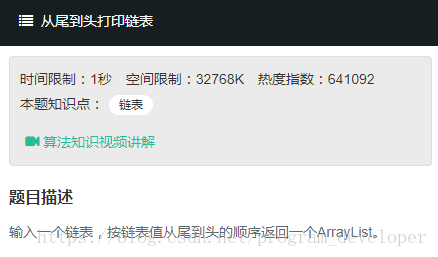
解题思路:
(1)用递归方法遍历链表输出
# -*- coding:utf-8 -*-
class ListNode:
    def __init__(self, x):
        self.val = x
        self.next = None

class SingleLinkedList:
    def __init__(self):
        self.head = None
        self.tail = None

    def add(self, data):
        node = ListNode(data)
        if self.head is None:
            self.head = node
            self.tail = node
        else:
            self.tail.next =node
            self.tail = node

    def iter(self):
        if not self.head:
            return
        cur = self.head
        yield cur.val
        while cur.next:
            cur = cur.next
            yield cur.val

class Solution:
    # 返回从尾部到头部的列表值序列,例如[1,2,3]
    def printListFromTailToHead(self, listNode):
        if listNode is None:
            return []
        return self.printListFromTailToHead(listNode.next) + [listNode.val]

if __name__=="__main__":
    link_list = SingleLinkedList()
    for i in range(5):
        link_list.add(i)

    for node in link_list.iter():
        print("node is {0}".format(node))

    solution = Solution()
    # Python递归实现。
    print(solution.printListFromTailToHead(link_list.head))
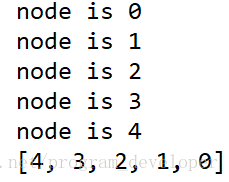
运行结果:
(2)顺序遍历链表,反转遍历的结果
    def printListFromTailToHead(self, listNode):
        if not listNode:
            return []
        res = []
        index = listNode
        while index:
            res.append(index.val)
            index = index.next

        return res[::-1]
(3)辅助栈法
解题思路:
链表特点: 只能从前至后访问每个节点。
题目要求: 倒序输出节点值。
这种 先入后出 的需求可以借助 栈 来实现。
算法流程:
入栈: 遍历链表,将各节点值 push 入栈。(Python 使用 append() 方法,Java借助 LinkedList 的addLast()方法)。
出栈: 将各节点值 pop 出栈,存储于数组并返回。(Python 直接返回 stack 的倒序列表,Java 新建一个数组,通过 popLast() 方法将各元素存入数组,实现倒序输出)。
复杂度分析:
时间复杂度 O(N): 入栈和出栈共使用 O(N) 时间。
空间复杂度 O(N): 辅助栈 stack 和数组 res 共使用 O(N) 的额外空间。
    def printListFromTailToHead(self, listNode):
        stack = []
        while listNode:
            stack.append(listNode.val)
            listNode = listNode.next
        return stack[::-1]
(4)链表原地反转
    def printListFromTailToHead(self, listNode):
        if not listNode:
            return []

        p1 = listNode
        p2 = listNode.next
        p3 = listNode.next.next
        while p2:
            p3 = p2.next
            p2.next = p1
            p1 = p2
            p2 = p3
        listNode.next = None
        listNode = p1

        res = []
        while listNode:
            res.append(listNode.val)
            listNode = listNode.next

        return res
Reference:





 扫一扫
扫一扫


 1292
1292

 被折叠的 条评论
为什么被折叠?
被折叠的 条评论
为什么被折叠?
 到【灌水乐园】发言





