



 文章展示了如何将使用requests库的同步HTTP请求转换为使用aiohttp和asyncio的异步操作,强调了在处理多个延迟任务时的性能提升。通过示例代码,解释了如何利用事件循环和协程实现并发,从而减少总执行时间。
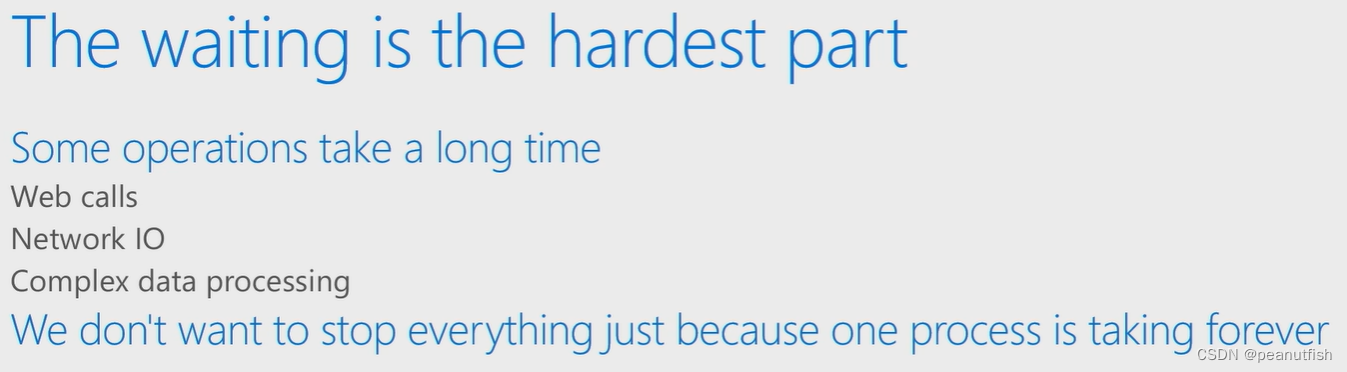
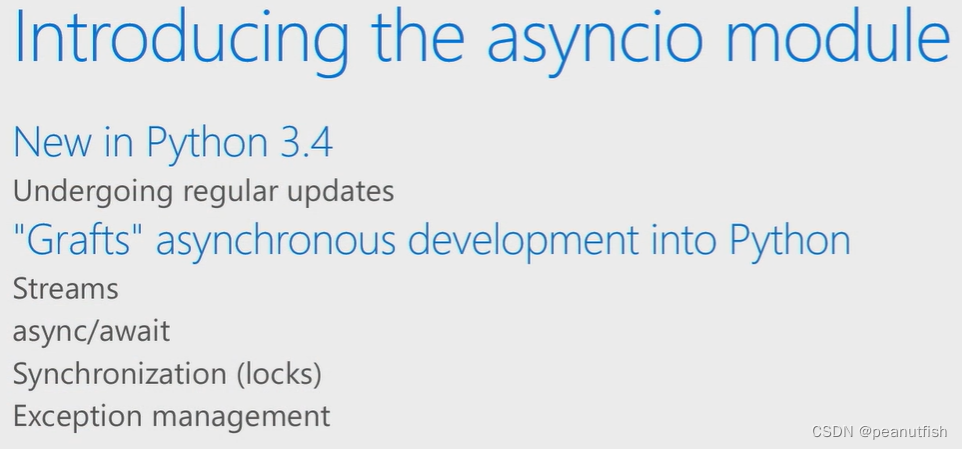
Asynchronous IO

Example:
# !/usr/bin/env python3
# -*- coding: utf-8 -*-

# standard wihtout AIO
"""
from timeit import default_timer
import aiohttp
import asyncio
import requests


def load_session(delay):
    print(f'Starting the delay {delay}s session...')
    txt = requests.get(f'https://httpbin.org/delay/{delay}').text
    print(f'Ended the delay {delay}s session')
    return txt

def run_demo():
    start_time = default_timer()

    delay1 = load_session(2)
    delay2 = load_session(3)

    total_time = default_timer() - start_time
    print(f'We totally used {total_time:.2f}s')
    print('session1: ' + delay1)
    print('session2: ' + delay2)

def main():
    run_demo()

if __name__ == '__main__':
    main()
"""

# Use AIO
from timeit import default_timer
import asyncio
import aiohttp

async def load_session(session, delay):
    print(f'Starting the delay {delay}s session...')
    async with session.get(f'https://httpbin.org/delay/{delay}') as resp:
        txt = await resp.text()
        print(f'Ended the delay {delay}s session')
        return txt

async def main():
    start_time = default_timer()

    async with aiohttp.ClientSession() as session:
        delay1 = asyncio.create_task(load_session(session, 2))
        delay2 = asyncio.create_task(load_session(session, 3))

        await asyncio.sleep(1)
        print('Doing other things...')

        txt1 = await delay1
        txt2 = await delay2

        elapsed_time = default_timer() - start_time
        print(f'Totally used {elapsed_time:.2}s')

loop = asyncio.get_event_loop()
loop.run_until_complete(main())
Starting the delay 2s session...
Starting the delay 3s session...
Doing other things...
Ended the delay 2s session
Ended the delay 3s session
Totally used 6.6s
小坑
如果上面的例子使用最后的部分使用asyncio.run(main())来执行代码,结果依然可以输出,但是会产生下面的报错RuntimeError('Event loop is closed'),

产生的原因是因为前面产生的asyncio的task没有做善后处理,所以code调用self.close()关掉了,改用如下可以解决:
loop = asyncio.get_event_loop()
loop.run_until_complete(main())





 扫一扫
扫一扫


 113
113

 被折叠的 条评论
为什么被折叠?
被折叠的 条评论
为什么被折叠?
 到【灌水乐园】发言





