



目录
2.3. 为什么 Tomcat 的类加载器也不是双亲委派模型
一. Tomcat 初始化了哪些 classloader
在 Bootstrap 中我们可以看到有如下三个 classloader
ClassLoader commonLoader = null;
ClassLoader catalinaLoader = null;
ClassLoader sharedLoader = null;
1.1. 如何初始化的呢
private void initClassLoaders() {
    try {
        // commonLoader初始化
        commonLoader = createClassLoader("common", null);
        if (commonLoader == null) {
            // no config file, default to this loader - we might be in a 'single' env.
            commonLoader = this.getClass().getClassLoader();
        }
        // catalinaLoader初始化, 父classloader是commonLoader
        catalinaLoader = createClassLoader("server", commonLoader);
        // sharedLoader初始化
        sharedLoader = createClassLoader("shared", commonLoader);
    } catch (Throwable t) {
        handleThrowable(t);
        log.error("Class loader creation threw exception", t);
        System.exit(1);
    }
}
可以看出,catalinaLoader 和 sharedLoader 的 parentClassLoader 是 commonLoader。
1.2. 如何创建 classLoader 的
不妨再看下如何创建的
private ClassLoader createClassLoader(String name, ClassLoader parent)
    throws Exception {

    String value = CatalinaProperties.getProperty(name + ".loader");
    if ((value == null) || (value.equals("")))
        return parent;

    value = replace(value);

    List<Repository> repositories = new ArrayList<>();

    String[] repositoryPaths = getPaths(value);

    for (String repository : repositoryPaths) {
        // Check for a JAR URL repository
        try {
            @SuppressWarnings("unused")
            URL url = new URL(repository);
            repositories.add(new Repository(repository, RepositoryType.URL));
            continue;
        } catch (MalformedURLException e) {
            // Ignore
        }

        // Local repository
        if (repository.endsWith("*.jar")) {
            repository = repository.substring
                (0, repository.length() - "*.jar".length());
            repositories.add(new Repository(repository, RepositoryType.GLOB));
        } else if (repository.endsWith(".jar")) {
            repositories.add(new Repository(repository, RepositoryType.JAR));
        } else {
            repositories.add(new Repository(repository, RepositoryType.DIR));
        }
    }

    return ClassLoaderFactory.createClassLoader(repositories, parent);
}
方法的逻辑也比较简单就是从 catalina.property 文件里找 common.loader,shared.loader, server.loader 对应的值,然后构造成 Repository 列表,再将 Repository 列表传入ClassLoaderFactory.createClassLoader 方法,ClassLoaderFactory.createClassLoader 返回的是 URLClassLoader,而 Repository 列表就是这个 URLClassLoader 可以加在的类的路径。在catalina.property 文件里。
common.loader="${catalina.base}/lib","${catalina.base}/lib/*.jar","${catalina.home}/lib","${catalina.home}/lib/*.jar"
server.loader=
shared.loader=
其中 shared.loader, server.loader 是没有值的,createClassLoader 方法里如果没有值的话,就返回传入的 parent ClassLoader,也就是说,commonLoader,catalinaLoader,sharedLoader 其实是一个对象。在 Tomcat 之前的版本里,这三个是不同的 URLClassLoader 对象。
Class<?> startupClass = catalinaLoader.loadClass("org.apache.catalina.startup.Catalina");
        Object startupInstance = startupClass.getConstructor().newInstance();
初始化完三个 ClassLoader 对象后,init() 方法就使用 catalinaClassLoader 加载了org.apache.catalina.startup.Catalina 类,并创建了一个对象,然后通过反射调用这个对象的 setParentClassLoader 方法,传入的参数是 sharedClassLoader。最后吧这个 Catania 对象复制给 catalinaDaemon 属性。
二. 深入理解
2.1. 什么是类加载机制
Java是一门面向对象的语言,而对象又必然依托于类。类要运行,必须首先被加载到内存。我们可以简单地把类分为几类:
-
Java自带的核心类
-
Java支持的可扩展类
-
我们自己编写的类
为什么要设计多个类加载器?
如果所有的类都使用一个类加载器来加载,会出现什么问题呢?
假如我们自己编写一个类 java.util.Object,它的实现可能有一定的危险性或者隐藏的 bug。而我们知道 Java 自带的核心类里面也有 java.util.Object,如果 JVM 启动的时候先行加载的是我们自己编写的 java.util.Object,那么就有可能出现安全问题!
所以,Sun(后被 Oracle 收购)采用了另外一种方式来保证最基本的、也是最核心的功能不会被破坏。你猜的没错,那就是双亲委派模式!
什么是双亲委派模型?
双亲委派模型解决了类错乱加载的问题,也设计得非常精妙。
双亲委派模式对类加载器定义了层级,每个类加载器都有一个父类加载器。在一个类需要加载的时候,首先委派给父类加载器来加载,而父类加载器又委派给祖父类加载器来加载,以此类推。如果父类及上面的类加载器都加载不了,那么由当前类加载器来加载,并将被加载的类缓存起来。
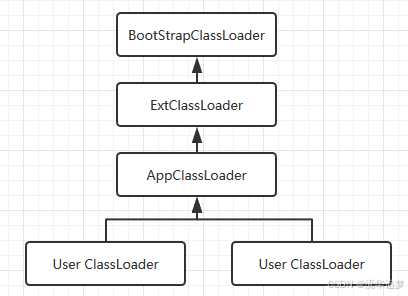
所以上述类是这么加载的
- Java 自带的核心类 -- 由启动类加载器加载
- Java 支持的可扩展类 -- 由扩展类加载器加载
- 我们自己编写的类 -- 默认由应用程序类加载器或其子类加载
但它也不是万能的,在有些场景也会遇到它解决不了的问题,比如如下场景。
2.2. 双亲委派模型问题是如何解决的
在 Java 核心类里面有 SPI(Service Provider Interface),它由 Sun 编写规范,第三方来负责实现。SPI 需要用到第三方实现类。如果使用双亲委派模型,那么第三方实现类也需要放在 Java 核心类里面才可以,不然的话第三方实现类将不能被加载使用。但是这显然是不合理的!怎么办呢?
ContextClassLoader(上下文类加载器)就来解围了。
在 java.lang.Thread 里面有两个方法,get/set 上下文类加载器
public void setContextClassLoader(ClassLoader cl)
public ClassLoader getContextClassLoader()
我们可以通过在 SPI 类里面调用 getContextClassLoader 来获取第三方实现类的类加载器。由第三方实现类通过调用 setContextClassLoader 来传入自己实现的类加载器,这样就变相地解决了双亲委派模式遇到的问题。
2.3. 为什么 Tomcat 的类加载器也不是双亲委派模型
我们知道,Java 默认的类加载机制是通过双亲委派模型来实现的,而 Tomcat 实现的方式又和双亲委派模型有所区别。
原因在于一个 Tomcat 容器允许同时运行多个 Web 程序,每个 Web 程序依赖的类又必须是相互隔离的。因此,如果 Tomcat 使用双亲委派模式来加载类的话,将导致 Web 程序依赖的类变为共享的。
举个例子,假如我们有两个 Web 程序,一个依赖 A 库的1.0版本,另一个依赖 A 库的2.0版本,他们都使用了类 xxx.xx.Clazz,其实现的逻辑因类库版本的不同而结构完全不同。那么这两个 Web 程序的其中一个必然因为加载的 Clazz 不是所使用的 Clazz 而出现问题!而这对于开发来说是非常致命的!
2.4. Tomcat 类加载机制是怎么样的呢
既然 Tomcat 的类加载机器不同于双亲委派模式,那么它又是一种怎样的模式呢?
我们在这里一定要看下官网提供的类加载的文档
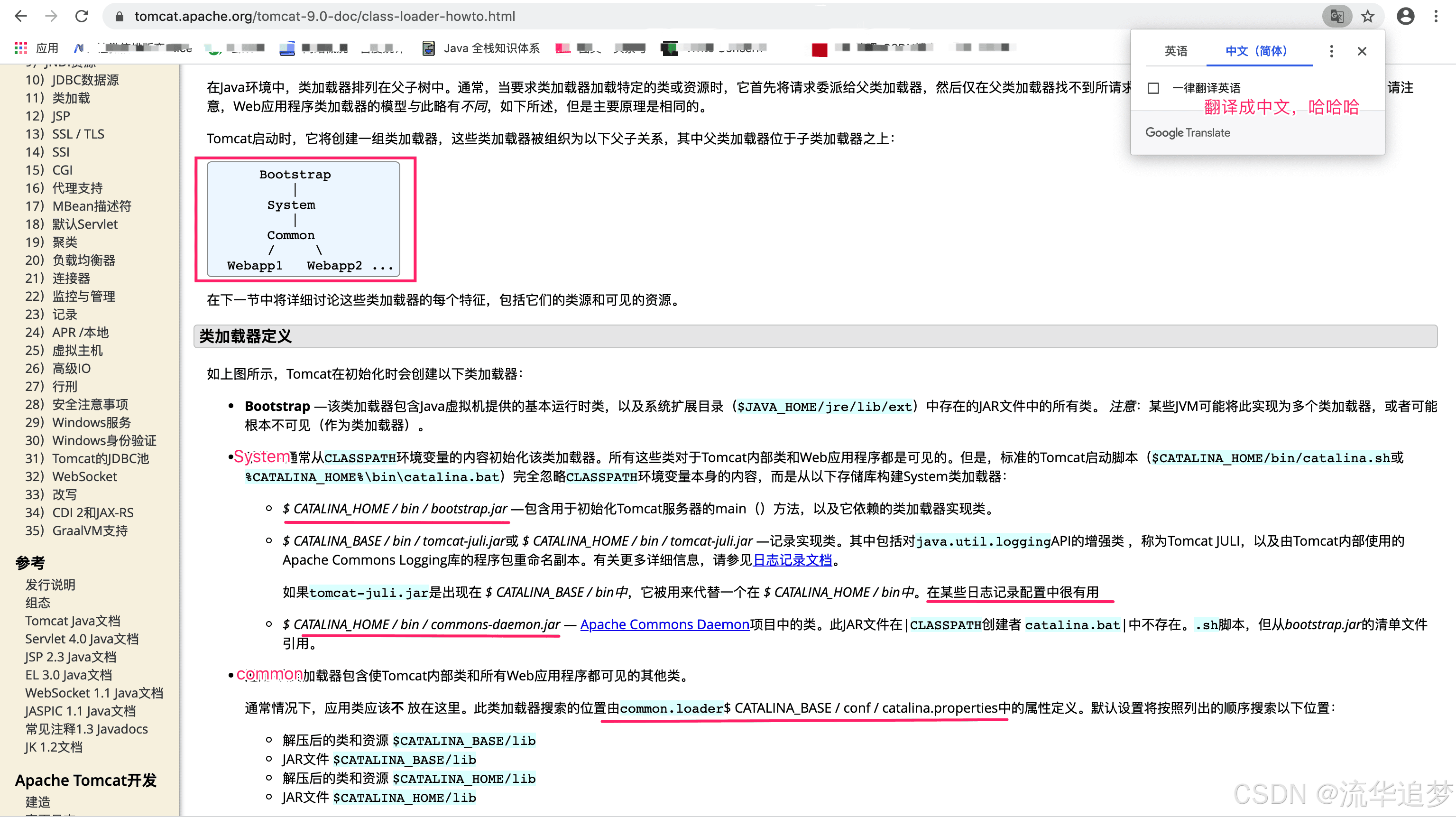
结合经典的类加载机制,我们完整的看下 Tomcat 类加载图:
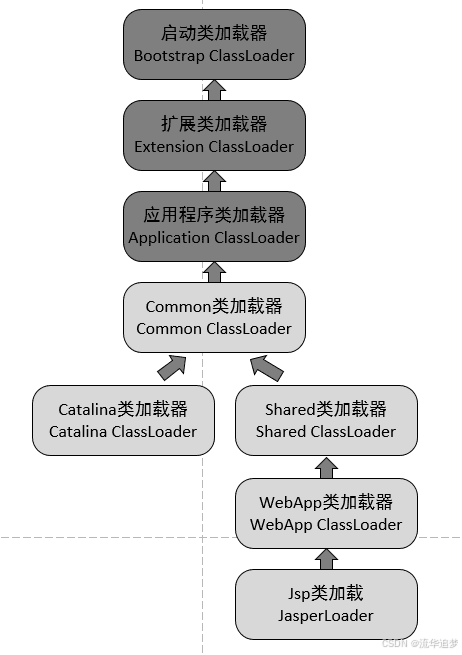
我们在这张图中看到很多类加载器,除了 JDK 自带的类加载器,我们尤其关心 Tomcat 自身持有的类加载器。仔细一点我们很容易发现:Catalina 类加载器和 Shared 类加载器,他们并不是父子关系,而是兄弟关系。为啥这样设计,我们得分析一下每个类加载器的用途,才能知晓。
- Common 类加载器,负责加载 Tomcat 和 Web 应用都复用的类
- Catalina 类加载器,负责加载 Tomcat 专用的类,而这些被加载的类在Web应用中将不可见
- Shared 类加载器,负责加载 Tomcat 下所有的 Web 应用程序都复用的类,而这些被加载的类在 Tomcat 中将不可见
- WebApp 类加载器,负责加载具体的某个 Web 应用程序所使用到的类,而这些被加载的类在 Tomcat 和其他的 Web 应用程序都将不可见
- Jsp 类加载器,每个 jsp 页面一个类加载器,不同的 jsp 页面有不同的类加载器,方便实现 jsp 页面的热插拔
同样的,我们可以看到通过 ContextClassLoader(上下文类加载器)的 setContextClassLoader 来传入自己实现的类加载器
public void init() throws Exception {

  initClassLoaders();

  // 看这里
  Thread.currentThread().setContextClassLoader(catalinaLoader);

  SecurityClassLoad.securityClassLoad(catalinaLoader);
...
2.5. WebApp 类加载器
到这儿,我们隐隐感觉到少分析了点什么!没错,就是 WebApp 类加载器。整个启动过程分析下来,我们仍然没有看到这个类加载器。它又是在哪儿出现的呢?
我们知道 WebApp 类加载器是 Web 应用私有的,而每个 Web 应用其实算是一个 Context,那么我们通过 Context 的实现类应该可以发现。在 Tomcat 中,Context 的默认实现为 StandardContext,我们看看这个类的 startInternal() 方法,在这儿我们发现了我们感兴趣的 WebApp 类加载器。
protected synchronized void startInternal() throws LifecycleException {
    if (getLoader() == null) {
        WebappLoader webappLoader = new WebappLoader(getParentClassLoader());
        webappLoader.setDelegate(getDelegate());
        setLoader(webappLoader);
    }
}
入口代码非常简单,就是 webappLoader 不存在的时候创建一个,并调用 setLoader 方法。我们接着分析 setLoader:
public void setLoader(Loader loader) {

    Lock writeLock = loaderLock.writeLock();
    writeLock.lock();
    Loader oldLoader = null;
    try {
        // Change components if necessary
        oldLoader = this.loader;
        if (oldLoader == loader)
            return;
        this.loader = loader;

        // Stop the old component if necessary
        if (getState().isAvailable() && (oldLoader != null) &&
            (oldLoader instanceof Lifecycle)) {
            try {
                ((Lifecycle) oldLoader).stop();
            } catch (LifecycleException e) {
                log.error("StandardContext.setLoader: stop: ", e);
            }
        }

        // Start the new component if necessary
        if (loader != null)
            loader.setContext(this);
        if (getState().isAvailable() && (loader != null) &&
            (loader instanceof Lifecycle)) {
            try {
                ((Lifecycle) loader).start();
            } catch (LifecycleException e) {
                log.error("StandardContext.setLoader: start: ", e);
            }
        }
    } finally {
        writeLock.unlock();
    }

    // Report this property change to interested listeners
    support.firePropertyChange("loader", oldLoader, loader);
}
这儿,我们感兴趣的就两行代码:
((Lifecycle) oldLoader).stop(); // 旧的加载器停止
((Lifecycle) loader).start(); // 新的加载器启动





 扫一扫
扫一扫


 1209
1209

 被折叠的 条评论
为什么被折叠?
被折叠的 条评论
为什么被折叠?
 到【灌水乐园】发言





