

empty,isset,is_null比较(差异与异同)

本文详细介绍了PHP中empty、isset、is_null三个函数的使用场景与区别,提供了实例帮助理解如何正确判断变量的存在性、是否为空及是否为null,避免了常见的编程错误。

做php开发时候,想必在使用:empty,isset,is_null  这几个函数时候,遇到一些问题。甚至给自己的程序带来一些安全隐患的bug。很多时候,对于isset,empty都认为差不多。因此开发时候,就没有注意,一段作为流程判断时候,就出现bug问题了。


一、举例说明

A.一个变量没有定义,我们该怎么样去判断呢?


<?php 
#不存在$test 变量 
  
$isset= isset($test)?"test is define!":"test is undefine!"; 
echo "isset:$isset\r\n"; 
  
$empty=!empty($test)?"test is define!":"test is undefine!"; 
echo "empty:$empty\r\n"; 
  
$is_null=is_null($test)?"test is define!":"test is undefine!"; 
echo "is_null:$is_null\r\n"; 

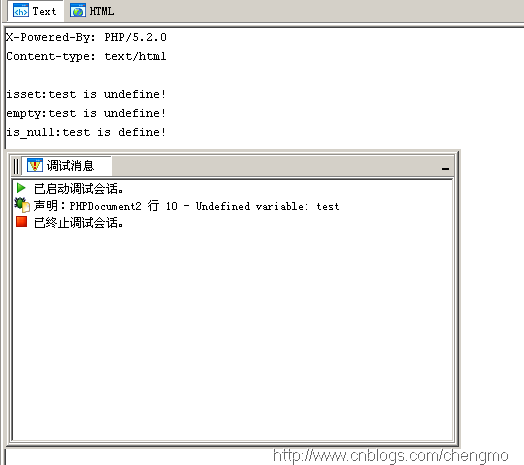
测试结果是:

image

结果出来了:empty,isset首先都会检查变量是否存在,然后对变量值进行检测。而is_null 只是直接检查变量值,是否为null,因此如果变量未定义就会出现错误!

B、看下各自接收的参数是什么?

isset函数参数:

<?php
$test=100;
echo isset($test),isset(100),$isset($b=100);


<br />
<b>Parse error</b>:  parse error, unexpected T_LNUMBER, expecting T_STRING or T_VARIABLE or '$' in <b>PHPDocument3</b> on line <b>3</b><br />

empty函数参数:

<?php
$test=100;

echo empty($test),empty(100),empty($b=100);


<br />
<b>Parse error</b>:  parse error, unexpected T_LNUMBER, expecting T_STRING or T_VARIABLE or '$' in <b>PHPDocument3</b> on line <b>3</b><br />

is_null函数参数:

<?php
$test=100;

echo is_null($test),is_null(100),is_null($b=100);

运行结果:没有任何错误。

比较结果出来了:empty,isset输入参数必须是一个变量(php变量是以$字符开头的),而is_null输入参数只要是能够有返回值就可以。(常量,变量,表达式等)。在php手册里面,对于他们解析是:empty,isset 是一个语言结构而非函数,因此它无法被变量函数调用。
 

二、概括总结isset,empty,is_null区别:

刚才介绍的:检查变量,以及参数类型,这个是这3个函数不同之处的基础,也是最容易被忽视的。看到网上有很多对这个3个函数进行比较文章。很少涉及这些。下面我要说的,是在都检查已存在变量情况下,不同之处。

实例:

<?php 
$a=100; 
$b=""; 
$c=null; 
//isset检查 
echo "isset","\$a=$a",isset($a)?"define":"undefine","\r\n"; 
echo "isset","\$b=$b",isset($b)?"define":"undefine","\r\n"; 
echo "isset","\$c=$c",isset($c)?"define":"undefine","\r\n"; 
unset($b); 
echo "isset","\$b",isset($b)?"define":"undefine","\r\n"; 
$b=0; 
echo "\r\n\r\n"; 
  
//empty检查 
echo "empty","\$a=$a",!empty($a)?"no empty":"empty","\r\n"; 
echo "empty","\$b=$b",!empty($b)?"no empty":"empty","\r\n"; 
echo "empty","\$c=$c",!empty($c)?"no empty":"empty","\r\n"; 
unset($b); 
echo "empty","\$b",!empty($b)?"no empty":"empty","\r\n"; 
$b=0; 
echo "\r\n\r\n"; 
  
//is_null检查 
echo "is_null","\$a=$a",!is_null($a)?"no null":"null","\r\n"; 
echo "is_null","\$b=$b",!is_null($b)?"no null":"null","\r\n"; 
echo "is_null","\$c=$c",!is_null($c)?"no null":"null","\r\n"; 
unset($b); 
echo "is_null","\$b",is_null($b)?"no null":"null","\r\n";

image

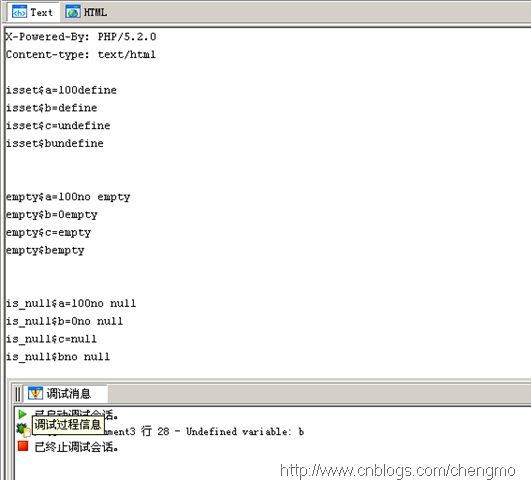
通过上面这个简单测试,我们可以大体知道,当一个变量存在情况下:isset,empty,is_null检测,得到值情况了。上面没有举例更多变量。其实测试发现:

empty

如果 变量 是非空或非零的值,则 empty() 返回 FALSE。换句话说,""、0、"0"、NULLFALSE、array()、var $var、未定义; 以及没有任何属性的对象都将被认为是空的,如果 var 为空,则返回TRUE

isset

如果 变量 存在(非NULL)则返回 TRUE,否则返回 FALSE(包括未定义)。变量值设置为:null,返回也是false;unset一个变量后,变量被取消了。注意,isset对于NULL值变量,特殊处理。

is_null

检测传入值【值,变量,表达式是否是null,只有一个变量定义了,且它的值是null,它才返回TRUE .其它都返回FALSE 【未定义变量传入后会出错!】.


疑问:怎么样判断一个变量被设置了,并且值为NULL呢?

通过上面比较,估计大家与我一样,会有这个问题浮现在脑海里面。 检测一个变量是否是null 可以用:is_null,但如果变量未定义用它检测会出错。因此,我们想到,检测变量是否定义可以用:isset,但是如果一个变量值是:null, 则它会返回false . 哈哈,这个问题怎么样解决呢?等待大家分享……
/* * net/sched/sch_mqprio.c * * Copyright (c) 2010 John Fastabend <john.r.fastabend@intel.com> * * This program is free software; you can redistribute it and/or * modify it under the terms of the GNU General Public License * version 2 as published by the Free Software Foundation. */ #include <linux/types.h> #include <linux/slab.h> #include <linux/kernel.h> #include <linux/string.h> #include <linux/errno.h> #include <linux/skbuff.h> #include <linux/module.h> #include <net/netlink.h> #include <net/pkt_sched.h> #include <net/sch_generic.h> struct mqprio_sched { struct Qdisc **qdiscs; int hw_owned; }; static void mqprio_destroy(struct Qdisc *sch) { struct net_device *dev = qdisc_dev(sch); struct mqprio_sched *priv = qdisc_priv(sch); unsigned int ntx; if (priv->qdiscs) { for (ntx = 0; ntx < dev->num_tx_queues && priv->qdiscs[ntx]; ntx++) qdisc_destroy(priv->qdiscs[ntx]); kfree(priv->qdiscs); } if (priv->hw_owned && dev->netdev_ops->ndo_setup_tc) dev->netdev_ops->ndo_setup_tc(dev, 0); else netdev_set_num_tc(dev, 0); } static int mqprio_parse_opt(struct net_device *dev, struct tc_mqprio_qopt *qopt) { int i, j; /* Verify num_tc is not out of max range */ if (qopt->num_tc > TC_MAX_QUEUE) return -EINVAL; /* Verify priority mapping uses valid tcs */ for (i = 0; i < TC_BITMASK + 1; i++) { if (qopt->prio_tc_map[i] >= qopt->num_tc) return -EINVAL; } /* net_device does not support requested operation */ if (qopt->hw && !dev->netdev_ops->ndo_setup_tc) return -EINVAL; /* if hw owned qcount and qoffset are taken from LLD so * no reason to verify them here */ if (qopt->hw) return 0; for (i = 0; i < qopt->num_tc; i++) { unsigned int last = qopt->offset[i] + qopt->count[i]; /* Verify the queue count is in tx range being equal to the * real_num_tx_queues indicates the last queue is in use. */ if (qopt->offset[i] >= dev->real_num_tx_queues || !qopt->count[i] || last > dev->real_num_tx_queues) return -EINVAL; /* Verify that the offset and counts do not overlap */ for (j = i + 1; j < qopt->num_tc; j++) { if (last > qopt->offset[j]) return -EINVAL; } } return 0; } static int mqprio_init(struct Qdisc *sch, struct nlattr *opt) { struct net_device *dev = qdisc_dev(sch); struct mqprio_sched *priv = qdisc_priv(sch); struct netdev_queue *dev_queue; struct Qdisc *qdisc; int i, err = -EOPNOTSUPP; struct tc_mqprio_qopt *qopt = NULL; BUILD_BUG_ON(TC_MAX_QUEUE != TC_QOPT_MAX_QUEUE); BUILD_BUG_ON(TC_BITMASK != TC_QOPT_BITMASK); if (sch->parent != TC_H_ROOT) return -EOPNOTSUPP; if (!netif_is_multiqueue(dev)) return -EOPNOTSUPP; if (!opt || nla_len(opt) < sizeof(*qopt)) return -EINVAL; qopt = nla_data(opt); if (mqprio_parse_opt(dev, qopt)) return -EINVAL; /* pre-allocate qdisc, attachment can't fail */ priv->qdiscs = kcalloc(dev->num_tx_queues, sizeof(priv->qdiscs[0]), GFP_KERNEL); if (!priv->qdiscs) return -ENOMEM; for (i = 0; i < dev->num_tx_queues; i++) { dev_queue = netdev_get_tx_queue(dev, i); qdisc = qdisc_create_dflt(dev_queue, default_qdisc_ops, TC_H_MAKE(TC_H_MAJ(sch->handle), TC_H_MIN(i + 1))); if (!qdisc) return -ENOMEM; priv->qdiscs[i] = qdisc; qdisc->flags |= TCQ_F_ONETXQUEUE | TCQ_F_NOPARENT; } /* If the mqprio options indicate that hardware should own * the queue mapping then run ndo_setup_tc otherwise use the * supplied and verified mapping */ if (qopt->hw) { priv->hw_owned = 1; err = dev->netdev_ops->ndo_setup_tc(dev, qopt->num_tc); if (err) return err; } else { netdev_set_num_tc(dev, qopt->num_tc); for (i = 0; i < qopt->num_tc; i++) netdev_set_tc_queue(dev, i, qopt->count[i], qopt->offset[i]); } /* Always use supplied priority mappings */ for (i = 0; i < TC_BITMASK + 1; i++) netdev_set_prio_tc_map(dev, i, qopt->prio_tc_map[i]); sch->flags |= TCQ_F_MQROOT; return 0; } static void mqprio_attach(struct Qdisc *sch) { struct net_device *dev = qdisc_dev(sch); struct mqprio_sched *priv = qdisc_priv(sch); struct Qdisc *qdisc, *old; unsigned int ntx; /* Attach underlying qdisc */ for (ntx = 0; ntx < dev->num_tx_queues; ntx++) { qdisc = priv->qdiscs[ntx]; old = dev_graft_qdisc(qdisc->dev_queue, qdisc); if (old) qdisc_destroy(old); if (ntx < dev->real_num_tx_queues) qdisc_list_add(qdisc); } kfree(priv->qdiscs); priv->qdiscs = NULL; } static struct netdev_queue *mqprio_queue_get(struct Qdisc *sch, unsigned long cl) { struct net_device *dev = qdisc_dev(sch); unsigned long ntx = cl - 1 - netdev_get_num_tc(dev); if (ntx >= dev->num_tx_queues) return NULL; return netdev_get_tx_queue(dev, ntx); } static int mqprio_graft(struct Qdisc *sch, unsigned long cl, struct Qdisc *new, struct Qdisc **old) { struct net_device *dev = qdisc_dev(sch); struct netdev_queue *dev_queue = mqprio_queue_get(sch, cl); if (!dev_queue) return -EINVAL; if (dev->flags & IFF_UP) dev_deactivate(dev); *old = dev_graft_qdisc(dev_queue, new); if (new) new->flags |= TCQ_F_ONETXQUEUE | TCQ_F_NOPARENT; if (dev->flags & IFF_UP) dev_activate(dev); return 0; } static int mqprio_dump(struct Qdisc *sch, struct sk_buff *skb) { struct net_device *dev = qdisc_dev(sch); struct mqprio_sched *priv = qdisc_priv(sch); unsigned char *b = skb_tail_pointer(skb); struct tc_mqprio_qopt opt = { 0 }; struct Qdisc *qdisc; unsigned int i; sch->q.qlen = 0; memset(&sch->bstats, 0, sizeof(sch->bstats)); memset(&sch->qstats, 0, sizeof(sch->qstats)); for (i = 0; i < dev->num_tx_queues; i++) { qdisc = rtnl_dereference(netdev_get_tx_queue(dev, i)->qdisc); spin_lock_bh(qdisc_lock(qdisc)); sch->q.qlen += qdisc->q.qlen; sch->bstats.bytes += qdisc->bstats.bytes; sch->bstats.packets += qdisc->bstats.packets; sch->qstats.backlog += qdisc->qstats.backlog; sch->qstats.drops += qdisc->qstats.drops; sch->qstats.requeues += qdisc->qstats.requeues; sch->qstats.overlimits += qdisc->qstats.overlimits; spin_unlock_bh(qdisc_lock(qdisc)); } opt.num_tc = netdev_get_num_tc(dev); memcpy(opt.prio_tc_map, dev->prio_tc_map, sizeof(opt.prio_tc_map)); opt.hw = priv->hw_owned; for (i = 0; i < netdev_get_num_tc(dev); i++) { opt.count[i] = dev->tc_to_txq[i].count; opt.offset[i] = dev->tc_to_txq[i].offset; } if (nla_put(skb, TCA_OPTIONS, sizeof(opt), &opt)) goto nla_put_failure; return skb->len; nla_put_failure: nlmsg_trim(skb, b); return -1; } static struct Qdisc *mqprio_leaf(struct Qdisc *sch, unsigned long cl) { struct netdev_queue *dev_queue = mqprio_queue_get(sch, cl); if (!dev_queue) return NULL; return dev_queue->qdisc_sleeping; } static unsigned long mqprio_get(struct Qdisc *sch, u32 classid) { struct net_device *dev = qdisc_dev(sch); unsigned int ntx = TC_H_MIN(classid); if (ntx > dev->num_tx_queues + netdev_get_num_tc(dev)) return 0; return ntx; } static void mqprio_put(struct Qdisc *sch, unsigned long cl) { } static int mqprio_dump_class(struct Qdisc *sch, unsigned long cl, struct sk_buff *skb, struct tcmsg *tcm) { struct net_device *dev = qdisc_dev(sch); if (cl <= netdev_get_num_tc(dev)) { tcm->tcm_parent = TC_H_ROOT; tcm->tcm_info = 0; } else { int i; struct netdev_queue *dev_queue; dev_queue = mqprio_queue_get(sch, cl); tcm->tcm_parent = 0; for (i = 0; i < netdev_get_num_tc(dev); i++) { struct netdev_tc_txq tc = dev->tc_to_txq[i]; int q_idx = cl - netdev_get_num_tc(dev); if (q_idx > tc.offset && q_idx <= tc.offset + tc.count) { tcm->tcm_parent = TC_H_MAKE(TC_H_MAJ(sch->handle), TC_H_MIN(i + 1)); break; } } tcm->tcm_info = dev_queue->qdisc_sleeping->handle; } tcm->tcm_handle |= TC_H_MIN(cl); return 0; } static int mqprio_dump_class_stats(struct Qdisc *sch, unsigned long cl, struct gnet_dump *d) __releases(d->lock) __acquires(d->lock) { struct net_device *dev = qdisc_dev(sch); if (cl <= netdev_get_num_tc(dev)) { int i; __u32 qlen = 0; struct Qdisc *qdisc; struct gnet_stats_queue qstats = {0}; struct gnet_stats_basic_packed bstats = {0}; struct netdev_tc_txq tc = dev->tc_to_txq[cl - 1]; /* Drop lock here it will be reclaimed before touching * statistics this is required because the d->lock we * hold here is the look on dev_queue->qdisc_sleeping * also acquired below. */ spin_unlock_bh(d->lock); for (i = tc.offset; i < tc.offset + tc.count; i++) { struct netdev_queue *q = netdev_get_tx_queue(dev, i); qdisc = rtnl_dereference(q->qdisc); spin_lock_bh(qdisc_lock(qdisc)); qlen += qdisc->q.qlen; bstats.bytes += qdisc->bstats.bytes; bstats.packets += qdisc->bstats.packets; qstats.backlog += qdisc->qstats.backlog; qstats.drops += qdisc->qstats.drops; qstats.requeues += qdisc->qstats.requeues; qstats.overlimits += qdisc->qstats.overlimits; spin_unlock_bh(qdisc_lock(qdisc)); } /* Reclaim root sleeping lock before completing stats */ spin_lock_bh(d->lock); if (gnet_stats_copy_basic(d, NULL, &bstats) < 0 || gnet_stats_copy_queue(d, NULL, &qstats, qlen) < 0) return -1; } else { struct netdev_queue *dev_queue = mqprio_queue_get(sch, cl); sch = dev_queue->qdisc_sleeping; if (gnet_stats_copy_basic(d, NULL, &sch->bstats) < 0 || gnet_stats_copy_queue(d, NULL, &sch->qstats, sch->q.qlen) < 0) return -1; } return 0; } static void mqprio_walk(struct Qdisc *sch, struct qdisc_walker *arg) { struct net_device *dev = qdisc_dev(sch); unsigned long ntx; if (arg->stop) return; /* Walk hierarchy with a virtual class per tc */ arg->count = arg->skip; for (ntx = arg->skip; ntx < dev->num_tx_queues + netdev_get_num_tc(dev); ntx++) { if (arg->fn(sch, ntx + 1, arg) < 0) { arg->stop = 1; break; } arg->count++; } } static const struct Qdisc_class_ops mqprio_class_ops = { .graft = mqprio_graft, .leaf = mqprio_leaf, .get = mqprio_get, .put = mqprio_put, .walk = mqprio_walk, .dump = mqprio_dump_class, .dump_stats = mqprio_dump_class_stats, }; static struct Qdisc_ops mqprio_qdisc_ops __read_mostly = { .cl_ops = &mqprio_class_ops, .id = "mqprio", .priv_size = sizeof(struct mqprio_sched), .init = mqprio_init, .destroy = mqprio_destroy, .attach = mqprio_attach, .dump = mqprio_dump, .owner = THIS_MODULE, }; static int __init mqprio_module_init(void) { return register_qdisc(&mqprio_qdisc_ops); } static void __exit mqprio_module_exit(void) { unregister_qdisc(&mqprio_qdisc_ops); } module_init(mqprio_module_init); module_exit(mqprio_module_exit); MODULE_LICENSE("GPL"); 参考这个队列逻辑写
最新发布
09-23
评论
添加红包

请填写红包祝福语或标题

红包个数最小为10个

红包金额最低5元

当前余额3.43前往充值 >
需支付:10.00
成就一亿技术人!
领取后你会自动成为博主和红包主的粉丝 规则
hope_wisdom
发出的红包
实付
使用余额支付
点击重新获取
扫码支付
钱包余额 0

抵扣说明:

1.余额是钱包充值的虚拟货币,按照1:1的比例进行支付金额的抵扣。
2.余额无法直接购买下载,可以购买VIP、付费专栏及课程。

余额充值


