



 本文深入解析SpringBoot的自动配置原理,重点剖析@SpringBootApplication注解如何整合@SpringBootConfiguration、@EnableAutoConfiguration与@ComponentScan,实现自动配置功能。通过分析@AutoConfigurationPackage与@Import的作用,揭示SpringBoot如何自动加载默认配置。
一、SpringBoot的自动配置原理
不知道大家第一次搭SpringBoot环境的时候,有没有觉得非常简单。无须各种的配置文件,无须各种繁杂的pom坐标,一个main方法,就能run起来了。与其他框架整合也贼方便,使用EnableXXXXX注解就可以搞起来了!
所以今天来讲讲SpringBoot是如何实现自动配置的~
1.1三个重要的注解
我们可以发现,在使用main()启动SpringBoot的时候,只有一个注解@SpringBootApplication
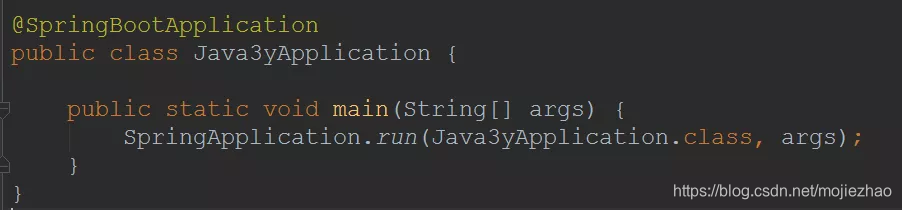
我们可以点击进去@SpringBootApplication注解中看看,可以发现有三个注解是比较重要的:
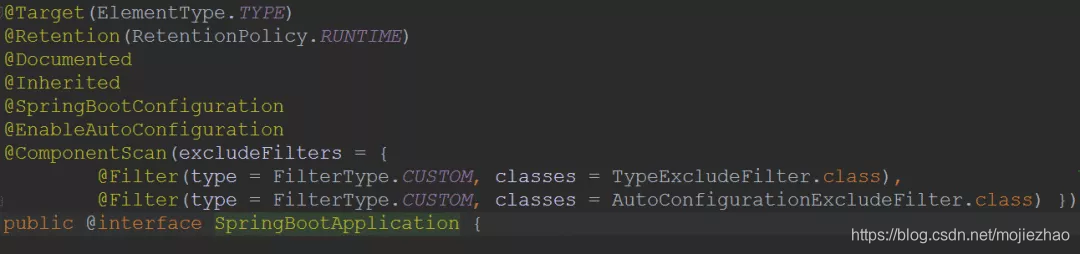
-
@SpringBootConfiguration:我们点进去以后可以发现底层是Configuration注解,说白了就是支持JavaConfig的方式来进行配置(使用Configuration配置类等同于XML文件)。 -
@EnableAutoConfiguration:开启自动配置功能(后文详解) -
@ComponentScan:这个注解,学过Spring的同学应该对它不会陌生,就是扫描注解,默认是扫描当前类下的package。将@Controller/@Service/@Component/@Repository等注解加载到IOC容器中。
所以,Application类可以被我们当做是这样的:
@SpringBootConfiguration
@EnableAutoConfiguration
@ComponentScan
public class Java3yApplication {

    public static void main(String[] args) {
        SpringApplication.run(Java3yApplication.class, args);
    }
}
1.2重点EnableAutoConfiguration
我们知道SpringBoot可以帮我们减少很多的配置,也肯定听过“约定大于配置”这么一句话,那SpringBoot是怎么做的呢?其实靠的就是@EnableAutoConfiguration注解。
简单来说,这个注解可以帮助我们自动载入应用程序所需要的所有默认配置。
如果你的类路径下有tomcat-embedded.jar包,那么你很可能就需要TomcatServletWebServerFactory
我们点进去看一下,发现有两个比较重要的注解:
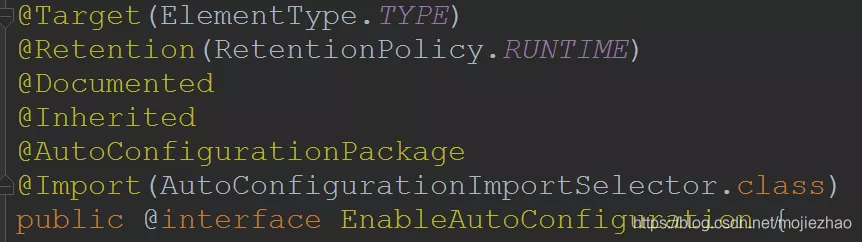
-
@AutoConfigurationPackage:自动配置包 -
@Import:给IOC容器导入组件
1.2.1AutoConfigurationPackage
网上将这个@AutoConfigurationPackage注解解释成自动配置包,我们也看看@AutoConfigurationPackage里边有什么:
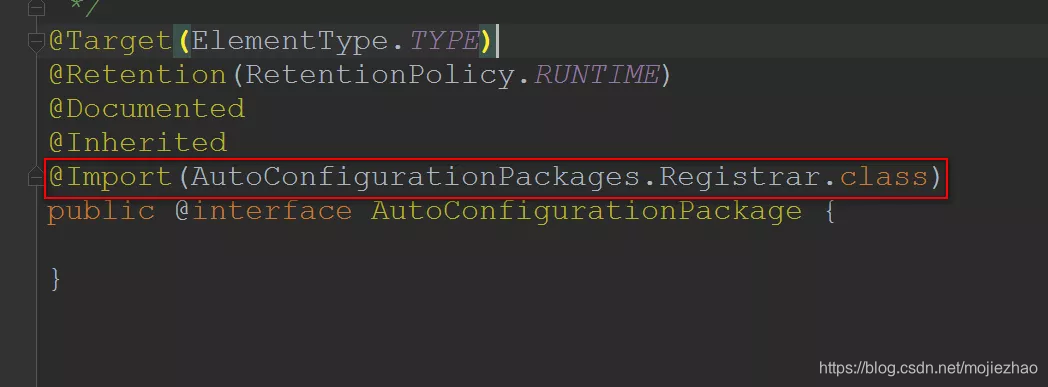
我们可以发现,依靠的还是@Import注解,再点进去查看,我们发现重要的就是以下的代码:
@Override
public void registerBeanDefinitions(AnnotationMetadata metadata,
        BeanDefinitionRegistry registry) {
    register(registry, new PackageImport(metadata).getPackageName());
}
在默认的情况下就是将:主配置类(@SpringBootApplication)的所在包及其子包里边的组件扫描到Spring容器中。
看完这句话,会不会觉得,这不就是ComponentScan的功能吗?这俩不就重复了吗?
我开始也有这个疑问,直到我看到文档的这句话:
it will be used when scanning for code @Entity classes.
It is generally recommended that you place EnableAutoConfiguration (if you're
not using  @SpringBootApplication) in a root package so that all sub-packages
and classes can be searched.
比如说,你用了Spring Data JPA,可能会在实体类上写@Entity注解。这个@Entity注解由@AutoConfigurationPackage扫描并加载,而我们平时开发用的@Controller/@Service/@Component/@Repository这些注解是由ComponentScan来扫描并加载的。
简单理解:这二者扫描的对象是不一样的。
1.2.2回到Import
我们回到@Import(AutoConfigurationImportSelector.class)这句代码上,再点进去AutoConfigurationImportSelector.class看看具体的实现是什么:
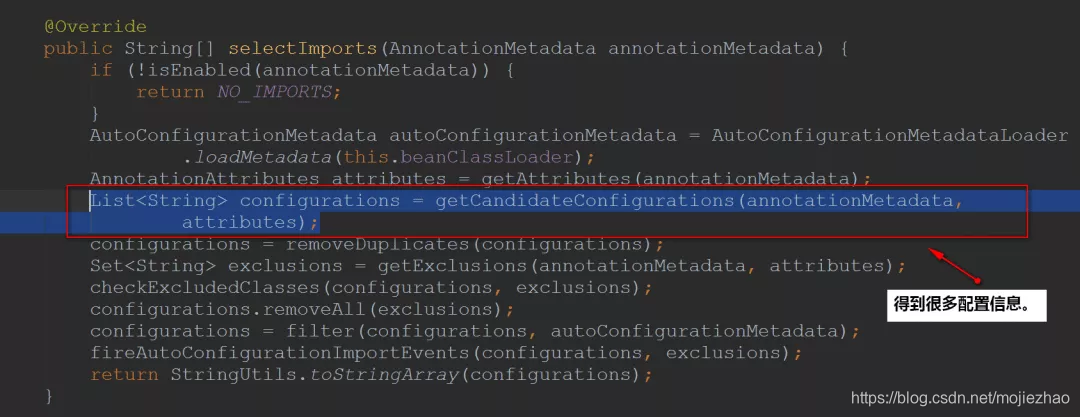
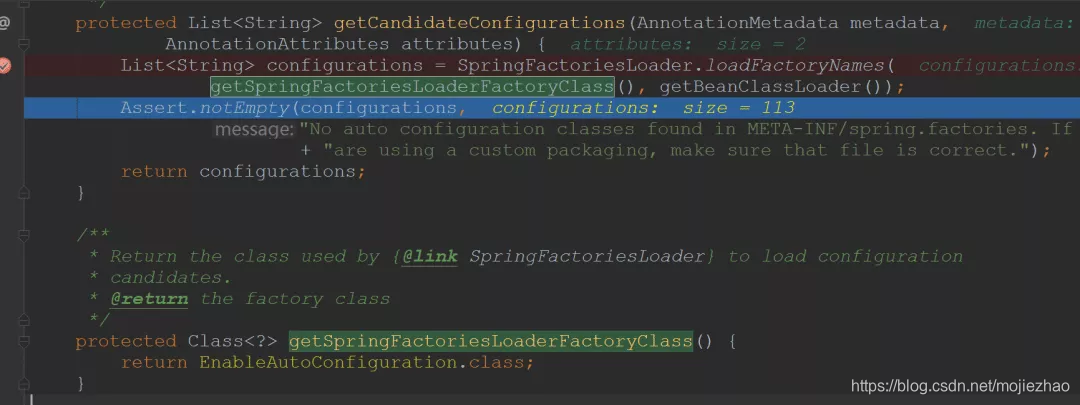
我们再进去看一下这些配置信息是从哪里来的(进去getCandidateConfigurations方法):
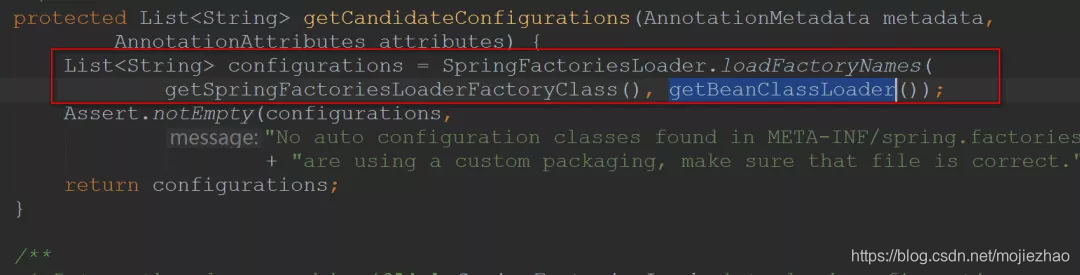
这里包装了一层,我们看到的只是通过SpringFactoriesLoader来加载,还没看到关键信息,继续进去:
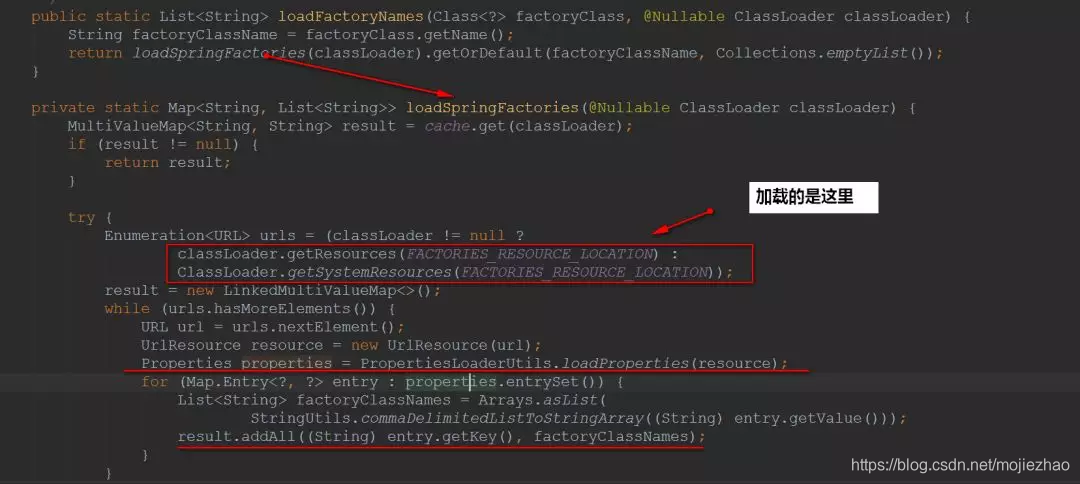
简单梳理:
-
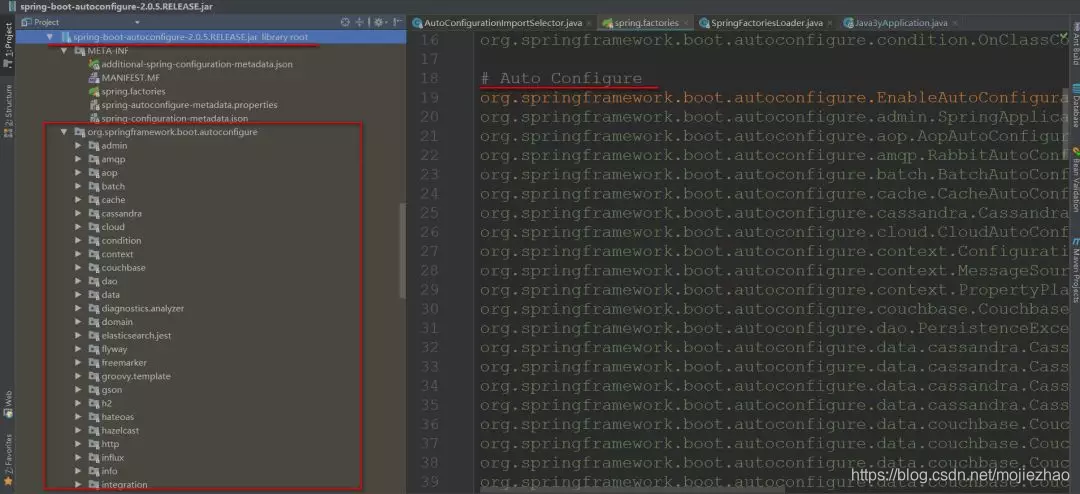
FACTORIES_RESOURCE_LOCATION的值是META-INF/spring.factories -
Spring启动的时候会扫描所有jar路径下的
META-INF/spring.factories,将其文件包装成Properties对象 -
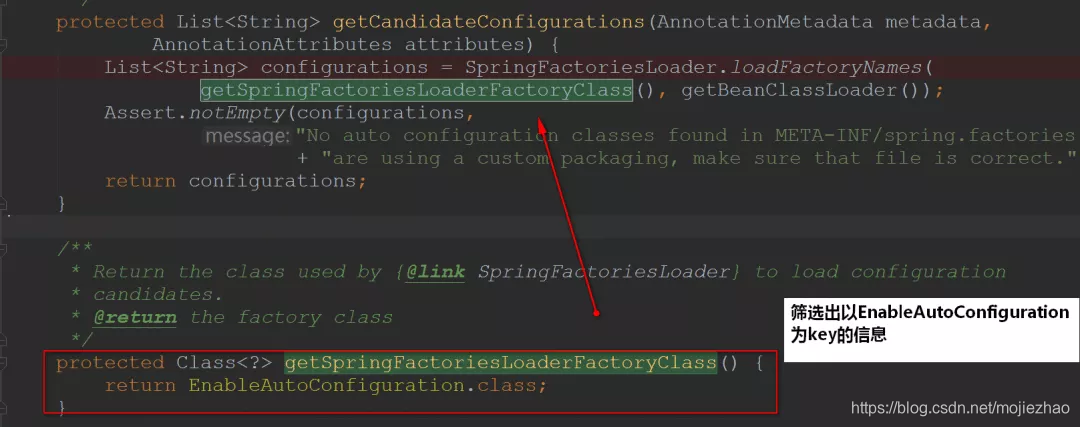
从Properties对象获取到key值为
EnableAutoConfiguration的数据,然后添加到容器里边。
最后我们会默认加载113个默认的配置类:
有兴趣的同学可以去翻一下这些文件以及配置类哦:
官网文档参考:
https://docs.spring.io/spring-boot/docs/2.2.0.BUILD-SNAPSHOT/reference/html/using-spring-boot.html#using-boot-structuring-your-code
1.3总结
@SpringBootApplication等同于下面三个注解:
-
@SpringBootConfiguration -
@EnableAutoConfiguration -
@ComponentScan
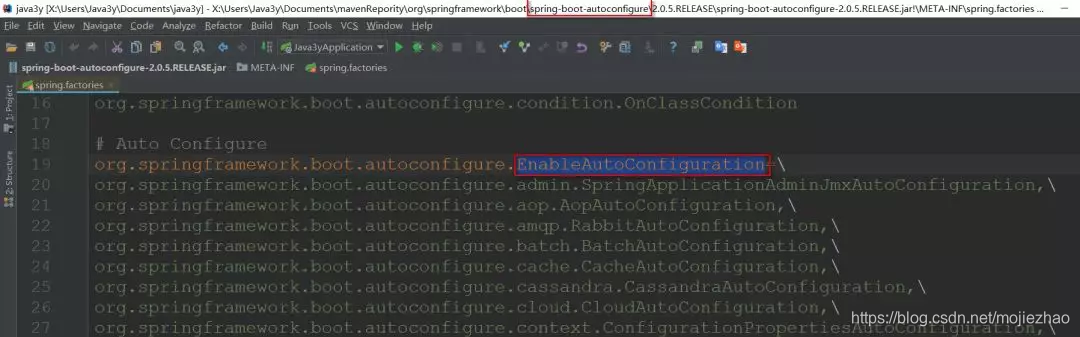
其中@EnableAutoConfiguration是关键(启用自动配置),内部实际上就去加载META-INF/spring.factories文件的信息,然后筛选出以EnableAutoConfiguration为key的数据,加载到IOC容器中,实现自动配置功能!





 扫一扫
扫一扫


 429
429

 被折叠的 条评论
为什么被折叠?
被折叠的 条评论
为什么被折叠?
 到【灌水乐园】发言





