



链表的初始化
1.对于链表的初始化,首先你得有一个链表,然后进行初始化链表的数据域和指针域,再一个要有一个构造方法对链表的数据进行赋值。

2.再这里我创建三个Java Class, 第一个就是具体操作的代码类,MySingleLinkedList ,第二个就是这个类的Test类 Test_MySingleLinkedList 用于对各个操作进行执行和检验,第三个就是对其中一个操作的补充 自定义异常类 ListIndexOutOfException。
3.下面是初始化链表的代码实现
public class MySingleLinkedList {
    static class ListNode{
        public int val;   //数据域
        public ListNode next;  //指针域
        public ListNode(int val){    //构造方法(对链表进行初始赋值)
            this.val = val;
        }
    }
    public ListNode head;  // 头结点
链表的创建
既然链表的东西都有了,那么我们就可以创建一个链表以便于对以后操作的实现。
    //创建链表
    public void createLink() {
        ListNode listNode1 = new ListNode(88);  //进行实例化赋值
        ListNode listNode2 = new ListNode(7);
        ListNode listNode3 = new ListNode(15);
        ListNode listNode4 = new ListNode(29);
        ListNode listNode5 = new ListNode(16);
        head = listNode1;     //将链表的头结点地址记录下来
        listNode1.next = listNode2;  //将每一个结点连接起来成为链表
        listNode2.next = listNode3;
        listNode3.next = listNode4;
        listNode4.next = listNode5;
        listNode5.next = null;   //最后的地址置空
    }
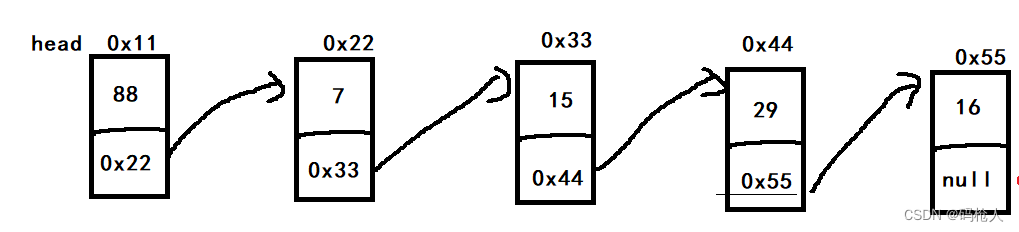
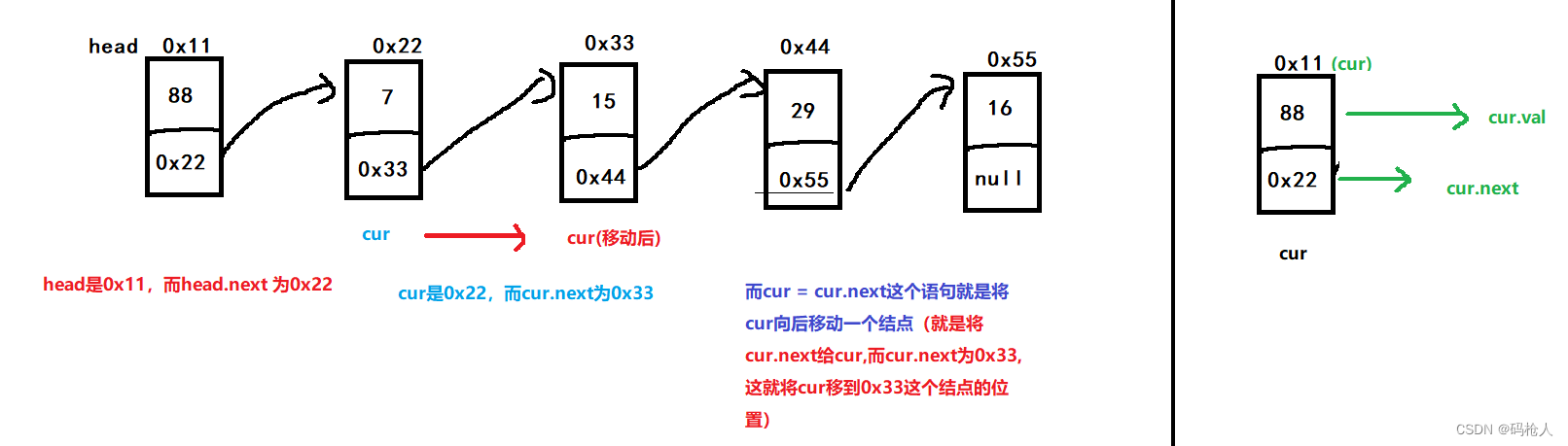
特别注意(对于next的说明):
遍历链表
将链表展示出来,由于单链表是单向移动的,所以要定义一个结点,让它来进行移动,若不进行这样操作链表就会缺失。
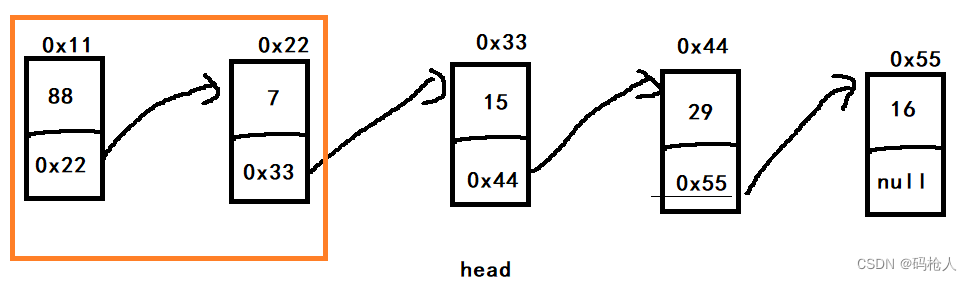
如上图,再次执行别的操作就无法知道前面的结点了。
实质
遍历链表其实就是将cur一直向后面走,直到它为空为止。
    //遍历链表
    public void display(){
        ListNode cur;
        cur = head;
        while (cur != null){     //注意此处cur和cur.next的区别
            System.out.print(cur.val+" ");   //注意此处cur.val和cur.next.val的区别
            cur = cur.next;
        }
        System.out.println();
    }
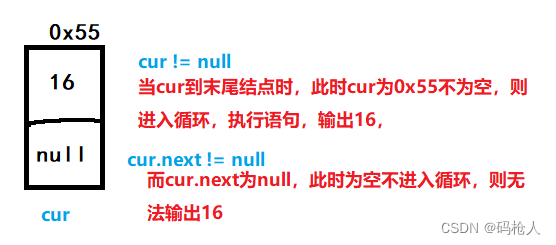
注意:cur != null 和 cur.next != null 是不一样的,当两者循环执行到末尾时,如下图
public class Test_MySingleLinkedList {
    public static void main(String[] args) {
        MySingleLinkedList mySingleLinkedList = new MySingleLinkedList();
        mySingleLinkedList.createLink();         //创建链表
        mySingleLinkedList.display();          //遍历链表

指定位置输出链表
从指定位置输出链表其实就是将遍历这个方法重写,给这个方法设定一个参数newhead,将newhead给cur,让cur遍历即可。
     // 从指定位置开始打印链表
    public void display(ListNode newHead) {     //进行display方法的重写
        ListNode cur;
        cur = newHead;         //将指定位置传给cur
        while (cur != null){
            System.out.print(cur.val+" ");
            cur = cur.next;
        }
        System.out.println();
    }
在此处,newhead在Test这个类中应被赋予新的位置(即指定的位置),例如:newhead = listNode3; newhead = listNode4; 等等。
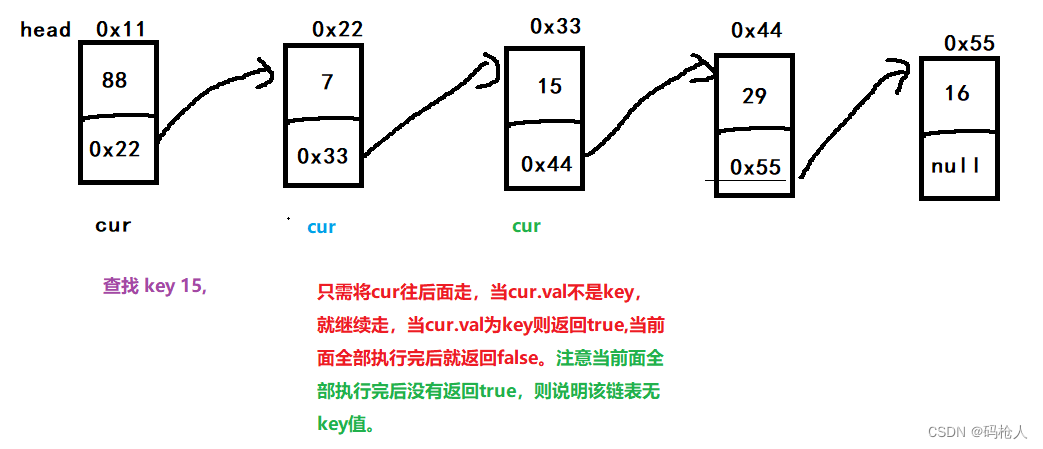
查找关键字key是否在链表中
    //查找是否包含关键字key是否在单链表当中
    public boolean contains(int key){
        ListNode cur = head;
        while (cur != null){
            if(cur.val == key){
                return true;
            }else {
                cur = cur.next;
            }
        }
        return false;
    }
计算链表的长度
链表的长度计算就是将链表进行遍历,在遍历过程中设置一个计算器即可(cunt),若链表不为空,则cunt++; cur向后面移动,直到cur为空为止并返回cunt。注意当cur == null;即链表为空,则return 0;
    //计算单链表的长度
    public int size(){
        ListNode cur = head;
        int count = 0;
        if(cur == null){
            return 0;
        }
        while (cur != null){
            count++;
            cur = cur.next;
        }
        return count;
    }
在测试类中进行测试:
        //查找是否包含关键字key是否在单链表当中
        boolean ret = mySingleLinkedList.contains(15);
        System.out.println(ret);
        System.out.println("=======================");
        //计算单链表的长度
        int ret1 = mySingleLinkedList.size();
        System.out.println(ret1);
        System.out.println("=======================");

头插
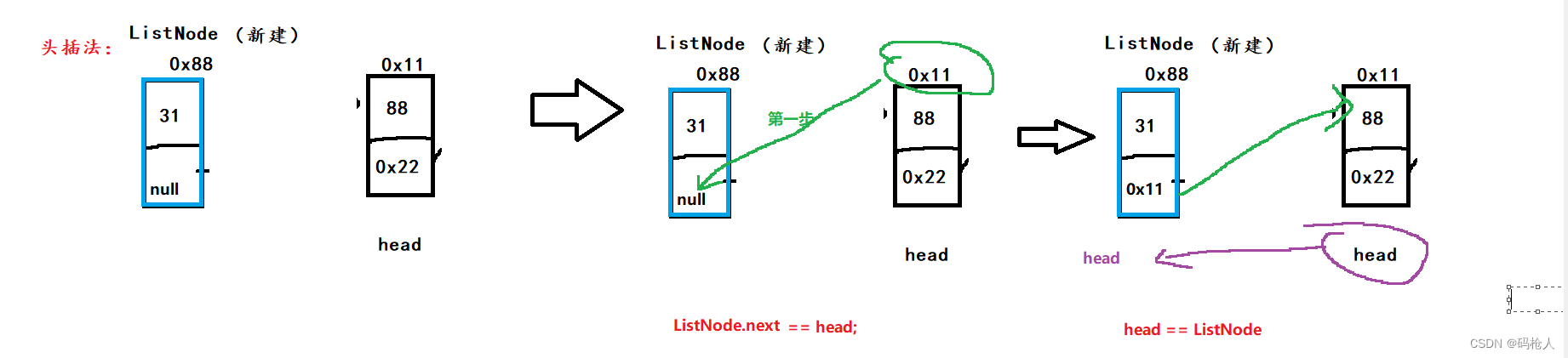
对于头插法,首先要创建一个待插入的结点,然后只需调整head和结点的指针域。
    //头插法
    public void addFirst(int data){
        ListNode listNode = new ListNode(data);  //新建一个列表,赋值为data
        listNode.next = head;
        head = listNode;
    }
在此不需要判断链表是否为空,当链表为空的时候不影响代码和最后的结果。
尾插
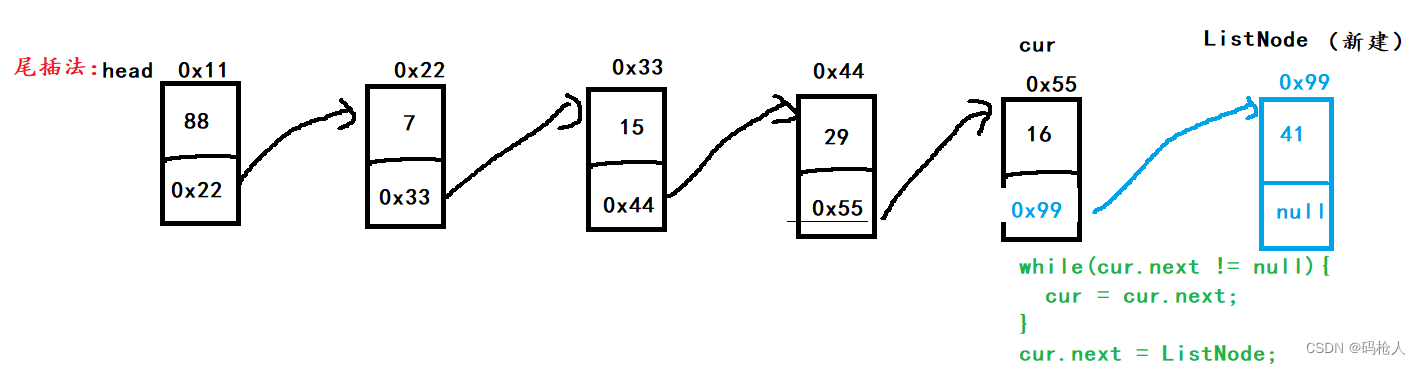
尾插法,首先创建一个待插入结点,那么要进行插入,要找到这个链表的尾巴,然后才能插入。将创建的这个结点的地址给到链表尾巴结点的指针域,这样就连接起来了。注意当链表为空时,只需将创建结点的地址给head即可。
    //尾插法
    public void addLast(int data){
        ListNode listNode = new ListNode(data);
        ListNode cur = head;
        if (cur == null){    //链表为空
            cur = listNode;
            return;
        }
        while (cur.next != null){   //首先要找到尾
            cur = cur.next;
        }
        cur.next = listNode;
        listNode.next = null;
    }
任意位置插入
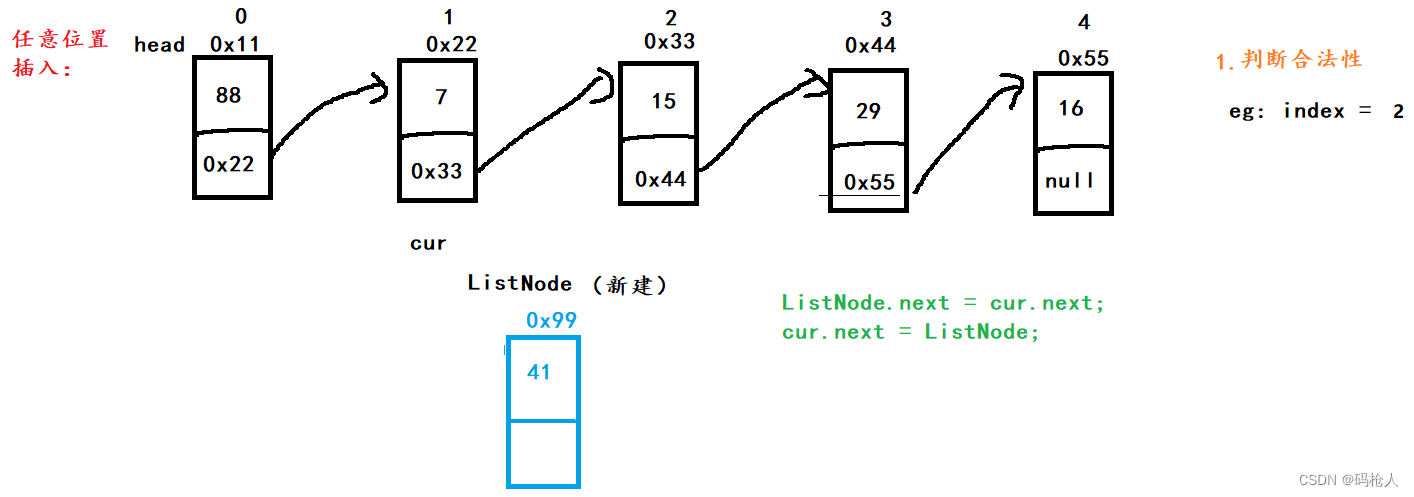
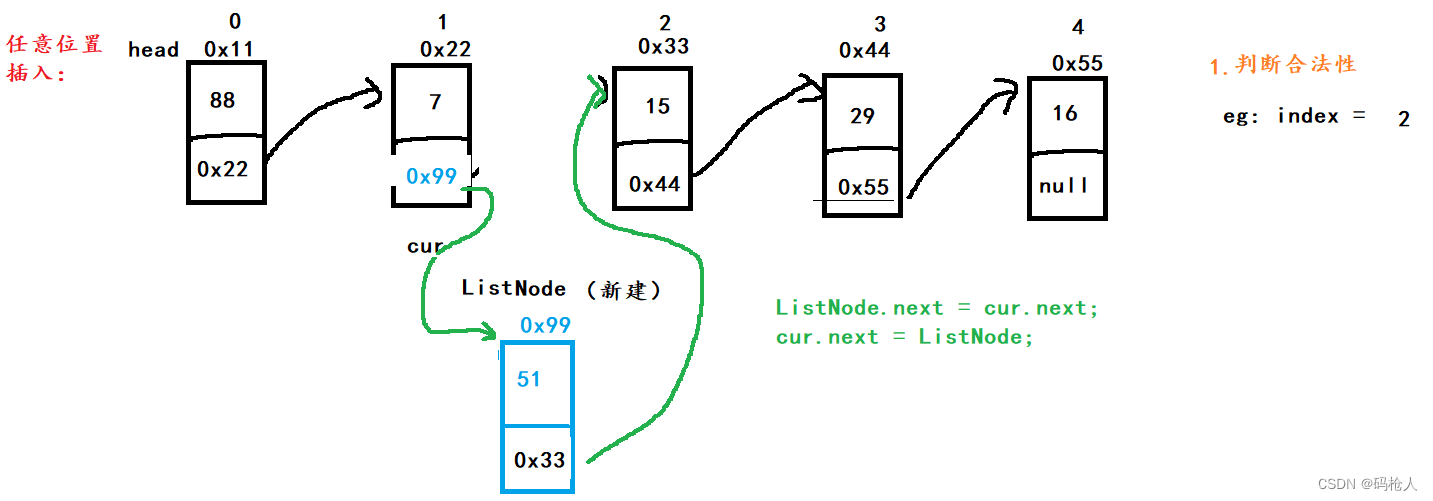
1.创建待插入结点,检验插入的位置(index)是否合法。
2.若插入位置为0(链表为空一个道理),则为头插,调用方法
3.若插入位置为链表长度size(),则为尾插,调用尾插
4.当为链表中间位置时,找到插入位置的前一个结点(因为是单链表,无法向前移动)
5.将 ListNode.next == cur.next; 将cur.next == ListNode
6.在此我将判断位置是否合法,寻找index的前一个结点分别写了两个方法,若对于插入位置不合法我使用异常来处理,单独创建了一个异常类
    //任意位置插入(第一个结点的下标为0)
    public void addIndex(int index,int data){
        checkIndex(index);     //检验是否合法
        ListNode listNode = new ListNode(data);
        if(index == 0){   //前插
            addFirst(data);
            return;
        }
        if(index == size()){       //尾插
            addLast(data);
            return;
        }
        ListNode cur = FindIndex(index);  //查找index位置
        listNode.next = cur.next;
        cur.next = listNode;
    }
    //检验插入位置是否合法
    private void checkIndex(int index){
        if(index<0 || index>size()){ //当位置小于0,位置超出链表大写,报异常
            throw new ListIndexOutOfException("位置不合法");
        }
    }
    //查找index-1位置
    private ListNode FindIndex(int index){
        ListNode cur = head;
        int count = 0;
        while (count != index-1 ){      //此处注意要找到插入位置的前一个结点
            cur = cur.next;
            count++;
        }
        return cur;
    }
public class ListIndexOutOfException extends RuntimeException {  //自定义异常类
    public ListIndexOutOfException(String message) {
        super(message);
    }
}
现在来对头插 尾插 任意位置插入进行测试:
        //头插法
        mySingleLinkedList.addFirst(31);
        mySingleLinkedList.display();
        System.out.println("========上面为头插===============");
        //尾插法
        mySingleLinkedList.addLast(41);
        mySingleLinkedList.display();
        System.out.println("=========上面为尾插===============");
        //任意位置插入
        mySingleLinkedList.addIndex(2,51);
        mySingleLinkedList.display();
        System.out.println("===========上面为任意位置插入=========");

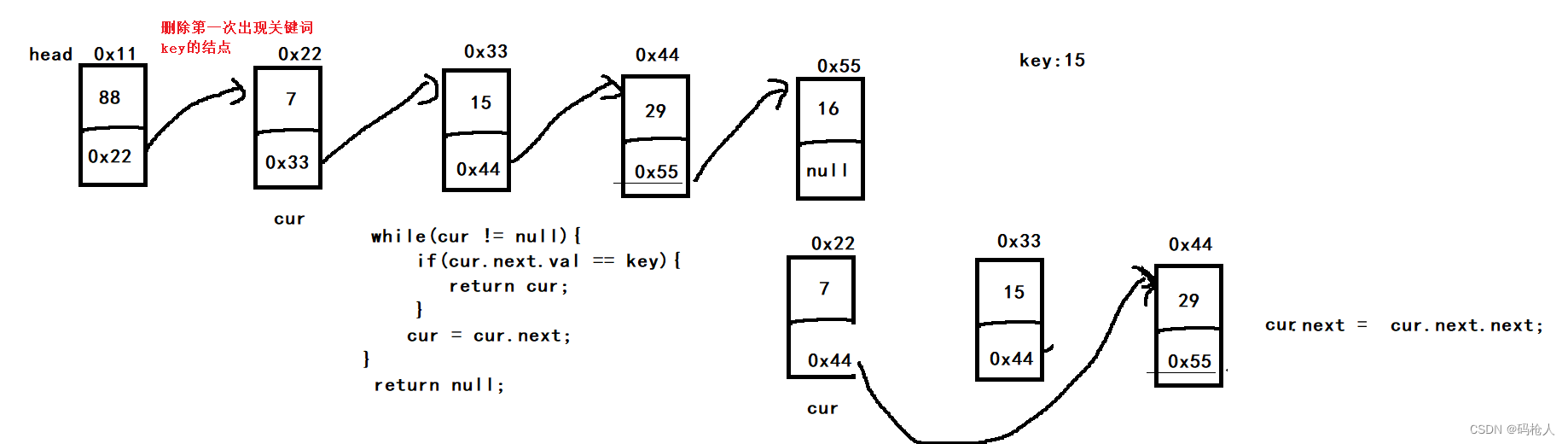
删除第一个为key的结点
1.若链表为空,返回
2.若链表的头结点就是key,只需将head向后移
3. 若key在1,2点以外的位置,首先要找到key的前一个结点(还是由于单链表,无法向前移),然后将cur.next = cur.next.next; 即可。
    //删除第一个为key的结点
    public void remove(int key){
        if (head == null){
            return;
        }
        if(head.val == key){
            head = head.next;   //注意此处头结点是head,永远以head为链表的开端,若使用cur即链表开端还是head,无法删除链表的头结点
            return;
        }
        ListNode cur1 = FindPrev(key);
        if(cur1 == null){
            return;
        }
        cur1.next = cur1.next.next;
    }
    //寻找key的位置(找到前一个结点)
    private ListNode FindPrev(int key){
        ListNode cur = head;
        while (cur != null){
            if(cur.next.val == key){
                return cur;        //找到了
            }
            cur = cur.next;
        }
        return null;   //链表中无key值
    }
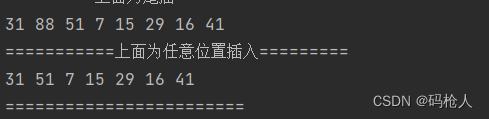
        //任意位置插入
        mySingleLinkedList.addIndex(2,51);
        mySingleLinkedList.display();
        System.out.println("===========上面为任意位置插入=========");
        ////删除第一次出现关键字为key的节点
        mySingleLinkedList.remove(88);
        mySingleLinkedList.display();
        System.out.println("========================");
删除所有为key的结点
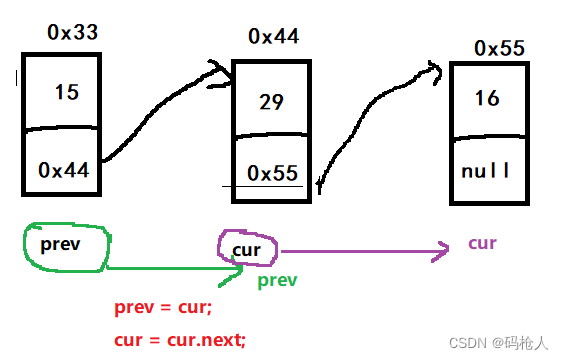
1.要删除所有为key的结点显然一个指针是不够的,采用双指针法,prev和cur
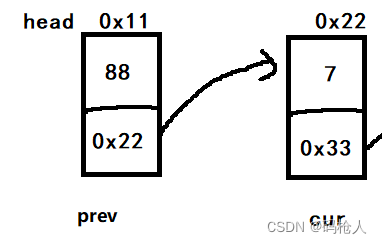
2.若链表为空,返回即可
3.若cur.val为key,就删除,将cur.next 赋给 prev.next, cur向后走
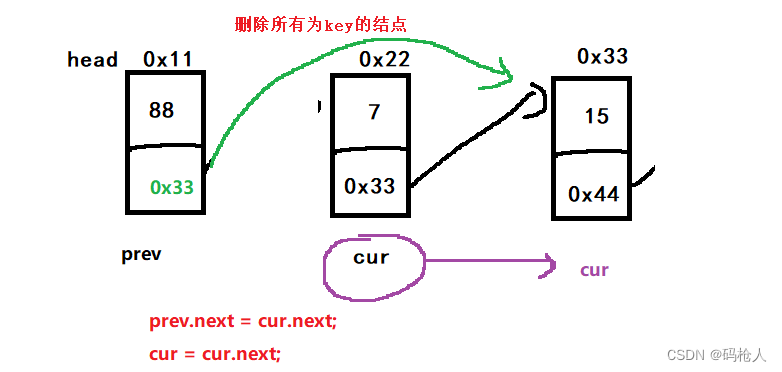
4.若不是prev和cur一起往后走 prev = cur; cur = cur.next;
5.若头结点就是key,只需将head后移

    //删除链表中所有为key的结点
    public void removeAllKey(int key){
        if(head == null) {
            return;
        }
        ListNode prev = head;
        ListNode cur = head.next;
        while (cur != null) {
            if(cur.val == key) {
                prev.next = cur.next;
                cur = cur.next;
            }else {
                prev = cur;
                cur = cur.next;
            }
        }
        if(head.val == key) {
            head = head.next;
        }
    }
        //删除链表中所有为key的结点
        mySingleLinkedList.removeAllKey(31);
        mySingleLinkedList.display();
        System.out.println("=========================");
清空链表(回收所有结点)
将头置空
    // 回收所有结点
    public void clear() {
        head = null;
    }
整体实现
1.操作类
public class MySingleLinkedList {
     static class ListNode{
        public int val;   //数据域
        public ListNode next;  //指针域
        public ListNode(int val){
            this.val = val;
        }
    }
    public ListNode head;  // 头结点

    //创建链表
    public void createLink() {
        ListNode listNode1 = new ListNode(88);
        ListNode listNode2 = new ListNode(7);
        ListNode listNode3 = new ListNode(15);
        ListNode listNode4 = new ListNode(29);
        ListNode listNode5 = new ListNode(16);
        head = listNode1;
        listNode1.next = listNode2;
        listNode2.next = listNode3;
        listNode3.next = listNode4;
        listNode4.next = listNode5;
        listNode5.next = null;
    }
    //遍历链表
    public void display(){
        ListNode cur;
        cur = head;
        while (cur != null){     //注意此处cur和cur.next的区别
            System.out.print(cur.val+" ");   //注意此处cur.val和cur.next.val的区别
            cur = cur.next;
        }
        System.out.println();
    }

     // 指定位置输出链表
    public void display(ListNode newHead) {
        ListNode cur;
        cur = newHead;
        while (cur != null){
            System.out.print(cur.val+" ");
            cur = cur.next;
        }
        System.out.println();
    }

    //链表是否存在key
    public boolean contains(int key){
        ListNode cur = head;
        while (cur != null){
            if(cur.val == key){
                return true;
            }else {
                cur = cur.next;
            }
        }
        return false;
    }
    //计算单链表的长度
    public int size(){
        ListNode cur = head;
        int count = 0;
        if(cur == null){
            return 0;
        }
        while (cur != null){
            count++;
            cur = cur.next;
        }
        return count;
    }
    //头插法
    public void addFirst(int data){
        ListNode listNode = new ListNode(data);  //新建一个列表,赋值为data
        listNode.next = head;
        head = listNode;
    }
    //尾插法
    public void addLast(int data){
        ListNode listNode = new ListNode(data);
        ListNode cur = head;
        if (cur == null){
            cur = listNode;
            return;
        }
        while (cur.next != null){   //首先要找到尾
            cur = cur.next;
        }
        cur.next = listNode;
        listNode.next = null;
    }
    //任意位置插入,第一个结点下标为0
    public void addIndex(int index,int data){
        checkIndex(index);     //检验是否合法
        ListNode listNode = new ListNode(data);
        if(index == 0){   //前插
            addFirst(data);
            return;
        }
        if(index == size()){       //尾插
            addLast(data);
            return;
        }
        ListNode cur = FindIndex(index);  //查找index位置
        listNode.next = cur.next;
        cur.next = listNode;
    }
    //检验插入位置是否合法
    private void checkIndex(int index){
        if(index<0 || index>size()){
            throw new ListIndexOutOfException("位置不合法");
        }
    }
    //查找index位置 (找到前一个结点)
    private ListNode FindIndex(int index){
        ListNode cur = head;
        int count = 0;
        while (count != index-1 ){      //此处注意要找到插入位置的前一个结点
            cur = cur.next;
            count++;
        }
        return cur;
    }
    //删除第一个为key的结点
    public void remove(int key){
        if (head == null){
            return;
        }
        if(head.val == key){
            head = head.next;   //注意此处头结点是head,永远以head为链表的开端,若使用cur即链表开端还是head,无法删除链表的头结点
            return;
        }
        ListNode cur1 = FindPrev(key);
        if(cur1 == null){
            return;
        }
        cur1.next = cur1.next.next;
    }
    //寻找key的位置(找到前一个结点)
    private ListNode FindPrev(int key){
        ListNode cur = head;
        while (cur != null){
            if(cur.next.val == key){
                return cur;        //找到了
            }
            cur = cur.next;
        }
        return null;   //链表中无key值
    }
    //删除链表中所有为key的结点
    public void removeAllKey(int key){
        if(head == null) {
            return;
        }
        ListNode prev = head;
        ListNode cur = head.next;
        while (cur != null) {
            if(cur.val == key) {
                prev.next = cur.next;
                cur = cur.next;
            }else {
                prev = cur;
                cur = cur.next;
            }
        }
        if(head.val == key) {
            head = head.next;
        }
    }
    // 回收所有结点
    public void clear() {
        head = null;
    }
}
2.测试类
public class Test_MySingleLinkedList {
    public static void main(String[] args) {
        MySingleLinkedList mySingleLinkedList = new MySingleLinkedList();
        mySingleLinkedList.createLink();         //创建链表
        mySingleLinkedList.display();          //遍历链表
        //查找是否包含关键字key是否在单链表当中
        boolean ret = mySingleLinkedList.contains(15);
        System.out.println(ret);
        System.out.println("=======================");
        //计算单链表的长度
        int ret1 = mySingleLinkedList.size();
        System.out.println(ret1);
        System.out.println("=======================");
        //头插法
        mySingleLinkedList.addFirst(31);
        mySingleLinkedList.display();
        System.out.println("========上面为头插===============");
        //尾插法
        mySingleLinkedList.addLast(41);
        mySingleLinkedList.display();
        System.out.println("=========上面为尾插===============");
        //任意位置插入
        mySingleLinkedList.addIndex(2,51);
        mySingleLinkedList.display();
        System.out.println("===========上面为任意位置插入=========");
        ////删除第一次出现关键字为key的节点
        mySingleLinkedList.remove(88);
        mySingleLinkedList.display();
        System.out.println("========================");
        //删除链表中所有为key的结点
        mySingleLinkedList.removeAllKey(31);
        mySingleLinkedList.display();
        System.out.println("=========================");
        //回收全部结点
        mySingleLinkedList.clear();
        mySingleLinkedList.display();
        System.out.println("----------------");
    }
}
3.自定义异常类
public class ListIndexOutOfException extends RuntimeException {
    public ListIndexOutOfException(String message) {
        super(message);
    }
}
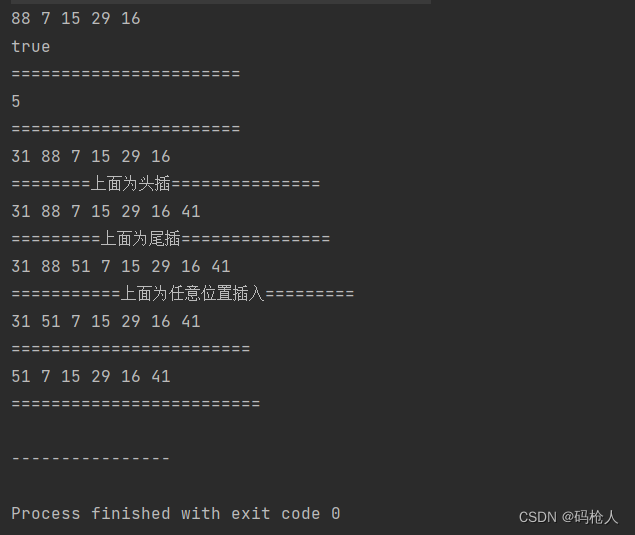
4.运行结果





 扫一扫
扫一扫


 1189
1189

 被折叠的 条评论
为什么被折叠?
被折叠的 条评论
为什么被折叠?
 到【灌水乐园】发言





