



 本文详细解释了Go语言中切片的底层结构,包括指针、长度和容量的概念,以及切片的创建方式(根据数组、字面量和make)。重点介绍了切片扩容的规则,如基于旧容量的线性增长策略和特定阈值下的动态增长。同时指出切片扩容的并发不安全性需注意同步问题。
切片的底层其实也是一个结构体,结构体定义如下
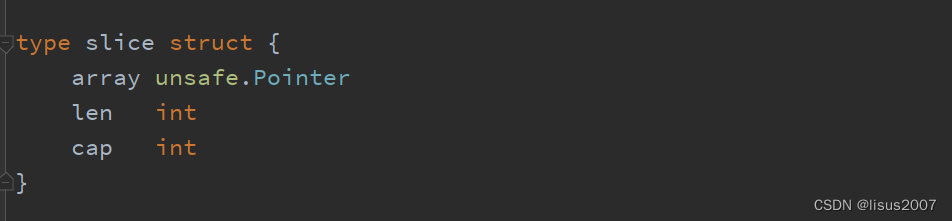 切片的结构体由3部分构成,Pointer 是指向一个数组的指针,len 代表当前切片的长度,cap 是当前切片的容量。cap 总是大于等于 len 的。
切片的本质是对数组的引用
切片的创建
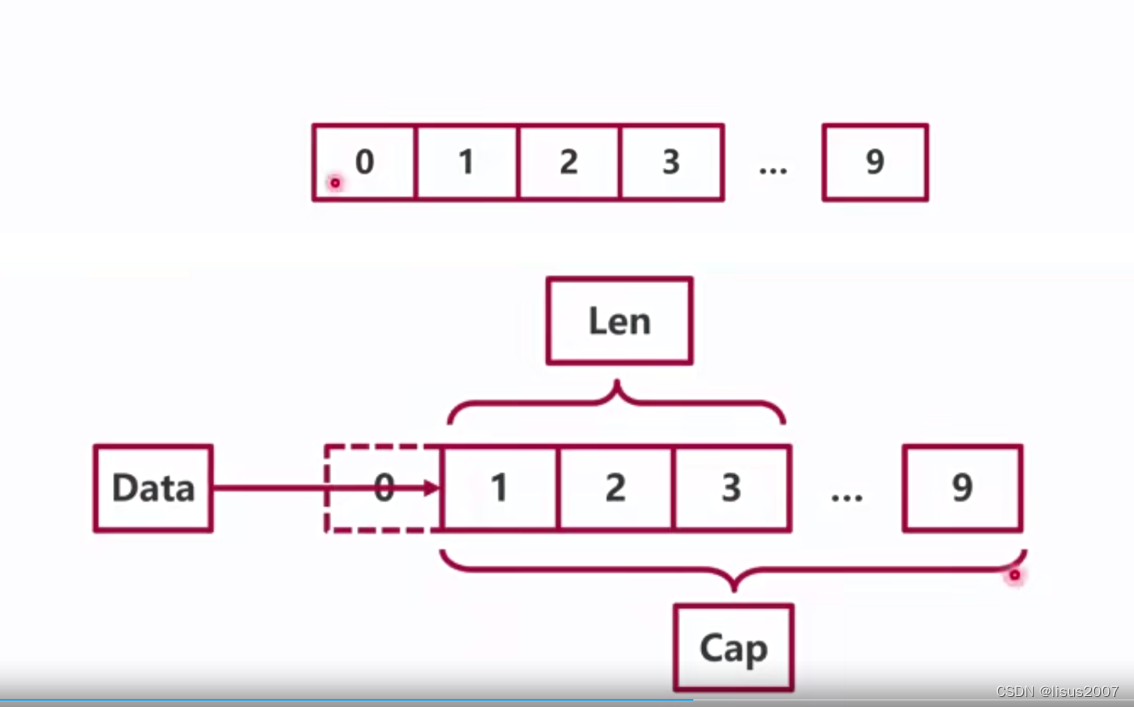
1,根据数组创建
arr[0:3] or slice[0:3]
2,字面量:编译时插和创建
当使用形如[]int{1,2,3}的字面量创建新的切片时,会创建一个array数组([3]int{1,2,3})存储于静态区中,并在堆区创建一个新的切片,在程序启动时将静态区的数据复制到堆区,这样可以加快切片的初始化过程
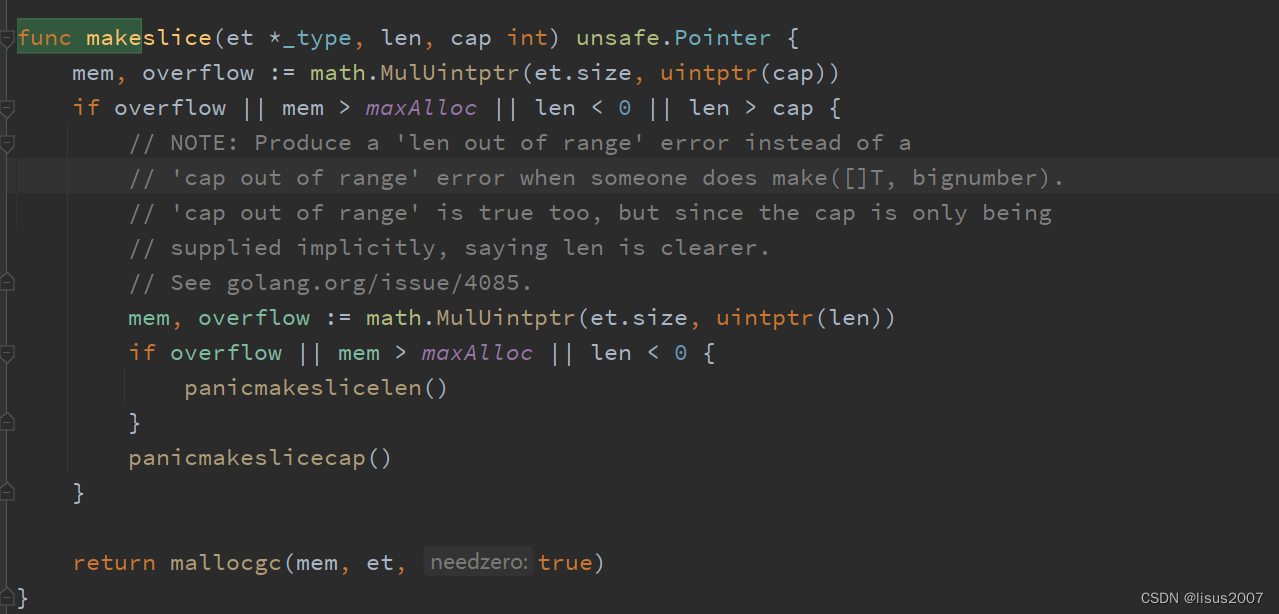
3.make:运行时创建数组
切片的扩容
切片的扩容分为两种
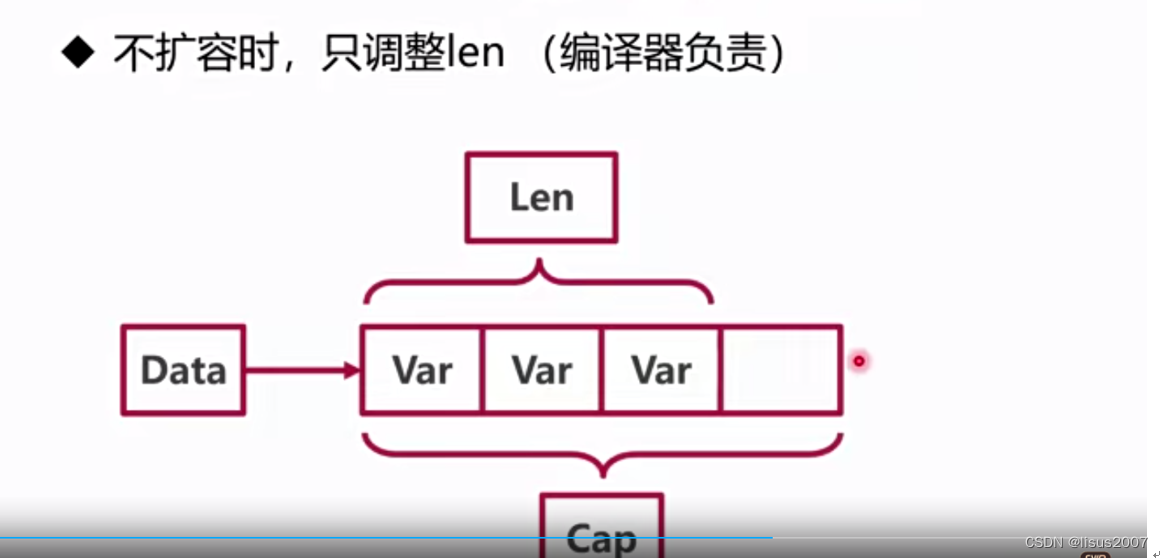
一种是不扩容时,只调整len,编译器负责
切片使用append函数添加元素,但不是使用了append函数就需要进行扩容,如下代码向长度为3,容量为4的切片a中添加元素后不需要。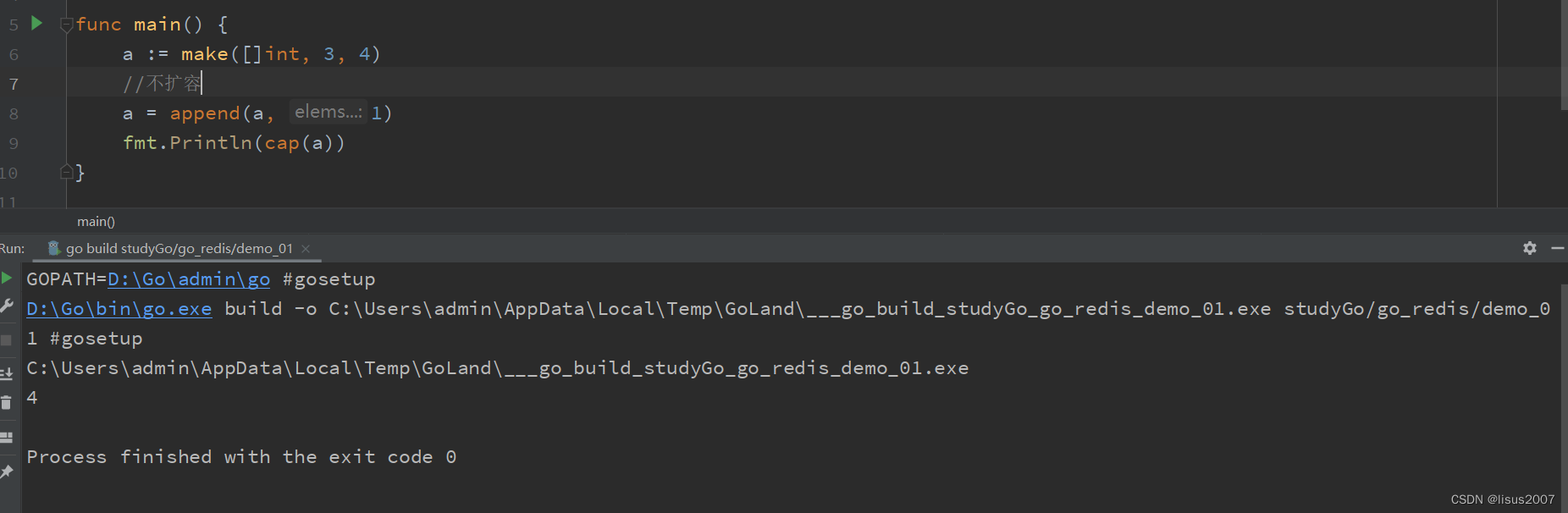
 另一种
另一种
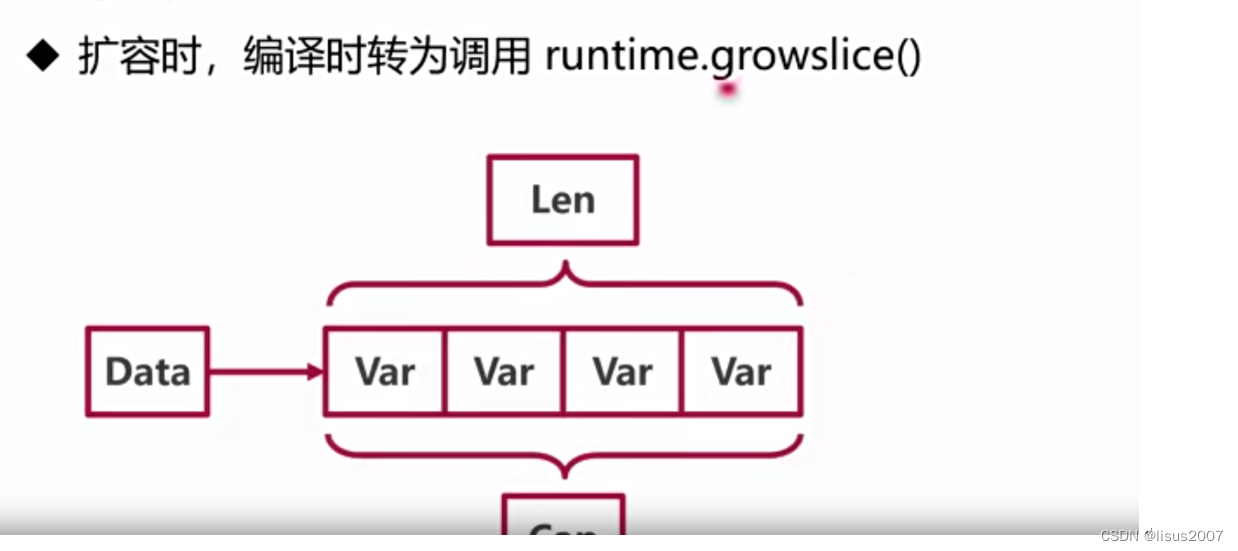
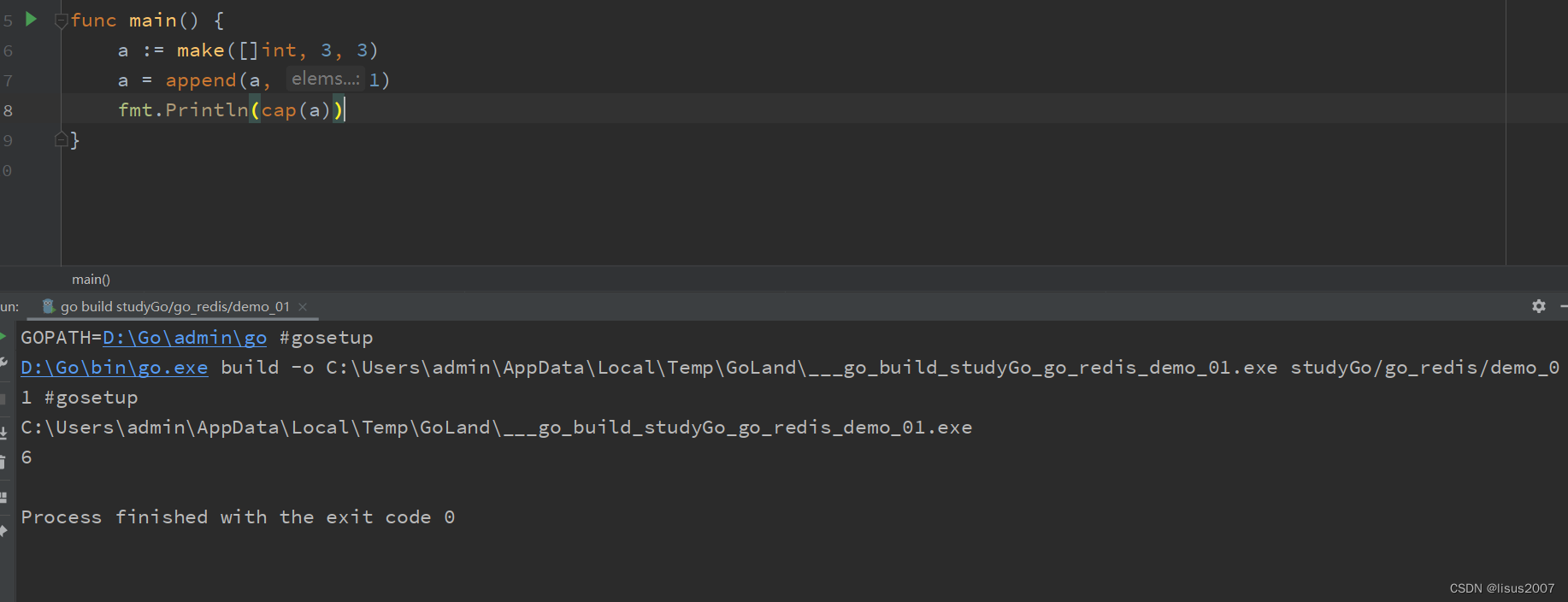
例如:切片增加元素后长度超过了现有容量,例如b一开始的长度和容量
都为3,但使用append函数后,其容量变为了6。
 append函数在运行时调用了runtime/slice.go文件下的growslice函数
unc growslice(et *_type, old slice, cap int) slice {
   if raceenabled {
      callerpc := getcallerpc()
      racereadrangepc(old.array, uintptr(old.len*int(et.size)), callerpc, abi.FuncPCABIInternal(growslice))
   }
   if msanenabled {
      msanread(old.array, uintptr(old.len*int(et.size)))
   }
   if asanenabled {
      asanread(old.array, uintptr(old.len*int(et.size)))
   }

   if cap < old.cap {
      panic(errorString("growslice: cap out of range"))
   }

   if et.size == 0 {
      // append should not create a slice with nil pointer but non-zero len.
      // We assume that append doesn't need to preserve old.array in this case.
      return slice{unsafe.Pointer(&zerobase), old.len, cap}
   }

   newcap := old.cap
   doublecap := newcap + newcap
   if cap > doublecap {
      newcap = cap
   } else {
      const threshold = 256
      if old.cap < threshold {
         newcap = doublecap
      } else {
         // Check 0 < newcap to detect overflow
         // and prevent an infinite loop.
         for 0 < newcap && newcap < cap {
            // Transition from growing 2x for small slices
            // to growing 1.25x for large slices. This formula
            // gives a smooth-ish transition between the two.
            newcap += (newcap + 3*threshold) / 4
         }
         // Set newcap to the requested cap when
         // the newcap calculation overflowed.
         if newcap <= 0 {
            newcap = cap
         }
      }
   }

   var overflow bool
   var lenmem, newlenmem, capmem uintptr
   // Specialize for common values of et.size.
   // For 1 we don't need any division/multiplication.
   // For goarch.PtrSize, compiler will optimize division/multiplication into a shift by a constant.
   // For powers of 2, use a variable shift.
   switch {
   case et.size == 1:
      lenmem = uintptr(old.len)
      newlenmem = uintptr(cap)
      capmem = roundupsize(uintptr(newcap))
      overflow = uintptr(newcap) > maxAlloc
      newcap = int(capmem)
   case et.size == goarch.PtrSize:
      lenmem = uintptr(old.len) * goarch.PtrSize
      newlenmem = uintptr(cap) * goarch.PtrSize
      capmem = roundupsize(uintptr(newcap) * goarch.PtrSize)
      overflow = uintptr(newcap) > maxAlloc/goarch.PtrSize
      newcap = int(capmem / goarch.PtrSize)
   case isPowerOfTwo(et.size):
      var shift uintptr
      if goarch.PtrSize == 8 {
         // Mask shift for better code generation.
         shift = uintptr(sys.Ctz64(uint64(et.size))) & 63
      } else {
         shift = uintptr(sys.Ctz32(uint32(et.size))) & 31
      }
      lenmem = uintptr(old.len) << shift
      newlenmem = uintptr(cap) << shift
      capmem = roundupsize(uintptr(newcap) << shift)
      overflow = uintptr(newcap) > (maxAlloc >> shift)
      newcap = int(capmem >> shift)
   default:
      lenmem = uintptr(old.len) * et.size
      newlenmem = uintptr(cap) * et.size
      capmem, overflow = math.MulUintptr(et.size, uintptr(newcap))
      capmem = roundupsize(capmem)
      newcap = int(capmem / et.size)
   }

   // The check of overflow in addition to capmem > maxAlloc is needed
   // to prevent an overflow which can be used to trigger a segfault
   // on 32bit architectures with this example program:
   //
   // type T [1<<27 + 1]int64
   //
   // var d T
   // var s []T
   //
   // func main() {
   //   s = append(s, d, d, d, d)
   //   print(len(s), "\n")
   // }
   if overflow || capmem > maxAlloc {
      panic(errorString("growslice: cap out of range"))
   }

   var p unsafe.Pointer
   if et.ptrdata == 0 {
      p = mallocgc(capmem, nil, false)
      // The append() that calls growslice is going to overwrite from old.len to cap (which will be the new length).
      // Only clear the part that will not be overwritten.
      memclrNoHeapPointers(add(p, newlenmem), capmem-newlenmem)
   } else {
      // Note: can't use rawmem (which avoids zeroing of memory), because then GC can scan uninitialized memory.
      p = mallocgc(capmem, et, true)
      if lenmem > 0 && writeBarrier.enabled {
         // Only shade the pointers in old.array since we know the destination slice p
         // only contains nil pointers because it has been cleared during alloc.
         bulkBarrierPreWriteSrcOnly(uintptr(p), uintptr(old.array), lenmem-et.size+et.ptrdata)
      }
   }
   memmove(p, old.array, lenmem)

   return slice{p, old.len, newcap}
}
Go语言中切片扩容的策略为:
◎ 如果新申请容量(cap)大于2倍的旧容量(old.cap),则最终容量(newcap)是新申请的容量(cap)。
◎ 如果旧切片的长度小于256,则最终容量是旧容量的2倍,即newcap=doublecap。
◎ 如果旧切片长度大于或等于256,则最终容量从旧容量开始循环增加原来的1/4,即newcap=old.cap,for {newcap+=newcap/4},直到最终容量大于或等于新申请的容量为止,即newcap ≥ cap。
◎ 如果最终容量计算值溢出,即超过了int的最大范围,则最终容量就是新申请容量。
注:切片扩容时,并发不安全,注意切片并发要加锁





 扫一扫
扫一扫


 1049
1049

 被折叠的 条评论
为什么被折叠?
被折叠的 条评论
为什么被折叠?
 到【灌水乐园】发言





