



文章目录
推荐阅读:
【01】Netty从0到1系列之I/O模型
【02】Netty从0到1系列之NIO
【03】Netty从0到1系列之Selector
【04】Netty从0到1系列之Channel
【05】Netty从0到1系列之Buffer(上)
【06】Netty从0到1系列之Buffer(下)
【07】Netty从0到1系列之零拷贝技术
【08】Netty从0到1系列之整体架构、入门程序
【09】Netty从0到1系列之EventLoop
一、EventLoopGroup
1.1 核心概念
EventLoopGroup 是 Netty 框架的核心线程调度与管理组件,它本质上是多个 EventLoop 的容器和调度器。Netty 基于 Reactor 线程模型,使用一个或多个 EventLoopGroup 来高效处理海量的网络连接和 I/O 操作,实现了卓越的性能和可伸缩性。
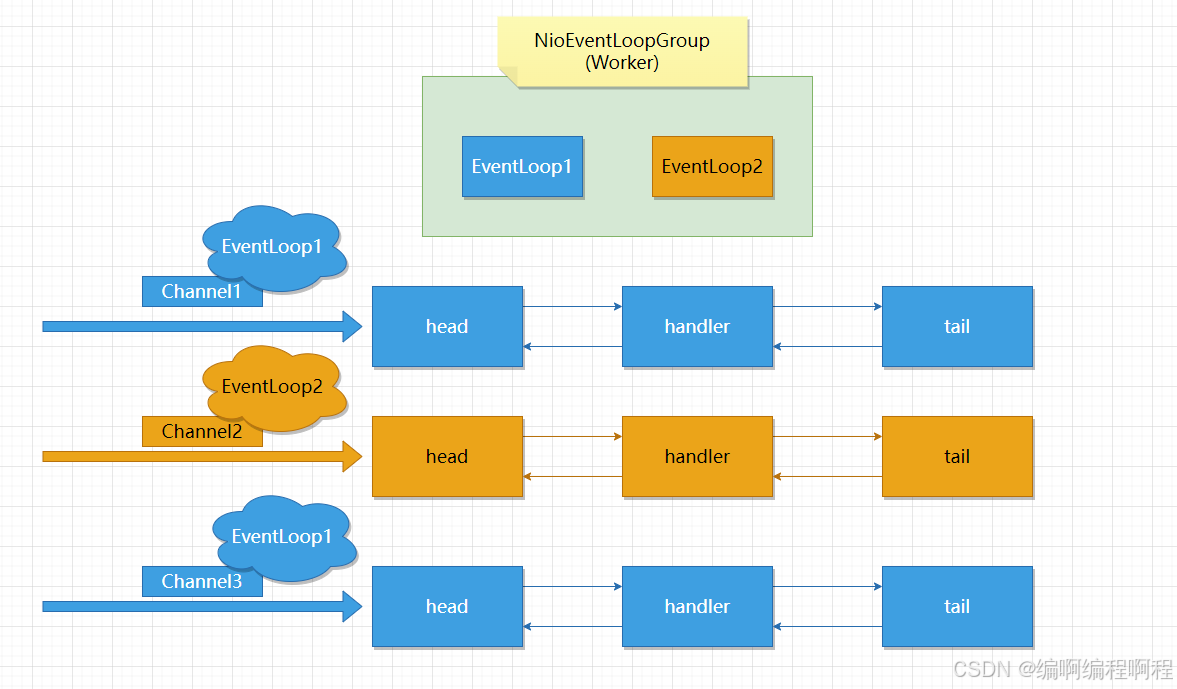
事件循环组: EventLoopGroup 是一组 EventLoop,Channel 一般会调用 EventLoopGroup 的 register 方法来绑定其中一个 EventLoop,后续这个 Channel 上的 io 事件都由此 EventLoop 来处理(保证了 io 事件处理时的线程安全)
🌟 核心职责:
- 管理多个
EventLoop线程- 轮询分配 Channel 到 EventLoop
- 统一启动与关闭所有 EventLoop
- 实现主从 Reactor 模型
1.2 工作原理
【注意: EventLoop核心】
1.3 核心原理与架构设计
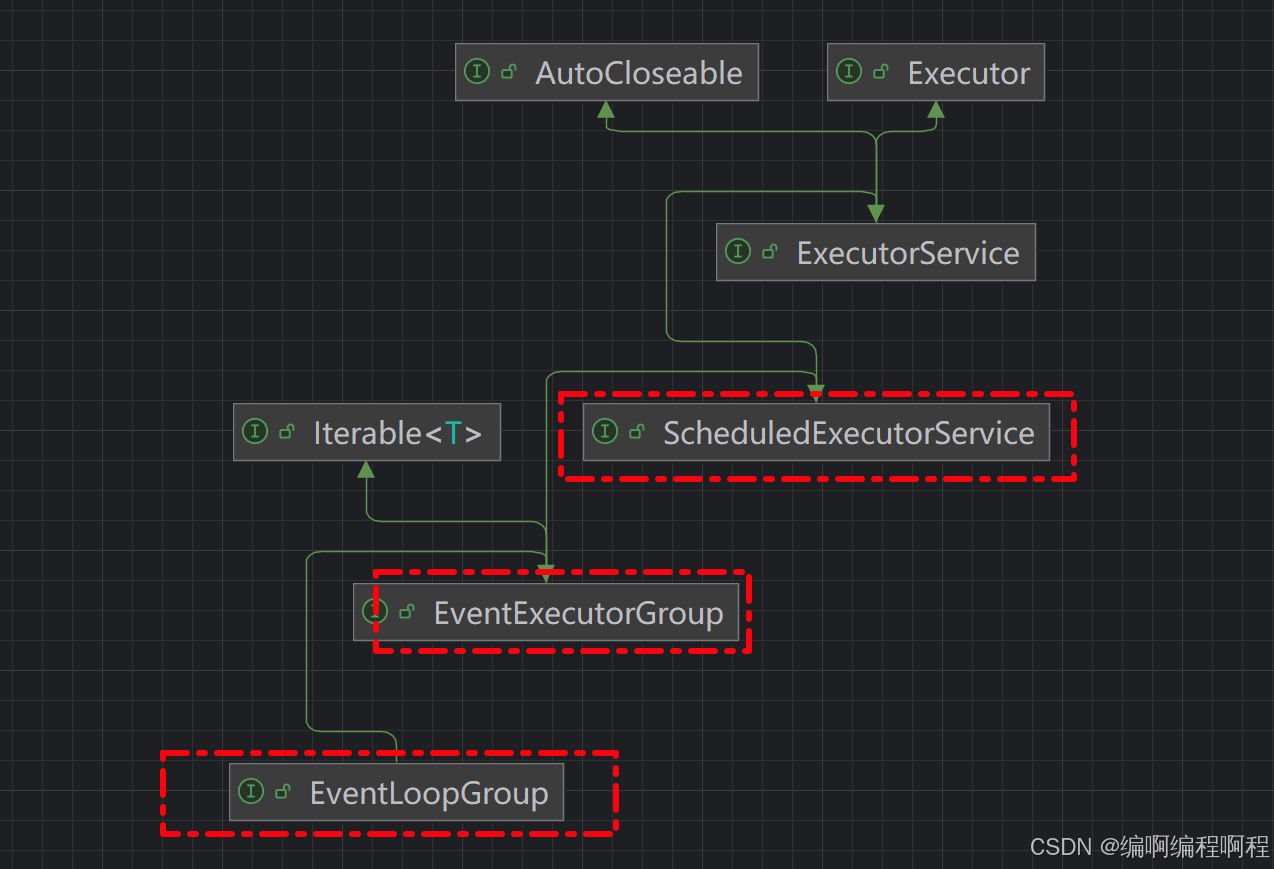
EventLoopGrouop的继承体系
io.netty.util.concurrent
    -> EventExecutorGroup
        -> EventLoopGroup
            -> MultithreadEventLoopGroup
                -> NioEventLoopGroup / EpollEventLoopGroup / ...
✅ 关键实现:
- NioEventLoopGroup:基于 JDK NIO
- EpollEventLoopGroup:Linux 专属,基于 epoll 系统调用,性能更高
- EventExecutorGroup:定义了线程池的基本行为,如
shutdownGracefully(),submit() - EventLoopGroup:扩展了 EventExecutorGroup,增加了注册 Channel 的能力
- MultithreadEventLoopGroup:提供了多线程实现的基础
- NioEventLoopGroup:基于 Java NIO 的具体实现
public interface EventLoopGroup extends EventExecutorGroup {

    // 从组中获取一个 EventLoop(轮询)
    @Override
    EventLoop next();
    // 创建新连接时,选择一个 EventLoop 绑定
    // 向此EventLoop注册一个 Channel .注册完成后,退回ChannelFuture者将收到通知
    ChannelFuture register(Channel channel);
    // Channel使用 ChannelFuture.EventLoop注册完成后,通过ChannelFuture者将收到通知,并将被退回。
    ChannelFuture register(ChannelPromise promise);

    /**
     * 向此EventLoop注册一个 Channel .注册完成后,通过ChannelFuture者将收到通知,并将被退回。
     * 荒废的
     * 请改用 register(ChannelPromise) 。
     *
     * @deprecated Use {@link #register(ChannelPromise)} instead.
     */
    @Deprecated
    ChannelFuture register(Channel channel, ChannelPromise promise);
}
继承自 netty 自己的 EventExecutorGroup
- 实现了 Iterable 接口提供遍历 EventLoop 的能力
- 另有 next 方法获取集合中下一个 EventLoop
1.4 示例
1.4.1 EventLoopGroup基本示例
@Slf4j
public class EventLoopGroupDemo01 {
    public static void main(String[] args) {
        try(EventLoopGroup eventLoopGroup = new NioEventLoopGroup(2);){
            EventLoop next1 = eventLoopGroup.next();
            EventLoop next2 = eventLoopGroup.next();
            EventLoop next3 = eventLoopGroup.next();

            log.debug("next1 : {}", next1);
            log.debug("next2 : {}", next2);
            log.debug("next3 : {}", next3);
        }catch (Exception _){}
    }
}

1.4.2 优雅的关闭EventLoopGroup
优雅关闭 shutdownGracefully 方法。该方法会首先切换 EventLoopGroup 到关闭状态从而拒绝新的任务的加入,然后在任务队列的任务都处理完成后,停止线程的运行。从而确保整体应用是在正常有序的状态下退出的.
public static void main(String[] args) {
    EventLoopGroup eventLoopGroup = new NioEventLoopGroup(3);
    for (EventExecutor eventExecutor : eventLoopGroup) {
        System.out.println(eventExecutor);
    }

    // 优雅的关闭事件循环组
    eventLoopGroup.shutdownGracefully();
}
1.4.3 自定义配置EventLoopGroup
/**
 * @author: laoren
 * @date: 2025/9/1 14:56
 * @description: 自定义配置EventLoopGroup
 * @version: 1.0.0
 */
public class CustomEventLoopGroupExample {
    public static void main(String[] args) {
        // 自定义线程工厂
        ThreadFactory bossThreadFactory = new DefaultThreadFactory("tc-boss-thread");
        ThreadFactory workerThreadFactory = new DefaultThreadFactory("tc-worker-thread");

        // 创建自定义配置的EventLoopGroup
        NioEventLoopGroup bossGroup = new NioEventLoopGroup(1, bossThreadFactory);

        // 使用更多自定义配置项
        NioEventLoopGroup workGroup = new NioEventLoopGroup(
                8,  // 线程数
                workerThreadFactory, // 线程工厂
                SelectorProvider.provider() // Selector提供者
        );

        System.out.println("bossGroup 线程数: " + bossGroup.executorCount());
        System.out.println("workGroup 线程数: " + workGroup.executorCount());
    }
}

1.4.4 性能优化配置
package cn.tcmeta.demo02;

import io.netty.bootstrap.ServerBootstrap;
import io.netty.buffer.PooledByteBufAllocator;
import io.netty.channel.*;
import io.netty.channel.epoll.EpollEventLoopGroup;
import io.netty.channel.epoll.EpollServerSocketChannel;
import io.netty.channel.nio.NioEventLoopGroup;
import io.netty.channel.socket.nio.NioServerSocketChannel;

public class OptimizedServer {
    private static final boolean USE_EPOLL = true; // 在Linux上使用epoll
    private static final int PORT = 8080;

    public static void main(String[] args) throws InterruptedException {
        // 根据操作系统选择最佳实现
        EventLoopGroup bossGroup = USE_EPOLL ?
                new EpollEventLoopGroup(1) : new NioEventLoopGroup(1);

        EventLoopGroup workerGroup = USE_EPOLL ?
                new EpollEventLoopGroup() : new NioEventLoopGroup();

        try {
            ServerBootstrap bootstrap = new ServerBootstrap();
            bootstrap.group(bossGroup, workerGroup)
                    .channel(USE_EPOLL ?
                            EpollServerSocketChannel.class : NioServerSocketChannel.class)
                    .childHandler(new SimpleChannelInboundHandler<String>() {
                        @Override
                        protected void channelRead0(ChannelHandlerContext ctx, String msg) {
                            ctx.writeAndFlush("Echo: " + msg + "\n");
                        }
                    })
                    // 性能优化选项
                    .option(ChannelOption.SO_BACKLOG, 1024) // 等待连接队列大小
                    .option(ChannelOption.SO_REUSEADDR, true) // 重用地址
                    .childOption(ChannelOption.TCP_NODELAY, true) // 禁用Nagle算法
                    .childOption(ChannelOption.SO_KEEPALIVE, true) // 保持连接
                    .childOption(ChannelOption.ALLOCATOR,
                            PooledByteBufAllocator.DEFAULT); // 使用池化内存分配器

            ChannelFuture future = bootstrap.bind(PORT).sync();
            System.out.println("优化服务器启动在端口: " + PORT);

            future.channel().closeFuture().sync();
        } finally {
            bossGroup.shutdownGracefully();
            workerGroup.shutdownGracefully();
        }
    }
}
1.4.5 基本使用
package cn.tcmeta.demo02;

import io.netty.channel.nio.NioEventLoopGroup;
import io.netty.util.concurrent.Future;

/**
 * 演示 EventLoopGroup 的基本使用
 */
public class EventLoopGroupBasicExample {

    public static void main(String[] args) throws Exception {
        // 创建包含 3 个线程的 EventLoopGroup
        NioEventLoopGroup group = new NioEventLoopGroup(3);

        try {
            System.out.println("✅ EventLoopGroup created with " +
                              group.executorCount() + " threads");

            // 演示轮询分配
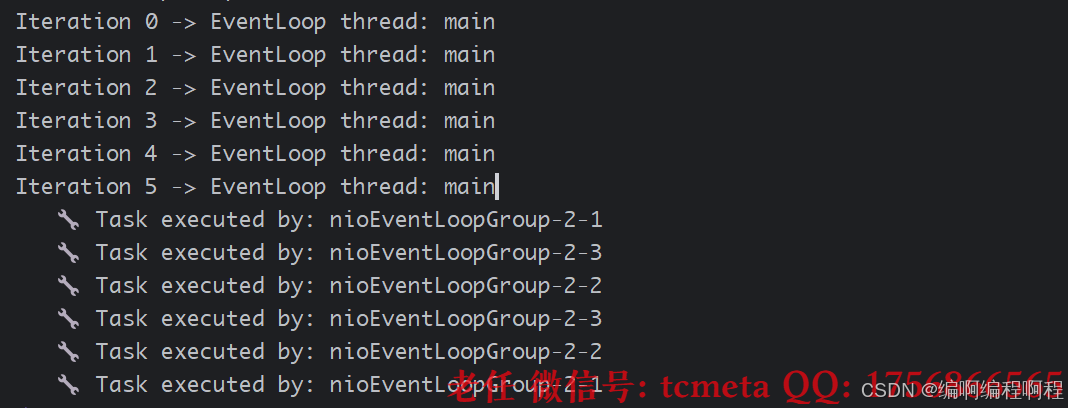
            for (int i = 0; i < 6; i++) {
                // next() 返回一个 EventLoop
                io.netty.channel.EventLoop eventLoop = group.next();
                System.out.println("Iteration " + i + " -> " +
                                  "EventLoop thread: " + Thread.currentThread().getName());

                // 提交任务到该 EventLoop
                eventLoop.execute(() -> {
                    System.out.println("   🔧 Task executed by: " +
                                      Thread.currentThread().getName());
                });
            }

            // 模拟运行
            Thread.sleep(2000);

        } finally {
            // 优雅关闭
            Future<?> future = group.shutdownGracefully();
            future.sync(); // 等待关闭完成
            System.out.println("🔚 EventLoopGroup shutdown completed.");
        }
    }
}
1.4.6 主从 Reactor 模型(生产环境标准配置)
import io.netty.bootstrap.ServerBootstrap;
import io.netty.buffer.Unpooled;
import io.netty.channel.*;
import io.netty.channel.nio.NioEventLoopGroup;
import io.netty.channel.socket.SocketChannel;
import io.netty.channel.socket.nio.NioServerSocketChannel;

/**
 * 演示 Boss + Worker EventLoopGroup 的主从模型
 */
public class EventLoopGroupReactorModel {

    public static void main(String[] args) throws Exception {
        // Boss Group:负责接收连接,通常 1 个线程
        EventLoopGroup bossGroup = new NioEventLoopGroup(1);

        // Worker Group:负责 I/O 读写,CPU 核心数 × 2
        EventLoopGroup workerGroup = new NioEventLoopGroup(
            Runtime.getRuntime().availableProcessors() * 2
        );

        try {
            ServerBootstrap bootstrap = new ServerBootstrap();
            bootstrap.group(bossGroup, workerGroup)  // 设置主从 Group
                    .channel(NioServerSocketChannel.class)
                    .childHandler(new ChannelInitializer<SocketChannel>() {
                        @Override
                        protected void initChannel(SocketChannel ch) {
                            ChannelPipeline pipeline = ch.pipeline();

                            // 获取当前 Channel 的 EventLoop
                            EventLoop eventLoop = ch.eventLoop();
                            System.out.println("🔗 Channel " + ch.id() +
                                    " assigned to: " + eventLoop.thread().getName());

                            // 添加处理器
                            pipeline.addLast(new SimpleChannelInboundHandler<Object>() {
                                @Override
                                protected void channelRead0(ChannelHandlerContext ctx, Object msg) {
                                    System.out.println("📩 Received: " + msg +
                                            " on thread: " + Thread.currentThread().getName());

                                    // 回写响应
                                    ctx.writeAndFlush(Unpooled.copiedBuffer(
                                            "Echo: " + msg.toString() + "\n",
                                            java.nio.charset.StandardCharsets.UTF_8));
                                }
                            });
                        }
                    });

            // 绑定端口
            ChannelFuture future = bootstrap.bind(8080).sync();
            System.out.println("🚀 Server started on port 8080");

            // 等待服务器关闭
            future.channel().closeFuture().sync();

        } finally {
            // 优雅关闭两个 Group
            bossGroup.shutdownGracefully();
            workerGroup.shutdownGracefully();
        }
    }
}
telnet localhost 8080
# 输入任意消息,观察日志中不同的 EventLoop 线程处理
1.4.7 NioEventLoop处理I/O事件
package cn.tcmeta.demo02;

/**
 * 服务端端示例代码
 */
@Slf4j
public class MyServer {
    public static void main(String[] args) throws InterruptedException {
        EventLoopGroup boss = new NioEventLoopGroup(1); // 管理连接
        EventLoopGroup worker = new NioEventLoopGroup(2); // 处理io读写等事件
        new ServerBootstrap()
                .group(boss, worker)
                .channel(NioServerSocketChannel.class)
                .childHandler(new ChannelInitializer<SocketChannel>() {
                    @Override
                    protected void initChannel(SocketChannel ch) throws Exception {
                        ch.pipeline().addLast(new ChannelInboundHandlerAdapter() {
                            // Object msg: ByteBuf类型的数据.
                            @Override
                            public void channelRead(ChannelHandlerContext ctx, Object msg) throws Exception {
                                ByteBuf byteBuf = msg instanceof ByteBuf ? ((ByteBuf) msg) : null;
                                // 读取数据操作.
                                if (byteBuf != null) {
                                    byte[] buf = new byte[16];
                                    ByteBuf len = byteBuf.readBytes(buf, 0, byteBuf.readableBytes());
                                    log.debug("{} -- {}", Thread.currentThread().getName(), new String(buf));
                                }
                                super.channelRead(ctx, msg);
                            }
                        });
                    }
                }).bind(8888).sync();

        log.debug("服务器已经启动了.......");
    }
}
开启两个客户端进行测试:
- nc ip port, 之后发送消息
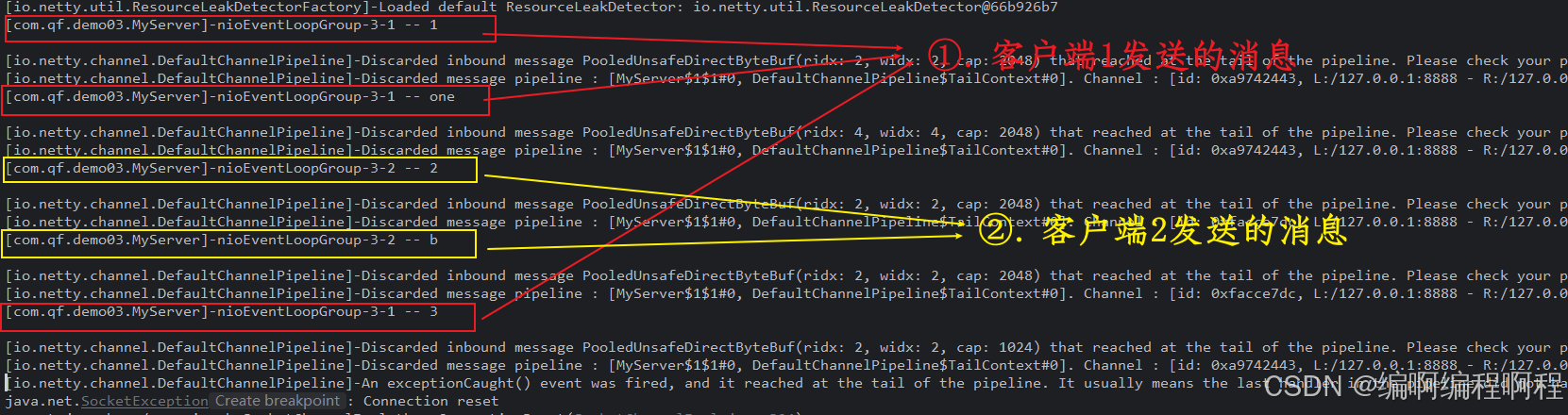
当前代码当中有2个worker的EventLoopGroup, 这两个「轮询执行」. 并且每个worker与自己要处理的channel进行绑定操作.
1.4.8 添加一个ChannelInboundHandlerAdapter
package cn.tcmeta.demo02;

import io.netty.bootstrap.ServerBootstrap;
import io.netty.channel.*;
import io.netty.channel.nio.NioEventLoopGroup;
import io.netty.channel.socket.SocketChannel;
import io.netty.channel.socket.nio.NioServerSocketChannel;
import io.netty.handler.codec.string.StringDecoder;
import io.netty.handler.logging.LoggingHandler;
import lombok.extern.slf4j.Slf4j;

/**
 * @author laoren
 * 创建时间:  2023/12/13 21:34
 */
@Slf4j
public class MyServer02 {

    public static void main(String[] args) throws InterruptedException {
        // 工作线程,处理连接
        EventLoopGroup boss = new NioEventLoopGroup(1);
        // 业务线程,具体负责:
        // io事件, 普通的任务, 定时任务.
        EventLoopGroup worker = new NioEventLoopGroup(2);

        // 添加一个业务处理
        EventLoopGroup defaultEventLoopGroup = new DefaultEventLoopGroup(2);

        // 当然这里还有其它实现, 譬如说: DefaultNioEventLoopGroup, 但是这个只能处理: 普通任务或者定时任务.
        new ServerBootstrap()
            .group(boss, worker)
            .channel(NioServerSocketChannel.class)
            .childHandler(new ChannelInitializer<SocketChannel>() {
                @Override
                protected void initChannel(SocketChannel ch) throws Exception {
                    ch.pipeline().addLast(new LoggingHandler())
                        .addLast(new StringDecoder()) // 处理解码
                        // 添加业务处理器
                        .addLast("handler", new ChannelInboundHandlerAdapter() { // handler, 处理客户端返回来的消息
                            @Override
                            public void channelRead(ChannelHandlerContext ctx, Object msg) throws Exception {
                                log.info(Thread.currentThread().getName() + "  读取的内容是: " + msg);
                                ctx.fireChannelRead(msg);
                                // 这个必须得调用一下, 传递给下一个handler进行处理
                            }

                            // 添加第二个handler处理器, 处理消息
                        }).addLast(defaultEventLoopGroup, "handler2", new ChannelInboundHandlerAdapter() {
                        @Override
                        public void channelRead(ChannelHandlerContext ctx, Object msg) throws Exception {
                            log.info(Thread.currentThread().getName() + " 读取的消息内容是: " + msg);
                        }
                    });
                }


            }).bind(8888).sync();
    }
}
重点说明
ctx.fireChannelRead(msg);将消息传递给下一个handler进行处理.
static void invokeChannelRead(final AbstractChannelHandlerContext next, Object msg) {
    final Object m = next.pipeline.touch(ObjectUtil.checkNotNull(msg, "msg"), next);
    // 下一个handler的事件循环是否与当前的事件循环是【同一个线程】
    // EventExecutor其实就是一个eventLoop
    // next.executor(), 返回下一个handler的eventLoop
    EventExecutor executor = next.executor();

    // 如果是, 则直接调用
    // 当前handler中的线程,是否和eventLoop是同一个线程
    if (executor.inEventLoop()) {
        next.invokeChannelRead(m);
    } else {
        // 如果不是, 将要执行的代码作为任务提交给下一个事件循环处理【handler】
        // exetutor, 表示: 下一个handler线程.
        executor.execute(new Runnable() {
            @Override
            public void run() {
                // 封装任务,去执行了.
                next.invokeChannelRead(m);
            }
        });
    }
}
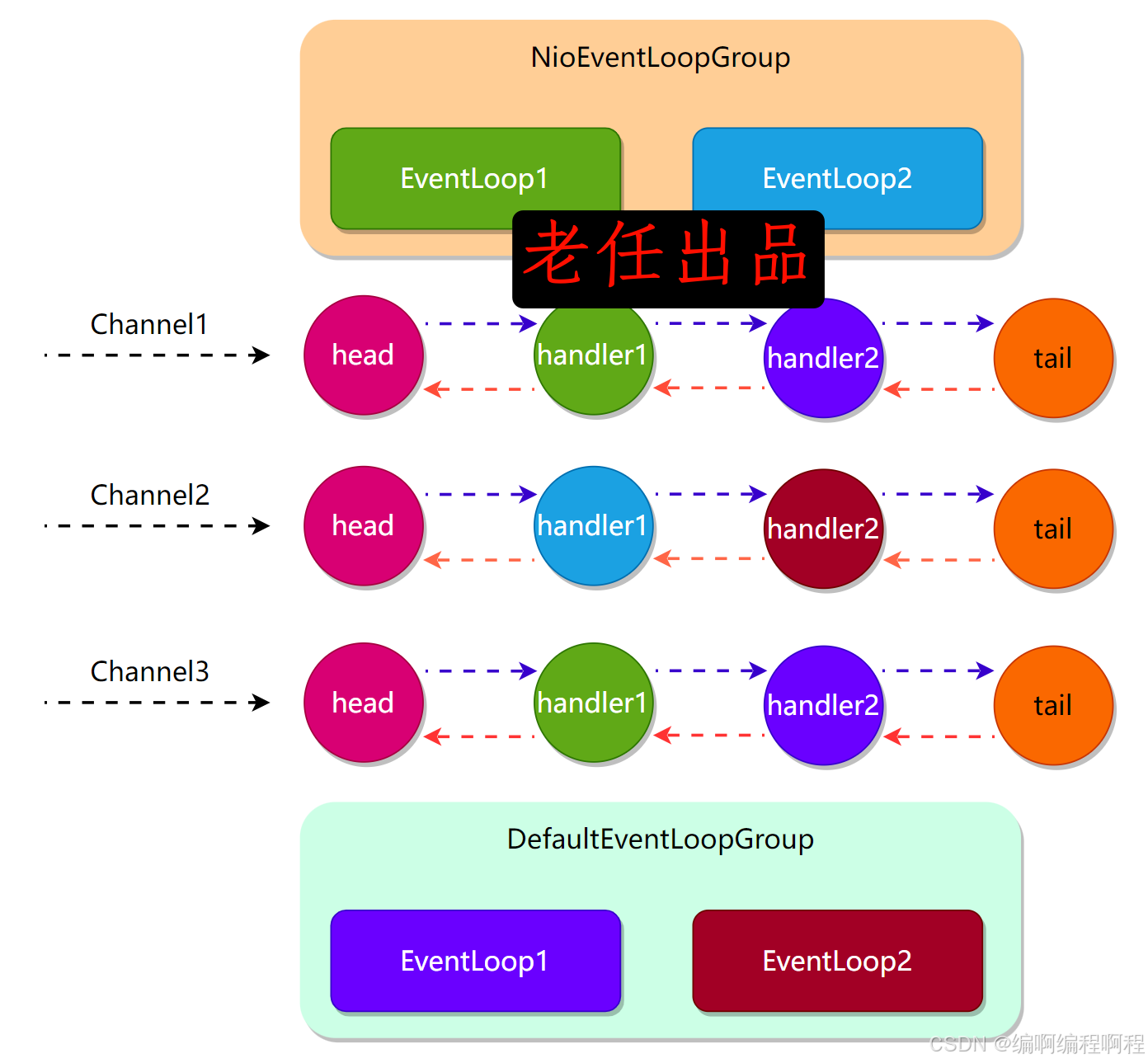
- 如果两个
handler绑定的是同一个线程,那么就直接调用 - 反之,把要调用的代码封装成一个
任务对象,由【下一个handler的线程来处理】
过观察可以发现, 消息会经过两个handler处理.
1.5 底层实现原理分析
1.5.1 轮询分配策略【Round-Robin】
EventLoopGroup维护一个EventLoop数组- 每次调用
next()返回下一个EventLoop(循环) - 确保 Channel 均匀分布到各个线程
// MultithreadEventLoopGroup.next() 伪代码
public EventLoop next() {
    return (EventLoop) children[Math.abs((int) (childIndex.getAndIncrement() % children.length))];
}
🔑 关键点:childIndex 是原子递增的,保证线程安全的轮询。
1.5.2 主从 Reactor 模型的实现
Netty 通过 两个 EventLoopGroup 实现主从架构:
- Boss Group:负责
accept新连接,通常 1 个线程 - Worker Group:负责 I/O 读写,通常 CPU 核心数 × 2 个线程
1.5.3 内部结构:children 数组
EventLoopGroup在初始化时创建指定数量的EventLoop- 存储在
children数组中 next()方法从数组中轮询获取
public abstract class MultithreadEventLoopGroup extends MultithreadEventExecutorGroup
    implements EventLoopGroup {

    private final EventLoop[] children;

    protected MultithreadEventLoopGroup(int nThreads, Executor executor, Object... args) {
        super(nThreads, executor, args);
        // 创建 nThreads 个 EventLoop
        children = new EventLoop[nThreads];
        for (int i = 0; i < nThreads; i++) {
            children[i] = newChild(executor, args);
        }
    }

    @Override
    public EventLoop next() {
        return (EventLoop) super.next();
    }
}
1.5.4 EventLoop线程模型
每个 EventLoop 都绑定一个专用线程,遵循以下工作模式:
// 伪代码:EventLoop 的核心执行逻辑
while (!isTerminated()) {
    // 1. 检查是否有定时任务需要执行
    long timeout = checkScheduledTasks();

    // 2. 轮询I/O事件(Selector操作)
    if (hasTasks()) {
        // 有任务时使用非阻塞select
        selector.selectNow();
    } else {
        // 无任务时使用带超时的阻塞select
        selector.select(timeout);
    }

    // 3. 处理就绪的I/O事件
    processSelectedKeys();

    // 4. 处理所有任务(包括普通任务和定时任务)
    runAllTasks();
}
1.5.5 任务调度机制
EventLoopGroup 实现了高效的任务调度:
import io.netty.util.concurrent.ScheduledFuture;
import java.util.concurrent.TimeUnit;

public class TaskSchedulingExample {
    public static void main(String[] args) {
        EventLoopGroup group = new NioEventLoopGroup(2);

        // 1. 立即执行任务
        group.execute(() -> {
            System.out.println("立即执行的任务");
        });

        // 2. 定时任务:延迟执行
        ScheduledFuture<?> future = group.schedule(() -> {
            System.out.println("延迟5秒执行的任务");
        }, 5, TimeUnit.SECONDS);

        // 3. 固定速率定时任务
        group.scheduleAtFixedRate(() -> {
            System.out.println("每秒执行一次的定时任务");
        }, 1, 1, TimeUnit.SECONDS);

        // 4. 带固定延迟的定时任务
        group.scheduleWithFixedDelay(() -> {
            System.out.println("任务完成后延迟2秒再执行下一次");
        }, 1, 2, TimeUnit.SECONDS);

        // 优雅关闭
        group.shutdownGracefully();
    }
}
任务执行优先级:
- I/O 任务优先于普通任务
- 普通任务按提交顺序执行
- 定时任务在到达指定时间后加入普通任务队列
1.6 实践经验与最佳实践
1.6.1 线程数配置策略
public class ThreadConfigurationBestPractice {
    public static void main(String[] args) {
        int cpuCores = Runtime.getRuntime().availableProcessors();

        // 最佳实践配置
        int bossThreads = 1; // 通常1个足够,除非需要绑定多个端口
        int workerThreads = cpuCores * 2; // 通用经验公式

        // 根据应用类型调整
        String appType = "ioIntensive"; // 或 "cpuIntensive"

        if ("cpuIntensive".equals(appType)) {
            workerThreads = cpuCores; // CPU密集型任务,线程数不宜过多
        } else if ("ioIntensive".equals(appType)) {
            workerThreads = cpuCores * 2; // IO密集型任务,可以多一些线程
        }

        EventLoopGroup bossGroup = new NioEventLoopGroup(bossThreads);
        EventLoopGroup workerGroup = new NioEventLoopGroup(workerThreads);

        System.out.println("CPU核心数: " + cpuCores);
        System.out.println("Boss线程数: " + bossThreads);
        System.out.println("Worker线程数: " + workerThreads);
    }
}
1.6.2 资源管理与优雅关闭
import io.netty.channel.EventLoopGroup;
import io.netty.channel.nio.NioEventLoopGroup;
import java.util.concurrent.TimeUnit;

public class GracefulShutdownExample {
    public static void main(String[] args) {
        EventLoopGroup group = new NioEventLoopGroup();

        // 添加JVM关闭钩子
        Runtime.getRuntime().addShutdownHook(new Thread(() -> {
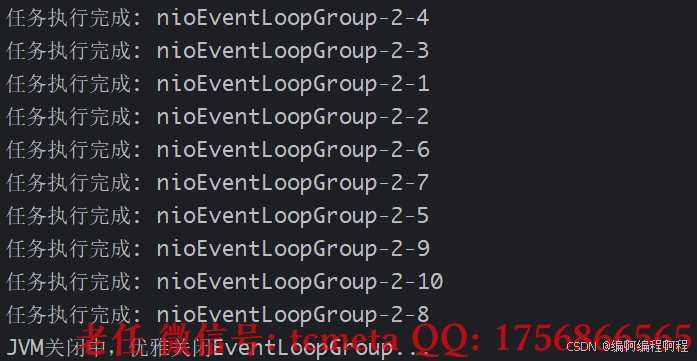
            System.out.println("JVM关闭中,优雅关闭EventLoopGroup...");

            // 优雅关闭:先停止接受新任务,然后等待已有任务完成
            group.shutdownGracefully();

            try {
                // 等待最多5秒完成关闭
                if (!group.awaitTermination(5, TimeUnit.SECONDS)) {
                    System.err.println("EventLoopGroup未能在5秒内完全关闭");
                }
            } catch (InterruptedException e) {
                Thread.currentThread().interrupt();
            }
        }));

        // 模拟工作负载
        for (int i = 0; i < 10; i++) {
            group.execute(() -> {
                try {
                    Thread.sleep(1000);
                    System.out.println("任务执行完成: " + Thread.currentThread().getName());
                } catch (InterruptedException e) {
                    Thread.currentThread().interrupt();
                }
            });
        }

        // 主线程等待一段时间后触发关闭
        try {
            Thread.sleep(3000);
            System.exit(0);
        } catch (InterruptedException e) {
            Thread.currentThread().interrupt();
        }
    }
}
1.7 优缺点总结
✅ 优点为
- 高性能:基于Reactor模式和高效的线程调度,支持海量连接
- 低资源消耗:少量线程处理大量连接,减少上下文切换
- 灵活性:支持多种传输协议(NIO、Epoll、OIO等)
- 易用性:简化了并发编程的复杂性
- 健壮性:经过大规模生产环境验证
| 优点 | 说明 |
|---|---|
| 高并发支持 | 多线程处理 I/O,支持百万级连接 |
| 资源可控 | 线程数可配置,避免资源耗尽 |
| 主从分离 | 职责分明,性能优化 |
| 跨平台 | 支持 NIO、epoll、kqueue |
| 易于扩展 | 可自定义 EventLoop 实现 |
❌ 缺点
- 学习曲线:需要理解异步编程和Netty特有的概念
- 调试复杂性:异步模式使得调试和问题排查更加困难
- 内存管理:需要手动管理ByteBuf的生命周期,容易导致内存泄漏
| 缺点 | 说明 |
|---|---|
| 配置复杂 | 需理解主从模型、线程数设置 |
| 调试困难 | 多线程异步,日志分散 |
| 内存开销 | 每个 EventLoop 维护 Selector、任务队列 |
| 阻塞风险 | 任一线程阻塞影响其负责的所有 Channel |
1.8 EventLoopGroup核心价值
| 维度 | 说明 |
|---|---|
| 核心思想 | 线程资源池化 + 轮询分配 + 主从分离 |
| 关键技术 | Reactor 模式、线程池、事件循环 |
| 性能优势 | 高吞吐、低延迟、高并发 |
| 设计精髓 | “让专业的人做专业的事” —— Boss 接收连接,Worker 处理 I/O |
| 适用场景 | 所有 Netty 网络服务(RPC、网关、消息系统) |
1.9 细节问题
1.9.1 ✅ 线程命名与调试友好
- Netty 为每个线程生成清晰的名称:
nioEventLoopGroup-2-1nioEventLoopGroup-2-2
- 格式:
[type]EventLoopGroup-[groupId]-[threadId]
1.9.2 ✅ 资源自动释放
-
shutdownGracefully()
方法:
- 停止接收新任务
- 处理完队列中的任务
- 关闭所有
EventLoop - 释放
Selector、Channel等资源
💡 建议:Linux 环境使用 EpollEventLoopGroup 可获得更高性能。
1.9.3 ✅ 支持多传输类
| EventLoopGroup 实现 | 传输类型 | 平台 | 性能 |
|---|---|---|---|
NioEventLoopGroup | NIO | 跨平台 | 高 |
EpollEventLoopGroup | epoll | Linux | 更高 |
KQueueEventLoopGroup | kqueue | macOS/BSD | 高 |
1.10 一句话总结
EventLoopGroup 是 Netty 的“调度中枢” —— 它通过 主从架构 和 轮询分配,实现了 连接接收 与 I/O 处理 的分离,是构建高性能网络服务的标准范式。
1.11 EventLoopGroup优缺点
✅ 优点
| 优点 | 说明 |
|---|---|
| 高并发支持 | 多线程处理 I/O,支持百万级连接 |
| 资源可控 | 线程数可配置,避免资源耗尽 |
| 主从分离 | 职责分明,性能优化 |
| 跨平台 | 支持 NIO、epoll、kqueue |
| 易于扩展 | 可自定义 EventLoop 实现 |
❌ 缺点
| 缺点 | 说明 |
|---|---|
| 配置复杂 | 需理解主从模型、线程数设置 |
| 调试困难 | 多线程异步,日志分散 |
| 内存开销 | 每个 EventLoop 维护 Selector、任务队列 |
| 阻塞风险 | 任一线程阻塞影响其负责的所有 Channel |






 扫一扫
扫一扫


 521
521

 被折叠的 条评论
为什么被折叠?
被折叠的 条评论
为什么被折叠?
 到【灌水乐园】发言





