


 本文介绍了在SpringCloud微服务架构中,如何通过Feign调用并在请求头中添加cookie的场景。具体做法是创建一个RequestInterceptor,从RequestContextHolder获取原始请求的cookie信息,并在Feign调用时同步到新请求中,确保B服务能接收到cookie。
以为feign调用请求头里添加cookie为例
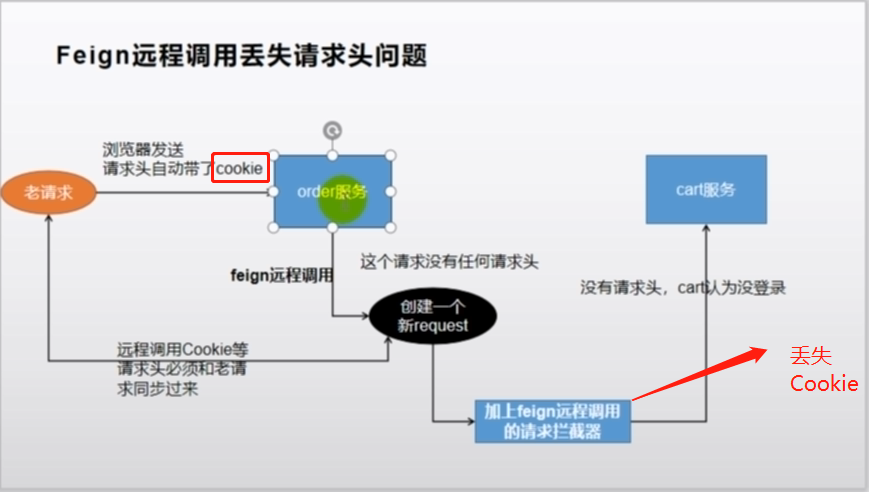
一、场景
我们有两个服务A、B,现在用户通过浏览器访问A服务的某个接口,在A接口中通过Feign调用了B服务。
B服务中定义拦截器,对所有的请求都进行拦截,检查请求头中是否包含了cookie,如果有cookie这放行,如果没有cookie则进行拦截。
解决:创建feign调用拦截器 RequestInterceptor 并注入容器
@Configuration
public class FeignConfig {

    @Bean("requestInterceptor")
    public static RequestInterceptor requestInterceptor() {
        // 创建拦截器
        return new RequestInterceptor() {
            @Override
            public void apply(RequestTemplate template) {
                // 1、使用RequestContextHolder拿到原生请求的请求头信息(下文环境保持器)
                // 从ThreadLocal中获取请求头(要保证feign调用与controller请求处在同一线程环境)
                ServletRequestAttributes requestAttributes = (ServletRequestAttributes) RequestContextHolder.getRequestAttributes();
                if (requestAttributes != null) {
                    // 获取controller请求对象
                    HttpServletRequest request = requestAttributes.getRequest();
                    // 如果使用线程池进行远程调用,则request是空的(因为RequestContextHolder.getRequestAttributes()是从threadlocal里拿的值)
                    if (Objects.nonNull(request)) {
                        //2、获取老请求里的cookie信息
                        String cookie = request.getHeader("Cookie");
                        // 同步Cookie (将老请求里的cookie信息放入新请求里(RequestTemplate))
                        template.header("Cookie", cookie);
                    }
                }
            }
        };
    }
}
原理解析
SynchronousMethodHandler 类中的executeAndDecode()
Object executeAndDecode(RequestTemplate template, Options options) throws Throwable {
  // 1、构建request,核心就在这里了,点进去
  Request request = targetRequest(template);
  Response response;
  long start = System.nanoTime();
  try {
    // 2、真正发起调用的地方
    response = client.execute(request, options);
    response = response.toBuilder()
        .request(request)
        .requestTemplate(template)
        .build();
  } catch (IOException e) {
    throw errorExecuting(request, e);
  }
  // 省略部分无关代码
}
targetRequest()
// 这里也就是我们自定义RequestInterceptor被调用的地方
// 可以看到,他拿到容器中所有实现了RequestInterceptor接口的bean,然后依次执行他们的apply方法
Request targetRequest(RequestTemplate template) {
   for (RequestInterceptor interceptor : requestInterceptors) {
    interceptor.apply(template);
  }
  return target.apply(template);
}





 扫一扫
扫一扫


 888
888

 被折叠的 条评论
为什么被折叠?
被折叠的 条评论
为什么被折叠?
 到【灌水乐园】发言





