 Java并发编程:理解volatile、可见性和有序性


 本文探讨了Java并发中的关键概念:volatile保证线程可见性,如何避免false sharing并通过@Contended注解控制内存布局,以及程序的有序性原理。通过实例分析了可见性与原子性的区别,以及为何单线程程序仍可能观察到乱序执行。
1、可见性(visibility)
volatile保证线程可见性
/**
 * volatile 关键字,使一个变量在多个线程间可见
 * A B线程都用到一个变量,java默认是A线程中保留一份copy,这样如果B线程修改了该变量,则A线程未必知道
 * 使用volatile关键字,会让所有线程都会读到变量的修改值
 * <p>
 * 在下面的代码中,running是存在于堆内存的t对象中
 * 当线程t1开始运行的时候,会把running值从内存中读到t1线程的工作区,在运行过程中直接使用这个copy,并不会每次都去
 * 读取堆内存,这样,当主线程修改running的值之后,t1线程感知不到,所以不会停止运行
 * <p>
 * 使用volatile,将会强制所有线程都去堆内存中读取running的值
 * volatile并不能保证多个线程共同修改running变量时所带来的不一致问题,也就是说volatile不能替代synchronized
 *
 * @author mashibing
 */
package com.mashibing.juc.c_001_01_Visibility;

import com.mashibing.util.SleepHelper;

import java.io.IOException;

public class T01_HelloVolatile {
    private static /*volatile*/ boolean running = true;

    private static void m() {
        System.out.println("m start");
        while (running) {
            System.out.println("hello");
        }
        System.out.println("m end!");
    }
    public static void main(String[] args) throws IOException {
        new Thread(T01_HelloVolatile::m, "t1").start();
        SleepHelper.sleepSeconds(1);
        running = false;
        System.in.read();
    }
}
按块读取
缓存行 64字节 缓存行对齐


不需要强行使用缓存行,使用注解@Contended
package com.mashibing.juc.c_001_02_FalseSharing;


import sun.misc.Contended;
//注意:运行这个小程序的时候,需要加参数:-XX:-RestrictContended
import java.util.concurrent.CountDownLatch;

public class T05_Contended {
    public static long COUNT = 10_0000_0000L;

    //@Contended  //只有1.8起作用 , 保证x位于单独一行中
    private static class T {
        public long x = 0L;
    }

    public static T[] arr = new T[2];

    static {
        arr[0] = new T();
        arr[1] = new T();
    }

    public static void main(String[] args) throws Exception {
        CountDownLatch latch = new CountDownLatch(2);

        Thread t1 = new Thread(() -> {
            for (long i = 0; i < COUNT; i++) {
                arr[0].x = i;
            }

            latch.countDown();
        });

        Thread t2 = new Thread(() -> {
            for (long i = 0; i < COUNT; i++) {
                arr[1].x = i;
            }

            latch.countDown();
        });

        final long start = System.nanoTime();
        t1.start();
        t2.start();
        latch.await();
        System.out.println((System.nanoTime() - start) / 100_0000);
    }
}
设置参数
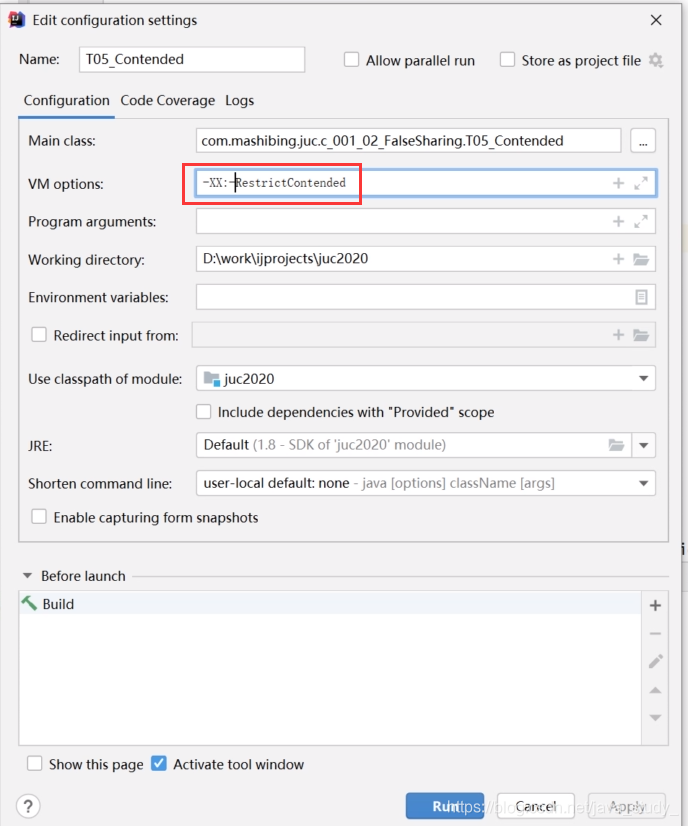
缓存一致性协议:
比较出名的有mesi
被修改 独享 共享 失效


2、有序性(ordering)
程序验证乱序:
package com.mashibing.juc.c_001_03_Ordering;

/**
 * 本程序跟可见性无关,曾经有同学用单核也发现了这一点
 */

import java.util.concurrent.CountDownLatch;

public class T01_Disorder {
    private static int x = 0, y = 0;
    private static int a = 0, b = 0;

    public static void main(String[] args) throws InterruptedException {

        for (long i = 0; i < Long.MAX_VALUE; i++) {
            x = 0;
            y = 0;
            a = 0;
            b = 0;
            CountDownLatch latch = new CountDownLatch(2);

            Thread one = new Thread(new Runnable() {
                public void run() {
                    a = 1;
                    x = b;

                    latch.countDown();
                }

            });

            Thread other = new Thread(new Runnable() {
                public void run() {
                    b = 1;
                    y = a;

                    latch.countDown();
                }
            });
            one.start();
            other.start();
            latch.await();
            String result = "第" + i + "次 (" + x + "," + y + ")";
            if (x == 0 && y == 0) {
                System.err.println(result);
                break;
            }
        }
    }

}
乱序的原因:cpu为了增加效率,做了优化
乱序的条件:不影响单线程的最终一直性
例子:对象版初始化
3、原子性(atomicity)





 扫一扫
扫一扫


 被折叠的 条评论
为什么被折叠?
被折叠的 条评论
为什么被折叠?
 到【灌水乐园】发言





