



 本文深入探讨了Python中唯一的一种参数传递方式:对象引用传递。详细分析了在函数体内部,可变与不可变对象的不同行为,包括列表和字符串的操作实例。同时,揭示了默认参数的副作用,展示了如何避免常见的陷阱。
print("""
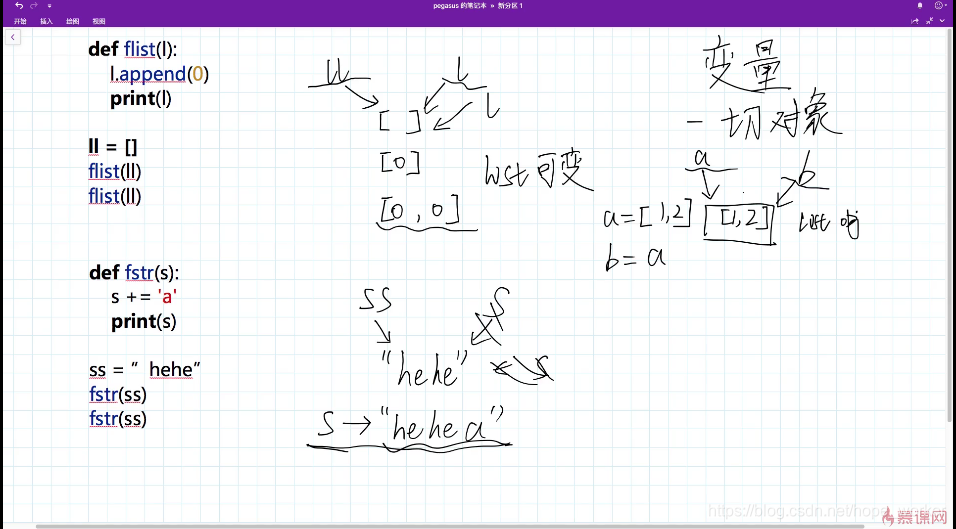
There is only one type of parameter passing in Python, which is object reference passing.
In the function body, mutable and immutable objects have different behaviours.
""")


def fl(l):
    l.append(1)
    print(l)


def fs(s):
    s += 'a'
    print(s)


ll = []
fl(ll)
fl(ll)

ss = "hehe"
fs(ss)
fs(ss)


print("#####################")

print("""
a test
""")


def clear_list(l):
    l = []


ll = [1, 2, 3]
clear_list(ll)
print(ll)


print("""
default parameter's side effect.
default parameters take effect only once.
""")


def flist(l=[1], ll=[2]):
    l.append(1)
    ll.append(2)
    print(l)
    print(ll)


flist()
flist()
output
There is only one type of parameter passing in Python, which is object reference passing.
In the function body, mutable and immutable objects have different behaviours.

[1]
[1, 1]
hehea
hehea
#####################

a test

[1, 2, 3]

default parameter's side effect.
default parameter take effect once.

[1, 1]
[2, 2]
[1, 1, 1]
[2, 2, 2]






 扫一扫
扫一扫


 2693
2693

 被折叠的 条评论
为什么被折叠?
被折叠的 条评论
为什么被折叠?
 到【灌水乐园】发言





