


 本文介绍了wait和waitpid两个函数在进程管理中的作用,wait用于等待任意一个子进程结束并回收资源,waitpid则能指定等待特定的子进程,并可选择阻塞或非阻塞模式。在示例代码中,展示了这两个函数如何处理子进程的退出状态和信号情况。
2.8 wait函数
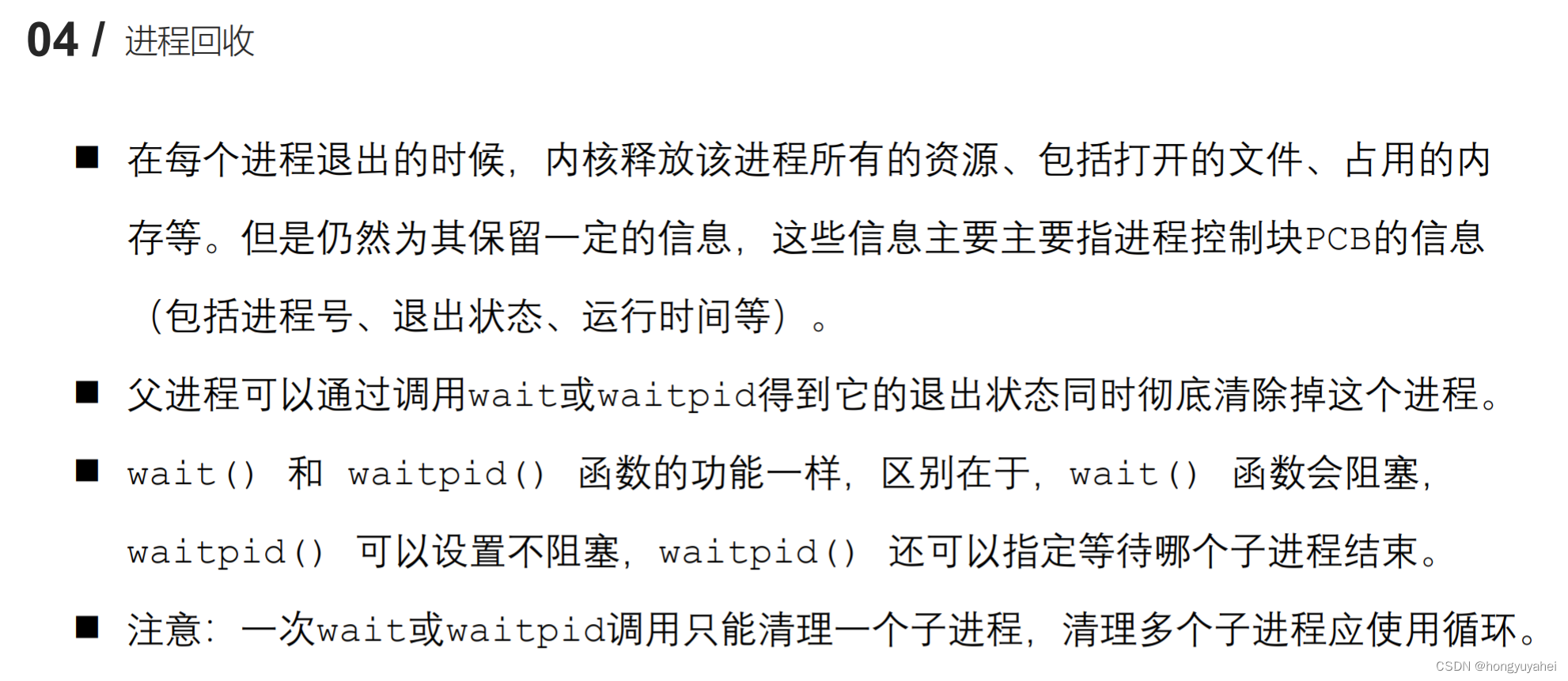
进程回收
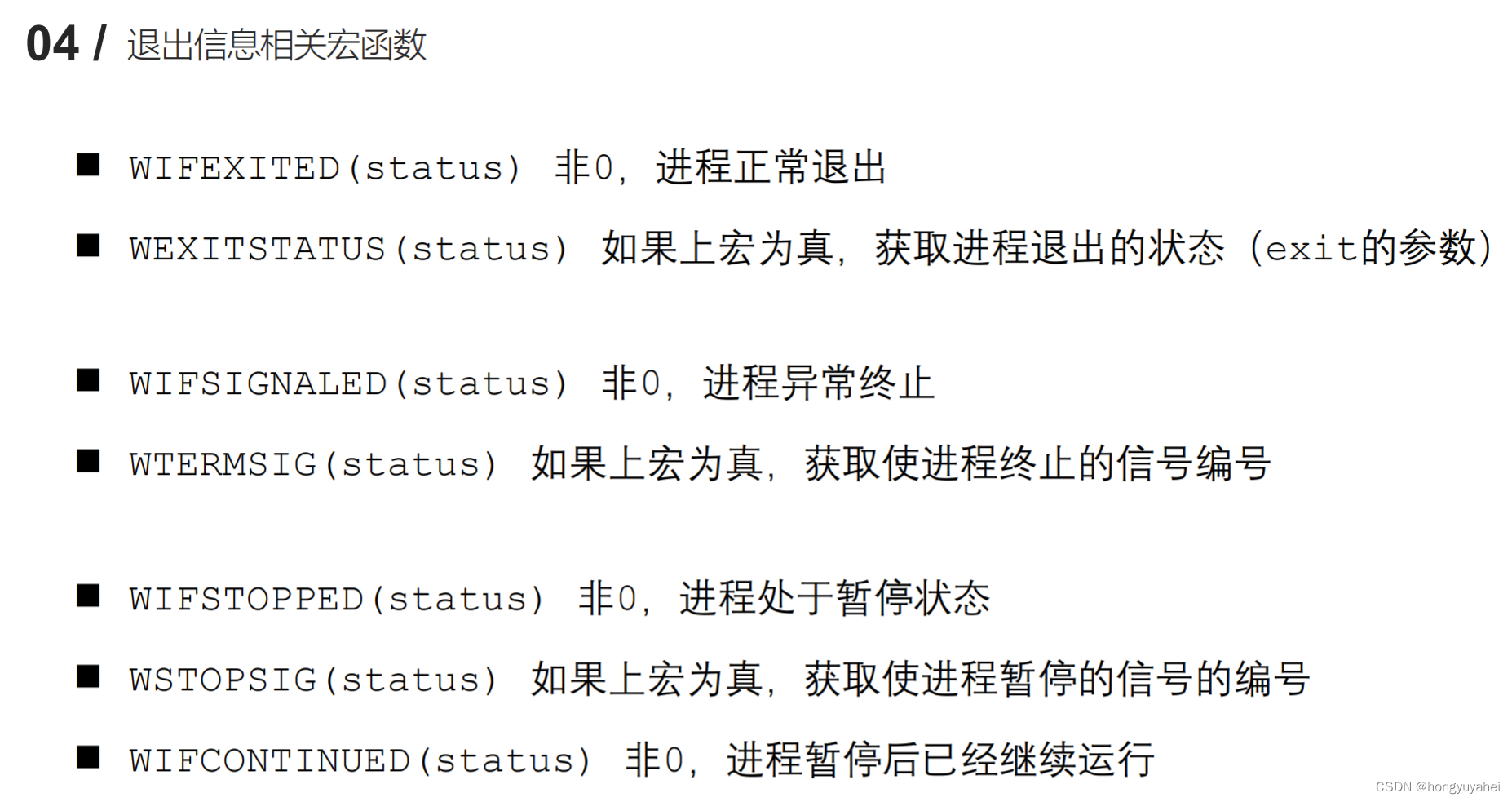
退出信息相关宏函数
/*
    #include <sys/types.h>
    #include <sys/wait.h>
    pid_t wait(int *wstatus);
        功能:等待任意一个子进程结束,如果任意一个子进程结束了,此函数会回收子进程的资源。
        参数:int *wstatus
            进程退出时的状态信息,传入的是一个int类型的地址,传出参数。
        返回值:
            - 成功:返回被回收的子进程的id
            - 失败:-1 (所有的子进程都结束,调用函数失败)

    调用wait函数的进程会被挂起(阻塞),直到它的一个子进程退出或者收到一个不能被忽略的信号时才被唤醒(相当于继续往下执行)
    如果没有子进程了,函数立刻返回,返回-1;如果子进程都已经结束了,也会立即返回,返回-1.

*/
#include <sys/types.h>
#include <sys/wait.h>
#include <stdio.h>
#include <unistd.h>
#include <stdlib.h>


int main() {

    // 有一个父进程,创建5个子进程(兄弟)
    pid_t pid;

    // 创建5个子进程
    for(int i = 0; i < 5; i++) {
        pid = fork();
        if(pid == 0) {//阻止子进程创建孙进程
            break;
        }
    }

    if(pid > 0) {
        // 父进程
        while(1) {//产生僵尸进程
            printf("parent, pid = %d\n", getpid());

            // int ret = wait(NULL);
            int st;
            int ret = wait(&st);//阻塞

            if(ret == -1) {
                break;
            }

            if(WIFEXITED(st)) {
                // 是不是正常退出
                printf("退出的状态码:%d\n", WEXITSTATUS(st));
            }
            if(WIFSIGNALED(st)) {
                // 是不是异常终止
                printf("被哪个信号干掉了:%d\n", WTERMSIG(st));
            }

			//阻塞,没有子进程退出时,不会打印该语句
            printf("child die, pid = %d\n", ret);

            sleep(1);
        }

    } else if (pid == 0){
        // 子进程
         //while(1) {//有循环时,使用信号杀死(kill -9 pid),无循环时exit(0)正常退出
        printf("child, pid = %d\n",getpid());
        sleep(1);
         //}

        exit(0);//退出状态码为0
    }

    return 0; // exit(0)
}
2.9waitpid函数
/*
    #include <sys/types.h>
    #include <sys/wait.h>
    pid_t waitpid(pid_t pid, int *wstatus, int options);
        功能:回收指定进程号的子进程,可以设置是否阻塞。
        参数:
            - pid:
                pid > 0 : 某个子进程的pid
                pid = 0 : 回收当前进程组的所有子进程
                pid = -1 : 回收所有的子进程,相当于 wait()  (最常用)
                pid < -1 : 某个进程组的组id的绝对值,回收指定进程组中的子进程,如-2是回收id为2的进程组的子进程
            - options:设置阻塞或者非阻塞
                0 : 阻塞
                WNOHANG : 非阻塞
            - 返回值:
                > 0 : 返回子进程的id
                = 0 : options=WNOHANG, 表示还有子进程活着
                = -1 :错误,或者没有子进程了
*/
#include <sys/types.h>
#include <sys/wait.h>
#include <stdio.h>
#include <unistd.h>
#include <stdlib.h>

int main() {

    // 有一个父进程,创建5个子进程(兄弟)
    pid_t pid;

    // 创建5个子进程
    for(int i = 0; i < 5; i++) {
        pid = fork();
        if(pid == 0) {
            break;
        }
    }

    if(pid > 0) {
        // 父进程
        while(1) {
            printf("parent, pid = %d\n", getpid());
            sleep(1);

            int st;
            // int ret = waitpid(-1, &st, 0);//回收所有子进程,阻塞
            int ret = waitpid(-1, &st, WNOHANG);//回收所有子进程,非阻塞,父进程不用一直挂起,可以执行一些其他的业务逻辑

            if(ret == -1) {
                break;
            } else if(ret == 0) {
                // 说明还有子进程存在
                continue;
            } else if(ret > 0) {

                if(WIFEXITED(st)) {
                    // 是不是正常退出
                    printf("退出的状态码:%d\n", WEXITSTATUS(st));
                }
                if(WIFSIGNALED(st)) {
                    // 是不是异常终止
                    printf("被哪个信号干掉了:%d\n", WTERMSIG(st));
                }

                printf("child die, pid = %d\n", ret);
            }

        }

    } else if (pid == 0){
        // 子进程
         while(1) {
            printf("child, pid = %d\n",getpid());
            sleep(1);
         }
        exit(0);
    }

    return 0;
}





 扫一扫
扫一扫


 2104
2104

 被折叠的 条评论
为什么被折叠?
被折叠的 条评论
为什么被折叠?
 到【灌水乐园】发言





