





 本文介绍了RPC的基本概念,它允许程序调用远程计算机的子程序,仿佛是本地调用。文章通过一个Netty服务器和客户端的示例,展示了如何实现RPC通信,包括HelloService接口、HelloServiceImpl服务实现、NettyServer和NettyClient的处理类,以及客户端和服务器端的交互过程。
基本介绍:
- RPC(Remote Procedure Call) : 远程过程调用,是一个计算机通讯协议,改协议允许运行于一台计算机的程序调用另一台计算机的子程序,而程序员无需额外地为这个交互作用编程
- 两个或多个应用程序都分部在不同的服务器上,它们之间的调用都像是本地方法调用一样
RPC 远程调用过程:
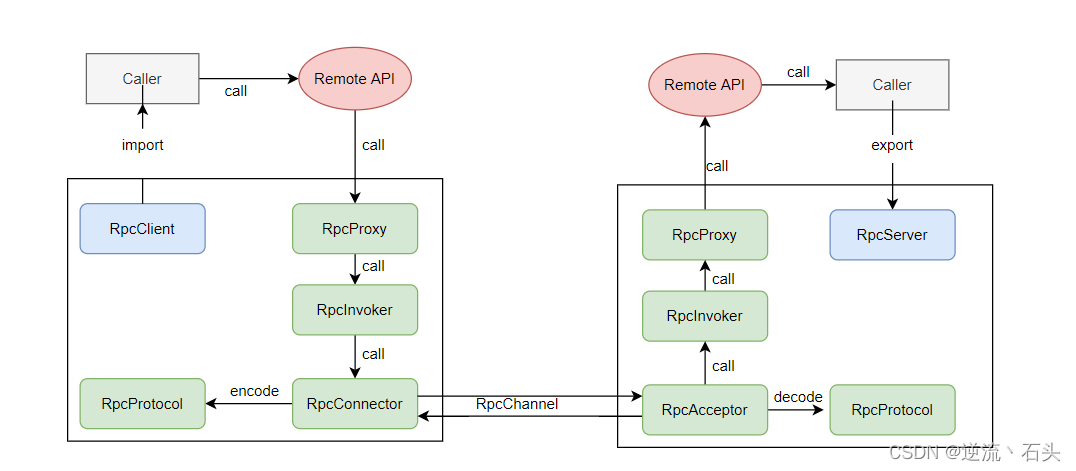
实例代码:
HelloService:
/**
 * 这是接口,是服务提供方 和 服务消费方 都需要
 */
public interface HelloService {
    String hello(String msg);
}
HelloServiceImpl:
public class HelloServiceImpl implements HelloService {
    // 非共用
    // private int count = 0;
    // 共用
    private static int count = 0;
    /**
     * 当有消费方 调用该方法时,就返回一个结果
     * @param msg
     * @return
     */
    @Override
    public String hello(String msg) {
        System.out.println("收到客户端消息:" + msg);

        // 根据 Msg 返回不同的结果
        if (msg != null) {
            return "您好客户端,我已经收到您的消息 [" + msg + "] 第" + (++count) + "次";
        } else {
            return "您好客户端,我已经收到您的消息";
        }
    }
}
NettyServerHandler:
public class NettyServerHandler extends ChannelInboundHandlerAdapter {
    @Override
    public void channelRead(ChannelHandlerContext ctx, Object msg) throws Exception {
        // 获取客户端发送的消息, 并调用服务
        System.out.println("msg = " + msg);

        // 客户端在调用服务器的 api 时,必须定义一个协议 - 每次发消息时必须以某个字符串开头 "HelloService#hello#你好"
        if (msg.toString().startsWith("HelloService#hello#")) {
            String result = new HelloServiceImpl().hello(msg.toString().substring(msg.toString().lastIndexOf("#") + 1));
            ctx.writeAndFlush(result);
        }
    }

    @Override
    public void exceptionCaught(ChannelHandlerContext ctx, Throwable cause) throws Exception {
        ctx.close();
    }
}
NettyServer:
public class NettyServer {

    public static void startServer(String hostname, int port) {
        startServer0(hostname,port);
    }
    /**
     *  完成 NettyServer 的初始化工作 和 启动
     */
    private static void startServer0(String hostname, int port) {
        EventLoopGroup bossGroup = new NioEventLoopGroup(1);
        EventLoopGroup workGroup = new NioEventLoopGroup();

        try {
            ServerBootstrap serverBootstrap = new ServerBootstrap();

            serverBootstrap.group(bossGroup, workGroup)
                    .channel(NioServerSocketChannel.class)
                    .childHandler(new ChannelInitializer<SocketChannel>() {
                        @Override
                        protected void initChannel(SocketChannel socketChannel) throws Exception {
                            ChannelPipeline pipeline = socketChannel.pipeline();
                            pipeline.addLast(new StringDecoder());
                            pipeline.addLast(new StringEncoder());
                            pipeline.addLast(new NettyServerHandler()); // 业务处理器
                        }
                    });
            ChannelFuture channelFuture = serverBootstrap.bind(hostname, port).sync();
            System.out.println("服务提供方开始提供服务~~");
            channelFuture.channel().closeFuture().sync();
        }catch (Exception e){
            e.printStackTrace();
        } finally {
            bossGroup.shutdownGracefully();
            workGroup.shutdownGracefully();
        }
    }
}
NettyClientHandler:
import io.netty.channel.ChannelHandlerContext;
import io.netty.channel.ChannelInboundHandlerAdapter;

import java.util.concurrent.Callable;

public class NettyClientHandler extends ChannelInboundHandlerAdapter implements Callable {
    private ChannelHandlerContext context;  // 上下文
    private String result;  // 返回的结果
    private String param; // 客户端调用方法时,传入的参数

    /**
     * 与服务器的连接创建后,就会被调用
     * @param ctx
     * @throws Exception
     */
    @Override
    public void channelActive(ChannelHandlerContext ctx) throws Exception {
        System.out.println("channelActive 被调用");
        context = ctx;
    }

    /**
     * 收到服务器的数据后, 调用
     * @param ctx
     * @param msg
     * @throws Exception
     */
    @Override
    public synchronized void channelRead(ChannelHandlerContext ctx, Object msg) throws Exception {
        System.out.println("channelRead 被调用");

        result = msg.toString();

        // 唤醒等待的线程
        notify();
    }

    @Override
    public void exceptionCaught(ChannelHandlerContext ctx, Throwable cause) throws Exception {
        ctx.close();
    }

    /**
     * 被代理对象调用,发送数据给服务器 等待被唤醒(channelRead)
     * @return
     * @throws Exception
     */
    @Override
    public synchronized Object call() throws Exception {
        System.out.println("call1 被调用");

        context.writeAndFlush(param);

        // 等待 channelRead 方法获取到服务器的结果后,唤醒
        wait();
        System.out.println("call2 被调用");

        return result;
    }

    void setParam(String param) {
        System.out.println("setParam 被调用");
        this.param = param;
    }
}
NettyClient:
public class NettyClient {
    private int count = 0;
    // 创建线程池
    private static ExecutorService executor = Executors.newFixedThreadPool(Runtime.getRuntime().availableProcessors());

    private static NettyClientHandler client;

    /**
     * 编写方法使用代理模式,获取一个代理对象
     * @param serviceClass 代理类
     * @param providerName 协议头
     * @return
     */
    public Object getBean(final Class<?> serviceClass, final String providerName) {
        return Proxy.newProxyInstance(Thread.currentThread().getContextClassLoader(), new Class<?>[]{serviceClass}, (proxy, method, args) -> {
            System.out.println("(proxy, method, args) 进入..." + (++count) + "次");
            if (client == null) {
               intiClient();
            }

            // 设置要发给服务器端的信息
            client.setParam(providerName + args[0]);

            // 将 handler 放入线程池 并返回结果
            return executor.submit(client).get();
        });
    }
    // 初始化客户端
    private static void intiClient() {
        client = new NettyClientHandler();

        // 创建 EventLoopGroup
        NioEventLoopGroup group = new NioEventLoopGroup();
        Bootstrap bootstrap = new Bootstrap();
        bootstrap.group(group)
                .channel(NioSocketChannel.class)
                .option(ChannelOption.TCP_NODELAY, true)
                .handler(new ChannelInitializer<SocketChannel>() {
                    @Override
                    protected void initChannel(SocketChannel socketChannel) throws Exception {
                        ChannelPipeline pipeline = socketChannel.pipeline();
                        pipeline.addLast(new StringDecoder());
                        pipeline.addLast(new StringEncoder());
                        pipeline.addLast(client);
                    }
                });
        try {
            bootstrap.connect("127.0.0.1", 9527).sync();
        }catch (Exception e) {
            e.printStackTrace();;
        }
    }
}
ClientBootstrap:
public class ClientBootstrap {

    // 协议头
    public static final String providerName = "HelloService#hello#";
    public static void main(String[] args) throws InterruptedException {
        // 创建一个消费者
        NettyClient customer = new NettyClient();

        // 创建代理对象
        HelloService service = (HelloService) customer.getBean(HelloService.class,  providerName);

        for (;;) {
            Thread.sleep(10 * 1000);
            // 通过代理对象调用服务提供者的方法
            String res = service.hello("您好 Netty~");
            System.out.println("调用的结果 res: " + res);
        }

    }
}
ServerBootstrap:
// ServerBootstrap 会启动一个服务提供者,即 NettyServer
public class ServerBootstrap {
    public static void main(String[] args) {
        // TODO
        NettyServer.startServer("127.0.0.1", 9527);
    }
}





 扫一扫
扫一扫


 419
419

 被折叠的 条评论
为什么被折叠?
被折叠的 条评论
为什么被折叠?
 到【灌水乐园】发言





