



一.配置文件
1.applicationContext.xml
<?xml version="1.0" encoding="utf-8" ?>
<beans xmlns="http://www.springframework.org/schema/beans"
       xmlns:context="http://www.springframework.org/schema/context"
       xmlns:xsi="http://www.w3.org/2001/XMLSchema-instance" xmlns:aop="http://www.springframework.org/schema/aop"
       xsi:schemaLocation="http://www.springframework.org/schema/beans https://www.springframework.org/schema/beans/spring-beans.xsd
       http://www.springframework.org/schema/context
       https://www.springframework.org/schema/context/spring-context.xsd http://www.springframework.org/schema/aop https://www.springframework.org/schema/aop/spring-aop.xsd"
       xmlns:c="http://www.springframework.org/schema/c"
       xmlns:p="http://www.springframework.org/schema/p">
    <!--三种实例化bean的方式-->

    <!--1. 使用类构造器实例化(默认无参数)-->
    <bean id="mathMethods" class="test.spring.Service.Impl.MathMethodImpl"></bean>

    <!--2. 使用静态工厂方法实例化(简单工厂模式):节省内存消耗-->
    <bean id="person" class="test.spring.Service.Impl.PersonServiceFactory" factory-method="createPerson"></bean>

    <!--3. 使用实例工厂方法实例化(工厂方法模式)-->
    <bean id="personFactory" class="test.spring.Service.Impl.PersonServiceFactory" scope="prototype"></bean>
    <bean id="per" factory-bean="personFactory" factory-method="newPerson"></bean>

</beans>
2.web.xml
<?xml version="1.0" encoding="UTF-8"?>
<web-app xmlns="http://xmlns.jcp.org/xml/ns/javaee"
         xmlns:xsi="http://www.w3.org/2001/XMLSchema-instance"
         xsi:schemaLocation="http://xmlns.jcp.org/xml/ns/javaee http://xmlns.jcp.org/xml/ns/javaee/web-app_3_1.xsd"
         version="3.1">

    <!-- 初始化spring容器,上下文的位置 -->
    <context-param>
        <param-name>contextConfigLocation</param-name>
        <param-value>classpath:applicationContext.xml</param-value>
    </context-param>
</web-app>
二、Bean
1. 使用类构造器实例化(默认无参数)-MathMethodImpl
package test.spring.Service.Impl;

import test.spring.Service.MathMethodService;

public class MathMethodImpl implements MathMethodService {
    public int getCalc(int a, int b) {
        return a+b;
    }
}
2.PersonImpl
package test.spring.Service.Impl;

public class PersonImpl {
    public void sayHi(){
        System.out.println("Hi");
    }
}
3. 使用静态工厂方法实例化(简单工厂模式)-PersonServiceFactory
package test.spring.Service.Impl;
public class PersonServiceFactory {
    public static PersonImpl createPerson(){
        return new PersonImpl();
    }
}
4.使用实例工厂方法实例化(工厂方法模式)-PersonServiceFactory
package test.spring.Service.Impl;
public class PersonServiceFactory {
    public PersonImpl newPerson() {
        return new PersonImpl();
    }
}
三、测试
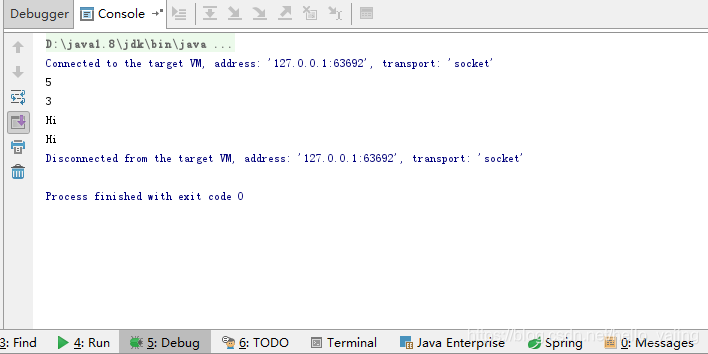
public class MathMethodController {
    public static void main(String[] args){
        //法一:普通实现方法
        MathMethodService math = new MathMethodImpl();
        System.out.println(math.getCalc(2,3));

        //法二:spring实现方法(实例化bean三种方式):区别在xml中。
        //1.类构造器实例化,无参
            /* 第一步:初始化spring容器*/
        ApplicationContext applicationContext = new ClassPathXmlApplicationContext("applicationContext.xml");
            /*第二步:从容器中获取service对象*/
        MathMethodService methodService = (MathMethodService)applicationContext.getBean("mathMethods");
            /*第三步:使用对象的方法*/
        System.out.println(methodService.getCalc(1,2));

        //2.静态工厂方法实例化
        PersonImpl person = (PersonImpl)applicationContext.getBean("person");
        person.sayHi();

        //3.使用实例工厂方法实例化
        PersonImpl per = (PersonImpl)applicationContext.getBean("per");
        per.sayHi();
    }
}





 扫一扫
扫一扫


 2306
2306

 被折叠的 条评论
为什么被折叠?
被折叠的 条评论
为什么被折叠?
 到【灌水乐园】发言





