


 本文详细介绍了Java线程的基础概念,包括线程与进程的区别,守护线程的作用,以及如何通过继承Thread类或实现Runnable接口来创建线程。探讨了线程的随机性,优先级设置,线程的启动、暂停和停止方法,并解释了interrupt和isInterrupted等API的使用,帮助读者深入理解Java线程的管理和控制。
Thread 启动 暂停 停止 优先级 安全
线程与进程的概念
- 进程:
- 线程:使用多线程也就是在使用异步。
- 守护线程:非守护线程的保姆,GC垃圾回收器。(调用方法setDaemo())
- 线程实现方法:继承Thread类(Thread类也实现了Runnable接口)、实现Runnable接口。前者不能实现多继承,需要多继承时使用第二种方法,实际上这两种方法创建的线程功能是一样的。
Thread类的使用
线程随机性
public class thread1 {

	public static void main(String[] args) {
      MyThread mt = new MyThread();
      //start运行耗时
      mt.start();
      /* 1通过jvm告诉操作系统创建Thread
       * 2操作系统开辟内存,创建Thread对象
       * 3操作系统对Thread对象进行调度,确定执行时机
       * 4Thread成功被执行
       */
      System.out.println("over");
      //使用多线程技术时,输出结果和代码的执行顺序没有必然联系。此次是先输出over,可以使用sleep方法,达到
      //先后输出over的目的
	}

}

class MyThread extends Thread {
	public void run() {
        super.run();
        System.out.println("i am thread1");
	}
}
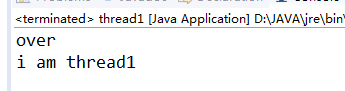
执行start的顺序不代表执行run的顺序
public class thread2 {

	public static void main(String[] args) {
		MyThread th0 = new MyThread(1);
		MyThread th1 = new MyThread(2);
		MyThread th2 = new MyThread(3);
		MyThread th3 = new MyThread(4);
		MyThread th4 = new MyThread(5);
		th0.start();
		th1.start();
		th2.start();
		th3.start();
		th4.start();

	}

}
class MyThread extends Thread{
	private int i;
	public MyThread(int i) {
		super();
		this.i=i;
	}
	public void run() {
		System.out.println(i);
	}
}
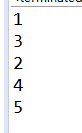
Runable接口的使用(多继承)
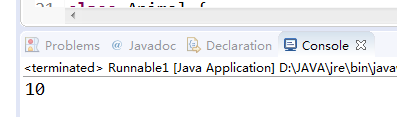
当想创建的线程类有父类时,不能再继承Thread类,可以继承Runnable接口。
package thread;

public class Runnable1 {
	public static void main(String[] args) {
		Dog dog = new Dog();
		Thread thread = new Thread(dog);
        thread.start();
	}

}

class Dog extends Animal implements Runnable {
	@Override
	public void run() {
		System.out.println(this.num);

	}

}

class Animal {
	public int num = 10;
}
实现Runnable接口的内部流程
Runnable runnable = new Runnable();
Thread thread = new Thread(runnable);
thread.start();
先调用Thread.java类的run方法
public void run(){
   if(target != null){
     target.run;
   }
}
target就是实现Runnable接口的对象,该对象被init方法初始化,而init方法在Thread.java的构造方法中被调用。
常用API
- start:告诉系统某个线程准备就绪,可以安排一个时间来执行,执行时自动调用run方法。
即,开启新线程执行run方法。 - run:不开启新线程,使用当前进程。
- yield:进程放弃时间片
- currentThread
public class Thread4 {
	public static void main(String[] args) throws InterruptedException {
		Thread1 th1 = new Thread1();
		th1.start();
		Thread1.sleep(1000);
		System.out.println("-----");
		th1.run();


	}
}
class Thread1 extends Thread{
	public Thread1() {
		System.out.println("构造方法 "+Thread.currentThread().getName());
	}
	public void run() {
		System.out.println("run方法 "+Thread.currentThread().getName());
	}
}
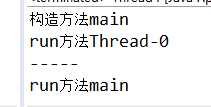
- isAlive 判断当前线程是否存活
- sleep 让当前正在执行的线程休眠
要理解当前正在执行的进程这几个字的含义。
package thread;

public class ThreadDemo04 {
	public static void main(String[] args) throws Exception {
       Thread4 th4 =new Thread4();
       Thread.sleep(2000);
       th4.start();
       //本以为这里睡眠的是新开辟的进程Thread-0 但是输出结果显示睡眠的还是main方法所在的进程。
       //当前执行的进程是main所在的进程,即 Thread.currentThread().sleep()
       //尽管sleep是被th4调用的,单它处理的任然是main线程
       th4.sleep(2000);
       System.out.println("执行打印方法的进程是"+Thread.currentThread().getName()+System.currentTimeMillis());


	}
}
class Thread4 extends Thread{
	public Thread4() {
		System.out.println("执行构造方法的进程是"+Thread.currentThread().getName()+"当前时间"+System.currentTimeMillis());
	}
	public void run() {
		System.out.println("执行start调用run方法的进程是"+Thread.currentThread().getName()+"当前时间"+System.currentTimeMillis());
	}
}
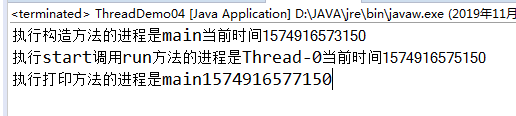
- 调整了Thread.sleep 的位置
package thread;

public class ThreadDemo04 {
	public static void main(String[] args) throws Exception {
       Thread4 th4 =new Thread4();
       Thread.sleep(2000);
       th4.start();
       System.out.println("执行打印方法的进程是"+Thread.currentThread().getName()+System.currentTimeMillis());


	}
}
class Thread4 extends Thread{
	public Thread4() {
		System.out.println("执行构造方法的进程是"+Thread.currentThread().getName()+"当前时间"+System.currentTimeMillis());
	}
	public void run() {
		System.out.println("执行start调用run方法的进程是"+Thread.currentThread().getName()+"当前时间"+System.currentTimeMillis());
		try {
			Thread.sleep(2000);
		} catch (InterruptedException e) {
			// TODO Auto-generated catch block
			e.printStackTrace();
		}
		System.out.println("执行start调用run方法的进程是"+Thread.currentThread().getName()+"睡眠后时间"+System.currentTimeMillis());
	}
}
第二行和第三行是同时输出的

- getId 取得线程的唯一标识
停止线程 interrupt(stop不安全) 暂停 suspend resume
stop直接销毁线程对象
判断状态
interrupt 只是做了一个停止标记,不是真正的停止线程
interrupted
isInterrupted
- interrupted 判断是否中断并清除中断状态 类似sleep 作用于当前执行的线程,而不是调用它的线程。
/**
     * Tests whether the current thread has been interrupted.  The
     * <i>interrupted status</i> of the thread is cleared by this method.  In
     * other words, if this method were to be called twice in succession, the
     * second call would return false (unless the current thread were
     * interrupted again, after the first call had cleared its interrupted
     * status and before the second call had examined it).
     *
     * <p>A thread interruption ignored because a thread was not alive
     * at the time of the interrupt will be reflected by this method
     * returning false.
     *
     * @return  <code>true</code> if the current thread has been interrupted;
     *          <code>false</code> otherwise.
     * @see #isInterrupted()
     * @revised 6.0
     */
    public static boolean interrupted() {
        return currentThread().isInterrupted(true);
    }
- isInterrupted
/**
     * Tests whether this thread has been interrupted.  The <i>interrupted
     * status</i> of the thread is unaffected by this method.
     *
     * <p>A thread interruption ignored because a thread was not alive
     * at the time of the interrupt will be reflected by this method
     * returning false.
     *
     * @return  <code>true</code> if this thread has been interrupted;
     *          <code>false</code> otherwise.
     * @see     #interrupted()
     * @revised 6.0
     */
    public boolean isInterrupted() {
        return isInterrupted(false);
    }
测试
public class ThreadDemo06 {
	public static void main(String[] args) {
    Thread06 th6 = new Thread06();
    th6.start();
    System.out.println("中断前th6是否存活:"+th6.isAlive());
    th6.interrupt();
    System.out.println("调用th6.isInterrupted():是否中断"+th6.isInterrupted());
	System.out.println("中断后th6是否存活:"+th6.isAlive());
	System.out.println("第一次调用th6.interrupted():是否中断"+th6.interrupted());
	System.out.println("第二次调用th6.interrupted():是否中断"+th6.interrupted());


	}
}

class Thread06 extends Thread {
    public void run() {
    	for(int i=1;i<=10;i++) {
    		System.out.println(i);
    	}
    }
}
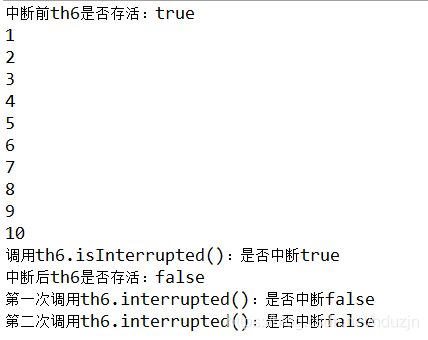
- 中断当前进程
public class ThreadDemo06 {
	public static void main(String[] args) {
    Thread06 th6 = new Thread06();
    th6.start();
    Thread.currentThread().interrupt();
    //interrupted 即使是th6调用 指的也是当前正在的main进程
	System.out.println("第一次调用th6.interrupted():是否中断"+th6.interrupted());
	System.out.println("第二次调用th6.interrupted():是否中断"+th6.interrupted());


	}
}
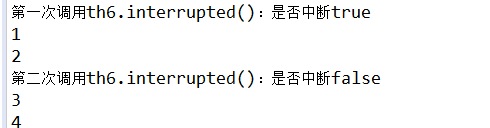
停止线程–异常停止法
isInterrupted 和 interrupted是为了判断该位置的线程是否应该中断,interrupt作为一个标志本身不具有中断线程的能力,可以将要执行的代码放到if(interrupted/isInterrupterd)else{}结构中,达到停止目的。
- 异常停止法
public class ThreadDemo07 {
	public static void main(String[] args) throws InterruptedException {
		Thread7 th7 = new Thread7();
		th7.start();
		Thread.sleep(2000);
		th7.interrupt();

	}
}

class Thread7 extends Thread {
	public void run() {
		try {
			for (int i = 1; i <= 10; i++) {
				if (Thread.interrupted()) {
					System.out.println("线程停止,要退出了");
					throw new InterruptedException();
				}
				System.out.println(i);
				//Thread.sleep(1000);
			}
		} catch (InterruptedException e) {
			System.out.println("进入到Thread7的run方法中");
			e.printStackTrace();
		}
	}
}
主进程中途睡眠2秒,Thread7的run方法中的循环已经执行完毕(先执行start,输出1–10),两秒后作出停止线程的标记,此时循环执行完毕不会出现异常。
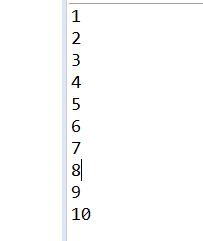
- 下图是主进程没有睡眠的情况
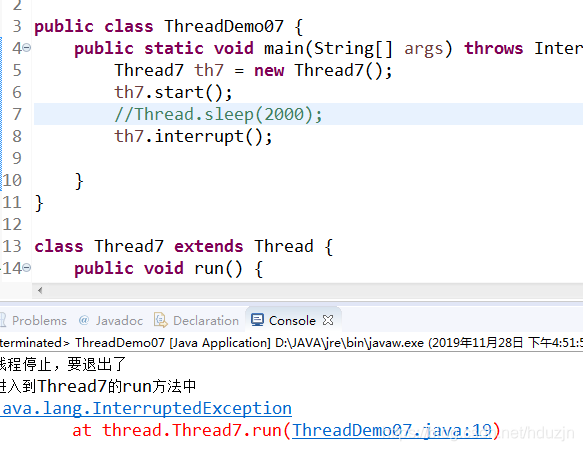
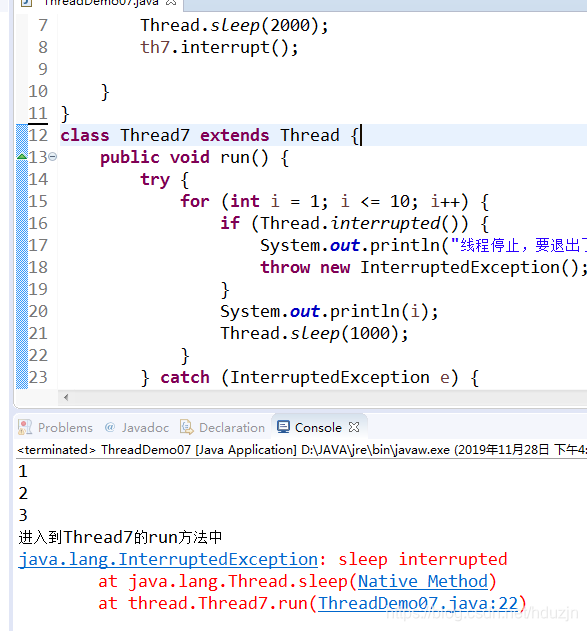
- 当sleep和interrupt相遇时会报错
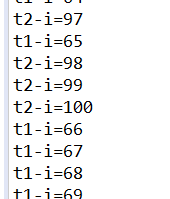
优先级 setPriority() 1~10
- 优先级高线程获得的CPU资源更多,分配到时间片更多,但不代表高优先级的一定先执行完(大多数情况)。
- 当优先级差距很大时,调用顺序和实行结果顺序没有必然联系。
public class Thread08 {
	public static void main(String[] args) {
		T1 t1 = new T1();
		t1.setPriority(1);
		T2 t2 = new T2();
		t2.setPriority(10);
		t1.start();
		t2.start();
	}

}

class T1 extends Thread {
	public void run() {
		for (int i = 0; i <= 100; i++) {
			System.out.println("t1-" + "i=" + i);
		}
	}
}

class T2 extends Thread {
	public void run() {
		for (int i = 0; i <= 100; i++) {
			System.out.println("t2-" + "i=" + i);
		}
	}
}





 扫一扫
扫一扫


 1509
1509

 被折叠的 条评论
为什么被折叠?
被折叠的 条评论
为什么被折叠?
 到【灌水乐园】发言





