


Integro — IT Services & Digital Agency WordPress Theme: A Practitioner’s Review, Setup Notes, and Growth Playbook
If you’ve ever tried to grow a service business on WordPress—whether you’re an IT consultancy, a boutique SaaS integrator, or a full-stack creative studio—you already know the paradox: the market is full of “agency themes,” but most of them either look slick while being awkward to operate, or they’re technically sound but visually generic. After putting several well-known options through real client work, I’ve landed on a stack I can set up fast, iterate confidently, and hand off to non-technical teams without anxiety. At the center of that stack sits Integro — IT Services & Digital Agency WordPress Theme.
Before we dive into the weeds, quick context. I source many GPL-licensed themes and plugins from dependable catalogs like gplitems. That way I can evaluate multiple candidates in realistic environments—same hosting, same cache/CDN policy, same demo content size—then keep only what actually helps shipping real work. Integro consistently makes the cut not because it’s flashy, but because it’s opinionated in the right places and quiet where it should be.
Who Integro Is Really For
Let’s sidestep vague “for everyone” claims. Integro plays best in these lanes:
-
IT service providers and MSPs. You need to present capabilities (cloud, automation, cybersecurity, DevOps), show case results, and funnel inbound leads into well-scoped consultations—without asking visitors to read a white paper.
-
Digital agencies and product studios. You sell brand, UX, web/app builds, marketing ops. The theme must support portfolio storytelling and service packaging simultaneously.
-
Boutique consultancies. One-to-ten-person teams that win on clarity and credibility. You want a compact system that looks good on day one and grows progressively rather than collapsing under plugin sprawl.
Where Integro shines is the bridge between positioning and execution: it gives you enough pre-made structure to be presentable immediately, yet keeps the code paths and layout system tidy so customization doesn’t feel like reverse-engineering a haunted house.
The Three Jobs Any “Agency Theme” Must Do (and How Integro Handles Them)
1) Package your services like products
Most agencies still throw everything into a generic “Services” page. Integro nudges you toward modular service cards with crisp scannability: headline, short promise, 3–5 bullet outcomes, and one primary action. This layout isn’t just pretty; it supports funnel instrumentation later. You’ll thank yourself when you begin split-testing copy or pricing models.
2) Tell credible stories with proof
Case studies shouldn’t be walls of text. Integro’s portfolio and case blocks blend hero narrative, highlights (role, scope, stack), and visual rhythm. The trick is the content cadence: an opening “why this mattered,” a constraint snapshot (“tight deadline, legacy stack”), then 2–3 quantified outcomes. People buy outcomes, not adjectives.
3) Convert interest into structured conversations
Lightweight lead capture is table stakes. What Integro gets right is contextual CTAs that match page intent: “Request a discovery call” on services, “Ask how this translates to your stack” on case studies, and a lower-friction “Send me the checklist” offer for visitors not ready to talk. That spread meets people where they are without feeling like a funnel trap.
Setup: From “Fresh Install” to “Looks Like a Real Agency” in an Afternoon
Here’s the straightforward path I use to get a solid v1 live:
-
Spin a child theme before touching styles or snippets. You want updates without rework.
-
Import the least amount of demo content that gets you the skeleton you want (home, services, case study, about, contact). Delete everything else so your media library and menus stay neat.
-
Establish a typography scale (desktop and mobile) and stick to it: H1, H2, H3, body, caption. Consistency communicates seniority.
-
Map services to outcomes. For each service card, replace generic jargon with 1–2 business impacts (e.g., “cut onboarding from weeks to days,” “reduce incident MTTR by 30%”).
-
Create one “flagship” case study first. Use it as a template for the rest. Keep images optimized and named with human terms (not “IMG_0042”).
-
Wire contact forms to your CRM or helpdesk with tags that mirror your service taxonomy. You’ll get cleaner pipeline data from day one.
The theme’s global styles and header/footer builder are forgiving; you can make decisive choices early and iterate later without the disorienting “everything moved” surprises. That’s a quiet superpower.
Performance Notes That Actually Matter
Everyone says they care about speed; few care about how. These adjustments give Integro a measurable lift without weird hacks:
-
Media discipline. Hero image as WebP with explicit width/height to avoid layout shifts, defer all below-the-fold imagery.
-
Fonts. If you can live with a system stack, do it. If not, ship a single WOFF2 per weight actually used and preload only your primary weight.
-
Scripts. Keep third-party scripts to a minimum; trigger analytics after first interaction; defer all non-critical JS.
-
CSS. Inline critical above-the-fold styles; load the remainder asynchronously.
-
Cache/CDN. A competent page cache, long-lived immutable assets, and image CDN resizing get you most of the way there.
Do this and you’ll notice not only better lab scores, but also reduced cognitive jitter for visitors: fewer cumulative layout shifts, snappier first interaction, and more trust.
Information Architecture: Make It Obvious
A theme can’t fix messy thinking. Give Integro a clean IA and it rewards you with a site that feels senior:
-
Navigation: Services, Case Studies, About, Insights, Contact. Secondary items (Careers, Partners, Legal) tucked into the footer.
-
Service depth: One landing page summarizing the suite, and a dedicated page per service with one clear CTA.
-
Case taxonomy: Don’t tag everything with everything. Use 5–8 tags you truly care about (industry, capability, stack) and stop.
-
Insights cadence: Ship one piece per capability cluster: a how-to, a teardown, and a short “myth vs reality.” Consistency beats bursts.
Integro’s templates make this structure look cohesive with minimal fiddling. You set the logic; the theme renders it legibly.
Copy: The Three Sentences That Close Projects
A pretty site that speaks in fog won’t sell. For each service page, write three sentences that can’t be mistaken for anyone else:
-
What we change: “We cut your incident response from hours to minutes by instrumenting the right telemetry and automating your runbooks.”
-
How we work: “Two-week diagnostics, four-week pilot, roll-out in 90 days with your team owning the console.”
-
What it costs (envelope math): “Diagnostics from $X, pilots from $Y; fixed-fee or retainer depending on scope.”
Integro’s layout—hero, proof strips, detail blocks—invites this kind of clarity. Use it.
Design System: Quiet Confidence
If you’re tempted to add gradients everywhere, don’t. Agencies sell reduction: the discipline to say no. What I like in Integro is how well it supports a limited, consistent system:
-
Grid: One container width (e.g., 1200–1320px) and a predictable 12-column rhythm.
-
Color: Primary brand, single accent, and a rational gray ramp. Reserve accent for CTAs and data points.
-
Elevations: One shadow token, one border radius. Over-styling reads as indecision.
-
Icons and art: Either a unified icon set or simple line illustrations; don’t mix skeuomorphic 3D with flat UI.
With those constraints, your pages start to feel senior even before the content is perfect.
Case Studies: Make Them Skimmable and Believable
Structure each case like this and visitors will actually read them:
-
Context in one sentence: “Legacy ERP blocked real-time inventory; errors cost six figures per quarter.”
-
Constraints: “Regulatory deadlines, unstable vendor API, 90-day window.”
-
Intervention: “Event-driven integration, staged roll-out, observable SLAs.”
-
Outcomes: Three bullets with numbers (“-28% stockouts,” “+35% on-time fulfillment,” “<2h MTTR”).
-
Human quote: A single credible sentence from the client.
-
CTA: “Ask how this applies to your stack.”
Integro’s case template supports precisely that rhythm without needing extra builder gymnastics.
Lead Capture Without the Cringe
Not everyone is ready to book a call. Offer laddered conversions:
-
Low-friction: A checklist, an RFP template, or a 5-email mini-course.
-
Mid-friction: “Request a diagnostic” with 7–9 scoping fields (enough to pre-qualify, not enough to scare).
-
High-friction: “Book a working session” for prospects already engaged.
Pair forms with a thank-you page that sets expectations (“we reply within one business day,” “you’ll get a Loom overview”), and automate the CRM tagging to match the service taxonomy. The theme won’t do the ops for you, but it makes aligning form designs and messaging easy.
Content That Attracts the Right Problems
Publish for decision-makers, not for engineers showing off. Three pieces that repeatedly generate serious conversations:
-
A teardown of a common failure pattern in your niche, with a remedy path you actually sell.
-
A cost calculator people can self-serve (even a simple table helps).
-
A “state of the stack” opinion for the quarter—what you’re saying yes/no to and why.
Integro’s blog and article layouts remain legible at long-form length and handle rich media cleanly, which keeps time-on-page honest.
Governance: What to Maintain Monthly
A site that earns trust is maintained like infrastructure:
-
Update cadence: Core, theme, plugins; but test on staging.
-
Link hygiene: Internal links to cornerstone pages, fix 404s, keep redirects tidy.
-
Speed watch: Hero media sizes, font additions, third-party script creep.
-
Content cadence: One case or one deep article per month, minimum. Consistency compounds.
-
Security posture: Strong auth, least-privilege roles, audit your admin users quarterly.
Integro’s sane defaults mean you spend less time fighting the theme and more time on the habits that move the business.
What I’d Change or Watch For
No theme is perfect. A short list of trade-offs and mitigations:
-
Demo temptation. It’s easy to import way too much. Resist; prune aggressively.
-
Portfolio bloat. Huge image sets sneak in. Compress and version images, especially hero graphics.
-
Plugin sprawl. The theme plays nicely with popular builders, which can seduce you into stacking three addons for one flourish. Keep the stack lean.
When those are under control, Integro stays fast and coherent.
Launch Blueprint: From “Nice Site” to “Working Funnel” in 14 Days
A lightweight plan I’ve used with small agencies:
Days 1–2: IA, brand tokens, child theme, minimal demo import, core pages scaffolded.
Days 3–5: Services copy, one flagship case, one cornerstone article, primary CTA calibration.
Days 6–7: Forms to CRM, thank-you pages, email autoresponders, calendar booking rules.
Days 8–10: Speed pass (images, fonts, JS), accessibility sweep (contrast, focus, labels), mobile QA.
Days 11–12: Search basics (titles, meta, schema, sitemaps), internal links to services and case.
Days 13–14: Soft launch with a narrow audience, gather feedback, fix rough edges, push wider.
You’ll end with a site that’s not just shippable, but measurable.
Where to Explore and Compare
If you’re the kind who validates by testing side-by-side (you should be), curate a short list and install them on identical staging environments. For discovery across themes and add-ons you can evaluate with less friction, browse the catalog via the Free download section and keep your test harness identical. That’s the only way performance claims mean anything.
The Bottom Line (and Where to Get Integro)
Integro does three hard things with minimal fuss: it packages services clearly, tells credible proof stories, and converts interest without gimmicks. It’s the theme I reach for when a team needs to look senior on day one and still have room to evolve on day ninety.
If you want the exact build I’ve been describing, evaluate the theme here: Integro — IT Services & Digital Agency WordPress Theme. Take the time to input real copy—outcomes, constraints, costs—and Integro will carry that clarity farther than most.
Final Notes for Operators
-
Ship the smallest possible v1 with ruthless clarity.
-
Tie every service to an observable outcome.
-
Keep the asset pipeline disciplined (images, fonts, JS).
-
Publish on a cadence your team can sustain for a year, not a week.
-
Review the site monthly like a product, not a brochure.
Do those five things, and Integro becomes less a “theme” and more a durable operating surface for your agency’s next stage.
您说:
Newsreader - Revolutionary WordPress Theme for Digital Media 链接 https://gplitems.com/product/newsreader-revolutionary-wordpress-theme-for-digital-media/
ChatGPT 说:
已思考 28s
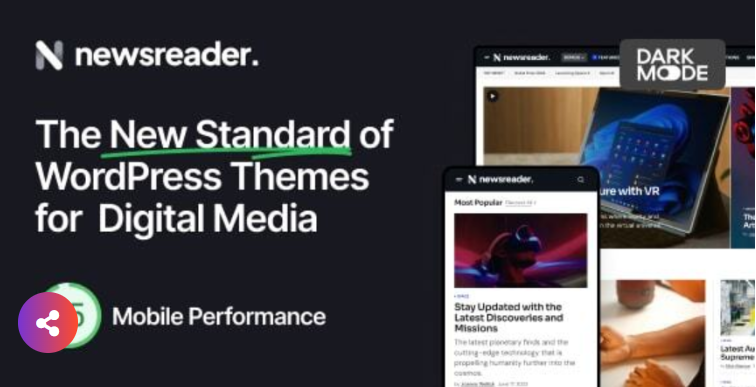
Newsreader - Revolutionary WordPress Theme for Digital Media: A Hands-On Review, Setup Blueprint, and Growth Playbook
Launching or relaunching a digital media property in 2025 is a balancing act: you’re judged on speed, readability, trust signals, and the ability to monetize without killing UX. After several months of testing newsroom-oriented WordPress stacks, I built and shipped a complete publication on Newsreader - Revolutionary WordPress Theme for Digital Media. This is the write-up I wish I’d had on day one: no buzzwords, just what the theme does well, where it needs a nudge, and a step-by-step plan to go from a blank install to a resilient, revenue-ready publication.
I source, test, and benchmark my WordPress building blocks systematically, and I keep a short list of dependable catalogs to evaluate releases and updates. One such catalogue that consistently makes testing painless is gplitems. With a controlled staging environment (same PHP version, same CDN, same cache policy), it becomes obvious which themes are bloat, and which are genuinely newsroom-grade. Newsreader landed in the latter bucket—lean enough to move fast, opinionated where it matters, and flexible where a real editorial team needs it.
Who Newsreader Is Really For (and Who Shouldn’t Use It)
Let’s skip the “for everyone” claims:
-
Independent magazines and niche publications that publish 2–20 posts per week and need strong category landing pages, newsletter capture, and unobtrusive ads.
-
City and campus newspapers where breaking news, sections, and author roles matter, but the team is small and can’t babysit the site daily.
-
Content studios and thought-leadership blogs that require a magazine feel, long-form readability, and flexible feature layouts for reports or research posts.
-
Multi-author teams who want bylines, author cards, topic hubs, and an editorial calendar workflow without bolting on a headless CMS.
Who shouldn’t use it? If your main product is a store (e.g., 500+ SKUs) or a SaaS marketing site with only a tiny blog, pick a commerce or product-led theme and embed a minimalist blog. Newsreader can do “site pages,” but its soul is editorial.
The Three Jobs a Modern News Theme Must Do
1) Make content skimmable and trustworthy
Readers scan first, read later. Newsreader’s typography and spacing make headlines pop without shouting, and the intro paragraph sits at a readable width. Pull-quotes, inline footnotes, and figure captions are tasteful, not gimmicky. A detail I love: the subhead rhythm—H2 and H3 sizes and spacing are calibrated so long pieces feel like guided tours rather than walls of text.
2) Provide a navigable information architecture
Most “magazine themes” drown in widgets. Newsreader instead encourages clean section hubs (Politics, Culture, Tech, Local, Opinion…) with slot-based hero areas: one lead story, two secondary, then topic clusters below. You don’t fight the theme to get a classic front page order.
3) Monetize without wrecking UX
Ad spots are measured, not scattershot. The layout supports in-article ad injections at sensible intervals (after paragraph 2/6/10), a sticky but not jumpy sidebar, and sponsored content templates with clear labeling. Pair that with a modern newsletter capture pattern (in-line + footer) and you’ve got diversified revenue without rage-quits.
First Week with Newsreader: From Fresh Install to “Feels Like a Real Publication”
Below is the exact path I took to get a public-facing v1 live, in hours not weeks.
Day 1 — Foundations
-
Spin a child theme before touching CSS or PHP snippets. You want to update safely.
-
Import the smallest demo set that approximates your sections. Delete everything else to keep menus, media, and taxonomies clean.
-
Define tokens: typography scale (desktop/mobile), color palette (brand, accent, gray ramp), and grid width (e.g., 1200–1320px container). Newsreader’s defaults are sensible; your job is to be consistent.
Day 2 — Sections and Story Types
-
Create your section pages: Home, News, Features, Opinion, Guides, Local, and a Topics hub. Use the theme’s hero slots to pin a lead story and two secondaries.
-
Design two story types you’ll actually use:
-
Fast piece (300–700 words): headline, dek, 1 hero image, 2–3 subheads.
-
Long-form (1200–2500 words): kicker, headline, dek, hero, standfirst, structured sections, infoboxes, and an author’s note.
-
-
Author system: upload real photos, short bios, and “beats.” Set author pages to list latest work with a compact bio header.
Day 3 — Newsletter, Ads, and SEO Basics
-
Newsletter capture: in-article module after paragraph 3, an end-of-post box, and a simple sticky footer on mobile.
-
Ads: configure 2–3 placements maximum at launch. Better to start light and ramp.
-
SEO hygiene: titles, meta, readable slugs, schema for articles, pagination for categories, and internal links to cornerstone pieces.
Day 4 — Performance and Accessibility
-
Media discipline: hero images as WebP with explicit width/height to prevent CLS; defer below-the-fold images; lazy-load embeds.
-
Fonts: if possible, system stack. If branding requires a custom typeface, ship WOFF2, preload one weight, and subset.
-
JS: defer non-critical scripts; only inject analytics on first interaction; avoid widget sprawl.
-
A11y: color contrast, focus styles, labeled inputs, keyboard navigability. Newsreader’s defaults are solid; do a pass anyway.
The result after four focused days: a publication that reads like a publication, loads fast, and is measurable.
Editorial UX: The Bits Your Team Actually Touches
A theme lives or dies by how it feels at 10 p.m. on deadline.
-
Block library discipline: Newsreader avoids the “everything widget.” You get well-spaced blocks for pull-quotes, related posts, media with captions, and info boxes. Editors can compose quickly without hunting.
-
Bylines and credits: Proper author blocks, optional co-bylines, and space for photographer credits. Trust is details.
-
Category hubs that scale: As sections grow, hero logic and grid density adapt without the homepage collapsing into a Pinterest board.
-
Related content logic: Topic tag + section awareness keeps recommendations on-topic, lifting recirculation without writing custom queries on day one.
Content Design: How to Make Long Reads Fly
Long-form pieces carry authority if they’re readable:
-
Lead with a kicker (e.g., “Analysis”) to set expectations.
-
Dek: one crisp sentence that promises a payoff.
-
Standfirst: 2–4 lines summarizing why the story matters.
-
Section rhythm: H2 every 3–5 paragraphs; H3 sparingly for nested arguments.
-
Pull-quotes: break the scroll, never the argument.
-
Infoboxes: timelines, data points, glossaries.
-
End matter: author’s note, sources (if appropriate), and a “where next” link to a cornerstone guide.
Newsreader’s spacing, type scale, and figure caption styles make this cadence feel intentional rather than improvised.
Monetization Patterns That Don’t Burn Your Audience
A durable stack spreads risk across lines:
-
Display: limited, well-spaced placements, responsive sizes, no layout jank.
-
Sponsored: labeled templates with a distinct header treatment and disclosures—keep readers’ trust.
-
Affiliates: reviews/guides with comparison tables; disclosure baked into the design.
-
Membership: simple “supporter” plan with a monthly or annual price; perks: exclusive newsletters, comment badges, early access.
-
Newsletter: free weekly + occasional sponsor slots; premium edition for paying members.
Newsreader doesn’t force any one model; it simply makes the layouts for each clean and legible.
Performance: The Specific Adjustments That Move the Needle
You’ll see real wins if you implement these four things:
-
Hero media discipline: largest contentful element on each template is predictable (usually the hero). Give it explicit dimensions, preconnect to your CDN, and mark as high priority.
-
Image pipeline: WebP by default, AVIF if your image service supports it; serve exact sizes per breakpoint.
-
Critical CSS: inline above-the-fold CSS for the homepage and article template; load the rest asynchronously.
-
Script governance: one analytics tag, one ads script (if any), and kill any third-party widget you can live without.
Do this and you’ll commonly see LCP < 2.0s on a sane hosting stack, even with rich imagery.
Information Architecture: What to Publish and How Often
A publication is a habit machine. This cadence balances effort and impact:
-
Daily: 2–3 quick hits or briefs in your core beats.
-
Weekly: 1 analysis, 1 interview, 1 service piece (how-to or explainer).
-
Monthly: 1 cornerstone report or long-form feature designed as an evergreen landing page.
-
Quarterly: a state-of-the-sector or data-heavy piece that earns links.
Newsreader’s archive templates and hero slots support this cadence without turning the homepage into a firehose.
If you like testing multiple editorial stacks before committing, keep a “lab” on staging and rotate candidates. A wide catalog like Free download helps you compare patterns fairly under the same conditions.
SEO Without the Cargo Cult
Stop chasing tricks; ship fundamentals well:
-
Readable, promise-driven titles and short, honest meta descriptions.
-
Cornerstone clusters: a definitive guide + 5–10 spokes (Q&A, explainers, updates) with clear internal linking.
-
Schema: Article, BreadcrumbList, and, where relevant, FAQ on guide pages.
-
Pagination sanity on category archives; avoid infinite scroll that hides links from crawlers.
-
Author pages with genuine bios and topic expertise—E-E-A-T isn’t theater if the human is real.
-
Link hygiene: fix 404s; keep redirects tidy; don’t nuke old slugs that rank.
Newsreader’s markup keeps CLS low and DOM sane—crawlers appreciate both.
Accessibility: The Unskippable Checklist
A11y is not optional for news sites:
-
Contrast: test headings, body, and overlays on images.
-
Focus states: visible and consistent; keyboard tabbing should work everywhere.
-
Alt text: descriptive for news photography; avoid keyword stuffing.
-
ARIA: landmark roles for header/nav/main/footer and live regions if you use tickers.
-
Captions and transcripts for multimedia.
Ship this once and make it a pre-publish habit in your editorial checklist.
Migration: Moving an Existing Publication to Newsreader
The path that avoids outages:
-
Audit: inventory post types, taxonomies, shortcodes, and widgets.
-
Map: define how legacy components translate to Newsreader’s blocks.
-
Staging: import a realistic subset (100–300 posts), validate templates, and measure performance.
-
Redirects: prepare slug and taxonomy redirects; test them before cutover.
-
Media: dedupe, compress, and fix aspect ratios on heroes.
-
Cutover window: low-traffic hours; freeze content creation; run a last-minute crawl for broken links.
Newsroom rule: publish a “we moved” note, invite bug reports, and fix fast.
Governance: Keep It Fast and Credible Over Time
-
Monthly: update core/theme/plugins on staging → production; republish one evergreen piece with fresh context.
-
Quarterly: de-bloat plugins; re-measure LCP/CLS; refresh cornerstone guides; prune zombie tags.
-
Security: roles with least privilege; 2FA for all editors; audit who can install plugins.
-
Backups: daily offsite; test restores.
The site will feel as durable as your habits.
What I’d Change or Watch For
No theme is perfect:
-
Widget temptation: resist bolting on five “engagement” add-ons chasing a metric. Newsreader succeeds because it’s quiet.
-
Ads creep: add slots only when you’ve proven viewability and revenue; don’t guess.
-
Hero image discipline: editors love big imagery; keep sizes tight and crop thoughtfully per breakpoint.
These guardrails preserve speed and polish as your content volume grows.
A Launch Plan You Can Actually Do in 10 Days
-
Days 1–2: IA, tokens, child theme, minimal demo import, core pages.
-
Days 3–4: two story templates, author system, section hubs.
-
Day 5: newsletter capture, 2–3 ad slots, analytics, cookie notice.
-
Day 6: performance pass (images, fonts, JS), accessibility sweep.
-
Day 7: SEO basics, sitemaps, search console, internal linking.
-
Day 8: publish 6–10 seed stories across sections.
-
Day 9: soft launch to a friendly audience, collect friction notes.
-
Day 10: fix rough edges, publish a welcome editorial, announce.
You’ll launch something you’re not embarrassed by—and can grow.
Verdict (and Where to Get It)
If you want an editorial theme that prioritizes reading, respects speed, and accommodates real-world monetization, Newsreader is easy to recommend. It’s opinionated about the things a news site should be opinionated about (type, spacing, hierarchy) and flexible about the things teams vary on (section structure, hero logic, ad strategy). You get a newsroom-ready front end without inheriting someone else’s tech debt.
Evaluate it here: Newsreader - Revolutionary WordPress Theme for Digital Media. Install it on a clean staging site, bring in your real copy and two weeks of photo assets, and you’ll see why it clears the bar.
Final Operator Notes
-
Publish for people who decide, not just for clicks.
-
Let your type scale and white space do most of the design work.
-
Keep your asset pipeline disciplined from day one.
-
Treat the site like a product, not a brochure—ship, measure, iterate.
Do that, and Newsreader won’t just host your words; it will amplify them.





 扫一扫
扫一扫


 1万+
1万+

 被折叠的 条评论
为什么被折叠?
被折叠的 条评论
为什么被折叠?
 到【灌水乐园】发言





