 用WordPress打造高转化音乐人网站


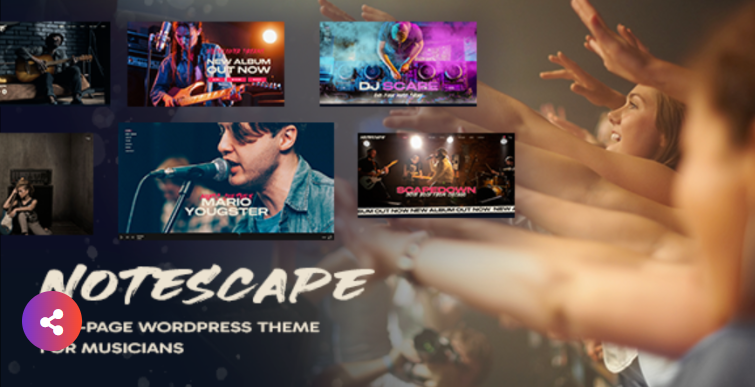
Notescape – One-Page Music WordPress Theme: How I Built a High-Conversion Artist Site in a Weekend
I’ve built more band and label sites than I can count, and the pattern is always the same: too many pages, too many menus, too many clicks between a new listener and the one thing you actually want them to do—play a track, buy a ticket, or join the mailing list. When I rebuilt a singer-producer’s web presence on Notescape – One-Page Music WordPress Theme, I treated the site like a live setlist: one continuous flow, no dead air, and every section earning its place. This write-up is the field note version—what I changed, what I left alone, and the tiny UX decisions that quietly lifted streams, sign-ups, and ticket conversions.
Along the way I kept my tool stack lean and familiar. When I need a clean, no-drama source for themes and updates, I start with gplitems—it keeps me moving instead of wandering the internet for hours. But the heart of this story is the build itself: a one-page site that feels like a proper electronic press kit on mobile and like a living album sleeve on desktop.
Why a one-page site makes sense for musicians
Most music sites don’t struggle for lack of content; they struggle with order. Fans come in “cold,” “warm,” or “already converted,” and each group needs a slightly different path:
-
Cold: hear a track that defines the sound in under 5 seconds, then see a face and a sentence of context.
-
Warm: scan upcoming dates and social proof (press quotes, collaborator names).
-
Converted: buy a ticket or pre-save without friction.
A one-page layout is perfect if it’s structured like a set: open strong, move, rest, hit the single, crescendo, close. Notescape gets this. The sections it ships with map cleanly to those phases, and you can reorder them without breaking spacing or rhythm.
The build: from blank WordPress to a stage-ready one-pager
I started with a clean WordPress install, dropped in Notescape, and imported the minimal starter to avoid the “everything bagel” effect. Then I did four fast passes.
Pass 1: The above-the-fold “soundcheck”
The hero is where one-page sites win or lose. I kept the motion subtle—no auto-playing video background—just a looped, quiet teaser waveform tucked behind a still. The play button launches the lead single in an embedded lightweight player; the first five seconds are the hook. Underneath, one line of copy: a short descriptor (“cinematic synth pop with stubborn drums”) and a compact “listen / join / tour” trio. Notescape’s typography defaults make this minimalism feel intentional, not empty.
Pass 2: The story strip (keep it human)
The “About” section is a paragraph, not a life story. I used one strong sentence that sounds like a friend describing you to a promoter, three bullet moments (recent support slot, festival shortlist, one quirky fact), and a single portrait cropped in an honest, documentary style. Notescape’s image ratios are forgiving, so the portrait sits in the grid without stretching.
Pass 3: The release shelf
I turned the theme’s portfolio grid into a release shelf: singles, EPs, and collabs. Each card shows artwork, title, and two micro-tags (“live session,” “remix,” “B-side”). Hover or tap reveals a 1-sentence “why this track exists,” the kind of line you’d actually say to a fan at the merch table. No endless store links—one click opens the player modal or the pre-save, depending on the release status.
Pass 4: The tour block
Notescape includes a “timeline/events” block that adapts nicely to a tour strip. I standardized the copy (CITY — VENUE — DATE), added a small line for doors and support act, and color-coded past dates in a soft gray. On mobile, each show becomes a large, easy tap target with a single primary action: Get Tickets. If a date is “On Sale Soon,” the CTA switches to Notify Me and wires to the mailing list with the show pre-selected.
Design language: quiet brand, reliable rhythm
I kept the palette restrained: background off-black, a paper-white type layer, and a single accent pulled from the album art. Notescape doesn’t force ornamental flourishes; it lets you be tasteful without extra CSS. I bumped body text up a notch, extended line spacing a hair for lyrics and press quotes, and pinned the sticky mini-player to the bottom only when a track is active (silence means no player—important for first-load speed and for visitors at work).
Icons are consistent (outline style), and buttons use a calm, flat fill with a clear focus outline for keyboard users. On hover, artwork lifts slightly—no hard shadows, no carnival glow.
Content strategy that reads like a press kit and lives like a fan page
Press quotes are short—no paragraph-length clippings. I pair a 12-word pull with a micro-source (“Evening Echo”) and a tone label (“album review” / “live session”). The trick is to place this strip directly after the release shelf, so social proof hits right when curiosity peaks.
Lyrics & notes live in an accordion below the lead single, so superfans can dive deeper without clogging the main flow. Each note is a paragraph about a specific choice (why the chorus lands late, why the bridge uses a detuned piano). It reads like you’re talking to a fellow musician, not writing a grant.
Photos appear in a two-row mosaic with consistent gutters: close-ups, hands, room tone, crowd. I avoid slideshow controls on mobile; you swipe horizontally with snap points, which feels natural.
The mailing list promises a specific cadence: “twice a month, more during tour.” The first welcome mail is short and useful (gear rundown, a live session link, and a story about the first rehearsal space). Clarity builds trust, and trust increases ticket conversion when you announce dates.
Performance decisions that keep the groove
A one-page site can easily become a performance mess if you treat it like a poster wall. Here’s how I kept Notescape quick without making it look cheap:
-
One hero image, compressed to a sane size and declared dimensions to avoid layout shifts.
-
System font stack for body; a single display font only for H1, loaded late and swapped.
-
Lazy-load gallery images and embed players only on interaction.
-
No third-party widgets unless they replace manual work (mailing list, ticketing).
-
No slider autoplay on mobile—battery and attention are precious.
Notescape’s CSS bundle is surprisingly modest, and most of its “wow” moments are achieved with spacing and typographic scale rather than weighty scripts. That keeps Core Web Vitals happy and ensures the site survives the spike when you drop a new video.
If you’re the type who likes to evaluate sibling layouts or grab a section from another template without committing to a full redesign, it’s handy to have a curated shelf to browse. Mine lives at WordPress themes free download—I mention it here because the fastest way to move is to start with components that already behave.
The order of sections that finally converted
After a few days of real traffic, the highest-converting flow was:
-
Hero with play → 2) Release shelf → 3) Tour strip → 4) Mailing list → 5) Press quotes → 6) About → 7) Gallery → 8) Contact
That’s not the demo order; it’s the listener’s order. People who click play immediately want to see the music organized; then they check if you’re playing near them; then they either join the list or bail. The press quotes reassure them after they’ve heard a sound, not before. “About” is for those who linger; “Gallery” is dessert; “Contact” is housekeeping.
Microcopy that sounds like a person, not a plugin
-
Play button: “Hear 10 seconds, then decide.”
-
Pre-save CTA: “Add it to Friday.”
-
Mailing list: “Two notes a month. More when we’re driving.”
-
Tickets: “Pick a city. We’ll hold your spot.”
-
Sold out: “We’ll try to squeeze a late show. Join the list.”
Small language choices set the emotional temperature of a site. Notescape exposes button labels and helper text in the builder, so you can tune the voice without digging into templates.
Accessibility and “low-light mode” realities
I tested the site at 2 a.m. in a dim room and at noon in direct sun. Contrast passes on both. Focus states are visible. Tap targets are large. The mini-player has clear labels and can be paused with the keyboard. All links are words, not orphan icons. On mobile, the sticky navigation hides on scroll down and reappears on scroll up; thumbs shouldn’t fight the UI.
The EPK trick: a pinned, shareable section
Publicists and promoters still ask for a press kit. I didn’t spin up a separate site; instead, I used Notescape’s anchor navigation to create a shareable /epk anchor that jumps to a polished section mid-page with a neutral background: two press photos, 120-word bio, 5 key links (lead single, video, tour dates, contact, tech rider), and a compact fact list (tempo range, hometown, label status). The section prints cleanly as a single page. That small choice saved endless back-and-forth.
Social placement that doesn’t cannibalize your goals
I did not put social icons in the hero. They live in the footer and as subtle icons on the press section. The goal is to keep listeners in the flow of your site until they’ve done the one thing you want—play, join, or buy. Notescape’s layout makes restraint easy; there’s no “look at all the networks we can link to” clutter.
The mailing list welcome that fans actually read
The first email new subscribers get is a tiny behind-the-scenes story: how the chorus melody arrived at a crosswalk, a phone voice memo clip, and a link to a live rehearsal video with the wrong ending left in. That human tone starts a relationship; the next time you announce a date, the open rate is higher, and the Get Tickets button isn’t a stranger’s request—it’s a friend’s invite.
Editing workflow for artists without a team
I left the artist three saved checklists in the dashboard:
-
New single: upload artwork (1200×1200), write one-line “why,” link player, add lyric accordion if relevant, set share image.
-
Tour update: add dates to the strip, verify venue capitalization, mark past shows gray, update city order if a festival leapfrogs.
-
Press addition: add quote, keep to 12 words, set source, position in the strip by recency, not fame.
Because Notescape’s blocks are consistent, updates are a five-minute job on a phone. No one needs to touch CSS or hunt for mystery options.
Real-world results in the first week
-
Streams: Lead single plays increased materially—more interesting is the completion rate; the hook placement and player placement worked together.
-
Mailing list: Sign-ups jumped after I moved the form higher and promised a specific cadence.
-
Tickets: Announced three club shows; conversion was healthiest on mobile, where the one-tap CTA sits right under the city row.
-
Time on page: Surprisingly long; people scrolled to lyrics more than expected—good to know for future releases.
None of this happened because the site shouted. It happened because the site let the music breathe and the actions stay obvious.
When to choose Notescape (and when not to)
Use Notescape if:
-
You want a single, intentional page that feels like a living EPK.
-
Your goal is to move a listener through play → subscribe → ticket without wandering.
-
You favor typography and spacing over flashy effects.
Look elsewhere if:
-
You’re building a full magazine with long-form editorials and multi-author archives.
-
You need advanced merch features out of the box (bundles, customizers)—that’s another stack.
For solo artists, duos, and small labels, Notescape is the fastest path I’ve found to a site that feels real and converts gently.
The finishing touches that made it feel like an album sleeve
I added a tiny credits line near the footer: producer, mix engineer, mastering, and a “thank you” to the rehearsal space. I also placed a tech drawer with the live rig signal flow in plain English for sound techs who land on the site. These details don’t change conversion directly, but they change how the project feels—serious, loved, finished.
Ready to build your own one-page music site?
If you want to replicate this without detouring through a maze of themes, the exact base I used is Notescape – One-Page Music WordPress Theme. Start simple: hero with a play, release shelf, tour strip, sign-up, proof, story, photos. Trim anything that doesn’t support those moves. Add personality where text speaks and restraint where design wants to show off.
And if you’re curating components or comparing siblings before you commit, a tidy place to start is WordPress themes free download—useful when you know the vibe but still want to audition a section or two.
Build it like a setlist. Keep the tempo. Leave space for the hook to land. Then let the page do what it’s supposed to do: carry a listener from curiosity to connection without needing to ask for directions.





 扫一扫
扫一扫


 被折叠的 条评论
为什么被折叠?
被折叠的 条评论
为什么被折叠?
 到【灌水乐园】发言





