


作为程序员,我们的生产皆来源于需求,本次的需求是把.Net core WebAPI托管进窗体程序,缘由是.net core的控制台窗口很容易被人误关,常见的办法是把程序做成windows服务,开机自启,不过windows服务是完全隐藏的,如果用户想在任务栏中看到进程,想在退出时输入密码确认,我暂时能想到的就是用窗体程序接管WebAPI程序,需求不是非常好,但也合情合理。
废话不多说,进入正题。
首先,我这里用WPF来实现(Winform也是基本一样的),计划是在窗体程序中,不仅接管WebAPI程序,同时把控制台的内容输出到WPF的富文本中,关闭窗体程序后,最小化到系统托盘,右键程序图标,可恢复窗口、可退出进程。
vs中创建WPF程序后,修改主窗体及后置代码:
<Window x:Class="NETCore.ApiHosted.MainWindow"
        xmlns="http://schemas.microsoft.com/winfx/2006/xaml/presentation"
        xmlns:x="http://schemas.microsoft.com/winfx/2006/xaml"
        xmlns:d="http://schemas.microsoft.com/expression/blend/2008"
        xmlns:mc="http://schemas.openxmlformats.org/markup-compatibility/2006"
        xmlns:local="clr-namespace:NETCore.ApiHosted"
        mc:Ignorable="d"
        Title="NETCore.ApiHosted" Height="450" Width="800">
    <Grid>
        <ScrollViewer HorizontalScrollBarVisibility="Disabled" VerticalScrollBarVisibility="Auto">
            <RichTextBox Name="rtbOutput" HorizontalAlignment="Stretch" VerticalAlignment="Stretch"/>
        </ScrollViewer>
    </Grid>
</Window>
    /// <summary>
    /// Interaction logic for MainWindow.xaml
    /// </summary>
    public partial class MainWindow : Window
    {
        private NotifyIcon notifyIcon;
        private ContextMenuStrip contextMenuStrip;
        private Process webApiProcess;


        public MainWindow()
        {
            this.InitializeComponent();


            // 将WebAPI控制台输出重定向到WPF窗口
            ProcessStartInfo startInfo = new ProcessStartInfo
            {
                FileName = "cmd.exe",
                Arguments = "/c dotnet HostedConsole.dll",
                RedirectStandardOutput = true,
                RedirectStandardError = true,
                UseShellExecute = false,
                CreateNoWindow = true
            };

            webApiProcess = new Process
            {
                StartInfo = startInfo
            };

            webApiProcess.OutputDataReceived += (sender, e) =>
            {
                Dispatcher.Invoke(() =>
                {
                    // 将WebAPI的输出写入到WPF窗口的控件中,如一个TextBox或RichTextBox
                    rtbOutput.AppendText(e.Data + Environment.NewLine);
                });
            };

            webApiProcess.Start();
            webApiProcess.BeginOutputReadLine();

            // 创建托盘图标
            notifyIcon = new NotifyIcon
            {
                Icon = new System.Drawing.Icon("ApiHosted.ico"),
                Visible = true,
                Text = "WebAPI 托管程序"
            };


            notifyIcon.DoubleClick += (sender, args) => ShowMain();
            contextMenuStrip = new ContextMenuStrip();
            contextMenuStrip.Items.Add("Restore", null, (s, e) => ShowMain());
            contextMenuStrip.Items.Add("Exit", null, (s, e) => ExitMenuItem_Click(s, e));
            notifyIcon.ContextMenuStrip = contextMenuStrip;

            // 窗口关闭时最小化到托盘
            this.Closing += (s, e) =>
            {
                e.Cancel = true;
                this.Hide();
            };
        }

        private void ExitMenuItem_Click(object sender, EventArgs e)
        {
            var dialog = new PasswordWindow();
            dialog.btnExit.Click += (s, e) =>
            {
                string username = dialog.UserName.Text;
                string password = dialog.PwBox.Password;

                // 在这里验证用户名和密码的正确性
                if (username == "admin" && password == "123456")
                {
                    // 输入用户名和密码正确后退出应用程序
                    webApiProcess.Kill();
                    notifyIcon.Dispose();
                    System.Windows.Application.Current.Shutdown();
                }
                else
                {
                    MessageBox.Show("用户名或密码错误,请重试。", "错误", MessageBoxButton.OK, MessageBoxImage.Error);
                }
            };
            dialog.WindowStartupLocation = WindowStartupLocation.CenterScreen;
            dialog.ShowDialog();
        }

        private void ShowMain()
        {
            this.Show();
            WindowState = WindowState.Normal;
        }
    }
由于NotifyIcon类和ContextMenuStrip类来自于winform的dll,因此还需要在程序配置信息中加一段代码,否则无法通过编译
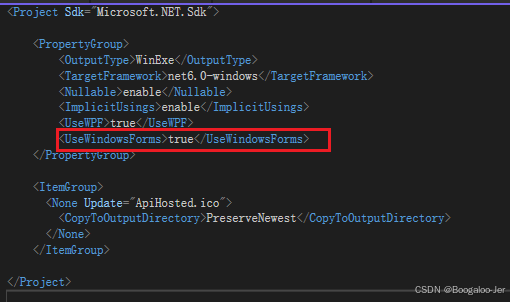
创建测试程序HostedConsole:控制台应用程序,代码很简单,不断的输出信息即可
// See https://aka.ms/new-console-template for more information
Console.WriteLine("Hello, World!");


while (true)
{
    Console.WriteLine($"{DateTime.Now} Hello. {new Random().Next(0, 10000)}");
    Thread.Sleep(1000);
}
然后,编译两个程序。
把HostedConsole的编译后的exe和dll,copy到NETCore.ApiHosted的bin目录下,总之,让两个程序的编译包都放在一起,当然也可以创建文件夹进行管理,更好看一些。
最后,启动NETCore.ApiHosted.exe进程,可以看到NETCore.ApiHosted启动的时候,也启动了HostedConsole,并且把HostedConsole的控制台输出项取了过来,输出在富文本中。
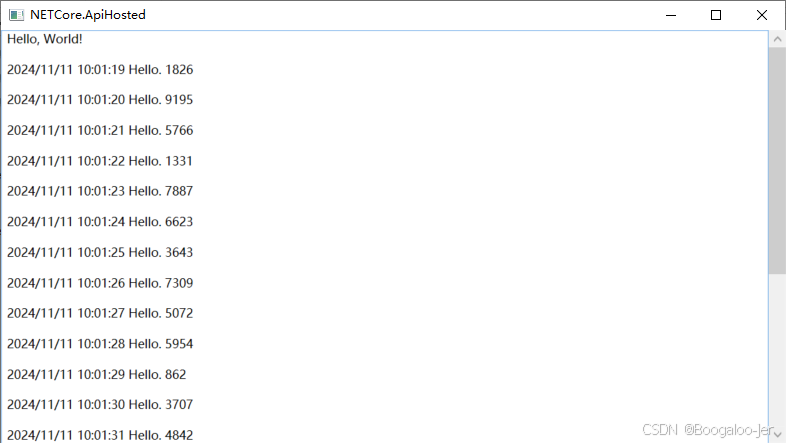
关闭窗口,最小化到托盘
右键进程 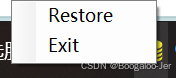
是想要的效果,OK,Restore恢复窗体,Exit退出进程,需要出确认框,输入账号密码退出。
密码确认窗体:
<Window x:Class="NETCore.ApiHosted.PasswordWindow"
        xmlns="http://schemas.microsoft.com/winfx/2006/xaml/presentation"
        xmlns:x="http://schemas.microsoft.com/winfx/2006/xaml"
        xmlns:d="http://schemas.microsoft.com/expression/blend/2008"
        xmlns:mc="http://schemas.openxmlformats.org/markup-compatibility/2006"
        xmlns:local="clr-namespace:NETCore.ApiHosted"
        mc:Ignorable="d"
        Title="Exit Confirm" Height="200" Width="300">

    <Grid Grid.Row="1">
        <Grid.RowDefinitions>
            <RowDefinition/>
            <RowDefinition/>
            <RowDefinition/>
        </Grid.RowDefinitions>
        <Grid.ColumnDefinitions>
            <ColumnDefinition Width="80"/>
            <ColumnDefinition/>
        </Grid.ColumnDefinitions>

        <TextBlock Text="用户名" Grid.Row="0" Grid.Column="0" VerticalAlignment="Center" HorizontalAlignment="Right"></TextBlock>
        <TextBox x:Name="UserName" Grid.Row="0" Grid.Column="1" HorizontalAlignment="Left" TextWrapping="Wrap" Margin="10" VerticalAlignment="Center" Width="150"/>

        <TextBlock Text="密码" Grid.Row="1" Grid.Column="0" VerticalAlignment="Center" HorizontalAlignment="Right"></TextBlock>
        <PasswordBox x:Name="PwBox" Grid.Row="1" Grid.Column="1" HorizontalAlignment="Left" VerticalAlignment="Center" Width="150" Margin="10" />

        <Button x:Name="btnExit" Content="Exit" Grid.Row="2" Grid.ColumnSpan="2" HorizontalAlignment="Center" Margin="10"
                VerticalAlignment="Top" Width="100" Height="30" IsDefault="True">
        </Button>
    </Grid>
</Window>
不知你有没有发现?退出进程的代码存在Bug,因为只是退出了NETCore.ApiHosted,却没有退出HostedConsole,所以需要进一步提升代码质量。
我的处理方式是,自己的webapi程序有一个固定端口,
Process[] dotnetProcesses = Process.GetProcessesByName("dotnet");
使用这段的代码找到所有dotnet进程,遍历进程,找到该端口的进程,Kill it!
贴出代码:
private void ExitMenuItem_Click(object sender, EventArgs e)
{
    var dialog = new PasswordWindow();
    dialog.btnExit.Click += (s, e) =>
    {
        string username = dialog.UserName.Text;
        string password = dialog.PwBox.Password;

        // 在这里验证用户名和密码的正确性
        if (username == "admin" && password == "123456")
        {
            string processName = "dotnet";
            int port = 你的webapi端口;

            // 获取所有名为dotnet的进程
            Process[] dotnetProcesses = Process.GetProcessesByName(processName);

            foreach (Process process in dotnetProcesses)
            {
                try
                {
                    // 尝试获取进程打开的所有端口
                    foreach (var connection in IPGlobalProperties.GetIPGlobalProperties().GetActiveTcpListeners())
                    {
                        // 检查端口和进程ID是否匹配
                        if (connection.Port != port) continue;

                        // 由于我们无法直接从connection获取进程ID,我们需要检查dotnet进程是否有可能监听该端口
                        // 一种简单的方法是检查进程启动的命令行参数是否包含端口号
                        if (process.MainModule.FileName.EndsWith("dotnet.exe", StringComparison.OrdinalIgnoreCase))
                        {
                            if (process.ProcessName == "dotnet")
                            {
                                Console.WriteLine($"找到监听端口 {port} 的 dotnet 进程: {process.ProcessName} (ID: {process.Id})");
                                process.Kill(); // 关闭进程
                                Console.WriteLine($"进程 {process.ProcessName} (ID: {process.Id}) 已被关闭");

                                webApiProcess.Kill();
                                notifyIcon.Dispose();
                                System.Windows.Application.Current.Shutdown();
                                return;
                            }
                        }
                    }
                }
                catch (Exception ex)
                {
                    MessageBox.Show($"无法访问进程 {process.ProcessName} (ID: {process.Id}) 的信息: {ex.Message}");
                }
            }
        }
        else
        {
            MessageBox.Show("用户名或密码错误,请重试。", "错误", MessageBoxButton.OK, MessageBoxImage.Error);
        }
    };
    dialog.WindowStartupLocation = WindowStartupLocation.CenterScreen;
    dialog.ShowDialog();
}
至于如何更加优雅的关闭,还请读者们发挥思路,给出合理答案,谢谢!





 扫一扫
扫一扫


 4万+
4万+

 被折叠的 条评论
为什么被折叠?
被折叠的 条评论
为什么被折叠?
 到【灌水乐园】发言





