



 本文详细介绍了Python中print函数的使用技巧,特别是如何通过end参数控制打印行为,避免自动换行。并通过两个实例——打印小星星图案和生成九九乘法表,展示了这些技巧的实际应用。
之前一直没有注意到这个细节,请看
def pt1():
	print('*')
	print('*')

pt1()
result:
*
*
可见print函数默认在结尾有个换行,如果不想换行,可在实参中加end=''或者任意拼接字符串
def pt1():
	print('*',end='')
	print('*')

pt2()
result
**
案例1:打印小星星
 def printstar():
    row = 1
    while row <= 5:
        col = 1
        while col <= row:
            print('*',end='')
            col += 1
        print('')
        row += 1
printstar()
*
**
***
****
*****
案例2:九九乘法表
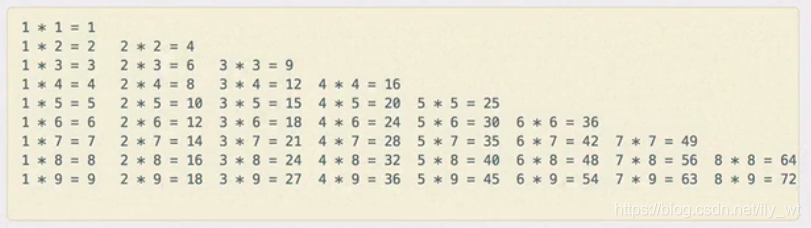
def ptmul():
    row = 1
    while row <= 9:
        col = 1
        while col <= row:
            print("{}*{}={}".format(col, row, col*row),end='\t')
            col += 1
        print('') # 执行换行
        row += 1

ptmul()
1*1=1
1*2=2	2*2=4
1*3=3	2*3=6	3*3=9
1*4=4	2*4=8	3*4=12	4*4=16
1*5=5	2*5=10	3*5=15	4*5=20	5*5=25
1*6=6	2*6=12	3*6=18	4*6=24	5*6=30	6*6=36
1*7=7	2*7=14	3*7=21	4*7=28	5*7=35	6*7=42	7*7=49
1*8=8	2*8=16	3*8=24	4*8=32	5*8=40	6*8=48	7*8=56	8*8=64
1*9=9	2*9=18	3*9=27	4*9=36	5*9=45	6*9=54	7*9=63	8*9=72	9*9=81





 扫一扫
扫一扫


 180
180

 被折叠的 条评论
为什么被折叠?
被折叠的 条评论
为什么被折叠?
 到【灌水乐园】发言





