



1、基本方法
package enumeration;

import java.util.ArrayList;
import java.util.Collections;
import java.util.List;

public class C {
    public static  void main(String[] args) {
        List list = new ArrayList();
        //创建一个ArrayList,用接口来接收。牢记那张图。
       list.add("jack");//只要是Object的子类都可以放。
       list.add(10);//这里自动装箱了成为Integer。
       list.add(true);
        System.out.println("list =" + list );
//        list.remove(0);//删除第一个元素
//        list.remove("true");
        boolean k = list.contains("k");//看集合是否包含
        System.out.println(k);
        int num = list.size();//看集合的个数
        list.isEmpty();//看是否为空。
//        list.clear();将其清空
//        list.addAll();添加多个元素
//        list.addAll(Collection o);只要是实现了Collection接口的子类都可以传进去。
       ArrayList list2 = new ArrayList();
        list2.add("woaini");
        list2.add("yidingyaozaiyiqi");
        list.addAll(list2);
        System.out.println(list);
        //containsAll:查找多个元素是否存在
        System.out.println(list.containsAll(list2));
      list.removeAll(list2);

    }
}
2、
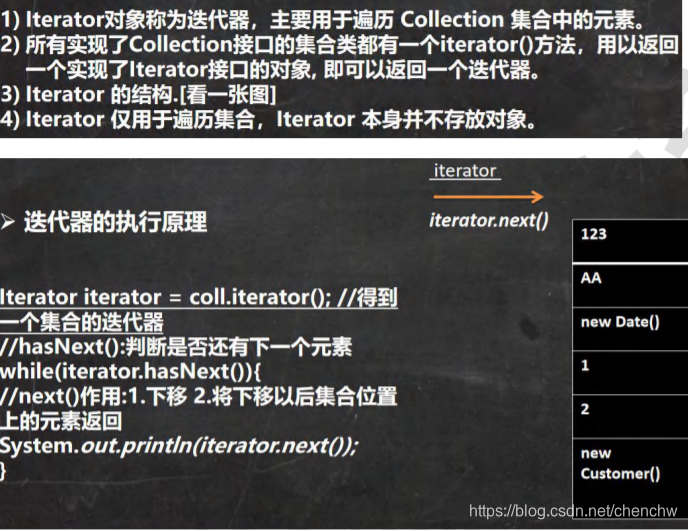
package Gather;

import java.util.ArrayList;
import java.util.Collection;
import java.util.Iterator;

public class gather {
    public static void main(String[] args) {
        Collection a = new ArrayList();
        a.add(new Book("向上生长","paoge",12.5));
        a.add(new Book("乌合之众","siji",11.5));
        a.add(new Book("通信原理","fan",52.5));
        System.out.println(a);
        //(1)先得到a对应的迭代器
        Iterator iterator = a.iterator();
        //(2)使用while循环遍历
        while(iterator.hasNext()){//判断是否 还有数据
            Object obj = iterator.next();//作用(1)将指针下移(2)将下移之前的元素返回(3)类型是Object
            System.out.println(obj);

        }
        //还有一个快捷键哦
//        while (iterator.hasNext()) {
//            Object obj =  iterator.next();
//
//        }  itit快捷键
        //(3)档推出while循环后,此时iterator迭代器指向最后的元素
//        iterator.next();再次取值的话,就会出现异常啊,因为此时已经到达了最下面了
        //(4)希望再次遍历的话,需要重置迭代器:
        iterator = a.iterator();//需要重置迭代器,再一次指向最前方。

    }
}
class Book {
    private String name;
    private String author;
    private double price;

    public Book(String name, String author, double price) {
        this.name = name;
        this.author = author;
        this.price = price;
    }

    public String getName() {
        return name;
    }

    public void setName(String name) {
        this.name = name;
    }

    public String getAuthor() {
        return author;
    }

    public void setAuthor(String author) {
        this.author = author;
    }

    public double getPrice() {
        return price;
    }

    public void setPrice(double price) {
        this.price = price;
    }

    @Override
    public String toString() {
        return "Book{" +
                "name='" + name + '\'' +
                ", author='" + author + '\'' +
                ", price=" + price +
                '}';
    }
}
增强for
package Gather;

import java.util.ArrayList;
import java.util.Collection;
import java.util.Iterator;

public class gather {
    public static void main(String[] args) {
        Collection a = new ArrayList();
        a.add(new Book("向上生长","paoge",12.5));
        a.add(new Book("乌合之众","siji",11.5));
        a.add(new Book("通信原理","fan",52.5));
        //增强for循环:也可以用在数组上,本质上也是一个iterator,可以理解成简化版本的迭代器。
        //快捷键I。


        for(Object book : a){
            System.out.println(book);
        }

    }
}
class Book {
    private String name;
    private String author;
    private double price;

    public Book(String name, String author, double price) {
        this.name = name;
        this.author = author;
        this.price = price;
    }

    public String getName() {
        return name;
    }

    public void setName(String name) {
        this.name = name;
    }

    public String getAuthor() {
        return author;
    }

    public void setAuthor(String author) {
        this.author = author;
    }

    public double getPrice() {
        return price;
    }

    public void setPrice(double price) {
        this.price = price;
    }

    @Override
    public String toString() {
        return "Book{" +
                "name='" + name + '\'' +
                ", author='" + author + '\'' +
                ", price=" + price +
                '}';
    }
}
list的相关方法
package Gather;

import java.util.ArrayList;
import java.util.List;

public class list {
    public static void main(String[] args) {
        //(1)List集合类中的元素有序(添加顺序和取出的顺序一致,且可以重复)
       List list = new ArrayList();
       list.add("jack");
       list.add("mary");
       list.add("a");
       list.add("j");
       list.add(1,"j");//没有加入索引的时候默认加在最后面
        list.remove(4);//删除指定下表的元素
        list.set(0,"xiaozhu");//将下表索引为0的元素替换成xiaozhu
//      list  subList(int fromList ,int tolist) 返回指定位置的值到一个行的子集合,左闭右开。
        List list1 = list.subList(0, 2);
        System.out.println(list1);
        System.out.println(list.lastIndexOf("j"));
        System.out.println("list " + list);
        //(2)List集合中的每个元素都具有其对应的索引
    }
}
三种方法遍历集合:
   Iterator iterator = list.iterator();
        while (iterator.hasNext()) {
            Object next =  iterator.next();
            System.out.println("list" + next);
        }

        for (Object o :list) {
            System.out.println(o);

        }
        for (int i = 0; i < list.size(); i++) {
            System.out.println(list.get(i));
        }
对集合里面的某项数据(对象中的某个数据)进行排序
package Gather;

import java.util.ArrayList;
import java.util.Iterator;
import java.util.List;

public class Price {
    public static void main(String[] args) {
        List list = new ArrayList();
        list.add(new Book("通信原理","樊",125.2));
        list.add(new Book("信号","樊",25.2));
        list.add(new Book("电磁场原理","樊",12));
        //list.get(i);得到第j个集合

        for (Object o :list) {
            System.out.println(o);
        }

        //排序
        bubble(list);

        System.out.println("排序后的值");

        for (Object o :list) {
            System.out.println(o);
        }


    }
    public static void bubble(List list){
        for (int i = 0; i < list.size() - 1; i++) {
            for (int j = 0; j < list.size() - 1 - i; j++) {
                 Book book1 = (Book)list.get(j);
                 Book book2 = (Book)list.get(j + 1);
                if (book1.getPrice() > book2.getPrice()){
                    list.set(j,book2);
                    list.set(j+1,book1);
                    //集合就不用进行交换了,直接用set方法
                    //因为他是引用类型,所以直接改变原来的值
                }
            }
        }

    }
}

class Book{
    private String name ;
    private String author;
    private double price;

    public Book(String name, String author, double price) {
        this.name = name;
        this.author = author;
        this.price = price;
    }

    public String getName() {
        return name;
    }

    public void setName(String name) {
        this.name = name;
    }

    public String getAuthor() {
        return author;
    }

    public void setAuthor(String author) {
        this.author = author;
    }

    public double getPrice() {
        return price;
    }

    public void setPrice(double price) {
        this.price = price;
    }

    @Override
    public String toString() {
        return "Book{" +
                "name='" + name + '\'' +
                ", author='" + author + '\'' +
                ", price=" + price +
                '}';
    }
}





 扫一扫
扫一扫


 1548
1548

 被折叠的 条评论
为什么被折叠?
被折叠的 条评论
为什么被折叠?
 到【灌水乐园】发言





