






目录
1. 用栈实现队列 ★★
2. 单词搜索 II ★★★
3. 直线上最多的点数 ★★★
1. 用栈实现队列
请你仅使用两个栈实现先入先出队列。队列应当支持一般队列支持的所有操作(push、pop、peek、empty):
实现 MyQueue 类:
void push(int x)将元素 x 推到队列的末尾int pop()从队列的开头移除并返回元素int peek()返回队列开头的元素boolean empty()如果队列为空,返回true;否则,返回false
说明:
- 你只能使用标准的栈操作 —— 也就是只有
push to top,peek/pop from top,size, 和is empty操作是合法的。 - 你所使用的语言也许不支持栈。你可以使用 list 或者 deque(双端队列)来模拟一个栈,只要是标准的栈操作即可。
进阶:
- 你能否实现每个操作均摊时间复杂度为
O(1)的队列?换句话说,执行n个操作的总时间复杂度为O(n),即使其中一个操作可能花费较长时间。
示例:
输入:
["MyQueue", "push", "push", "peek", "pop", "empty"]
[[], [1], [2], [], [], []]
输出:
[null, null, null, 1, 1, false]
解释:
MyQueue myQueue = new MyQueue();
myQueue.push(1); // queue is: [1]
myQueue.push(2); // queue is: [1, 2] (leftmost is front of the queue)
myQueue.peek(); // return 1
myQueue.pop(); // return 1, queue is [2]
myQueue.empty(); // return false
提示:
1 <= x <= 9- 最多调用
100次push、pop、peek和empty - 假设所有操作都是有效的 (例如,一个空的队列不会调用
pop或者peek操作)
代码:
#include <bits/stdc++.h>
using namespace std;

class MyQueue
{
public:
    /** Initialize your data structure here. */
    stack<int> a, b;
    MyQueue()
    {
    }
    /** Push element x to the back of queue. */
    void push(int x)
    {
        while (!b.empty())
        {
            a.push(b.top());
            b.pop();
        }
        b.push(x);
        while (!a.empty())
        {
            b.push(a.top());
            a.pop();
        }
    }
    /** Removes the element from in front of queue and returns that element. */
    int pop()
    {
        int res = b.top();
        b.pop();
        return res;
    }
    /** Get the front element. */
    int peek()
    {
        return b.top();
    }
    /** Returns whether the queue is empty. */
    bool empty()
    {
        return b.empty();
    }
};

int main()
{

	MyQueue myQueue = MyQueue();
	myQueue.push(1); // queue is: [1]
	myQueue.push(2); // queue is: [1, 2] (leftmost is front of the queue)
	cout << myQueue.peek() << endl; // return 1
	cout << myQueue.pop() << endl; // return 1, queue is [2]
	myQueue.empty(); // return false

    return 0;
}
输出:
1
1
2. 单词搜索 II
给定一个 m x n 二维字符网格 board 和一个单词(字符串)列表 words,找出所有同时在二维网格和字典中出现的单词。
单词必须按照字母顺序,通过 相邻的单元格 内的字母构成,其中“相邻”单元格是那些水平相邻或垂直相邻的单元格。同一个单元格内的字母在一个单词中不允许被重复使用。
示例 1:
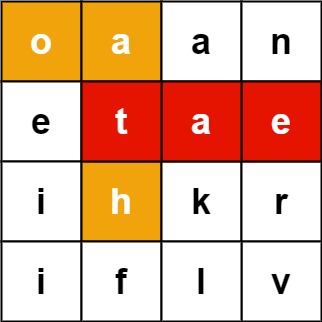
输入:board = [["o","a","a","n"],["e","t","a","e"],["i","h","k","r"],["i","f","l","v"]], words = ["oath","pea","eat","rain"]
输出:["eat","oath"]
示例 2:
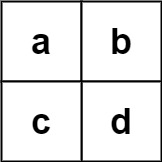
输入:board = [["a","b"],["c","d"]], words = ["abcb"]
输出:[]
提示:
m == board.lengthn == board[i].length1 <= m, n <= 12board[i][j]是一个小写英文字母1 <= words.length <= 3 * 10^41 <= words[i].length <= 10words[i]由小写英文字母组成words中的所有字符串互不相同
代码:
#include <bits/stdc++.h>
using namespace std;
class Solution
{
public:
    struct Node
    {
        bool isflag = false;
        Node *next[27] = {};
    };
    set<string> res;
    vector<string> ans;
    Node *root;
    vector<int> dirx{0, 0, 1, -1};
    vector<int> diry{1, -1, 0, 0};
    bool flag;
    void createtree(vector<string> &words)
    {
        root = new Node();
        for (auto w : words)
        {
            Node *p = root;
            for (int i = 0; i < w.length(); i++)
            {
                if (p->next[w[i] - 'a'] == NULL)
                {
                    p->next[w[i] - 'a'] = new Node();
                }
                p = p->next[w[i] - 'a'];
            }
            p->isflag = true;
        }
    }
    void backtrack(vector<vector<char>> &board, vector<vector<bool>> visited, int row, int col, Node *roott, string cur)
    {
        cur += board[row][col];
        roott = roott->next[board[row][col] - 'a'];
        if (!roott)
            return;
        if (roott->isflag == true)
        {
            res.insert(cur);
            flag = true;
        }
        visited[row][col] = true;
        for (int i = 0; i < 4; i++)
        {
            int nx = row + dirx[i];
            int ny = col + diry[i];
            if (nx < 0 || ny < 0 || nx >= board.size() || ny >= board[0].size())
                continue;
            if (visited[nx][ny] == false)
            {
                backtrack(board, visited, nx, ny, roott, cur);
            }
        }
    }
    vector<string> findWords(vector<vector<char>> &board, vector<string> &words)
    {
        if (board.size() == 0 || words.size() == 0)
            return ans;
        createtree(words);
        for (int i = 0; i < board.size(); i++)
        {
            for (int j = 0; j < board[i].size(); j++)
            {
                Node *p = root;
                flag = false;
                if (p->next[board[i][j] - 'a'])
                {
                    vector<vector<bool>> visited{board.size(), vector<bool>(board[0].size(), false)};
                    backtrack(board, visited, i, j, p, "");
                }
            }
        }
        set<string>::iterator it;
        for (it = res.begin(); it != res.end(); it++)
            ans.push_back(*it);
        return ans;
    }
};

int main()
{
	Solution s;
	vector<vector<char>> board = {
		{'o','a','a','n'},
		{'e','t','a','e'},
		{'i','h','k','r'},
		{'i','f','l','v'}};
	vector<string> words = {"oath","pea","eat","rain"};
	for (auto str: s.findWords(board, words))
		cout << str << " ";
	cout << endl;

    return 0;
}
输出:
eat oath
3. 直线上最多的点数
给你一个数组 points ,其中 points[i] = [xi, yi] 表示 X-Y 平面上的一个点。求最多有多少个点在同一条直线上。
示例 1:
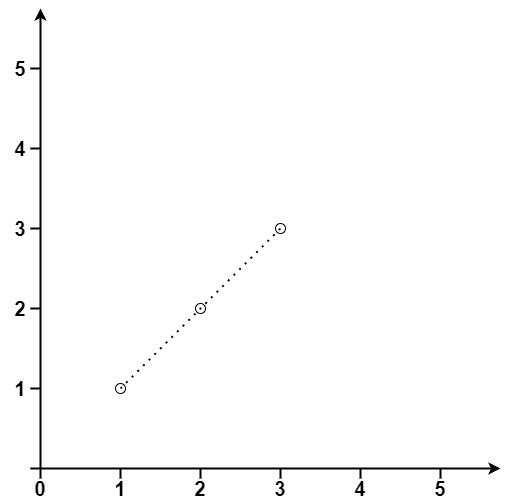
输入:points = [[1,1],[2,2],[3,3]]
输出:3
示例 2:
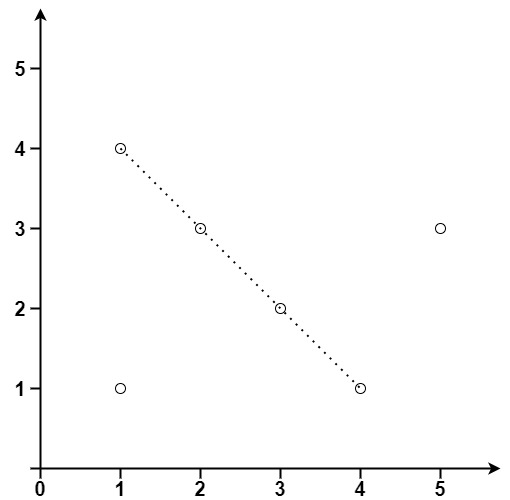
输入:points = [[1,1],[3,2],[5,3],[4,1],[2,3],[1,4]]
输出:4
提示:
1 <= points.length <= 300points[i].length == 2-10^4 <= xi, yi <= 10^4points中的所有点 互不相同
代码:
#include <bits/stdc++.h>
using namespace std;
struct Point
{
    int x;
    int y;
    Point() : x(0), y(0) {}
    Point(int a, int b) : x(a), y(b) {}
};
class Solution
{
public:
    int maxPoints(vector<Point> &points)
    {
        int ans = 0;
        for (int i = 0; i < points.size(); ++i)
        {
            map<pair<int, int>, int> m;
            int p = 1;
            for (int j = i + 1; j < points.size(); ++j)
            {
                if (points[i].x == points[j].x && (points[i].y == points[j].y))
                {
                    ++p;
                    continue;
                }
                int dx = points[j].x - points[i].x;
                int dy = points[j].y - points[i].y;
                int d = gcd(dx, dy);
                ++m[{dx / d, dy / d}];
            }
            ans = max(ans, p);
            for (auto it = m.begin(); it != m.end(); ++it)
            {
                ans = max(ans, it->second + p);
            }
        }
        return ans;
    }
    int gcd(int a, int b)
    {
        return (b == 0) ? a : gcd(b, a % b);
    }
};

int main()
{
	Solution s;
	vector<Point> points = {{1,1},{2,2},{3,3}};
	cout << s.maxPoints(points) << endl;

	points = {{1,1},{3,2},{5,3},{4,1},{2,3},{1,4}};
	cout << s.maxPoints(points) << endl;

    return 0;
}
输出:
3
4
🌟 每日一练刷题专栏
✨ 持续,努力奋斗做强刷题搬运工!
👍 点赞,你的认可是我坚持的动力!
★ 收藏,你的青睐是我努力的方向!
✏️ 评论,你的意见是我进步的财富!
 | C/C++ 每日一练 专栏 |
 | Python 每日一练 专栏 |





 扫一扫
扫一扫


 2223
2223


 到【灌水乐园】发言



