


传统生产消费者模式例子
这里写的是传统版还有一版是阻塞队列版,这里的例子可以和阻塞队列版对比。下面我们来做一道小需求题“一个初始值为零的变量,两个线程对其交替操作,一个加1一个减1,执行5次”。
代码如下:
import java.util.concurrent.locks.Condition;
import java.util.concurrent.locks.Lock;
import java.util.concurrent.locks.ReentrantLock;

class ShareData {//资源类
    private int number = 0;
    private Lock lock = new ReentrantLock();
    private Condition condition = lock.newCondition();

    public void increment() throws Exception {
        lock.lock();
        try {
            //1 判断
            while (number != 0) {
                //等待,不能生产
                condition.await();
            }
            //2干活
            number++;
            System.out.println(Thread.currentThread().getName() + "\t" + number);
            //3通知唤醒
            condition.signalAll();
        } catch (Exception e) {
            e.printStackTrace();
        } finally {
            lock.unlock();
        }
    }

    public void decrement() throws Exception {
        lock.lock();
        try {
            //1 判断
            while (number == 0) {
                //等待,不能生产
                condition.await();
            }
            //2干活
            number--;
            System.out.println(Thread.currentThread().getName() + "\t" + number);
            //3通知唤醒
            condition.signalAll();
        } catch (Exception e) {
            e.printStackTrace();
        } finally {
            lock.unlock();
        }
    }
}

/**
 * 一个初始值为零的变量,两个线程对其交替操作,一个加1一个减1,执行5次
 */
public class ConsumerTraditionDemo {
    public static void main(String[] args) {
        ShareData shareData = new ShareData();
        new Thread(()->{
            for (int i = 1; i <=5 ; i++) {
                try {
                    shareData.increment();
                } catch (Exception e) {
                    e.printStackTrace();
                }
            }
        },"t1").start();

        new Thread(()->{
            for (int i = 1; i <=5 ; i++) {
                try {
                    shareData.decrement();
                } catch (Exception e) {
                    e.printStackTrace();
                }
            }
        },"t2").start();
    }
}
运行结果:
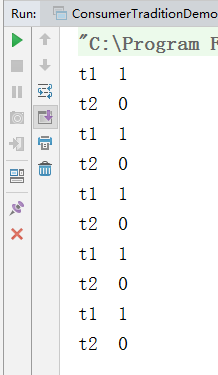
这里需要注意为什么用while而不用if因为用while可以防止虚假唤醒机制。
这里改下代码演示如下:
import java.util.concurrent.locks.Condition;
import java.util.concurrent.locks.Lock;
import java.util.concurrent.locks.ReentrantLock;

class ShareData {//资源类
    private int number = 0;
    private Lock lock = new ReentrantLock();
    private Condition condition = lock.newCondition();

    public void increment() throws Exception {
        lock.lock();
        try {
            //1 判断
            if (number != 0) {
                //等待,不能生产
                condition.await();
            }
            //2干活
            number++;
            System.out.println(Thread.currentThread().getName() + "\t" + number);
            //3通知唤醒
            condition.signalAll();
        } catch (Exception e) {
            e.printStackTrace();
        } finally {
            lock.unlock();
        }
    }

    public void decrement() throws Exception {
        lock.lock();
        try {
            //1 判断
            if (number == 0) {
                //等待,不能生产
                condition.await();
            }
            //2干活
            number--;
            System.out.println(Thread.currentThread().getName() + "\t" + number);
            //3通知唤醒
            condition.signalAll();
        } catch (Exception e) {
            e.printStackTrace();
        } finally {
            lock.unlock();
        }
    }
}

/**
 * 一个初始值为零的变量,两个线程对其交替操作,一个加1一个减1,执行5次
 */
public class ConsumerTraditionDemo {
    public static void main(String[] args) {
        ShareData shareData = new ShareData();
        new Thread(()->{
            for (int i = 1; i <=5 ; i++) {
                try {
                    shareData.increment();
                } catch (Exception e) {
                    e.printStackTrace();
                }
            }
        },"t1").start();

        new Thread(()->{
            for (int i = 1; i <=5 ; i++) {
                try {
                    shareData.decrement();
                } catch (Exception e) {
                    e.printStackTrace();
                }
            }
        },"t2").start();

        new Thread(()->{
            for (int i = 1; i <=5 ; i++) {
                try {
                    shareData.increment();
                } catch (Exception e) {
                    e.printStackTrace();
                }
            }
        },"t3").start();

        new Thread(()->{
            for (int i = 1; i <=5 ; i++) {
                try {
                    shareData.decrement();
                } catch (Exception e) {
                    e.printStackTrace();
                }
            }
        },"t4").start();
    }
}
运行结果:
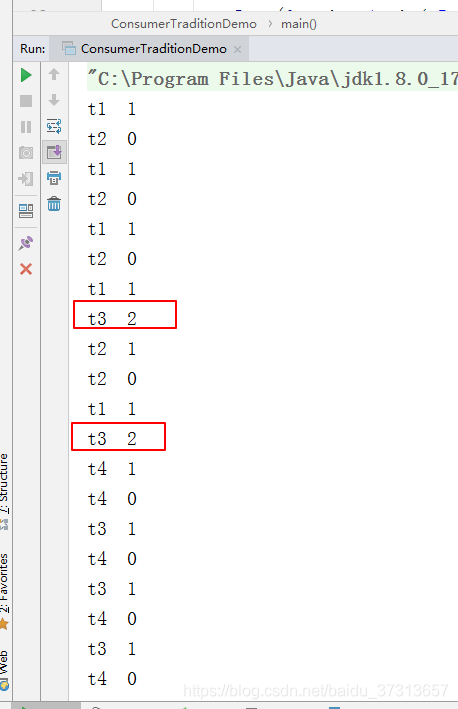
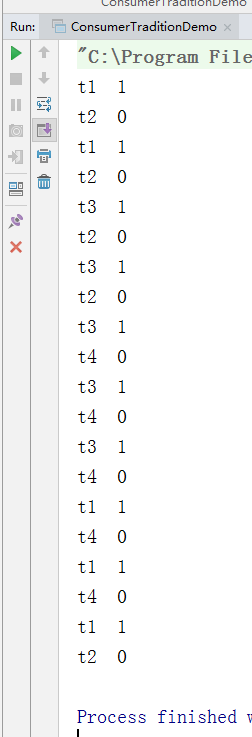
修改if为while后运行如下:





 扫一扫
扫一扫


 997
997

 被折叠的 条评论
为什么被折叠?
被折叠的 条评论
为什么被折叠?
 到【灌水乐园】发言





