


一、环形队列是什么
环形队列是一种使用固定大小的数组、但逻辑上看起来首尾相连的队列结构。
它的最大特点:
- 不会移动元素
- 入队和出队只移动两个指针(front、rear)
- 操作是 O(1)
极适合作为:缓冲区(Buffer)、生产者-消费者队列、高性能网络收发、音视频流处理、线程间通信等。
二、为什么要用环形队列
普通队列基于数组,会遇到一个问题:
出队时 front++,但前面的空间不能再利用 → 必须移动元素或重新分配。
环形队列的设计目的就是:
- 避免数组移动
- 让释放的空间可以再次使用
做到:既高效,又节省空间。
三、核心思想:余数取模 (mod)
假设数组长度为 capacity,队列中使用两个指针:
- front 指向队头(第一个有效元素)
- rear 指向队尾下一个可写入的位置
移动方式:
- rear = (rear + 1) % capacity
- front = (front + 1) % capacity
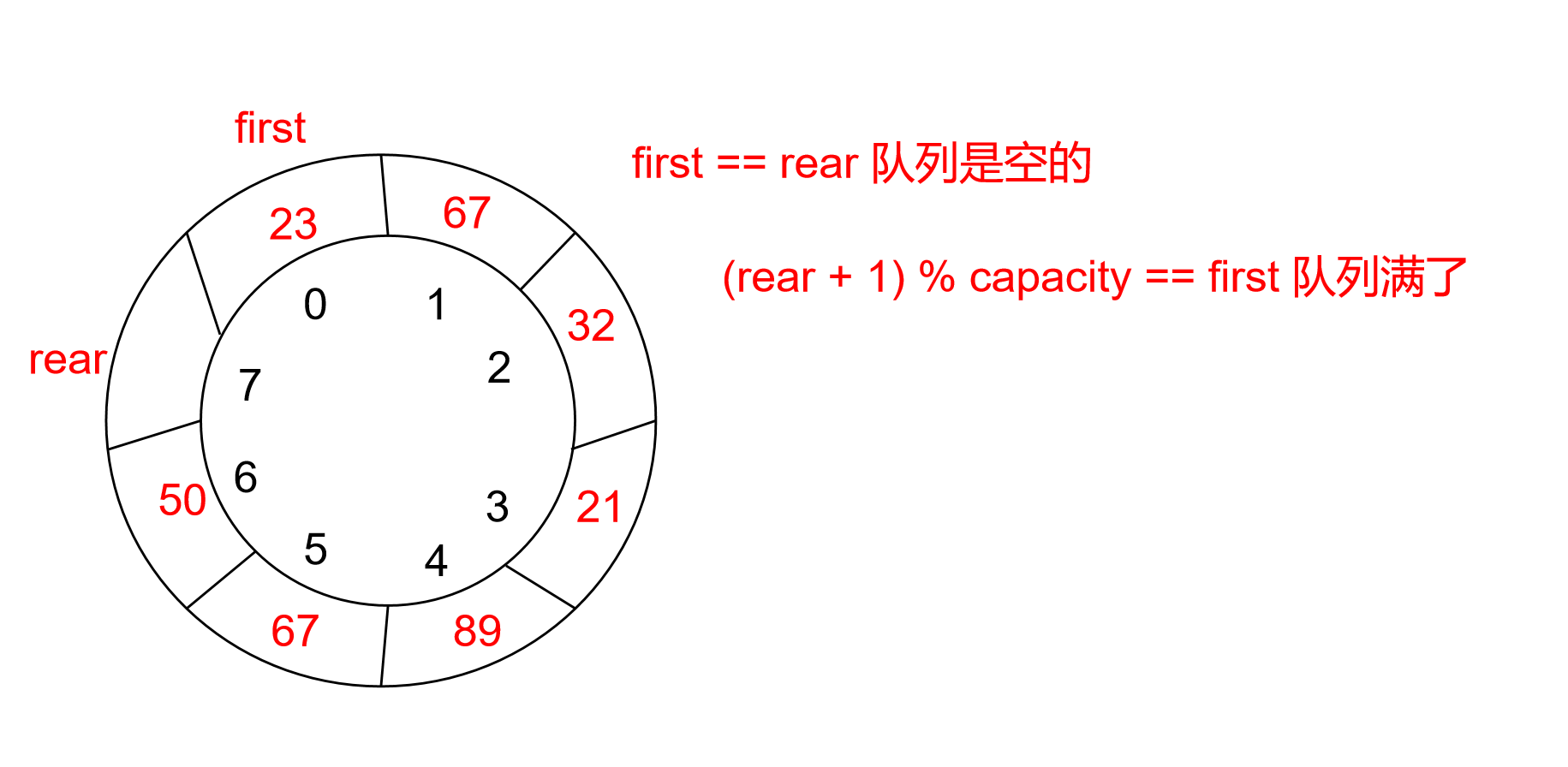
比如容量为 5:
索引:0 1 2 3 4 (length=5)
若 rear 从 4 再加 1:
(4 + 1) % 5 = 0
存储结构示意图:
四、环形队列的两个重要规则
判断队列是否为空
front == rear
判断队列是否满?
当 rear 的下一个位置是 front 时,队列为满。
(rear + 1) % capacity == front
队列最多容纳 capacity - 1 个元素。
五、核心操作(以浪费一个空间的经典方案为例)
1. 入队(enqueue)
if (满) return false;
buffer[rear] = value;
rear = (rear + 1) % capacity;
2. 出队(dequeue)
if (空) return false;
value = buffer[front];
front = (front + 1) % capacity;
完整示例:
#include <iostream>

using namespace std;

class Queue {
public:
	Queue(int size = 10)
		: cap_(size)
		, front_(0)
		, rear_(0)
		, size_(0)
	{
		pQue_ = new int[cap_];
	}

	~Queue()
	{
		delete[] pQue_;
		pQue_ = nullptr;
	}

	// 入队
	void push(int val)
	{
		if ((rear_ + 1) % cap_ == front_) {
			// 扩容
			expand(2 * cap_);
		}

		pQue_[rear_] = val;
		rear_ = (rear_ + 1) % cap_;
		size_++;
	}

	// 出队
	void pop()
	{
		if (front_ == rear_) {
			throw "queue is empty!";
		}

		front_ = (front_ + 1) % cap_;
		size_--;
	}

	// 队头元素
	int front() const
	{
		if (front_ == rear_) {
			throw "queue is empty!";
		}

		return pQue_[front_];
	}

	// 队尾元素
	int back() const
	{
		if (front_ == rear_) {
			throw "queue is empty!";
		}

		return pQue_[(rear_ - 1 + cap_) % cap_];
	}

	// 队空
	bool empty()
	{
		return front_ == rear_;
	}

	// 队列元素个数
	int size() const
	{
		return size_;

#if 0
		// 遍历一遍统计队列元素个数 O(n)
		int size = 0;
		for (int i = front_; i != rear_; i = (i + 1) % cap_) {
			size++;
		}

		return size;
#endif
	}

private:
	//  扩容接口
	void expand(int size)
	{
		int* p = new int[size];

		int i = 0;
		int j = front_;
		for (; j != rear_; i++, j = (j + 1) % cap_) {
			p[i] = pQue_[j];
		}

		delete pQue_;
		pQue_ = p;
		cap_ = size;
		front_ = 0;
		rear_ = i;
	}

private:
	int* pQue_;
	int cap_;		// 空间容量
	int front_;		// 队头
	int rear_;		// 队尾
	int size_;		// 队列元素个数
};

int main()
{
	int arr[] = { 12, 4, 56, 7, 89, 31, 53, 75 };
	Queue que;

	for (int v : arr) {
		que.push(v);
	}

	cout << que.front() << endl;
	cout << que.back() << endl;

	que.push(100);
	que.push(200);
	que.push(300);

	cout << que.front() << endl;
	cout << que.back() << endl;

	while (!que.empty()) {
		cout << que.front() << " " << que.back() << endl;

		que.pop();
	}
}
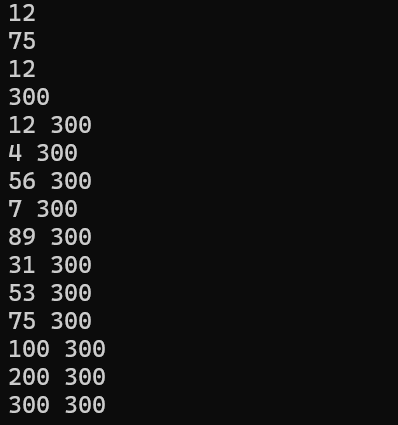
输出结果:
六、常见示例
使用两个栈实现一个队列
用两个栈 inStack 和 outStack:
1. 入队(push/enqueue)
所有数据 直接入 inStack:
inStack.push(x);
2. 出队(pop/dequeue)
当需要出队时:
- 如果 outStack 不为空:直接 pop
- 如果 outStack 为空:把 inStack 所有元素倒入 outStack
while (!inStack.empty()) {
    outStack.push(inStack.top());
    inStack.pop();
}
倒完后:
- outStack.top() 就是队列队头
- outStack.pop() 完成出队
为什么这样能实现队列?
栈是后进先出(LIFO);队列是先进先出(FIFO)
将栈 A 的数据全部倒到栈 B,会把顺序反转:
入队顺序:1, 2, 3
inStack:top → 3,2,1

倒入 outStack:

outStack:top → 1,2,3
此时 outStack 的 top 就是队列的队头。
完整实现:
#include <stack>
#include <stdexcept>

class QueueWithTwoStacks {
public:
    void push(int x) {
        inStack.push(x);
    }

    int pop() {
        if (empty()) {
            throw std::runtime_error("Queue is empty");
        }
        moveIfNeeded();
        int value = outStack.top();
        outStack.pop();
        return value;
    }

    int front() {  // 等同于队头 peek
        if (empty()) {
            throw std::runtime_error("Queue is empty");
        }
        moveIfNeeded();
        return outStack.top();
    }

    bool empty() const {
        return inStack.empty() && outStack.empty();
    }

private:
    std::stack<int> inStack;
    std::stack<int> outStack;

    void moveIfNeeded() {
        if (outStack.empty()) {
            while (!inStack.empty()) {
                outStack.push(inStack.top());
                inStack.pop();
            }
        }
    }
};
使用示例:
QueueWithTwoStacks q;

q.push(10);
q.push(20);
q.push(30);

std::cout << q.pop() << std::endl; // 10
std::cout << q.front() << std::endl; // 20
q.push(40);
std::cout << q.pop() << std::endl; // 20
时间复杂度分析(关键)

关键点:倒数据的过程只会发生在 outStack 为空时
数据被倒过去以后,不会再倒回来,所以总体均摊下来每个元素只被“倒”一次。所以队列所有操作都是均摊 O(1)。
图示(原理可视化)
队列元素顺序:[1, 2, 3]
(1)入队
inStack:  top → 3,2,1
outStack: (empty)
(2)第一次出队时,outStack 为空 → 倒数据
inStack:  (empty)
outStack: top → 1,2,3
(3)后续的出队直接从 outStack 弹出
用两个栈实现一个队列:
- 入队:入 inStack
- 出队:如果 outStack 为空,则把 inStack 全倒进去
- 队头在 outStack.top()
- 所有操作均摊 O(1)
使用两个队列实现一个栈
核心思想:
- 栈(stack)是:后进先出(LIFO)
- 队列(queue)是:先进先出(FIFO)
要用两个队列实现栈,就必须想办法让“最后入的元素”成为队列的“队头”。
方法一:push O(n),pop O(1)(最常见的方案)
通过让最新入栈的元素始终保持在队列队头来实现栈。只使用一个主队列 q1,另一个 q2 用于辅助倒数据。
核心思想
push(x):
- 先把 x 放入 q2
- 把 q1 中所有元素搬到 q2 中(保持顺序反转)
- 交换 q1 和 q2
此时:
q1 的 front 就是最新压入的元素(top)
pop:q1.front() 就是栈顶元素,直接 pop 即可。
时间复杂度

方法一:C++ 完整实现
#include <queue>
#include <stdexcept>

class StackWithTwoQueues {
public:
    void push(int x) {
        q2.push(x);

        // 把 q1 所有元素倒进 q2
        while (!q1.empty()) {
            q2.push(q1.front());
            q1.pop();
        }

        // 交换 q1 和 q2,使 q1 始终为主队列
        std::swap(q1, q2);
    }

    int pop() {
        if (q1.empty()) {
            throw std::runtime_error("Stack is empty");
        }
        int value = q1.front();
        q1.pop();
        return value;
    }

    int top() {
        if (q1.empty()) {
            throw std::runtime_error("Stack is empty");
        }
        return q1.front();
    }

    bool empty() const {
        return q1.empty();
    }

private:
    std::queue<int> q1, q2;
};
图示理解
假设依次 push:1、2、3
栈顶应该是 3。
push(1)
q1: [1]
push(2)
q2: [2]
q1: [1] → 倒入 q2 → q2: [2,1]

swap(q1, q2)

q1: [2,1]
push(3)
q2: [3]
q1: [2,1] → q2: [3,2,1]

swap → q1: [3,2,1]
此时:
栈顶 = q1.front() = 3
pop 时直接 q1.pop() 即可,非常快。
方法二:push O(1),pop O(n)
思路反过来:
- push 直接入队到 q1
- pop 时为了拿到最后入队的元素,需要将前 n-1 个元素转移到 q2
pop 步骤:
- 把 q1 的前 n-1 个元素全部转移到 q2
- 剩下的就是栈顶元素 → pop 掉
- swap(q1, q2)
时间复杂度

方法二 C++ 实现
class StackWithTwoQueues {
public:
    void push(int x) {
        q1.push(x);
    }

    int pop() {
        if (q1.empty()) {
            throw std::runtime_error("Stack is empty");
        }

        // 留下最后一个
        while (q1.size() > 1) {
            q2.push(q1.front());
            q1.pop();
        }

        int value = q1.front();
        q1.pop();
        std::swap(q1, q2);
        return value;
    }

    int top() {
        if (q1.empty()) {
            throw std::runtime_error("Stack is empty");
        }

        // 和 pop 类似,但不删除最后一个
        while (q1.size() > 1) {
            q2.push(q1.front());
            q1.pop();
        }

        int value = q1.front();
        q2.push(value);  // 回填
        q1.pop();
        std::swap(q1, q2);
        return value;
    }

    bool empty() const {
        return q1.empty();
    }

private:
    std::queue<int> q1, q2;
};
对比:两种方案差别

 540


 扫一扫


 被折叠的 条评论
为什么被折叠?
 到【灌水乐园】发言


