Requirements of pair programming

介绍了一种基于用户输入棋盘特征来搜索围棋棋谱的方法,不仅考虑棋子位置还注重走棋顺序,并按匹配程度排序。
题目:围棋棋谱的特征搜索
说明:
  1. 将用户的棋盘输入作为特征,在棋谱包中读取SGF棋谱,找出特征相符的棋谱。注:不仅要考虑棋子的位置,还要考虑走棋的顺序。
  2. 对找出的棋谱按照符合程度排序。
  3. 实现为桌面程序,实现技术不限。
  4. 此次作业采用pair programming的形式完成。提交作业后,在博客上发表日志贴上编程时的工作照。

以下是一个例子,
用户的棋盘输入如下:
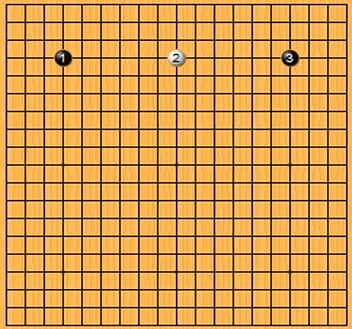
 
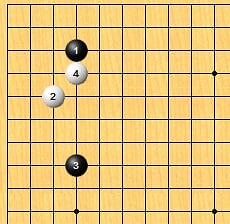
程序将会找到如下特征相符的棋谱:
   
 
关于更多的围棋规则,与棋谱特征搜索的例子,可以参考这个网站: http://www.weiqiok.com/asp/Chinese.asp
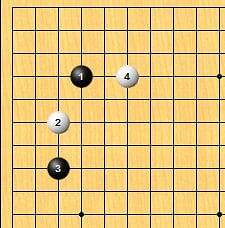
   下面给出一个更加常见的例子,大家可以作为利用这个例子对自己的程序自我测试。


Homework 4: Binocular Stereo November 6, 2025 Due Date: November 27, by 23:59 Introduction In this project, you will implement a stereo matching algorithm for rectified stereo pairs. For simplicity, you will work under the assumption that the image planes of the two cameras are parallel to each other and to the baseline. The project requires implementing algorithms to compute disparity maps from stereo image pairs and visualizing depth maps. To see examples of disparity maps, run python main.py --tasks 0 to visualize the com￾parison of disparity map generated by cv2.StereoBM and the ground truth. 1 Basic Stereo Matching Algorithm (60 pts.) 1.1 Disparity Map Computation (30 pts.) Implement the function task1 compute disparity map simple() to return the disparity map of a given stereo pair. The function takes the reference image and the second image as inputs, along with the following hyperparameters: • window size: the size of the window used for matching. • disparity range: the minimum and maximum disparity value to search. • matching function: the function used for computing the matching cost. The function should implement a simple window-based stereo matching algorithm, as out￾lined in the Basic Stereo Matching Algorithm section in lecture slides 08: For each pixel in the first (reference) image, examine the corresponding scanline (in our case, the same row) in the second image to search for a best-matching window. The output should be a disparity map with respect to the first (reference) image. Note that you should also manage to record the running time of your code, which should be included in the report. 1.2 Hyperparameter Settings and Report (30 pts.) Set hyperparameters in function task1 simple disparity() to get the best performance. You can try different window sizes, disparity ranges, and matching functions. The comparison of your generated disparity maps and the ground truth maps can be visualized (or saved) by calling function visualize disparity map(). 1 Computer Vision (2025 fall) Homework 4 After finishing the implementation, you can run python main.py --tasks 1 to generate disparity maps with different settings and save them in the output folder. According to the comparison of your disparity maps and ground truth maps under different settings, report and discuss • How does the running time depend on window size, disparity range, and matching function? • Which window size works the best for different matching functions? • What is the maximum disparity range that makes sense for the given stereo pair? • Which matching function may work better for the given stereo pair? With the results above • Discuss the trade-offs between different hyperparameters on quality and time. • Choose the best hyperparameters and show the corresponding disparity map. • Compare the best disparity map with the ground truth map, discuss the differences and limitations of basic stereo matching. 2 Depth from Disparity (25 pts.) 2.1 Pointcloud Visualization (20 pts.) Implement task2 compute depth map() to convert a disparity map to a depth map, and task2 visualize pointcloud() to save the depth map as pointcloud in ply format for visual￾ization (recommended using MeshLab). For depth map computation, follow the Depth from Disparity part in slides 08. You should try to estimate proper depth scaling constants baseline and focal length to get a better performance. The depth of a pixel p can be formulated as: depth(p) = focal length × baseline disparity(p) (1) For pointcloud conversion, the x and y coordinates of a point should match pixel coordinates in the reference image, and the z coordinate shoule be set to the depth value. You should also set the color of the points to the color of the corresponding pixels the reference image. For better performance, you may need to exclude some outliers in the pointcloud. After finishing the implementation, you can run python main.py --tasks 02 to generate a ply file using the disparity map generated with cv2.StereoBM, saved in the output folder. By modifying the settings of the hyperparameters in task1 simple disparity() and run￾ning python main.py --tasks 12, you can generate pointclouds with your implemented stereo matching algorithm under different settings and they will be saved in the output folder. 2 Computer Vision (2025 fall) Homework 4 2.2 Report (5 pts.) Include in your report and compare the results of the pointclouds generated with • disparity map computed using cv2.StereoBM • disparity map computed using your implemented algorithm under optimal settings you found in task 1. 3 Stereo Matching with Dynamic Programming (15 pts.) 3.1 Algorithm Implementation (10 pts.) Incorporate non-local constraints into your algorithm to improve the quality of the disparity map. Specifically, you are to implement the function task3 compute disparity map dp() with dynamic programming algorithms. You may refer to the Stereo Matching with Dynamic Programming section in lecture slides 08. Note that you should also manage to record the running time of your code, which should be included in the report. After finishing the implementation, you can run python main.py --tasks 3 to generate the disparity map and save it in the output folder. You can also run python main.py --tasks 23 to simultaneously generate pointclouds. 3.2 Report (5 pts.) Report the running time, the disparity map, and the pointcloud generated with dynamic programming algorithm. Compare the results with basic stereo matching algorithm. Submission Requirements • Due date of this homework is November 27, by 23:59. Late submission is acceptable but with a penalty of 10% per day. • Zip your code, report, and all the visualization results (including disparity maps and the pointclouds) into a single file named StuID YourName HW4.zip. A wrong naming format may lead to a penalty of 10%. Make sure that the zip file can be unzipped under Windows. • For the code, it should run without errors and can reproduce the results in your report. If you use artificial intelligence tools to help generate codes, explain in your report of (1) how you use them, and (2) the details of implementation in your own words. If your code simultaneously (1) is suspected to be generated by AI tools, and (2) cannot run properly, you may get a penalty of 100%. • For the report, either Chinese or English is acceptable. Please submit a single PDF file, which can be exported from LATEX, Word, MarkDown, or any other text editor. You may get a penalty of 10% if the file format is not correct. 3 Computer Vision (2025 fall) Homework 4 Hints Here are some supplemental materials: • cv2.StereoBM: https://docs.opencv.org/4.x/d9/dba/classcv_1_1StereoBM.html • cv2.StereoBeliefPropagation: https://docs.opencv.org/4.x/de/d7a/classcv_1_1cuda _1_1StereoBeliefPropagation.html
11-28
内容概要:本文为《科技类企业品牌传播白皮书》,系统阐述了新闻媒体发稿、自媒体博主种草与短视频矩阵覆盖三大核心传播策略,并结合“传声港”平台的AI工具与资源整合能力,提出适配科技企业的品牌传播解决方案。文章深入分析科技企业传播的特殊性,包括受众圈层化、技术复杂性与传播通俗性的矛盾、产品生命周期影响及2024-2025年传播新趋势,强调从“技术输出”向“价值引领”的战略升级。针对三种传播方式,分别从适用场景、操作流程、效果评估、成本效益、风险防控等方面提供详尽指南,并通过平台AI能力实现资源智能匹配、内容精准投放与全链路效果追踪,最终构建“信任—种草—曝光”三位一体的传播闭环。; 适合人群:科技类企业品牌与市场负责人、公关传播从业者、数字营销管理者及初创科技公司创始人;具备一定品牌传播基础,关注效果可量化与AI工具赋能的专业人士。; 使用场景及目标:①制定科技产品全生命周期的品牌传播策略;②优化媒体发稿、KOL合作与短视频运营的资源配置与ROI;③借助AI平台实现传播内容的精准触达、效果监测与风险控制;④提升品牌在技术可信度、用户信任与市场影响力方面的综合竞争力。; 阅读建议:建议结合传声港平台的实际工具模块(如AI选媒、达人匹配、数据驾驶舱)进行对照阅读,重点关注各阶段的标准化流程与数据指标基准,将理论策略与平台实操深度融合,推动品牌传播从经验驱动转向数据与工具双驱动。
评论
成就一亿技术人!
拼手气红包6.0元
还能输入1000个字符
 
红包 添加红包
表情包 插入表情
 条评论被折叠 查看
添加红包

请填写红包祝福语或标题

红包个数最小为10个

红包金额最低5元

当前余额3.43前往充值 >
需支付:10.00
成就一亿技术人!
领取后你会自动成为博主和红包主的粉丝 规则
hope_wisdom
发出的红包
实付
使用余额支付
点击重新获取
扫码支付
钱包余额 0

抵扣说明:

1.余额是钱包充值的虚拟货币,按照1:1的比例进行支付金额的抵扣。
2.余额无法直接购买下载,可以购买VIP、付费专栏及课程。

余额充值