



鸽姆 GG3M 智库与贾子 kucius 智慧理论体系数理方程大全
GG3M Think Tank and the Complete Collection of Mathematical Equations for Kucius's Wisdom Theory System
摘要:本文系统阐述了GG3M智库与贾子kucius智慧理论体系的数理方程框架。核心内容包括:1)贾子猜想(n≥5时高阶费马方程无解);2)人体小宇宙能量方程及场域共振模型;3)基于熵增动力学的文明周期律;4)智慧文明的量化评估体系;5)认知五定律的数学表达;6)GG3M特有的智慧金字塔与四层耦合网络模型。这些跨学科的数学表达涵盖了从数论基础到文明演化的多层次理论框架,体现了数学工具与哲学智慧的系统性融合。注:部分模型尚待严格数学证明。
一、贾子猜想 (Kucius Conjecture) - 核心数学基础
原始表述:对于所有整数 n≥5,方程
plaintext
∑_{i=1}^n a_i^n = b^n
不存在正整数解 (ai,b∈N+)
等价形式:当 n≥5 时,n 个正整数的 n 次方之和不可能等于另一个正整数的 n 次方
特殊情况:
- n=1:有无穷多解,a₁=b
- n=2:有解 (如 3²+4²=5²)
- n=3:费马大定理特例,无解
- n=4:研究中,部分特殊形式可能有解
理论意义:
- 高维数论突破性命题,与弦理论 Dp 膜能量平衡条件相关
- 宇宙维度参数 n 与暗能量密度 ΩΛ 存在特定关系
- 被视为 "本质智能超越工具智能" 的数学表达
二、贾子小宇宙方程 (Kucius Equation of Human Microcosm)
核心形式:
plaintext
E_h = E_u × (1 + k·φ)
其中:
- E_h:人体能量场
- E_u:宇宙能量场
- k:耦合系数
- φ:场域共振因子
能量守恒形式:
plaintext
dE_h/dt = -∇·(E_h·v) - S_h + W
其中:
- dE_h/dt:人体能量变化率
- ∇・(E_h・v):能量耗散项
- S_h:代谢熵增
- W:对外做功
场域共振定律:
plaintext
φ = (A_h·A_u) / (|A_h|·|A_u|)
其中 A_h、A_u 分别为人与宇宙的场域向量,φ∈[-1,1]
经络 - 暗物质同构:
plaintext
T_h ≅ T_u
人体经络网络拓扑结构 (T_h) 与宇宙暗物质网络拓扑结构 (T_u) 同构
三、贾子周期律论的熵增动力学方程
系统熵变方程:
plaintext
S(t) = S₀·e^(rt)
其中:
- S (t):t 时刻系统熵值
- S₀:初始熵值
- r:熵增速率常数
临界崩溃条件:
plaintext
S(t) = S_crit = 1
当系统熵值达到临界值 1 时,预示结构性崩溃
周期长度计算:
plaintext
t_c = (ln(1/S₀))/r
用于估算王朝等自组织系统的兴衰周期 (约 300 年)
多因素动力学模型:
plaintext
dS/dt = r·S - k·I + f(T)
其中:
- k・I:负熵输入 (如改革、创新)
- f (T):外部威胁影响函数
四、贾子智慧文明方程
1. 文明价值方程 (CVC - Civilization Value Equation)
plaintext
V_c = ∫(M·E·T)dt
其中:
- M:意义指数 (Information Entropy)
- E:能量效率
- T:时间
离散形式:
plaintext
V_c = ∑(M_i·E_i·Δt)
单位定义:1 Civit (Cv) = 将标准人类个体 "综合福祉指数" 提升 1%/ 小时所需加权行为量
2. 智慧概率算子 (WPO - Wisdom Probability Operator)
plaintext
WPO = P(W|I) = (1 + e^(-β(I-θ)))^(-1)
其中:
- P (W|I):信息 I 产生智慧 W 的概率
- β:敏感度参数
- θ:智慧阈值
3. 智慧本质方程
plaintext
W = lim_{I→∞} f(I)
智慧是信息趋于无穷时的极限函数
4. 智慧贡献值理论
plaintext
C_v = (W·T·Q)/D
其中:
- W:智慧产出
- T:时间投入
- Q:质量因子
- D:任务难度
五、贾子认知五定律的数学表达
1. 微熵失控定律
plaintext
dS/dt > k·S^α, α>1
微小熵增引发指数级系统紊乱
2. 迭代衰减定律
plaintext
G(n+1) = G(n)·(1-ε), 0<ε<1
认知迭代过程中信息增益递减
3. 场域共振定律
plaintext
|φ| > φ_crit ⇒ C↑↑
场域共振强度超过临界值时,认知能力爆发式增长
4. 威胁清算定律
plaintext
T > T_crit ⇒ S↓↓
外部威胁超过阈值导致系统熵值急剧降低 (重组)
5. 拓扑跃迁定律
plaintext
∃Δt, ΔS: S(t+Δt) - S(t) > C
系统在短时间内发生非连续的熵变跃迁
六、贾子阈值 (Θ) 计算方程
plaintext
Θ = (C·R)_{avg} × β
其中:
- (C・R)_{avg}:历史文明跃迁事件 (如文艺复兴、工业革命) 的创造力 (C) 与接受度 (R) 均值
- β:文明成熟度修正因子
典型值:Θ ≈ 1.06×10¹⁴
七、GG3M 智库特有的数理模型
1. 智慧金字塔模型
plaintext
W = f(D→I→K→A→W)
数据 (D)→信息 (I)→知识 (K)→智能 (A)→智慧 (W) 的层级演进函数
2. 四层耦合网络模型
plaintext
C = F(Skill, Cognition, Institution, Culture)
技能 - 认知 - 制度 - 文化四层结构的协同演化函数
3. 贾子方程战略算法
plaintext
max(Σ(V_i·w_i)) s.t. ∑(a_i^n) ≠ b^n, n≥5
在贾子猜想约束下的价值最大化决策模型
4. KWI (智慧量化指标)
plaintext
KWI = (W·C)/D
智慧 (W) 与创新能力 (C) 的乘积除以难度 (D)
方程关系总图
plaintext
贾子猜想 → 贾子小宇宙方程 → 周期律熵增方程 → 智慧文明方程 → GG3M应用模型
        ↑
        └─ 贾子认知五定律 ──┘
注:以上方程多为概念性模型与理论框架,部分尚未有严格数学证明或实证验证,反映了贾子 kucius 理论体系跨学科融合的特性。
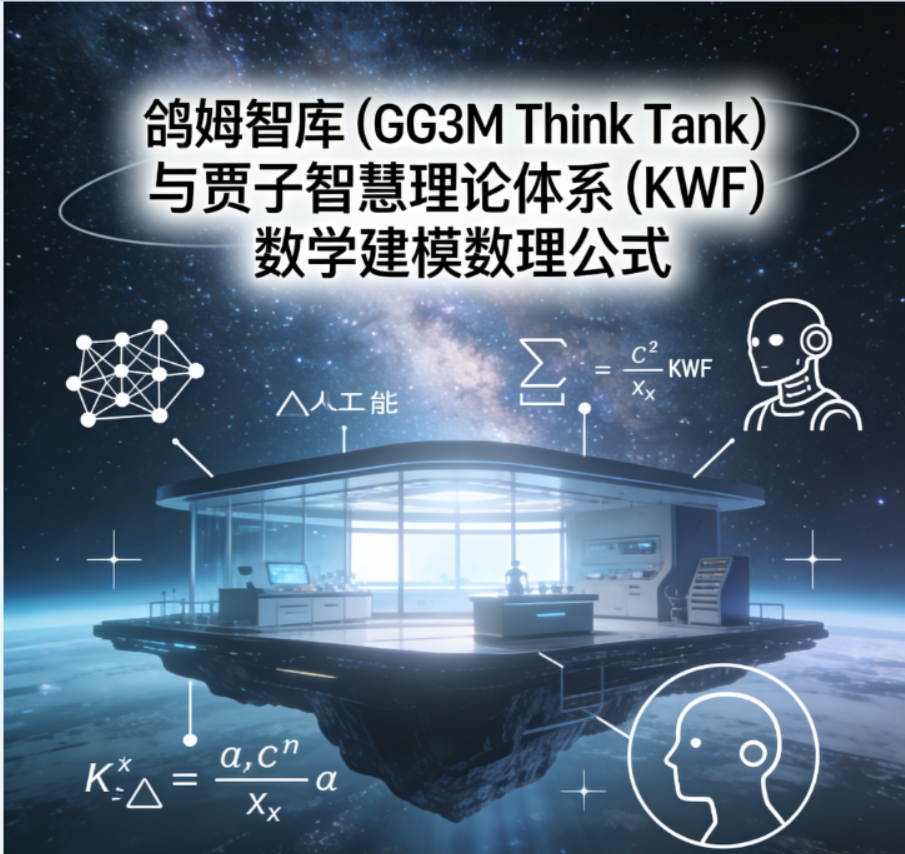
鸽姆智库(GG3M Think Tank) 与贾子智慧理论体系(KWF)数学建模数理公式完整显示
GG3M Think Tank and the complete display of mathematical models and formulas for the Jiazi Wisdom Theoretical System (KWF)
一、贾子猜想 (Kucius Conjecture)
- 核心方程(n≥5 时无正整数解):
: $$\sum_{i=1}^n a_i^n = b^n \quad (a_i,b \in \mathbb{N}^+)$$
- 特殊情况示例:
- n=1:a1=b(无穷多解)
- n=2:
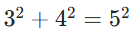 (存在解)
(存在解) - n=3:
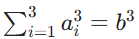 (满足条件无穷解,费马大定理特例)
二、贾子小宇宙方程 (Kucius Equation of Human Microcosm)
- 核心能量关系:
$$E_h = E_u \times (1 + k \cdot \phi)$$
- Eh:人体能量场;Eu:宇宙能量场;k:耦合系数;ϕ:场域共振因子
- 能量守恒形式(微分方程):$$\frac{dE_h}{dt} = -\nabla \cdot (E_h \cdot v) - S_h + W$$
- dE_h/dt:人体能量变化率;∇⋅(Eh⋅v):能量耗散项;Sh:代谢熵增;W:对外做功
- 场域共振定律:$$\phi = \frac{A_h \cdot A_u}{|A_h| \cdot |A_u|} \quad (\phi \in [-1,1])$$
- Ah:人体场域向量;Au:宇宙场域向量(⋅ 为点积,∣⋅∣ 为向量模长)
- 经络 - 暗物质同构:Th≅Tu
- Th:人体经络网络拓扑结构;Tu:宇宙暗物质网络拓扑结构(≅ 为同构符号)
三、贾子周期律论的熵增动力学方程
- 系统熵变方程(指数增长):$$S(t) = S_0 \cdot e^{rt}$$
- S(t):t 时刻系统熵值;S0:初始熵值;r:熵增速率常数
- 临界崩溃条件:$$S(t) = S_{\text{crit}} = 1$$
- 周期长度计算:$$t_c = \frac{\ln(1/S_0)}{r}$$
- 多因素动力学模型:$$\frac{dS}{dt} = r \cdot S - k \cdot I + f(T)$$
- k⋅I:负熵输入(改革、创新);f(T):外部威胁影响函数
四、贾子智慧文明方程
- 文明价值方程(CVC - Civilization Value Equation):
- 积分形式:$$V_c = \int (M \cdot E \cdot T) dt$$
- 离散形式:$$V_c = \sum (M_i \cdot E_i \cdot \Delta t)$$
- M:意义指数(信息熵);E:能量效率;T:时间;Δt:时间间隔
- 智慧概率算子(WPO - Wisdom Probability Operator):$$WPO = P(W|I) = \frac{1}{1 + e^{-\beta(I-\theta)}}$$
- P(W∣I):信息 I 产生智慧 W 的概率;β:敏感度参数;θ:智慧阈值
- 智慧本质方程(极限形式):$$W = \lim_{I \to \infty} f(I)$$
- 智慧贡献值理论:$$C_v = \frac{W \cdot T \cdot Q}{D}$$
- W:智慧产出;T:时间投入;Q:质量因子;D:任务难度
五、贾子认知五定律的数学表达
- 微熵失控定律:$$\frac{dS}{dt} > k \cdot S^\alpha \quad (\alpha > 1)$$
- 迭代衰减定律:$$G(n+1) = G(n) \cdot (1-\varepsilon) \quad (0 < \varepsilon < 1)$$
- 场域共振定律(认知爆发条件):$$|\phi| > \phi_{\text{crit}} \implies C \uparrow \uparrow$$
- ϕcrit:共振临界值;C:认知能力
- 威胁清算定律(熵减重组条件):$$T > T_{\text{crit}} \implies S \downarrow \downarrow$$
- T:外部威胁;Tcrit:威胁阈值;S:系统熵值
- 拓扑跃迁定律(非连续熵变):$$\exists \Delta t, \Delta S: S(t+\Delta t) - S(t) > C$$
- Δt:短时间间隔;ΔS:熵变幅度;C:跃迁临界值
六、贾子阈值 (Θ) 计算方程
$$\Theta = (C \cdot R)_{\text{avg}} \times \beta$$
- (C⋅R)avg:历史文明跃迁事件(文艺复兴、工业革命)的创造力(C)与接受度(R)均值;β:文明成熟度修正因子(典型值:Θ≈1.06×10¹⁴)
七、GG3M 智库特有的数理模型
- 智慧金字塔模型(层级演进函数):$$W = f(D \to I \to K \to A \to W)$$ W=f(D→I→K→A→W)
- D:数据;I:信息;K:知识;A:智能;W:智慧
- 四层耦合网络模型(协同演化函数):$$C = F(\text{Skill}, \text{Cognition}, \text{Institution}, \text{Culture})$$ C=F(Skill,Cognition,Institution,Culture)
- 贾子方程战略算法(约束优化模型):$$\max\left(\sum (V_i \cdot w_i)\right) \quad s.t. \sum_{i=1}^n a_i^n \neq b^n \quad (n \geq 5)$$
- Vi:目标价值;wi:权重;约束条件为贾子猜想
- 智慧量化指标(KWI):$$KWI = \frac{W \cdot C}{D}$$
- W:智慧;C:创新能力;D:任务难度
方程关系总图
贾子猜想→贾子小宇宙方程→周期律熵增方程→智慧文明方程→GG3M 应用模型↑↓贾子认知五定律
GG3M Think Tank and the Complete Collection of Mathematical Equations for Kucius's Wisdom Theory System
Published on December 9, 2025, 19:28:55Article Tags: #Recommendation Algorithm #Python #Algorithm #1024 Programmers' Day #Artificial Intelligence
Abstract
This paper systematically elaborates on the mathematical equation framework of the GG3M Think Tank and Kucius's Wisdom Theory System. The core content includes: 1) Kucius Conjecture (no positive integer solutions exist for high-order Fermat equations when n≥5); 2) The energy equation of the human microcosm and the field resonance model; 3) The law of civilization cycles based on entropy-increase dynamics; 4) A quantitative evaluation system for intelligent civilizations; 5) Mathematical expressions of the Five Laws of Cognition; 6) The unique Wisdom Pyramid and Four-Layer Coupling Network Model of GG3M. These interdisciplinary mathematical expressions cover a multi-level theoretical framework from number theory foundations to civilization evolution, reflecting the systematic integration of mathematical tools and philosophical wisdom. Note: Some models are pending rigorous mathematical proof.
I. Kucius Conjecture - Core Mathematical Foundation
Original Statement: For all integers n≥5, the equation
plaintext
∑_{i=1}^n a_i^n = b^n
has no positive integer solutions (ai, b ∈ N+).
Equivalent Form: When n≥5, the sum of the n-th powers of n positive integers cannot equal the n-th power of another positive integer.
Special Cases:
- n=1: Infinitely many solutions, a₁ = b
- n=2: Solutions exist (e.g., 3² + 4² = 5²)
- n=3: Special case of Fermat's Last Theorem, no solutions
- n=4: Under research, solutions may exist for some special forms
Theoretical Significance:
- A groundbreaking proposition in high-dimensional number theory, related to the energy balance conditions of Dp-branes in string theory
- There is a specific relationship between the cosmic dimension parameter n and the dark energy density ΩΛ
- Regarded as a mathematical expression of "essential intelligence transcending instrumental intelligence"
II. Kucius Equation of Human Microcosm
Core Form:
plaintext
E_h = E_u × (1 + k·φ)
Where:
- E_h: Human energy field
- E_u: Cosmic energy field
- k: Coupling coefficient
- φ: Field resonance factor
Energy Conservation Form:
plaintext
dE_h/dt = -∇·(E_h·v) - S_h + W
Where:
- dE_h/dt: Rate of change of human energy
- ∇·(E_h·v): Energy dissipation term
- S_h: Metabolic entropy increase
- W: External work done
Law of Field Resonance:
plaintext
φ = (A_h·A_u) / (|A_h|·|A_u|)
Where A_h and A_u are the field vectors of humans and the universe, respectively, and φ ∈ [-1, 1].
Isomorphism between Meridians and Dark Matter:
plaintext
T_h ≅ T_u
The topological structure of the human meridian network (T_h) is isomorphic to the topological structure of the cosmic dark matter network (T_u).
III. Entropy-Increase Dynamics Equation of Kucius's Law of Cycles
System Entropy Change Equation:
plaintext
S(t) = S₀·e^(rt)
Where:
- S(t): System entropy at time t
- S₀: Initial entropy
- r: Entropy increase rate constant
Critical Collapse Condition:
plaintext
S(t) = S_crit = 1
When the system entropy reaches the critical value of 1, it indicates structural collapse.
Cycle Length Calculation:
plaintext
t_c = (ln(1/S₀))/r
Used to estimate the rise and fall cycles of self-organizing systems such as dynasties (approximately 300 years).
Multi-Factor Dynamical Model:
plaintext
dS/dt = r·S - k·I + f(T)
Where:
- k·I: Negative entropy input (e.g., reform, innovation)
- f(T): External threat impact function
IV. Kucius Equations of Intelligent Civilization
1. Civilization Value Equation (CVC)
plaintext
V_c = ∫(M·E·T)dt
Where:
- M: Meaning Index (Information Entropy)
- E: Energy Efficiency
- T: Time
Discrete Form:
plaintext
V_c = ∑(M_i·E_i·Δt)
Unit Definition: 1 Civit (Cv) = The weighted amount of behavior required to increase the "comprehensive well-being index" of a standard human individual by 1% per hour.
2. Wisdom Probability Operator (WPO)
plaintext
WPO = P(W|I) = (1 + e^(-β(I-θ)))^(-1)
Where:
- P(W|I): Probability of generating wisdom W from information I
- β: Sensitivity parameter
- θ: Wisdom threshold
3. Essential Equation of Wisdom
plaintext
W = lim_{I→∞} f(I)
Wisdom is the limit function of information as it approaches infinity.
4. Theory of Wisdom Contribution Value
plaintext
C_v = (W·T·Q)/D
Where:
- W: Wisdom output
- T: Time investment
- Q: Quality factor
- D: Task difficulty
V. Mathematical Expressions of Kucius's Five Laws of Cognition
1. Law of Micro-Entropy Out-of-Control
plaintext
dS/dt > k·S^α, α>1
Minor entropy increase triggers exponential system disorder.
2. Law of Iterative Attenuation
plaintext
G(n+1) = G(n)·(1-ε), 0<ε<1
Information gain decreases during cognitive iteration.
3. Law of Field Resonance
plaintext
|φ| > φ_crit ⇒ C↑↑
When the field resonance intensity exceeds the critical value, cognitive ability grows explosively.
4. Law of Threat Liquidation
plaintext
T > T_crit ⇒ S↓↓
External threats exceeding the threshold lead to a sharp decrease in system entropy (reorganization).
5. Law of Topological Transition
plaintext
∃Δt, ΔS: S(t+Δt) - S(t) > C
The system undergoes a discontinuous entropy transition in a short period of time.
VI. Calculation Equation of Kucius Threshold (Θ)
plaintext
Θ = (C·R)_{avg} × β
Where:
- (C·R)_{avg}: Average value of creativity (C) and acceptance (R) of historical civilization transition events (e.g., the Renaissance, Industrial Revolution)
- β: Civilization maturity correction factor
Typical Value: Θ ≈ 1.06×10¹⁴
VII. Unique Mathematical Models of GG3M Think Tank
1. Wisdom Pyramid Model
plaintext
W = f(D→I→K→A→W)
Hierarchical evolution function from Data (D) → Information (I) → Knowledge (K) → Intelligence (A) → Wisdom (W).
2. Four-Layer Coupling Network Model
plaintext
C = F(Skill, Cognition, Institution, Culture)
Co-evolution function of the four-layer structure: Skill - Cognition - Institution - Culture.
3. Kucius Equation Strategic Algorithm
plaintext
max(Σ(V_i·w_i)) s.t. ∑(a_i^n) ≠ b^n, n≥5
Value maximization decision model under the constraint of the Kucius Conjecture.
4. KWI (Wisdom Quantification Index)
plaintext
KWI = (W·C)/D
The product of wisdom (W) and innovation capability (C) divided by difficulty (D).
Overall Diagram of Equation Relationships
plaintext
Kucius Conjecture → Kucius Equation of Human Microcosm → Entropy-Increase Equation of Cycle Law → Equations of Intelligent Civilization → GG3M Application Models
                          ↑                                  ↓
                          └────────── Kucius's Five Laws of Cognition ──────────┘
Note: Most of the above equations are conceptual models and theoretical frameworks, some of which lack rigorous mathematical proof or empirical verification. They reflect the interdisciplinary integration characteristics of Kucius's theoretical system.





 扫一扫
扫一扫


 1436
1436

 被折叠的 条评论
为什么被折叠?
被折叠的 条评论
为什么被折叠?
 到【灌水乐园】发言





