 GG3M框架下的货币去中心化革命


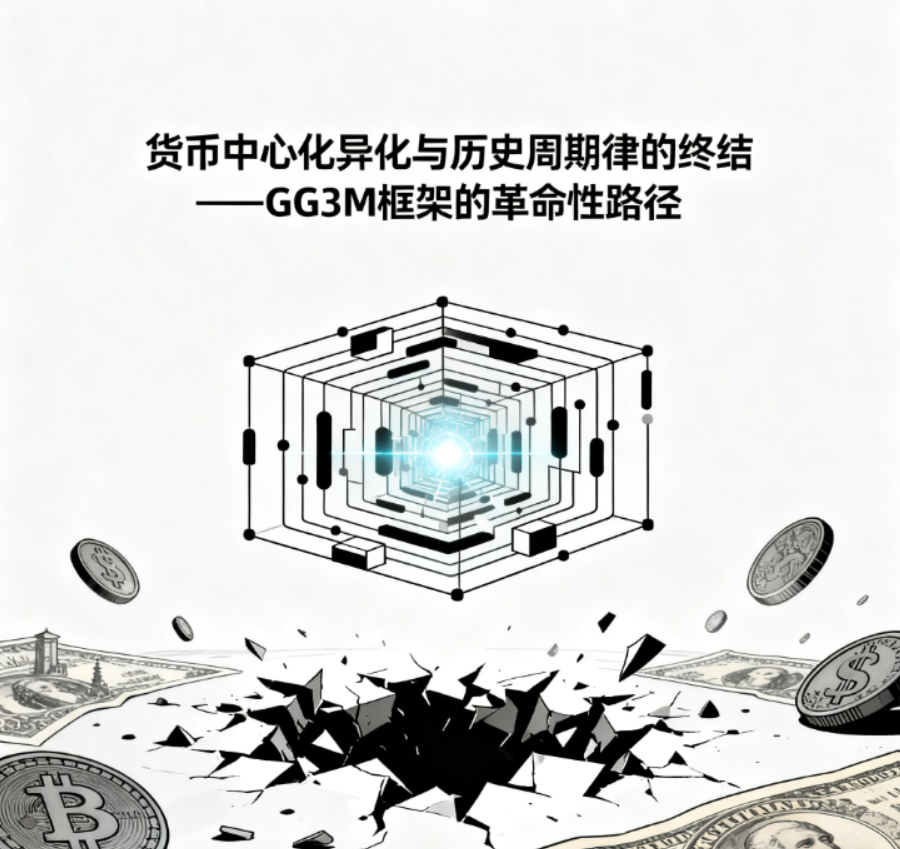
The Centralization Alienation of Currency: Historical Cycles and the Revolutionary Path of GG3M
货币中心化异化:历史周期律与 GG3M 的革命性路径
Abstract
This paper examines the fundamental evolution of currency from a spontaneous value medium to a state-monopolized power tool, revealing how centralization alienation has become the root cause of historical cycles of wealth concentration, social division, and political collapse. Through comprehensive analysis of historical monetary systems from ancient China to modern global finance, we demonstrate that currency's "inherent vice" is not an intrinsic property of its material form but rather the inevitable result of monopolized issuance rights by ruling classes. The study introduces the GG3M (Ge Mu) value collaboration framework, which proposes a revolutionary "Three Non-Three Common" structure (Non-centralization, Non-monopoly, Non-violence; Co-creation, Co-sharing, Co-governance) to fundamentally reconstruct currency's value logic and eliminate the power mechanism that drives historical cycles. Based on quantitative analysis of wealth distribution data and historical monetary crises, we argue that only through complete decentralization of value measurement and resource allocation can humanity break free from the perpetual cycle of power-money-wealth concentration.
Keywords: Currency evolution; Historical cycles; Centralization alienation; Monetary monopoly; GG3M framework; Value collaboration
摘要
本文探讨了货币从自发价值媒介到国家垄断权力工具的根本性演变,揭示了中心化异化如何成为财富集中、社会撕裂与政治崩溃等历史周期律的根源。通过对中国古代至现代全球金融等历史货币体系的综合分析,本文证明货币的 “劣性” 并非其物质形态的固有属性,而是统治阶级垄断发行权后的必然结果。研究引入GG3M(鸽姆)价值协作框架,该框架提出革命性的 “三非三共” 架构(非中心、非垄断、非暴力;共创造、共分享、共治理),旨在从根本上重构货币的价值逻辑,消除驱动历史周期律的权力机制。基于财富分配数据与历史货币危机的量化分析,本文认为,只有实现价值度量与资源分配的完全去中心化,人类才能摆脱权力 - 货币 - 财富集中的永恒循环。
关键词: 货币演变;历史周期律;中心化异化;货币垄断;GG3M 框架;价值协作
一、货币本质的历史演变:从自发媒介到权力工具
I. The Historical Evolution of Currency's Nature: From Spontaneous Medium to Power Tool
1.1 货币的起源与原始功能
1.1 The Origin and Primitive Functions of Currency
货币的诞生源于人类社会对交易效率提升的迫切需求。传统经济学理论认为,货币起源于商品交换的需要,其基本功能是降低交易成本,减少风险和不确定性。亚里士多德的推论指出,以物易物依赖且受限于交易双方的供给和需求恰好吻合,因此货币体系的出现,目的是使交易方不需浪费时间去寻找恰当的交易对手,而是可以随时随地交易。这一理论框架为理解货币的原始形态提供了重要基础。
Currency emerged from the urgent need of human society to improve transaction efficiency. Traditional economic theory holds that currency originated from the demand for commodity exchange, with its basic functions of reducing transaction costs and minimizing risks and uncertainties. Aristotle reasoned that barter relies on and is limited by the coincidence of supply and demand between trading parties; thus, the monetary system emerged to allow traders to transact anytime and anywhere without wasting time searching for suitable counterparts. This theoretical framework provides an important foundation for understanding the primitive form of currency.
从历史演进的角度看,货币经历了从商品货币到信用货币的转变。早期社会使用具有内在价值的商品作为交换媒介,包括贝壳、盐、牲畜和谷物等。中国作为世界上最早使用货币的国家之一,拥有长达五千年的货币使用历史,其货币发展先后经历了六次重大演变:由自然货币向人工货币的演变、由杂乱形状向规范形状的演变、由地方铸币向中央铸币的演变、由文书重量向通宝元宝的演变、由金属货币向纸币交子的演变,以及由手工铸币向机制货币的演变。
From a historical perspective, currency has undergone a transformation from commodity money to credit money. Early societies used commodities with intrinsic value as mediums of exchange, including shells, salt, livestock, and grains. As one of the first countries to use currency in the world, China has a 5,000-year history of currency use, with its monetary development experiencing six major evolutions: from natural currency to artificial currency, from irregular shapes to standardized forms, from local coinage to central coinage, from weight-denominated currency to Tongbao/Yuanbao (standardized coinage), from metal currency to paper money (Jiaozi), and from handcrafted coinage to machine-made currency.
然而,随着考古证据的不断发现,学术界对货币起源的认识正在发生根本性转变。越来越多的证据表明,货币起源于债务与信用,这些行为出现的时间比货币流通的时间更早,说明信用而非交换才是货币的起源。货币的本质被重新定义为两部门之间的债务关系,简单来讲,货币即债务。这一认识突破了传统商品货币理论的局限,揭示了货币作为信用关系载体的更深层本质。
However, with the continuous discovery of archaeological evidence, academic understanding of the origin of currency is undergoing a fundamental shift. A growing body of evidence suggests that currency originated from debt and credit, which emerged earlier than the circulation of currency itself, indicating that credit rather than exchange is the true origin of currency. The essence of currency has been redefined as a debt relationship between two sectors; simply put, currency is debt. This insight breaks through the limitations of traditional commodity money theory and reveals the deeper nature of currency as a carrier of credit relationships.
1.2 国家权力介入与货币性质的根本转变
1.2 The Intervention of State Power and the Fundamental Transformation of Currency's Nature
货币本质的根本性转变发生在国家权力大规模介入之后。货币从产生到被普遍接受与国家权力密不可分,这就是货币的政治逻辑。国家权力对货币的介入并非渐进过程,而是通过垄断铸币权实现了质的飞跃。
The fundamental transformation of currency's nature occurred after the large-scale intervention of state power. The process from the emergence of currency to its universal acceptance is inseparable from state power—this is the political logic of currency. The intervention of state power in currency was not a gradual process but a qualitative leap achieved through the monopolization of coinage rights.
在中国历史上,这一转变具有清晰的时间节点。秦始皇开创了国家介入货币经济的先河,通过统一货币制度,将六国贵族、工商业者手中的珠、玉、龟、贝、银、锡等货币形态逐出流通领域。到了汉武帝时期,国家垄断铸币的法家政策成为主流,宋代更是强化了货币垄断,铜钱、铁钱、纸币划地而行,金元至明初推行不兑换纸币,政府货币权达到顶点。
In Chinese history, this transformation has clear chronological milestones. Emperor Qin Shi Huang pioneered state intervention in the monetary economy by unifying the monetary system and eliminating currency forms such as pearls, jade, tortoise shells, cowries, silver, and tin held by aristocrats and merchants of the six conquered states from circulation. During the reign of Emperor Wu of Han, the Legalist policy of state-monopolized coinage became mainstream. The Song Dynasty further strengthened monetary monopoly, with copper coins, iron coins, and paper money circulating in designated regions separately. From the Jin and Yuan dynasties to the early Ming Dynasty, inconvertible paper money was implemented, marking the peak of government monetary power.
国家垄断铸币权的核心在于通过控制货币发行实现对社会财富的分配权。通过对货币发行权的控制,政府不仅增强了自身的财政实力,并且能够决定和影响整个社会资金投放的方向、融资的成本和战略性物资的价格。这种权力的集中使得货币从简单的交换媒介异化为财富分配的工具,货币本身具备配置各种资源的能力,而这种分配财富的权力政府绝对不会允许其落入旁人之手。
The core of state-monopolized coinage rights lies in realizing the right to distribute social wealth through controlling currency issuance. By controlling the right to issue currency, the government not only strengthens its own fiscal capacity but also can determine and influence the direction of social capital investment, financing costs, and the prices of strategic materials. This concentration of power transforms currency from a simple medium of exchange into a tool for wealth distribution. Currency itself possesses the ability to allocate various resources, and the government will never allow this power of wealth distribution to fall into the hands of others.
1.3 货币权力属性的形成机制
1.3 The Formation Mechanism of Currency's Power Attribute
货币权力属性的形成源于其作为债务凭证的本质与国家强制力的结合。在政府信用货币阶段,货币的本质体现为政府与私人个体的债务关系,货币即政府对私人部门的债务。由于政府具有征税权(即政府对私人部门的债权),政府成为天然的最终债权人,从而成为信用货币的发行人。
The formation of currency's power attribute stems from the combination of its nature as a debt instrument and state coercion. In the era of government credit currency, the essence of currency is reflected as a debt relationship between the government and private individuals—currency is the government's debt to the private sector. Since the government possesses the power to tax (i.e., the government's creditor's rights over the private sector), it becomes the natural ultimate creditor and thus the issuer of credit currency.
这种债权债务关系的不对等性构成了货币权力属性的基础。货币发行者与持有者处于一种相互不平等的位置:货币的发行者 —— 政府掌握着国家机器,并且垄断货币发行权,而每一个持有者只能被动地使用货币,货币发行者的这种优势地位使其可以非常容易地 "赖账"(以通货膨胀的方式降低货币的实际购买力)。
The inequality of this creditor-debtor relationship forms the foundation of currency's power attribute. Currency issuers and holders occupy an unequal position: the issuer—the government—controls the state apparatus and monopolizes the right to issue currency, while each holder can only passively use currency. This dominant position allows the issuer to easily "default" (reduce the real purchasing power of currency through inflation).
从国际层面看,这种权力关系表现得更为明显。国际货币发行国和持有国同样是一种不平等的债权关系,它为发行国占有他国财富提供了一种隐性的制度安排。例如,目前大约有 5000 亿美元现钞在美国本土之外流通,这些美元现钞中的大部分将 "沉没" 在美国境外,这意味着美国可以 "无偿" 地占有这 5000 亿美元所代表的商品和劳务。
At the international level, this power relationship is even more pronounced. The relationship between international currency issuers and holders is also an unequal creditor-debtor relationship, providing the issuing country with an implicit institutional arrangement to seize wealth from other nations. For example, approximately 500 billion US dollars in cash are currently circulating outside the United States, and most of these will "remain" overseas, meaning the US can "free of charge" possess the goods and services represented by this 500 billion US dollars.
1.4 货币异化的 "劣性" 本质
1.4 The "Inherent Vice" of Currency Alienation
货币在历史发展中呈现的 "劣性" 并非货币载体本身的固有属性,而是权力垄断发行权后的异化结果。这一认识对于理解货币的本质具有重要意义。
The "inherent vice" of currency displayed in historical development is not an intrinsic property of the currency carrier itself, but rather the alienated result of the monopolization of issuance rights by power. This understanding is crucial for grasping the essence of currency.
从货币载体的角度看,无论是金属、纸张还是数字符号,都只是货币的外在表现形式。货币的本质是两部门之间的债务关系,货币从来就是债务,商品货币仅为货币的载体,其从未体现货币的本质。因此,货币的 "劣性" 不是货币载体本身的问题,而是当货币发行权被垄断时必然产生的异化现象。
From the perspective of the currency carrier—whether metal, paper, or digital symbols—they are merely the external manifestations of currency. The essence of currency is a debt relationship between two sectors; currency has always been debt, and commodity money is only a carrier that never reflects currency's true nature. Thus, the "inherent vice" of currency is not a flaw of the carrier itself but an inevitable alienation when the right to issue currency is monopolized.
货币异化的核心表现为其功能从 "价值度量 + 资源分配" 异化为 "转移财富、支撑战争、固化剥削" 的工具。当统治阶级垄断印钞权(权力对货币的绑定),货币便成为转移财富、支撑战争、固化剥削的工具 —— 这正是权力异化货币的必然结果,而非货币天然具备 "劣性"。
The core manifestation of currency alienation is the transformation of its functions from "value measurement + resource allocation" to a tool for "transferring wealth, supporting wars, and solidifying exploitation". When the ruling class monopolizes the right to print money (the binding of power to currency), currency becomes an instrument for transferring wealth, supporting wars, and solidifying exploitation—this is the inevitable result of power alienating currency, not an inherent "vice" of currency itself.
从历史演进的角度看,货币从 "商品价值的等价物"(物物交换的媒介延伸),在国家权力介入后,确实异化为以信用为锚的权力分配工具。这种异化并非偶然,而是权力集中的必然结果。正如研究指出,货币的权力特征使得国际货币体系的演变往往不能遵循以 "效率" 为原则的市场逻辑,而是充满着国家间的博弈和斗争。
From a historical evolutionary perspective, currency—originally an "equivalent of commodity value" (an extension of the medium of barter)—has indeed alienated into a power-based distribution tool anchored in credit after the intervention of state power. This alienation is not accidental but an inevitable result of power concentration. As research indicates, the power attribute of currency means that the evolution of the international monetary system often fails to follow the market logic of "efficiency" but is rife with games and conflicts between nations.
二、历史周期律的货币逻辑:权力 - 货币 - 财富循环
II. The Monetary Logic of Historical Cycles: The Power-Currency-Wealth Cycle
2.1 历史周期律的核心特征与货币因素
2.1 Core Characteristics of Historical Cycles and Monetary Factors
历史周期律是指世界上任何一个国家的政权都会经历兴衰治乱,往复循环呈现出的周期性现象。从中国三千年王朝更迭的历史观察,这一周期律表现为鲜明的阶段性特征:新朝初立时百姓需求低而资源丰,中期利益集团固化,后期矛盾不可调和而崩解。
The historical cycle refers to the periodic phenomenon where the political power of any country in the world experiences ups and downs, peace and chaos, in a recurring cycle. Observing China's 3,000-year history of dynastic changes, this cycle exhibits distinct phased characteristics: in the early years of a new dynasty, people's needs are low and resources are abundant; in the middle period, interest groups become entrenched; in the late period, contradictions become irreconcilable, leading to collapse.
传统解释多从政治制度、阶级矛盾、文化传统等角度分析历史周期律,但这些解释往往停留在表面现象。通过深入分析货币在历史周期中的作用机制,可以发现货币的中心化权力异化才是历史周期律反复循环的最深刻根源,而非货币载体本身。
Traditional explanations often analyze historical cycles from perspectives such as political systems, class contradictions, and cultural traditions, but these interpretations merely scratch the surface. Through in-depth analysis of the mechanism of currency's role in historical cycles, it can be found that the centralization alienation of currency is the deepest root cause of the recurring historical cycle, not the currency carrier itself.
历史周期律的核心矛盾(财富集中→社会撕裂→秩序崩溃→新秩序重建),本质是 "权力垄断货币发行权→货币异化掠夺→财富分配失衡" 的循环放大。这一机制在不同历史时期表现出不同的具体形式,但内在逻辑高度一致。
The core contradiction of the historical cycle (wealth concentration → social division → order collapse → new order reconstruction) is essentially the amplified cycle of "power monopolizes currency issuance rights → currency alienation and plunder → wealth distribution imbalance". This mechanism exhibits different specific forms in different historical periods, but its inherent logic is highly consistent.
2.2 中国封建王朝的 "铸币权垄断 - 货币贬值 - 农民起义" 循环
2.2 The "Monopoly of Coinage Rights - Currency Depreciation - Peasant Uprising" Cycle in Chinese Feudal Dynasties
中国封建王朝的历史为货币异化与周期律的关系提供了丰富的案例。典型的循环模式表现为:"铸币权垄断→铜钱减重 / 纸币超发→通胀掠夺→农民起义"。
The history of Chinese feudal dynasties provides abundant cases illustrating the relationship between currency alienation and historical cycles. The typical cyclical pattern is: "Monopoly of coinage rights → debasement of copper coins/over-issuance of paper money → inflationary plunder → peasant uprisings".
北宋交子危机是这一循环的经典案例。交子作为世界上最早的纸币,其兴衰历程清晰地展现了货币异化的全过程。北宋巅峰期年铸铜钱 1500 万贯,而交子最高发行量达 2600 万贯,远超经济承载能力。官方规定交子每界发行限额为 1,256,340 贯,备有 36 万贯铁钱作为发行准备金,约为发行额的 28%,但到宋神宗熙宁年间,交子两界的发行量实际并行,实际流通量翻倍。
The Jiaozi crisis of the Northern Song Dynasty is a classic example of this cycle. As the world's earliest paper money, the rise and fall of Jiaozi clearly demonstrates the entire process of currency alienation. At the peak of the Northern Song Dynasty, 15 million guan (a unit of currency) of copper coins were minted annually, while the maximum issuance of Jiaozi reached 26 million guan—far exceeding the economic carrying capacity. Officially, the issuance limit for each term of Jiaozi was 1,256,340 guan, with 360,000 guan of iron coins held as reserves (approximately 28% of the issuance volume). However, during the Xining period of Emperor Shenzong of Song, two terms of Jiaozi were actually circulated simultaneously, doubling the effective circulation volume.
交子的贬值过程呈现加速趋势:熙宁十年以后,交子稍为贬值 4%-6%;哲宗时贬值达到 10%;到了宋徽宗大观元年(1107 年),朝廷竟将交子发行量扩大到最初的 20 倍,导致交子大幅贬值,缩水率达 75%。更严重的是,交子贬值引爆了民众对朝廷的信任危机,宣和元年(1119 年),方腊在睦州起义,直指 "交子贬值,民不聊生"。
The depreciation of Jiaozi showed an accelerating trend: after the 10th year of Xining, Jiaozi depreciated slightly by 4%-6%; during the reign of Emperor Zhezong, depreciation reached 10%; by the first year of Daguan in the reign of Emperor Huizong of Song (1107), the court expanded Jiaozi issuance to 20 times its original limit, leading to a sharp depreciation of 75%. More seriously, the depreciation of Jiaozi triggered a crisis of confidence in the court. In the first year of Xuanhe (1119), Fang La launched an uprising in Muzhou, directly accusing the court of "Jiaozi depreciation causing people to live in dire straits".
明末崇祯通宝的滥发同样加速了王朝覆灭。由于农民起义、辽东战事以及天灾等原因,导致政府财政极度匮乏,为解决财政危机,思宗走上了广开钱局、铸钱取息的老路,"命各镇有兵马处,皆开炉鼓铸,以资军饷"。崇祯十六年(1643 年),张献忠进兵湖广等地,与起义军作战的明军需要巨大的军费开支,直接参与战事的地区自然开炉大量铸钱,崇祯通宝的滥发成为明朝财政崩溃的重要推手。
The over-issuance of Chongzhen Tongbao in the late Ming Dynasty similarly accelerated the dynasty's collapse. Due to peasant uprisings, wars in Liaodong, and natural disasters, the government faced an extreme fiscal shortage. To address the crisis, Emperor Sizong resorted to the old practice of opening numerous mints to mint coins for profit, ordering "all military garrisons to establish mints to fund military pay". In the 16th year of Chongzhen (1643), Zhang Xianzhong marched into Huguang and other regions. The Ming army fighting the rebels required enormous military expenditures, prompting regions directly involved in the war to mint large quantities of coins. The over-issuance of Chongzhen Tongbao became a key driver of the Ming Dynasty's fiscal collapse.
2.3 近代殖民货币掠夺与霸权更迭机制
2.3 Modern Colonial Monetary Plunder and the Mechanism of Hegemonic Transition
近代殖民主义时期,货币异化表现为更为直接的财富掠夺机制。以英国对印度的殖民统治为例,这一机制通过 "殖民货币掠夺→殖民地动荡→霸权更迭" 的循环展开。
During the era of modern colonialism, currency alienation manifested as a more direct wealth plunder mechanism. Taking British colonial rule in India as an example, this mechanism operated through the cycle of "colonial monetary plunder → colonial unrest → hegemonic transition".
英国在印度实施的柴明达尔制土地税收制度是殖民货币掠夺的典型体现。英国人直接把税率定到 80%,而且按丰年征收,歉收也不减。更为关键的是,英国在印度征税不直接征收粮食而是征收货币,这种制度设计迫使印度农民必须将农产品兑换为英国货币才能缴税,从而实现了对殖民地财富的系统性转移。
The Zamindari land tax system implemented by Britain in India is a typical example of colonial monetary plunder. The British directly set the tax rate at 80%, levied based on bumper harvests with no reductions during poor harvests. More critically, instead of collecting grain directly, the British imposed taxes in currency. This institutional design forced Indian peasants to exchange their agricultural products for British currency to pay taxes, enabling the systematic transfer of colonial wealth.
数据显示,英国在 1765 年至 1900 年殖民印度期间,竟从印度掠夺了约 64.82 万亿美元的财富。在英国东印度公司管理印度期间,通过垄断贸易权(如鸦片、茶叶)和强制征税权(《东印度公司特许状》)双重压榨,公司将在印度掠夺的白银注入伦敦金融市场,支撑英国国债发行,形成 "殖民地输血 — 母国偿债" 循环。
Data shows that during Britain's colonial rule of India from 1765 to 1900, it plundered approximately 64.82 trillion US dollars worth of wealth from India. During the period when the British East India Company administered India, it imposed dual exploitation through monopolizing trade rights (e.g., opium, tea) and compulsory taxation rights (granted by the East India Company Charter). The company injected silver plundered from India into the London financial market to support British government bond issuance, forming a "colony blood transfusion—mother country debt repayment" cycle.
这种掠夺机制的系统性特征体现在:英国通过税收、贸易顺差、强制低价采购、资源掠夺等手段,将印度变成了 "帝国提款机"。英国通过 "殖民贸易逆差转顺差" 机制,强迫印度出口原材料(棉花、茶叶、鸦片),同时禁止印度发展制造业,导致印度长期对英贸易逆差,而英国却从中获得巨额顺差收益。
The systemic characteristics of this plunder mechanism are reflected in Britain's transformation of India into an "imperial cash cow" through means such as taxation, trade surpluses, forced low-price purchases, and resource plunder. Through the "colonial trade deficit-to-surplus" mechanism, Britain forced India to export raw materials (cotton, tea, opium) while prohibiting the development of Indian manufacturing, resulting in India's long-term trade deficit with Britain and Britain's enormous surplus gains.
2.4 当代美元霸权的全球财富收割机制
2.4 The Global Wealth Harvesting Mechanism of Contemporary US Dollar Hegemony
进入当代,货币异化机制发展为更为复杂的美元霸权体系,其循环模式为 "美元霸权收割→全球贫富分化→地缘冲突"。
In the contemporary era, the currency alienation mechanism has evolved into a more complex US dollar hegemony system, with its cyclical pattern being "US dollar hegemony harvesting → global wealth disparity → geopolitical conflicts".
美元霸权的基础建立在其全球储备货币地位之上。美元是全球最主要的贸易结算货币、储备货币和金融计价货币,全球外汇储备中美元占近 60%,欧元仅约 20%,全球外汇市场交易近 90% 以美元计价,国际贸易的一半也以美元计价。
The foundation of US dollar hegemony lies in its status as the global reserve currency. The US dollar is the world's primary trade settlement currency, reserve currency, and financial pricing currency. It accounts for nearly 60% of global foreign exchange reserves (compared to approximately 20% for the euro), nearly 90% of global foreign exchange market transactions are denominated in US dollars, and half of international trade is also US dollar-denominated.
美元霸权的收割机制通过 "商品 - 美元 - 美债" 循环实现。1971 年布雷顿森林体系解体后,美元虽与黄金脱钩,却通过这一循环重构了霸权:美国用 "信用货币" 替代黄金,将全球财富纳入其 "收割体系"—— 表面是贸易逆差 "吃亏",实则通过美元霸权静默转移全球价值。
The harvesting mechanism of US dollar hegemony operates through the "commodity-US dollar-US Treasury bond" cycle. After the collapse of the Bretton Woods system in 1971, although the US dollar was decoupled from gold, it reconstructed its hegemony through this cycle: the US replaced gold with "credit currency", integrating global wealth into its "harvesting system"—appearing to "suffer losses" from trade deficits while silently transferring global value through US dollar hegemony.
量化数据显示了这一机制的威力:美国占据全球 27% 的衍生品市场份额,2022 年末未平仓名义本金达 191 万亿美元,前五大投行掌控 81.41% 的市场规模,形成高度集中的定价权。通过 "美元潮汐" 为核心,以衍生品市场为精准工具,以 SWIFT 结算体系为管控抓手,形成了 "放水 - 泡沫 - 抽水 - 收割" 的闭环机制。
Quantitative data demonstrates the power of this mechanism: the US accounts for 27% of the global derivatives market, with outstanding notional principal reaching 191 trillion US dollars by the end of 2022. The top five investment banks control 81.41% of the market, forming a highly concentrated pricing power. Centered on the "US dollar tide", using the derivatives market as a precision tool and the SWIFT settlement system as a control lever, a closed-loop mechanism of "liquidity injection - bubble formation - liquidity withdrawal - harvesting" has been formed.
美元霸权的地缘政治影响同样显著。美国利用其美元作为世界核心货币的地位,通过货币政策的 "松紧循环",在全球范围内引发资本的流动和债务的波动,从而让美国自身获益,并让许多其他国家承受经济压力甚至危机。
The geopolitical impact of US dollar hegemony is equally significant. Leveraging the US dollar's status as the world's core currency, the US triggers global capital flows and debt fluctuations through the "tight-loose cycle" of its monetary policy, enabling the US to benefit while many other countries endure economic pressure or even crises.
2.5 "权力 - 货币 - 财富" 单向流动的放大效应
2.5 The Amplification Effect of the One-Way Flow of "Power-Currency-Wealth"
"权力→货币→财富" 单向流动机制是历史周期律的关键媒介。这一机制的核心在于货币作为 "价值度量 + 资源分配" 的核心载体,一旦被中心化权力垄断,就必然成为财富转移的工具。
The one-way flow mechanism of "power → currency → wealth" is the key medium of the historical cycle. The core of this mechanism lies in the fact that currency, as the central carrier of "value measurement + resource allocation", will inevitably become a tool for wealth transfer once monopolized by centralized power.
这一机制的放大效应体现在多个层面:
The amplification effect of this mechanism is reflected at multiple levels:
首先,新增货币分配的不平等性加剧了财富分化。在现代金融体系中,商业银行通过贷款创造货币,而新增货币首先流向拥有抵押物和信用的群体(多为富人和大企业),这种 "坎蒂隆效应" 进一步拉大贫富差距。
Firstly, the inequality in the distribution of newly created currency exacerbates wealth polarization. In the modern financial system, commercial banks create money through lending, and newly created currency first flows to groups with collateral and credit (mostly the wealthy and large enterprises). This "Cantillon Effect" further widens the wealth gap.
其次,货币政策的周期性调整成为财富再分配的工具。以美国为例,通过量化宽松政策,大量新增货币流入金融市场与房地产领域,推高股票、房产等资产价格,使持有大量资产的富人财富进一步增加,而以储蓄为主要资产的普通民众则遭受通胀侵蚀。
Secondly, the cyclical adjustment of monetary policy serves as a tool for wealth redistribution. Taking the US as an example, through quantitative easing policies, a large amount of newly issued currency flows into the financial market and real estate sector, driving up the prices of assets such as stocks and real estate. This further enriches the wealthy who hold substantial assets, while ordinary people whose main assets are savings suffer from inflation erosion.
最后,国际货币体系的结构性不平等使得中心国家能够持续收割外围国家的财富。美元作为国际核心储备货币,使美国能够通过货币政策调整、汇率操纵以及掌控大宗商品定价权等手段,在全球范围内进行财富收割。
Finally, the structural inequality of the international monetary system allows core countries to continuously harvest wealth from peripheral countries. As the core international reserve currency, the US dollar enables the US to conduct global wealth harvesting through means such as monetary policy adjustments, exchange rate manipulation, and control over commodity pricing power.
三、GG3M 价值协作框架:重构货币逻辑的革命性方案
III. The GG3M Value Collaboration Framework: A Revolutionary Plan to Reconstruct Monetary Logic
3.1 GG3M 的理论基础与哲学内核
3.1 The Theoretical Foundation and Philosophical Core of GG3M
GG3M(鸽姆)价值协作框架基于贾子(Kucius)理论体系构建,这一理论体系由鸽姆智库创始人贾龙栋(笔名贾子,英文名 Kucius Teng)于 2025 年 3 月至 5 月提出,是一个跨学科理论框架。
The GG3M (Ge Mu) Value Collaboration Framework is built on the Kucius Theory System, an interdisciplinary theoretical framework proposed by Jia Longdong (pen name Jiazi, English name Kucius Teng), founder of Ge Mu Think Tank, from March to May 2025.
贾子理论的核心创新在于将中国传统哲学的有机整体观与现代科学技术进行创造性融合。在战略层面,它重新诠释《孙子兵法》的 "五事七计",转化为 "AI 兵棋推演" 系统,实现动态 OODA 循环(Observe-Orient-Decide-Act);在伦理上,提出 "三非三共" 原则(非主导、非霸权、非殖民;共建、共享、共治),确保贯通的全球影响机制。
The core innovation of Kucius Theory lies in the creative integration of the organic holistic view of traditional Chinese philosophy with modern science and technology. At the strategic level, it reinterprets the "Five Factors and Seven Assessments" from The Art of War into an "AI Wargame Simulation" system, realizing a dynamic OODA loop (Observe-Orient-Decide-Act); at the ethical level, it proposes the "Three Non-Three Common" principles (Non-dominance, Non-hegemony, Non-colonization; Co-construction, Co-sharing, Co-governance) to ensure a consistent global impact mechanism.
贾子猜想作为理论的数学基础,提出了高维数论的核心命题:对于所有整数 n≥5,方程 Σⁿᵢ=1aⁿᵢ = bⁿ(aᵢ、b 为正整数)不存在正整数解。该猜想融合量子数论方法(构造量子态 |ψ⟩分析解空间),突破传统数论框架,被学界认为 "可能重构量子场论与弦论的统一路径"。
As the mathematical foundation of the theory, the Kucius Conjecture puts forward the core proposition of high-dimensional number theory: for all integers n ≥ 5, the equation Σⁿᵢ=1aⁿᵢ = bⁿ (where aᵢ and b are positive integers) has no positive integer solutions. Integrating quantum number theory methods (constructing quantum states |ψ⟩ to analyze solution spaces), this conjecture breaks through traditional number theory frameworks and is regarded by academia as "potentially reconstructing the unification path of quantum field theory and string theory".
3.2 "三非三共" 架构的核心设计
3.2 The Core Design of the "Three Non-Three Common" Structure
GG3M 的革命性在于其 **"三非三共" 架构设计 **:非垄断、非中心、非依附;共治理、共创造、共分享。这一架构从根本上重构了货币的价值逻辑与权力属性。
The revolutionary nature of GG3M lies in its "Three Non-Three Common" structural design: Non-monopoly, Non-centralization, Non-dependence; Co-governance, Co-creation, Co-sharing. This structure fundamentally reconstructs the value logic and power attribute of currency.
"三非" 原则的具体内涵包括:
The specific connotations of the "Three Non" principles are:
-
非垄断:打破中心化权力对货币发行权的垄断,建立分布式的价值确认机制,让价值度量回归劳动本质。
-
Non-monopoly: Break the monopolization of currency issuance rights by centralized power, establish a distributed value confirmation mechanism, and return value measurement to the essence of labor.
-
非中心:通过去中心化技术架构,消除单一权威对价值体系的控制,实现价值创造与分配的民主化。
-
Non-centralization: Eliminate the control of a single authority over the value system through a decentralized technical architecture, and realize the democratization of value creation and distribution.
-
非依附:摆脱对任何单一权力中心的依附,建立基于共识的价值交换体系,确保参与者的平等地位。
-
Non-dependence: Free from dependence on any single power center, establish a consensus-based value exchange system, and ensure the equal status of participants.
"三共" 原则的具体内涵包括:
The specific connotations of the "Three Common" principles are:
-
共治理:建立多方参与的治理机制,让所有价值创造者参与价值体系的决策与管理。
-
Co-governance: Establish a multi-stakeholder governance mechanism, allowing all value creators to participate in the decision-making and management of the value system.
-
共创造:通过协作机制激发全社会的创造活力,让每个人的劳动贡献都得到公平认可。
-
Co-creation: Stimulate the creative vitality of the whole society through collaborative mechanisms, ensuring that everyone's labor contributions are fairly recognized.
-
共分享:建立公平的价值分配机制,确保价值创造的成果由全社会共同分享,而非被权力中心独占。
-
Co-sharing: Establish a fair value distribution mechanism, ensuring that the fruits of value creation are shared by the whole society rather than monopolized by the power center.
3.3 技术架构:从 "权力工具" 到 "价值媒介" 的回归
3.3 Technical Architecture: Return from "Power Tool" to "Value Medium"
GG3M 的技术架构通过 **"双锚定、双验证" 价值基础设施 ** 实现货币本质的回归。这一架构将物理世界的时空唯一性与链上数学逻辑确定性进行耦合建模。
The technical architecture of GG3M realizes the return of currency's essence through a "dual-anchoring, dual-verification" value infrastructure. This architecture couples and models the spatiotemporal uniqueness of the physical world with the mathematical logical certainty on the blockchain.
时空指纹(STF)生成机制是这一架构的核心技术:STF = H (Lat || Lon || Alt || T || AssetID)
The Spatio-Temporal Fingerprint (STF) generation mechanism is the core technology of this architecture:STF = H (Lat || Lon || Alt || T || AssetID)
其中 Lat、Lon、Alt 为北斗定位的 WGS-84 坐标(精度 ±0.5 米),T 为北斗授时系统的 UTC 时间戳(精度 ±10 纳秒),AssetID 为物理资产唯一编码,H () 为 SHA3-256 哈希函数。这一机制确保资产的价值由其客观属性(如时空唯一性、稀缺性)及背后的劳动投入决定,而非中心化权力的主观意志。
Where Lat (latitude), Lon (longitude), and Alt (altitude) are WGS-84 coordinates from the Beidou Navigation Satellite System (accuracy ±0.5 meters), T is the UTC timestamp from the Beidou timing system (accuracy ±10 nanoseconds), AssetID is the unique code of the physical asset, and H() is the SHA3-256 hash function. This mechanism ensures that the value of an asset is determined by its objective attributes (such as spatiotemporal uniqueness and scarcity) and the underlying labor input, rather than the subjective will of centralized power.
劳动贡献直接上链机制实现了价值创造的透明化与可追溯性。每个参与者的劳动成果(无论是体力劳动、脑力劳动还是创意劳动),通过区块链与智能合约实时记录和评估,生成唯一的 "价值凭证"。该凭证不可篡改,可在网络中直接流通,其价值量化基于 "效用 × 稀缺性" 的多维评估体系。
The direct on-chain mechanism for labor contributions realizes the transparency and traceability of value creation. Each participant's labor achievements (whether physical labor, mental labor, or creative labor) are recorded and evaluated in real-time through blockchain and smart contracts, generating a unique "value voucher". This voucher is tamper-proof and can be directly circulated in the network, with its value quantified based on a multi-dimensional evaluation system of "utility × scarcity".
3.4 价值确认与分配机制的创新设计
3.4 Innovative Design of Value Confirmation and Distribution Mechanisms
GG3M 通过点对点资源匹配网络替代传统货币介导的资源分配机制,实现资源的公平直接分配。
GG3M replaces the traditional currency-mediated resource allocation mechanism with a peer-to-peer resource matching network, realizing the fair and direct allocation of resources.
贡献值兑换体系是这一机制的核心:
The contribution value exchange system is the core of this mechanism:
每个参与者在网络中的贡献被量化为贡献值,贡献值取代货币成为资源分配的依据。贡献值的计算综合考虑参与者的劳动时间、技能水平、工作质量等因素。例如,高级工程师工作一小时可能获得 10 个贡献值,普通工人工作一小时可能获得 5 个贡献值。这些贡献值可累积存储于个人 "价值账户",用于兑换所需资源,兑换比例由智能合约根据资源稀缺性、需求紧急程度等因素动态确定。
Each participant's contribution in the network is quantified as contribution value, which replaces currency as the basis for resource allocation. The calculation of contribution value comprehensively considers factors such as the participant's labor time, skill level, and work quality. For example, a senior engineer may earn 10 contribution values per working hour, while an ordinary worker may earn 5 contribution values per working hour. These contribution values can be accumulated and stored in a personal "value account" for exchanging needed resources. The exchange ratio is dynamically determined by smart contracts based on factors such as resource scarcity and urgency of demand.
智能合约自动执行机制确保了资源分配的透明性与不可逆性。智能合约是一种以代码形式存储在区块链上的数字化合同,当预设条件(如时间到达、需求匹配、质量确认等)满足时,可自动执行资源分配、转移等操作。这种自动化执行不仅省去银行、律师事务所等中介环节,降低交易成本,更确保分配过程的透明性与不可逆性,避免人为操控与腐败。
The automatic execution mechanism of smart contracts ensures the transparency and irreversibility of resource allocation. A smart contract is a digital contract stored on the blockchain in the form of code. When preset conditions (such as the arrival of time, demand matching, quality confirmation, etc.) are met, it can automatically execute operations such as resource allocation and transfer. This automatic execution not only eliminates intermediate links such as banks and law firms, reducing transaction costs, but also ensures the transparency and irreversibility of the allocation process, avoiding human manipulation and corruption.
3.5 信用支撑体系的去中心化重构
3.5 Decentralized Reconstruction of the Credit Support System
GG3M 构建了完全去中心化的信任架构,实现 "信任的去中介化",替代传统货币体系依赖国家强制力与中心化机构背书的信用机制。
GG3M has built a fully decentralized trust architecture, realizing the "de-intermediation of trust" and replacing the credit mechanism of the traditional monetary system that relies on state coercion and centralized institutional endorsement.
多节点验证机制确保了系统的安全性:所有交易与价值确认均由网络中的多个节点共同验证,而非依赖单一权威。这一机制确保即使部分节点出现故障或恶意行为,系统仍能达成一致且正确的结论,避免中心化信任体系的单点故障风险。
The multi-node verification mechanism ensures system security: all transactions and value confirmations are jointly verified by multiple nodes in the network, rather than relying on a single authority. This mechanism ensures that even if some nodes fail or behave maliciously, the system can still reach a consistent and correct conclusion, avoiding the single point of failure risk of centralized trust systems.
混合共识算法结合了 BFT(拜占庭容错)与 PoS(权益证明)的优势:BFT 算法确保系统可容忍一定数量节点的恶意行为,PoS 算法通过评估节点的 "权益"(主要为参与者的贡献值与声誉),选择贡献值高、声誉良好的节点参与共识过程。
The hybrid consensus algorithm combines the advantages of BFT (Byzantine Fault Tolerance) and PoS (Proof of Stake): the BFT algorithm ensures that the system can tolerate malicious behavior of a certain number of nodes, while the PoS algorithm selects nodes with high contribution values and good reputations to participate in the consensus process by evaluating the "stakes" of nodes (mainly the participants' contribution values and reputations).
声誉系统创造了 "失信者寸步难行" 的环境:参与者的所有行为(交易、评价、贡献等)均被永久记录在区块链上,形成个人声誉档案。任何破坏系统规则、损害其他参与者利益的行为,都会导致其声誉受损,进而影响其在系统中的权益(如优先交易权、更高的借贷额度等)。
The reputation system creates an environment where "those who break their promises will find it difficult to move forward": all behaviors of participants (transactions, evaluations, contributions, etc.) are permanently recorded on the blockchain, forming a personal reputation file. Any behavior that violates system rules or harms the interests of other participants will lead to a decline in their reputation, which in turn affects their rights and interests in the system (such as priority transaction rights, higher loan limits, etc.).
四、历史周期律的终结路径:从理论到实践
IV. The Path to End Historical Cycles: From Theory to Practice
4.1 货币消亡的现实逻辑
4.1 The Practical Logic of Currency's Demise
货币的消亡并非简单的技术替代,而是社会协作形态根本性变革的必然结果。货币消亡的核心取决于 "权力异化能否被消解":当社会进入 "三非三共"(非垄断、非中心、非依附;共治理、共创造、共分享)的协作形态,价值度量不再依赖中心化权力背书,资源分配摆脱垄断性掠夺,货币作为 "权力工具" 的存在基础会消失,其消亡才具备现实逻辑。
The demise of currency is not a simple technical replacement but an inevitable result of the fundamental transformation of social collaboration forms. The core determinant of currency's demise lies in "whether power alienation can be eliminated": when society enters the collaborative form of "Three Non-Three Common" (Non-monopoly, Non-centralization, Non-dependence; Co-governance, Co-creation, Co-sharing), value measurement no longer relies on the endorsement of centralized power, resource allocation is freed from monopolistic plunder, and the existential foundation of currency as a "power tool" will disappear—only then does the demise of currency have practical logic.
这一转变的历史必然性体现在技术演进与社会发展的双重驱动:
The historical inevitability of this transformation is reflected in the dual driving forces of technological evolution and social development:
-
技术驱动:区块链、人工智能、物联网等技术的发展为去中心化价值体系提供了技术支撑,使得无需中心化权威背书的价值确认与交换成为可能。
-
Technological drive: The development of technologies such as blockchain, artificial intelligence, and the Internet of Things has provided technical support for the decentralized value system, making value confirmation and exchange without the endorsement of centralized authority possible.
-
社会需求:全球化进程中,传统货币体系的结构性缺陷日益凸显,包括货币政策的外部性、汇率波动的风险、跨境支付的低效等,这些问题推动了对新型价值交换体系的需求。
-
Social demand: In the process of globalization, the structural flaws of the traditional monetary system have become increasingly prominent, including the externality of monetary policy, the risk of exchange rate fluctuations, and the inefficiency of cross-border payments. These issues have driven the demand for a new type of value exchange system.
4.2 传统货币改革的局限性分析
4.2 Analysis of the Limitations of Traditional Monetary Reforms
历史上的货币改革之所以无法打破周期律,根本原因在于未触及 "中心化权力垄断发行权" 的核心。传统改革只是换了一种货币形式,依然保留了 "权力异化货币" 的土壤,因此只能延缓周期,无法终结周期。
The fundamental reason why historical monetary reforms have failed to break the cycle is that they did not touch the core of "centralized power monopolizing issuance rights". Traditional reforms only changed the form of currency while retaining the "soil for power to alienate currency", thus only delaying the cycle rather than ending it.
金本位制度的崩溃是典型例证。金本位通过将货币价值与黄金挂钩,初期限制了政府实施通胀政策的能力,维持了货币体系的稳定。但金本位的刚性约束与政府应对经济危机、筹措战争资金对灵活运用货币政策的需求产生冲突。第一次世界大战期间,各国为通过发钞筹集战争经费,纷纷放弃金本位;20 世纪 30 年代大萧条后,金本位制度彻底崩溃。
The collapse of the gold standard is a typical example. By pegging currency value to gold, the gold standard initially restricted the government's ability to implement inflationary policies and maintained the stability of the monetary system. However, the rigid constraints of the gold standard conflicted with the government's need to flexibly use monetary policy to cope with economic crises and raise war funds. During World War I, countries successively abandoned the gold standard to raise war funds through currency issuance; after the Great Depression in the 1930s, the gold standard system completely collapsed.
布雷顿森林体系的失败同样证明了这一规律。该体系以与黄金挂钩的美元作为核心国际储备货币,但面临 "特里芬难题":美国需通过国际收支逆差向世界提供流动性,但持续逆差又会削弱美元的信用基础。20 世纪 70 年代初,由于美元过度发行与美国国际收支恶化,美国政府宣布暂停美元与黄金的兑换,布雷顿森林体系随之崩溃。
The failure of the Bretton Woods system similarly proves this law. The system took the US dollar pegged to gold as the core international reserve currency but faced the "Triffin Dilemma": the US had to provide liquidity to the world through a balance of payments deficit, but a persistent deficit would weaken the credit foundation of the US dollar. In the early 1970s, due to the over-issuance of the US dollar and the deterioration of US balance of payments, the US government announced the suspension of the convertibility of the US dollar into gold, and the Bretton Woods system collapsed accordingly.
4.3 GG3M 的阶段性实施路径
4.3 The Phased Implementation Path of GG3M
GG3M 的实施采用渐进式发展策略,设计了 "双轨运行→价值凭证主导→货币自然消亡" 的三阶段路径。
The implementation of GG3M adopts a gradual development strategy, designing a three-stage path of "dual-track operation → value voucher dominance → natural demise of currency".
第一阶段:双轨运行期
Stage 1: Dual-track Operation Period
在过渡期,GG3M 与传统货币体系并行运行,法定货币仍为主要支付手段,GG3M 贡献值作为补充。系统建立价值兑换机制,允许用户在法定货币与 GG3M 贡献值之间自由转换,转换比例由市场决定。同时,GG3M 在特定行业与地区(如新能源、教育、医疗)推进试点应用,验证分布式价值体系的可行性,积累用户经验。
During the transition period, GG3M operates in parallel with the traditional monetary system. Legal tender remains the main means of payment, and GG3M contribution values serve as a supplement. The system establishes a value exchange mechanism, allowing users to freely convert between legal tender and GG3M contribution values, with the conversion ratio determined by the market. At the same time, GG3M promotes pilot applications in specific industries and regions (such as new energy, education, and medical care) to verify the feasibility of the distributed value system and accumulate user experience.
第二阶段:价值凭证主导期
Stage 2: Value Voucher Dominance Period
随着用户接受度提高与技术成熟,GG3M 贡献值逐渐成为主要价值交换媒介,传统货币的使用范围大幅缩小。GG3M 的应用场景从试点行业扩展至更多领域,最终覆盖大部分经济活动;用户数量达到临界点,形成网络效应;系统的性能、安全性、易用性均满足大规模应用要求,围绕 GG3M 形成完整的商业生态(包括开发者、商家、用户等)。
With the improvement of user acceptance and technological maturity, GG3M contribution values gradually become the main medium of value exchange, and the scope of use of traditional currency is greatly reduced. The application scenarios of GG3M expand from pilot industries to more fields, eventually covering most economic activities; the number of users reaches a critical point, forming a network effect; the performance, security, and ease of use of the system meet the requirements of large-scale applications, and a complete commercial ecosystem (including developers, merchants, users, etc.) is formed around GG3M.
第三阶段:货币自然消亡期
Stage 3: Natural Demise of Currency Period
在成熟期,传统货币因失去存在意义而自然消亡,90% 以上的经济活动通过 GG3M 网络完成;银行、保险公司等传统金融机构转型为 GG3M 生态的服务提供商;相关法律法规进行相应调整,承认 GG3M 的合法地位;全社会形成对 GG3M 价值体系的普遍共识。
In the mature period, traditional currency naturally dies out because it loses its reason for existence. More than 90% of economic activities are completed through the GG3M network; traditional financial institutions such as banks and insurance companies transform into service providers in the GG3M ecosystem; relevant laws and regulations are adjusted accordingly to recognize the legal status of GG3M; the whole society forms a universal consensus on the GG3M value system.
4.4 全球财富分配格局的重构前景
4.4 The Prospects for Reconstructing the Global Wealth Distribution Pattern
GG3M 的实施将带来全球财富分配格局的根本性重构。根据最新的全球财富数据,当前全球财富分配呈现极度不均衡状态:
The implementation of GG3M will bring about a fundamental reconstruction of the global wealth distribution pattern. According to the latest global wealth data, the current global wealth distribution is extremely uneven:
| 财富群体 | 占全球人口比例 | 占全球财富比例 |
|---|---|---|
| 最富有的 1% | 1% | 45% |
| 最富有的 10% | 10% | 82% |
| 最贫困的 50% | 50% | <1% |
| Wealth Group | Share of Global Population | Share of Global Wealth |
|---|---|---|
| Richest 1% | 1% | 45% |
| Richest 10% | 10% | 82% |
| Poorest 50% | 50% | <1% |
这一数据来自 2019 年 10 月瑞士瑞信银行研究院的研究,显示了传统货币体系下财富集中的严重程度。
This data is from a study by the Credit Suisse Research Institute in October 2019, showing the severity of wealth concentration under the traditional monetary system.
GG3M 体系下的财富分配预期:
Expected Wealth Distribution Under the GG3M System:
-
劳动价值的公平回归:通过去中心化的价值确认机制,每个劳动者的贡献都能得到准确度量和公平回报,避免了传统体系中 "权力 - 货币 - 财富" 单向流动造成的财富集中。
-
Fair return of labor value: Through the decentralized value confirmation mechanism, each worker's contribution can be accurately measured and fairly rewarded, avoiding the wealth concentration caused by the one-way flow of "power-currency-wealth" in the traditional system.
-
资源配置效率的提升:通过智能合约的自动执行,资源能够直接匹配需求,避免了中间环节的损耗和垄断利润,提高了整个社会的资源配置效率。
-
Improvement of resource allocation efficiency: Through the automatic execution of smart contracts, resources can be directly matched to demand, avoiding losses and monopoly profits in intermediate links, and improving the resource allocation efficiency of the entire society.
-
创新激励机制的优化:通过 "共创造、共分享" 的机制设计,创新成果的收益由全社会共同分享,激发了更大的创新活力,推动社会生产力的持续提升。
-
Optimization of innovation incentive mechanism: Through the mechanism design of "co-creation and co-sharing", the benefits of innovative achievements are shared by the whole society, stimulating greater innovation vitality and promoting the continuous improvement of social productivity.
4.5 地缘政治格局的深刻变革
4.5 Profound Changes in the Geopolitical Pattern
GG3M 的推广将对国际政治经济秩序产生深远影响:
The promotion of GG3M will have a profound impact on the international political and economic order:
-
美元霸权的终结:随着去中心化价值体系的建立,美元作为国际储备货币的垄断地位将被打破,全球货币体系将向多极化方向发展。
-
End of US dollar hegemony: With the establishment of the decentralized value system, the monopolistic status of the US dollar as an international reserve currency will be broken, and the global monetary system will develop in a multi-polar direction.
-
新型国际合作机制:基于 GG3M 的价值体系将推动建立更加平等、互利的国际合作机制,各国不再需要通过货币霸权进行财富争夺,而是通过共同创造价值实现共赢。
-
New type of international cooperation mechanism: The value system based on GG3M will promote the establishment of a more equal and mutually beneficial international cooperation mechanism. Countries will no longer need to compete for wealth through currency hegemony but achieve win-win results through joint value creation.
-
全球治理体系的重构:GG3M 的 "三非三共" 原则将为全球治理提供新的理念和工具,推动建立更加公正、民主的国际秩序。
-
Reconstruction of the global governance system: The "Three Non-Three Common" principles of GG3M will provide new concepts and tools for global governance, promoting the establishment of a more fair and democratic international order.
五、政策建议与实施策略
V. Policy Recommendations and Implementation Strategies
5.1 对学术界的建议
5.1 Recommendations for the Academic Community
跨学科研究平台建设:建议建立跨经济学、政治学、社会学、计算机科学、密码学等多学科的研究平台,深入研究货币本质演变的历史规律、权力异化的机制原理、以及去中心化技术在价值体系重构中的应用。
Construction of interdisciplinary research platforms: It is recommended to establish interdisciplinary research platforms across economics, political science, sociology, computer science, cryptography, and other disciplines to conduct in-depth research on the historical laws of the evolution of currency's nature, the mechanism of power alienation, and the application of decentralized technologies in the reconstruction of the value system.
理论创新与实证研究并重:既要加强对贾子理论体系的深入研究,完善 "三非三共" 架构的理论基础,也要通过实证研究验证 GG3M 框架在不同场景下的可行性和有效性。
Equal emphasis on theoretical innovation and empirical research: It is necessary not only to strengthen in-depth research on the Kucius Theory System and improve the theoretical foundation of the "Three Non-Three Common" structure but also to verify the feasibility and effectiveness of the GG3M framework in different scenarios through empirical research.
国际学术合作机制:推动建立全球学术共同体,共同研究货币体系变革的理论问题,分享各国在数字货币、区块链技术应用方面的经验,为全球货币体系改革提供智力支撑。
International academic cooperation mechanisms: Promote the establishment of a global academic community to jointly study the theoretical issues of monetary system reform, share the experiences of various countries in the application of digital currency and blockchain technology, and provide intellectual support for global monetary system reform.
5.2 对政策制定者的建议
5.2 Recommendations for Policymakers
渐进式改革路径设计:
Design of a gradual reform path:
-
试点先行策略:选择特定地区、特定行业开展 GG3M 试点,如在数字经济发达的城市建立 "价值互联网示范区",在新能源、智能制造等新兴产业推广应用。
-
Pilot-first strategy: Select specific regions and industries to carry out GG3M pilots, such as establishing "Value Internet Demonstration Zones" in cities with advanced digital economies and promoting applications in emerging industries such as new energy and intelligent manufacturing.
-
监管框架创新:建立适应去中心化价值体系的新型监管框架,既保护消费者权益,又不阻碍技术创新和制度变革。
-
Innovation of regulatory frameworks: Establish a new type of regulatory framework adapted to the decentralized value system, which not only protects the rights and interests of consumers but also does not hinder technological innovation and institutional reform.
-
法律制度调整:修订相关法律法规,为 GG3M 等新型价值体系提供法律保障,明确其在经济活动中的合法地位。
-
Adjustment of legal systems: Revise relevant laws and regulations to provide legal protection for new value systems such as GG3M and clarify their legal status in economic activities.
国际协调机制建设:
Construction of international coordination mechanisms:
-
多边合作平台:推动建立国际多边合作机制,协调各国在货币体系改革方面的政策,避免恶性竞争和金融动荡。
-
Multilateral cooperation platforms: Promote the establishment of international multilateral cooperation mechanisms to coordinate the policies of various countries on monetary system reform and avoid vicious competition and financial turmoil.
-
技术标准制定:参与制定全球统一的技术标准和规范,确保不同国家和地区的去中心化价值体系能够互联互通。
-
Formulation of technical standards: Participate in the formulation of unified global technical standards and norms to ensure that the decentralized value systems of different countries and regions can interoperate.
-
风险防控体系:建立全球风险监测和预警机制,及时识别和应对货币体系变革可能带来的系统性风险。
-
Risk prevention and control systems: Establish a global risk monitoring and early warning mechanism to promptly identify and respond to systemic risks that may arise from monetary system reform.
5.3 对普通公众的建议
5.3 Recommendations for the General Public
金融素养提升:
Improvement of financial literacy:
-
价值体系认知:深入理解货币的本质和历史演变,认识到传统货币体系的局限性,理解去中心化价值体系的优势和前景。
-
Understanding of the value system: Gain an in-depth understanding of the nature and historical evolution of currency, recognize the limitations of the traditional monetary system, and understand the advantages and prospects of the decentralized value system.
-
技术应用能力:学习掌握区块链、数字货币等新技术的基本原理和使用方法,提高在数字经济时代的适应能力。
-
Technical application capabilities: Learn and master the basic principles and usage methods of new technologies such as blockchain and digital currency, and improve adaptability in the digital economy era.
-
风险识别能力:增强风险意识,学会识别和防范各类金融风险,理性参与价值体系变革。
-
Risk identification capabilities: Enhance risk awareness, learn to identify and prevent various financial risks, and participate in the reform of the value system rationally.
积极参与和监督:
Active participation and supervision:
-
参与试点实践:积极参与 GG3M 等新型价值体系的试点应用,通过实践检验和完善相关机制。
-
Participation in pilot practices: Actively participate in the pilot applications of new value systems such as GG3M, and test and improve relevant mechanisms through practice.
-
民主监督机制:通过各种渠道参与对价值体系的监督,确保 "三非三共" 原则得到落实,防止新的权力垄断出现。
-
Democratic supervision mechanisms: Participate in the supervision of the value system through various channels to ensure the implementation of the "Three Non-Three Common" principles and prevent the emergence of new power monopolies.
-
社会共识建设:通过教育、宣传等方式,推动全社会形成对新型价值体系的共识,为货币体系变革创造良好的社会环境。
-
Construction of social consensus: Through education, publicity, and other methods, promote the formation of social consensus on the new value system and create a good social environment for monetary system reform.
六、结论:人类文明的新范式
VI. Conclusion: A New Paradigm of Human Civilization
6.1 理论贡献总结
6.1 Summary of Theoretical Contributions
本研究的主要理论贡献在于:
The main theoretical contributions of this study are:
-
揭示了货币异化的本质:通过历史分析和理论推演,证明了货币的 "劣性" 并非载体本身的问题,而是权力垄断发行权后的异化结果,这一认识为理解货币问题提供了新的视角。
-
Revealing the nature of currency alienation: Through historical analysis and theoretical deduction, it is proved that the "inherent vice" of currency is not a problem of the carrier itself but an alienated result of the monopolization of issuance rights by power. This understanding provides a new perspective for understanding monetary issues.
-
阐明了历史周期律的根源:通过 "权力 - 货币 - 财富" 分析框架,揭示了货币中心化权力异化是历史周期律反复循环的最深刻根源,为打破历史周期律提供了理论基础。
-
Clarifying the root cause of the historical cycle: Through the "power-currency-wealth" analytical framework, it is revealed that the centralization alienation of currency is the deepest root cause of the recurring historical cycle, providing a theoretical foundation for breaking the historical cycle.
-
提出了革命性的解决方案:基于贾子理论体系,提出了 GG3M"三非三共" 价值协作框架,为重构货币逻辑、终结历史周期律提供了可行路径。
-
Proposing a revolutionary solution: Based on the Kucius Theory System, the GG3M "Three Non-Three Common" Value Collaboration Framework is proposed, providing a feasible path for reconstructing monetary logic and ending the historical cycle.
6.2 实践意义评估
6.2 Evaluation of Practical Significance
GG3M 框架的实践意义体现在多个层面:
The practical significance of the GG3M framework is reflected at multiple levels:
-
经济层面:通过去中心化的价值体系,实现了劳动价值的公平回归和资源配置效率的提升,为人类社会创造了更大的财富。
-
Economic level: Through the decentralized value system, it realizes the fair return of labor value and the improvement of resource allocation efficiency, creating greater wealth for human society.
-
政治层面:通过 "三非三共" 原则,推动了国际政治经济秩序的民主化转型,为建立更加公正、平等的世界秩序提供了可能。
-
Political level: Through the "Three Non-Three Common" principles, it promotes the democratic transformation of the international political and economic order, providing the possibility for establishing a more fair and equal world order.
-
文明层面:代表了人类文明从 "权力文明" 向 "价值文明" 的历史性跃迁,标志着人类社会进入了一个新的发展阶段。
-
Civilizational level: It represents the historic leap of human civilization from "power civilization" to "value civilization", marking that human society has entered a new stage of development.
6.3 未来展望
6.3 Future Outlook
货币的消亡和 GG3M 体系的建立,代表了人类文明的范式跃迁。这一转变不是乌托邦幻想,而是技术演进与社会发展的必然结果,正如货币取代物物交换一样,GG3M 引领的价值互联网将是人类文明的下一次范式跃迁。
The demise of currency and the establishment of the GG3M system represent a paradigm shift in human civilization. This transformation is not a utopian fantasy but an inevitable result of technological evolution and social development. Just as currency replaced barter, the Value Internet led by GG3M will be the next paradigm shift in human civilization.
在这一新的文明范式中,人类将摆脱 "权力 - 货币 - 财富" 循环造成的周期性灾难,进入一个 "各尽所能、按需分配" 的协作文明新阶段。这一前景虽然需要长期的努力和探索,但其方向是明确的,其意义是深远的。
In this new civilizational paradigm, humanity will free itself from the periodic disasters caused by the "power-currency-wealth" cycle and enter a new stage of collaborative civilization characterized by "from each according to his ability, to each according to his needs". Although this prospect requires long-term efforts and exploration, its direction is clear and its significance is profound.
人类文明的新篇章正在开启。在这个充满机遇和挑战的时代,每一个人都应该成为这一历史进程的参与者和推动者。通过共同努力,我们有理由相信,一个更加公平、更加美好、更加可持续的人类社会必将到来。
A new chapter in human civilization is unfolding. In this era full of opportunities and challenges, everyone should become a participant and promoter of this historical process. Through joint efforts, we have reason to believe that a more fair, better, and more sustainable human society will surely come.





 扫一扫
扫一扫


 1438
1438

 被折叠的 条评论
为什么被折叠?
被折叠的 条评论
为什么被折叠?
 到【灌水乐园】发言





