



1 C++继承中的构造
1.1 子类对象初始化父类成员的方式
思考一下:如何初始化父类成员?父类构造函数和子类构造函数有什么关系?
子类对象的构造:
- 子类对象中可以定义构造函数。
- 子类构造函数:必须被继承而来的成员进行初始化。
- 直接通过初始化列表或者赋值的方式进行初始。
- 调用父类构造函数进行初始化。
父类构造函数在子类中的调用方式:
默认调用:
- 适用于无参构造函数和使用默认参数的构造函数。
显示调用:
- 通过初始化列表进行调用。
- 适用于所有父类构造函数。
父类构造函数的调用:
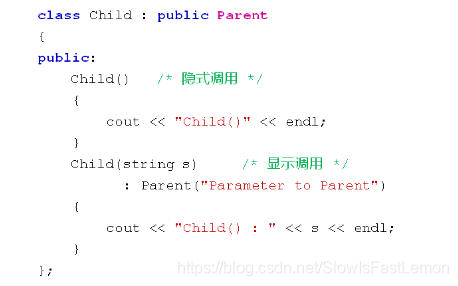
子类的构造初探:
#include <iostream>
#include <string>

using namespace std;

class Parent
{
public:
    Parent()
    {
        cout << "Parent()" << endl;
    }
    Parent(string s)
    {
        cout << "Parent(string s) : " << s << endl;
    }
};

class Child : public Parent
{
public:
    Child()
    {
        cout << "Child()" << endl;
    }
    Child(string s) : Parent(s)
    {
        cout << "Child(string s) : " << s << endl;
    }
};

int main()
{
    Child c;
    Child cc("cc");

    return 0;
}
1.2 子类对象的构造
构造规则:
- 子类对象在创建时会首先调用父类的构造函数。
- 先执行父类构造函数再执行子类的构造函数。
- 父类构造函数可以被隐式调用或者显示调用。
对象创建时构造函数的调用顺序:
- 调用父类的构造函数。
- 调用成员变量的构造函数。
- 调用类自身的构造函数。
口诀心法:先父母,后客人,再自己。
子类构造深度解析:
#include <iostream>
#include <string>

using namespace std;

class Object
{
public:
    Object(string s)
    {
        cout << "Object(string s) : " << s << endl;
    }
};

class Parent : public Object
{
public:
    Parent() : Object("Default")
    {
        cout << "Parent()" << endl;
    }
    Parent(string s) : Object(s)
    {
        cout << "Parent(string s) : " << s << endl;
    }
};

class Child : public Parent
{
    Object mO1;
    Object mO2;
public:
    Child() : mO1("Default 1"), mO2("Default 2")
    {
        cout << "Child()" << endl;
    }
    Child(string s) : Parent(s), mO1(s + " 1"), mO2(s + " 2")
    {
        cout << "Child(string s) : " << s << endl;
    }
};

int main()
{
    Child cc("cc");

    return 0;
}
2 C++继承中的析构
2.1 子类对象的析构
析构函数的调用顺序与构造函数相反:
- 执行自身的析构函数。
- 执行成员变量的析构函数。
- 执行父类的析构函数。
对象的析构:
#include <iostream>
#include <string>

using namespace std;

class Object
{
    string ms;
public:
    Object(string s)
    {
        cout << "Object(string s) : " << s << endl;
        ms = s;
    }
    ~Object()
    {
        cout << "~Object() : " << ms << endl;
    }
};

class Parent : public Object
{
    string ms;
public:
    Parent() : Object("Default")
    {
        cout << "Parent()" << endl;
        ms = "Default";
    }
    Parent(string s) : Object(s)
    {
        cout << "Parent(string s) : " << s << endl;
        ms = s;
    }
    ~Parent()
    {
        cout << "~Parent() : " << ms << endl;
    }
};

class Child : public Parent
{
    Object mO1;
    Object mO2;
    string ms;
public:
    Child() : mO1("Default 1"), mO2("Default 2")
    {
        cout << "Child()" << endl;
        ms = "Default";
    }
    Child(string s) : Parent(s), mO1(s + " 1"), mO2(s + " 2")
    {
        cout << "Child(string s) : " << s << endl;
        ms = s;
    }
    ~Child()
    {
        cout << "~Child() " << ms << endl;
    }
};

int main()
{
    Child cc("cc");

    cout << endl;

    return 0;
}
参考资料:





 扫一扫
扫一扫


 1万+
1万+

 被折叠的 条评论
为什么被折叠?
被折叠的 条评论
为什么被折叠?
 到【灌水乐园】发言





