


 文章讲述了C语言中结构体大小计算、枚举类型使用、初始化函数和灯控制,以及验证数据存储(大端/小端)的示例。
1.求结构体大小
struct data{
char t1;  //1
char t2;  //1
unsigned short t3;//2   //4
unsigned long t4;//8
};//16

struct data{
char t1;//1   //3
int t2;//4
short t3;//2   //2
};//12

struct s1
{
char c1;//1  //3
int i;//4
char c2;//1   //3
};//12

struct s2
{
char c1;//1
char c2;//1  //2
int i;//4
};//8

typedef struct Test
{
    short a;//2   //6
    struct
    {
        int b; //4   //4
        double c;//8
        char d;//1   //7
    }p;//8
    int e;//4  //4
}Test;//40

typedef struct Test
{
    short a;//2  //6
    struct
    {
        int b;//4  //4
        double c[10];//80
        char d;//1   //7
    };//8
    int e;//4    //4
}Test;//112

struct C{
char b;//1   //3
int a;//4
short c;//2   //2
};//12

struct C {
char a;//1
char b[3];//3
char c;//1
};//5

typedef struct
{
int b;//4
char a;//1   //3
long e;//8
char c;//1
float d;//4    //3
double t;//8
}node;//32
2.枚举练习题
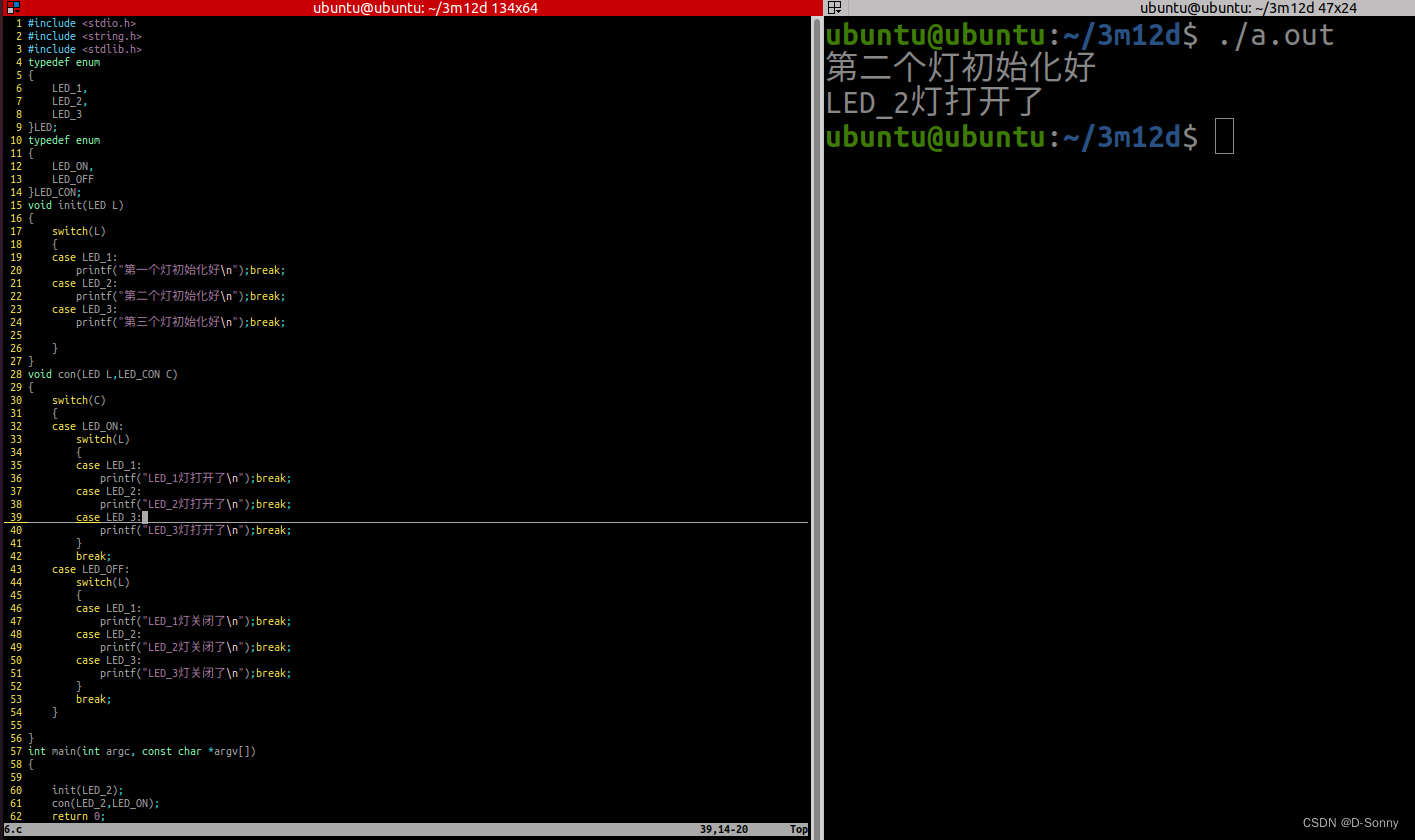
已知有三盏灯,LED_1,LED_2,LED_3,每盏灯有两种状态LED_ON,LED_OFF,现有两个函数void init(enum LED L)灯的初始化函数;void con(enum LED L,enum LED_CON C),在主函数内完成三盏灯的初始化和控制操作。
3.三种验证大小端存储的代码
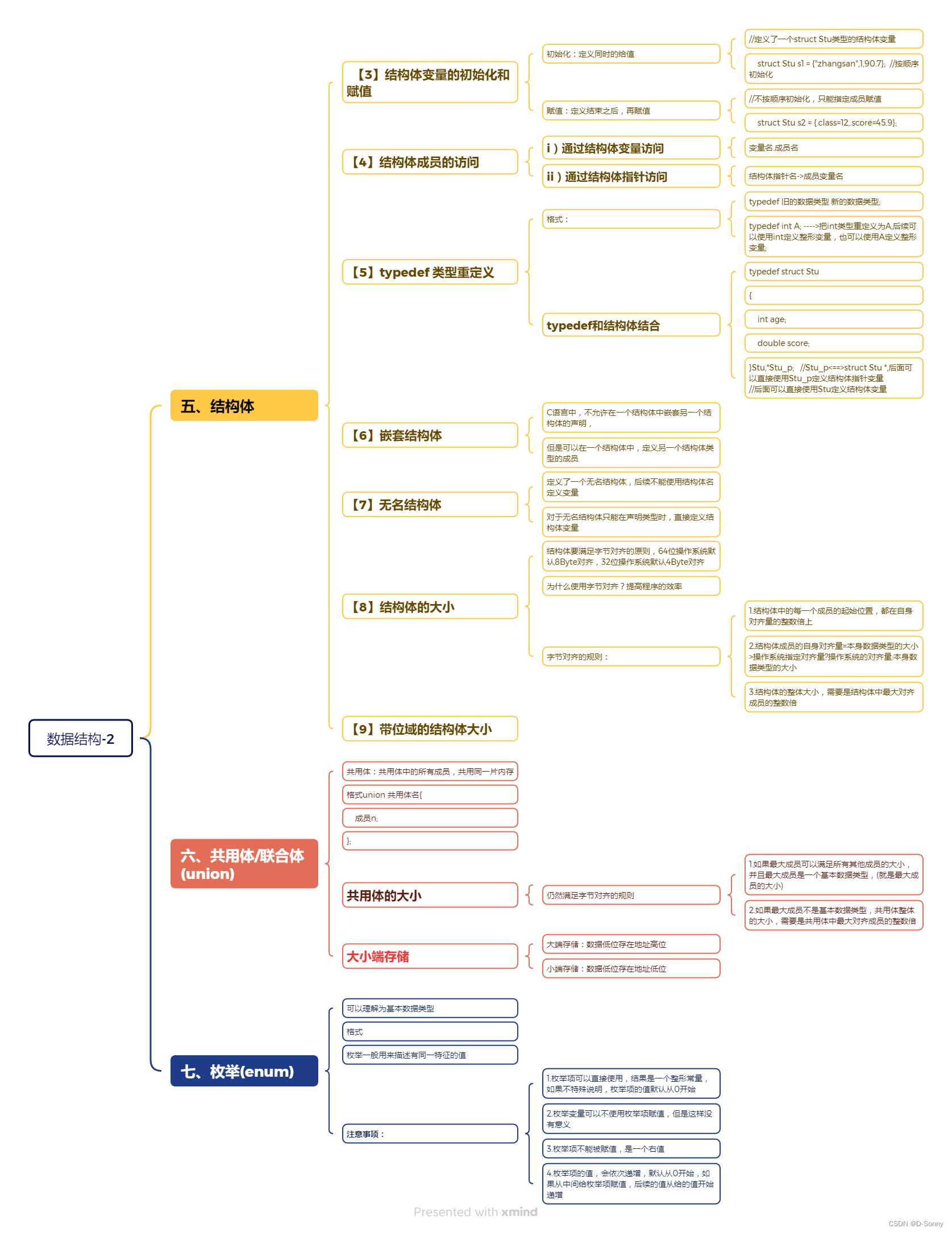
#include <stdio.h>
#include <string.h>
#include <stdlib.h>
typedef enum
{
	LED_1,
	LED_2,
	LED_3
}LED;
typedef enum
{
	LED_ON,
	LED_OFF
}LED_CON;
void init(LED L)
{
	switch(L)
	{
	case LED_1:
		printf("第一个灯初始化好\n");break;
	case LED_2:
		printf("第二个灯初始化好\n");break;
	case LED_3:
		printf("第三个灯初始化好\n");break;

	}
}
void con(LED L,LED_CON C)
{
	switch(C)
	{
	case LED_ON:
		switch(L)
		{
		case LED_1:
			printf("LED_1灯打开了\n");break;
		case LED_2:
			printf("LED_2灯打开了\n");break;
		case LED_3:
			printf("LED_3灯打开了\n");break;
		}
		break;
	case LED_OFF:
		switch(L)
		{
		case LED_1:
			printf("LED_1灯关闭了\n");break;
		case LED_2:
			printf("LED_2灯关闭了\n");break;
		case LED_3:
			printf("LED_3灯关闭了\n");break;
		}
		break;
	}

}
int main(int argc, const char *argv[])
{

	init(LED_2);
	con(LED_2,LED_ON);
	return 0;
}
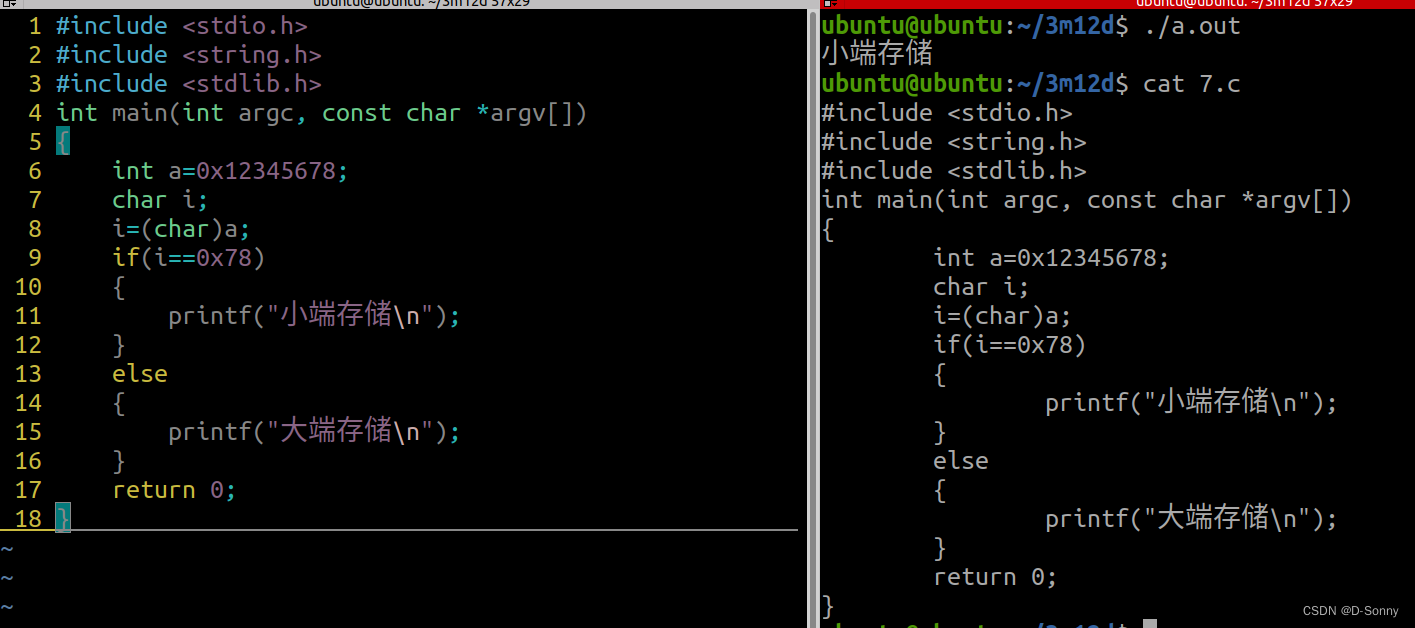
#include <stdio.h>
#include <string.h>
#include <stdlib.h>
int main(int argc, const char *argv[])
{
	int a=0x12345678;
	char i;
	i=(char)a;
	if(i==0x78)
	{
		printf("小端存储\n");
	}
	else
	{
		printf("大端存储\n");
	}
	return 0;
}
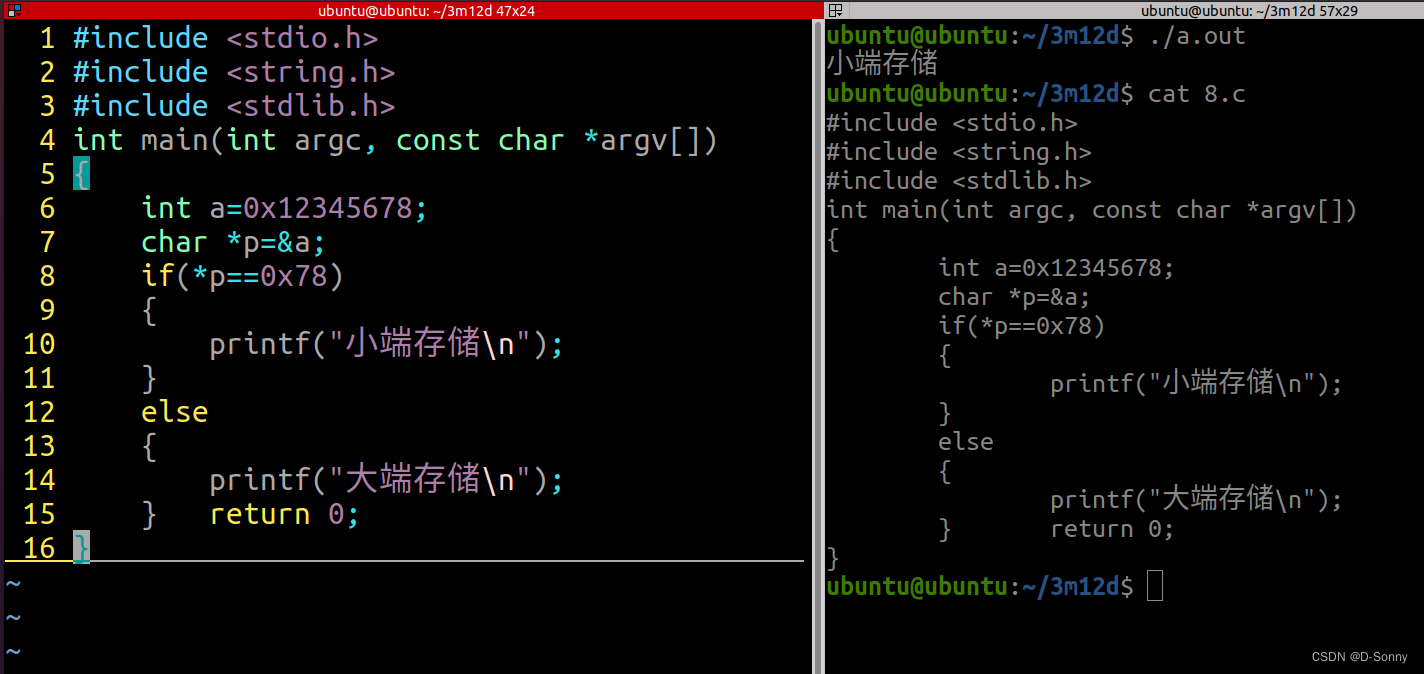
#include <stdio.h>
#include <string.h>
#include <stdlib.h>
int main(int argc, const char *argv[])
{
	int a=0x12345678;
	char *p=&a;
	if(*p==0x78)
	{
		printf("小端存储\n");
	}
	else
	{
		printf("大端存储\n");
	}
    return 0;
}
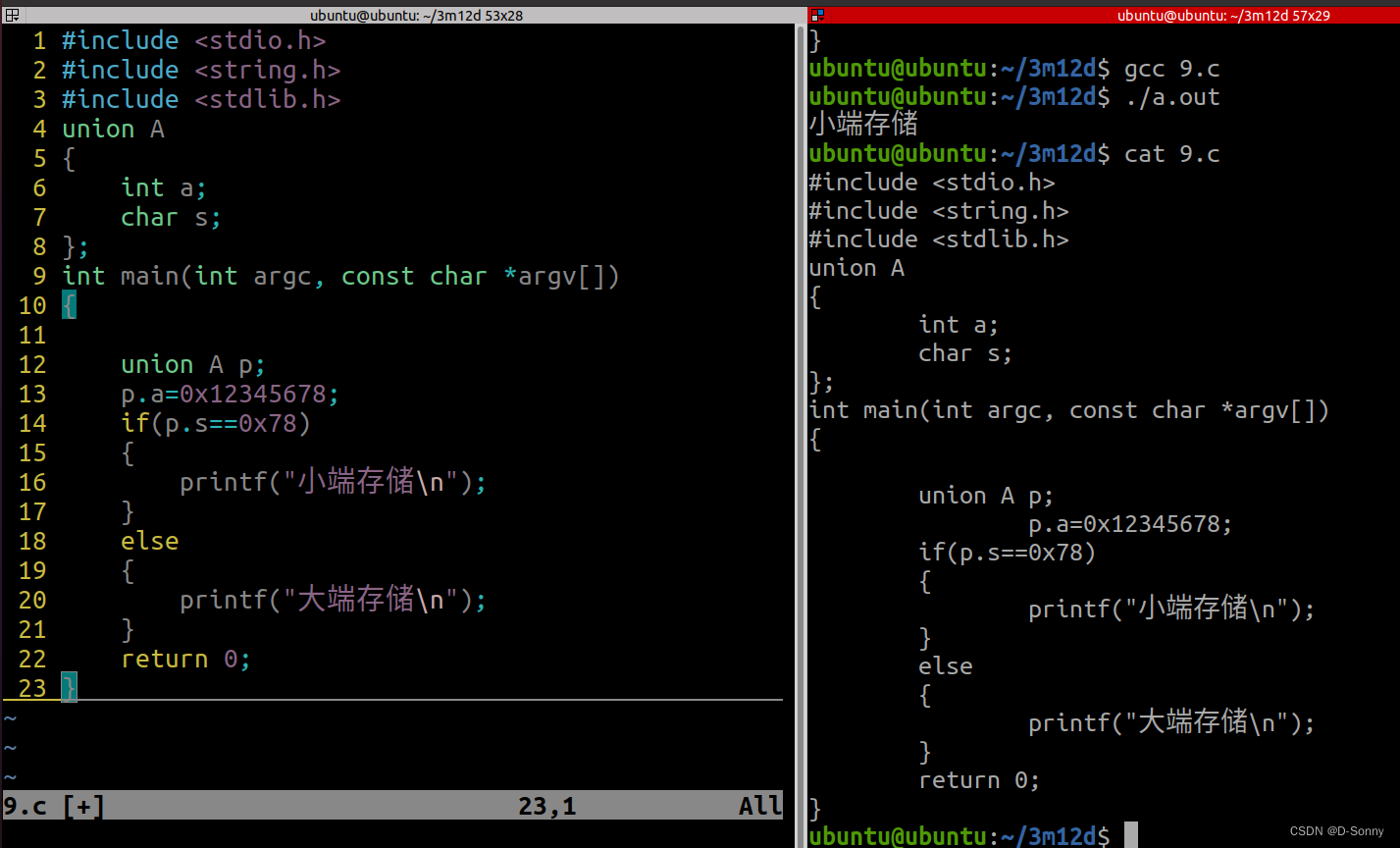
#include <stdio.h>
#include <string.h>
#include <stdlib.h>
union A
{
	int a;
	char s;
};
int main(int argc, const char *argv[])
{

	union A p;
		p.a=0x12345678;
	if(p.s==0x78)
	{
		printf("小端存储\n");
	}
	else
	{
		printf("大端存储\n");
	}
	return 0;
}





 扫一扫
扫一扫


 3632
3632

 被折叠的 条评论
为什么被折叠?
被折叠的 条评论
为什么被折叠?
 到【灌水乐园】发言





