Python之运算符

本文深入讲解了Python中的算术运算符、赋值运算符、关系运算符和逻辑运算符,包括算术运算符的详细使用方法,如加、减、乘、除、取余、整除、乘方等,并对Python2和Python3中除法运算符的不同进行了对比说明。此外,还介绍了赋值运算符、关系运算符和逻辑运算符的基本用法。


1.算术运算符

+,-,*,/,**,//,%

```

**** /:
# python2:

>>> 5/2
2
>>> 100/300
0
>>> 5/2.0
2.5
>>> 100/300.0
0.3333333333333333
>>> from __future__ import division
>>> 5/2
2.5
>>> 100/300
0.3333333333333333

# python3:
>>> 5/2
2.5
>>> 100/300
0.3333333333333333


```
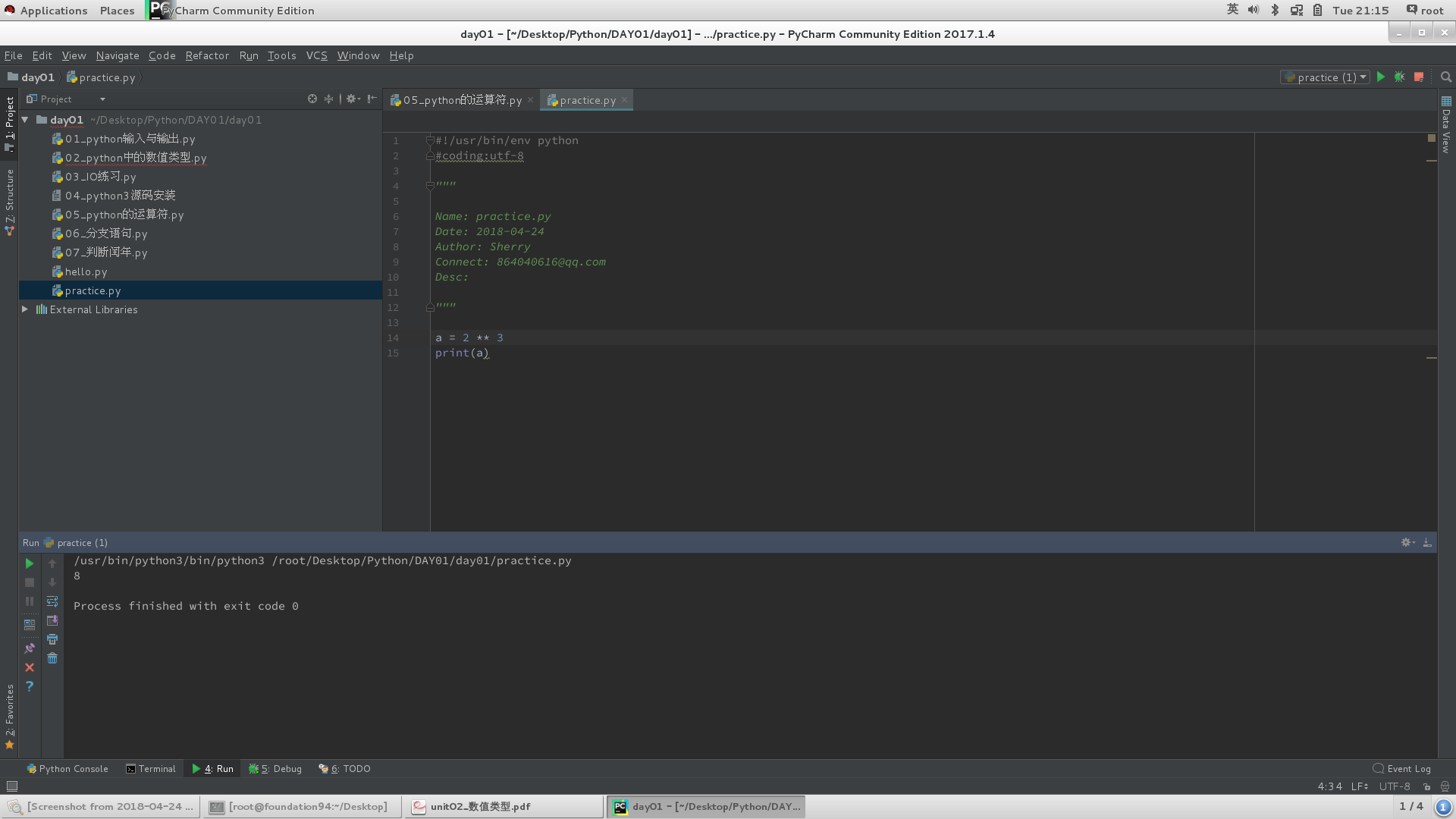
#乘方表示方式

2.赋值运算符

=,+=,-=,/=,*=,%=

3.关系运算符

>,>=,<,<=,!=,==
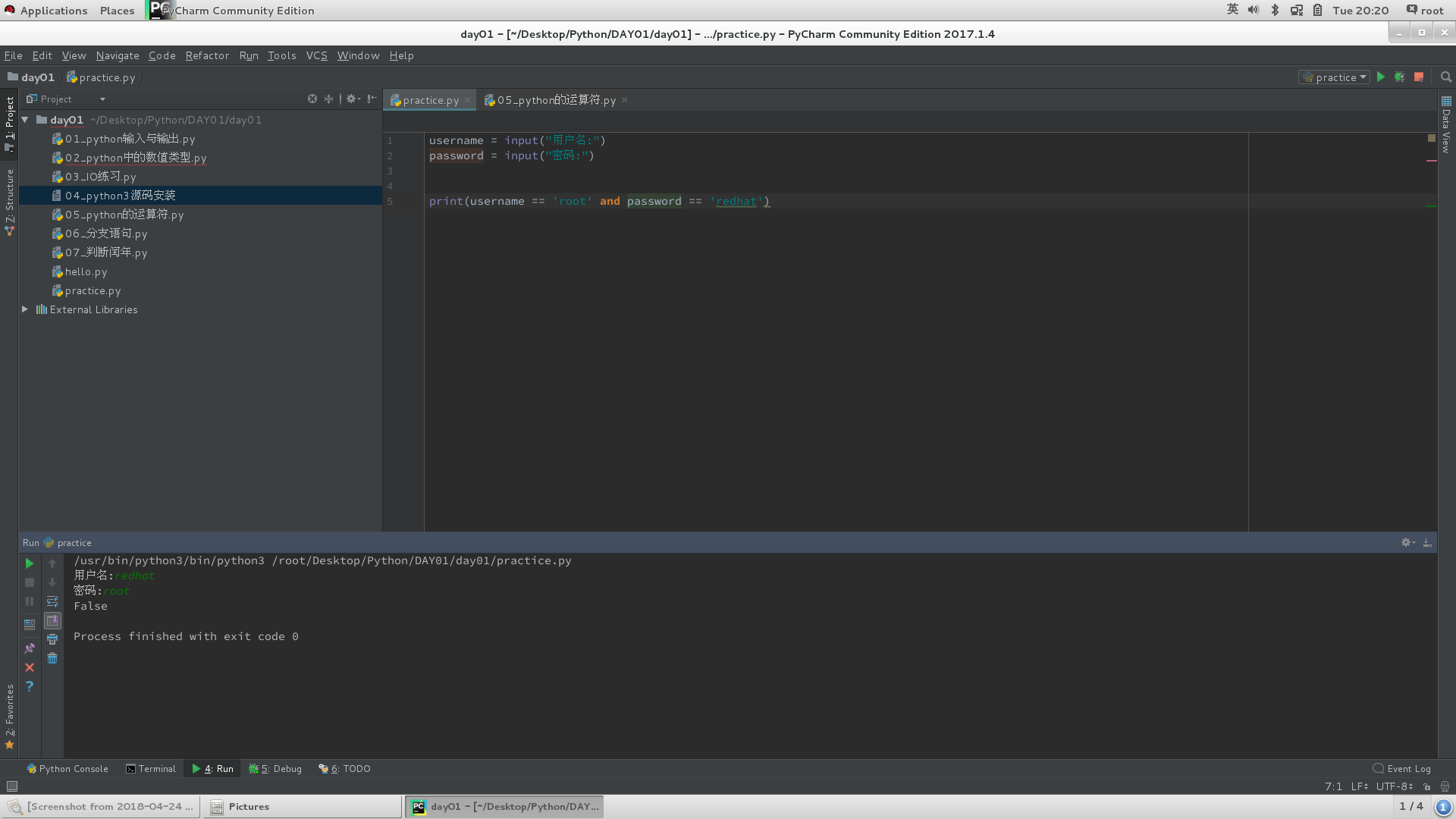
4.逻辑运算符

and,or,not

Python 包含三个核心逻辑运算符,分别为 `and`(逻辑与)、`or`(逻辑或)、`not`(逻辑非),它们可以在布尔值之间执行逻辑 AND、OR 和 NOT 运算 [^1][^2]。 ### 各运算符描述及示例 | 运算符 | 描述 | 示例 | 结果 | | --- | --- | --- | --- | | and | 逻辑与,若两个操作数都为 True,则返回 True;否则返回 False | `True and True` | `True` | | or | 逻辑或,若两个操作数至少有一个为 True,则返回 True;只有当两个操作数都为 False 时,才返回 False | `False or True` | `True` | | not | 逻辑非,对操作数的布尔值取反 | `not False` | `True` | [^2] ### 真值表与运算规则 #### `and` 运算符 | 左操作数 | 右操作数 | 结果 | | --- | --- | --- | | True | True | True | | True | False | False | | False | True | False | | False | False | False | #### `or` 运算符 | 左操作数 | 右操作数 | 结果 | | --- | --- | --- | | True | True | True | | True | False | True | | False | True | True | | False | False | False | #### `not` 运算符 | 操作数 | 结果 | | --- | --- | | True | False | | False | True | [^2] ### 短路求值特性 #### `and` 的短路行为 在 `and` 运算中,如果第一个操作数为 `False`,则不会计算第二个操作数,因为无论第二个操作数是什么,整个表达式的结果都是 `False`。 ```python def check(): print("执行检查") return True print(False and check()) # 输出 False,不执行check() ``` #### `or` 的短路行为 在 `or` 运算中,如果第一个操作数为 `True`,则不会计算第二个操作数,因为无论第二个操作数是什么,整个表达式的结果都是 `True`。 ```python def load_data(): print("加载数据") return [] print(True or load_data()) # 输出 True,不执行load_data() ``` #### 实际应用:避免除零错误 利用 `and` 运算符的短路特性,可以避免危险的计算,如除零错误。 ```python x = 0 if x != 0 and (10 / x > 2): # 安全判断 print("条件成立") else: print("跳过危险计算") ``` [^2] ### 运算符优先级 逻辑运算符Python 中有其特定的优先级,在复杂的逻辑表达式中,需要注意运算符的优先级以确保表达式按预期计算。不过具体优先级顺序在引用中未详细提及,一般可通过查阅 Python 官方文档获取准确信息。 ### 示例代码 ```python a = 10 b = 10 c = -10 if a > 0 and b > 0: print("The numbers are greater than 0") if a > 0 and b > 0 and c > 0: print("The numbers are greater than 0") else: print("Atleast one number is not greater than 0") ``` 这段代码展示了 `and` 运算符的使用,第一个 `if` 语句中 `a > 0` 和 `b > 0` 都为 `True`,所以会输出相应信息;第二个 `if` 语句中由于 `c > 0` 为 `False`,所以整个 `and` 表达式为 `False`,会执行 `else` 语句的内容 [^3]。
评论
添加红包

请填写红包祝福语或标题

红包个数最小为10个

红包金额最低5元

当前余额3.43前往充值 >
需支付:10.00
成就一亿技术人!
领取后你会自动成为博主和红包主的粉丝 规则
hope_wisdom
发出的红包
实付
使用余额支付
点击重新获取
扫码支付
钱包余额 0

抵扣说明:

1.余额是钱包充值的虚拟货币,按照1:1的比例进行支付金额的抵扣。
2.余额无法直接购买下载,可以购买VIP、付费专栏及课程。

余额充值