 LRU缓存机制实现



 本文详细介绍了一种常用的缓存淘汰策略——LRU(Least Recently Used)缓存机制的两种实现方式:使用LinkedHashMap和结合LinkedList与HashMap。通过具体代码示例,展示了如何在Java中高效地实现LRU缓存,适用于需要频繁访问且需维护访问顺序的场景。
题目
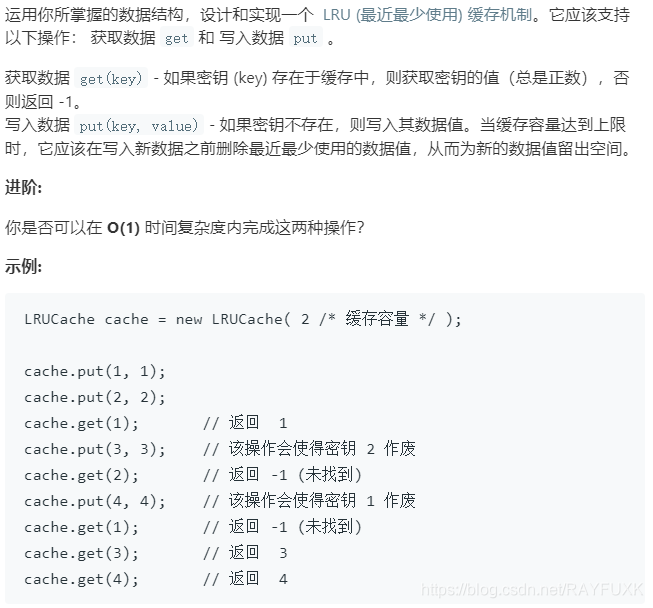
146. LRU缓存机制
题解
1 直接用LinkedHashMap来完成
class LRUCache {

    private LinkedHashMap<Integer, Integer> map;

    public LRUCache(int capacity) {
        map = new LinkedHashMap<Integer, Integer>(capacity, 0.75f, true) {
            @Override
            protected boolean removeEldestEntry(Map.Entry<Integer,Integer> eldest){
                return size() > capacity;
            }
        };
    }

    public int get(int key) {
        return map.getOrDefault(key, -1);
    }

    public void put(int key, int value) {
        map.put(key, value);
    }
}
2 用LinkedList 和HashMap来完成
1 put
1 判断key是否已经在哈希遍历存在的了,如果存在那么就就要更新哈希表里的value,还有吧原来的list的key 值给 remove 了,然后 addLast
2 如果不存在list直接addLast,哈希表添加新的值
2 查询
1 如果存在,那么list remove,同时addLast ,同时从HashMap返回值
2 如果不存在,返回-1;
public class LruCache01 {

    int capacity = 0;
    LinkedList<Integer> list = null;
    HashMap<Integer, Integer> map = null;

    public LruCache01(int capacity) {
        this.capacity = capacity;
        list = new LinkedList<>();
        map = new HashMap<>();
    }

    public int get(int key) {
        if (map.containsKey(key)) {
            list.remove(new Integer(key));
            list.addLast(key);
            return map.get(key);
        }
        return -1;
    }

    public void put(int key, int value) {
        if (map.containsKey(key)) {
            list.remove(new Integer(key));
            list.addLast(key);
            map.put(key, value);
        } else {
            list.addLast(key);
            map.put(key, value);
            if (list.size() > this.capacity) {
                int keyTemp = list.removeFirst();
                map.remove(keyTemp);
            }
        }
    }
}





 扫一扫
扫一扫


 927
927

 被折叠的 条评论
为什么被折叠?
被折叠的 条评论
为什么被折叠?
 到【灌水乐园】发言





