/*
* Copyright (C) 2024 The Android Open Source Project
*
* Licensed under the Apache License, Version 2.0 (the "License");
* you may not use this file except in compliance with the License.
* You may obtain a copy of the License at
*
* http://www.apache.org/licenses/LICENSE-2.0
*
* Unless required by applicable law or agreed to in writing, software
* distributed under the License is distributed on an "AS IS" BASIS,
* WITHOUT WARRANTIES OR CONDITIONS OF ANY KIND, either express or implied.
* See the License for the specific language governing permissions and
* limitations under the License.
*/
package com.android.server.pinner;
import static android.app.ActivityManager.UID_OBSERVER_ACTIVE;
import static android.app.ActivityManager.UID_OBSERVER_GONE;
import static android.os.Process.SYSTEM_UID;
import static com.android.server.flags.Flags.pinGlobalQuota;
import static com.android.server.flags.Flags.pinWebview;
import android.annotation.EnforcePermission;
import android.annotation.IntDef;
import android.annotation.NonNull;
import android.annotation.Nullable;
import android.app.ActivityManager;
import android.app.ActivityManagerInternal;
import android.app.IActivityManager;
import android.app.UidObserver;
import android.app.pinner.IPinnerService;
import android.app.pinner.PinnedFileStat;
import android.content.BroadcastReceiver;
import android.content.Context;
import android.content.Intent;
import android.content.IntentFilter;
import android.content.pm.ActivityInfo;
import android.content.pm.ApplicationInfo;
import android.content.pm.PackageManager;
import android.content.pm.ResolveInfo;
import android.database.ContentObserver;
import android.net.Uri;
import android.os.Binder;
import android.os.Build;
import android.os.Handler;
import android.os.HandlerExecutor;
import android.os.Looper;
import android.os.Message;
import android.os.Process;
import android.os.RemoteException;
import android.os.ResultReceiver;
import android.os.ShellCallback;
import android.os.SystemProperties;
import android.os.UserHandle;
import android.os.UserManager;
import android.provider.DeviceConfig;
import android.provider.DeviceConfigInterface;
import android.provider.MediaStore;
import android.provider.Settings;
import android.system.ErrnoException;
import android.system.Os;
import android.system.OsConstants;
import android.util.ArrayMap;
import android.util.ArraySet;
import android.util.Slog;
import com.android.internal.annotations.GuardedBy;
import com.android.internal.annotations.VisibleForTesting;
import com.android.internal.app.ResolverActivity;
import com.android.internal.os.BackgroundThread;
import com.android.internal.util.DumpUtils;
import com.android.internal.util.function.pooled.PooledLambda;
import com.android.server.LocalServices;
import com.android.server.SystemService;
import com.android.server.wm.ActivityTaskManagerInternal;
import dalvik.system.DexFile;
import dalvik.system.VMRuntime;
import system.ext.loader.core.ExtLoader;
import java.io.FileDescriptor;
import java.io.FileOutputStream;
import java.io.IOException;
import java.io.InputStream;
import java.io.PrintWriter;
import java.lang.annotation.Retention;
import java.lang.annotation.RetentionPolicy;
import java.lang.reflect.Method;
import java.util.ArrayList;
import java.util.Collection;
import java.util.HashSet;
import java.util.List;
import java.util.zip.ZipEntry;
import java.util.zip.ZipFile;
import sun.misc.Unsafe;
// #ifdef OPLUS_EXTENSION_HOOK
// Haoran.Xu@ROM.Framework, 2021/07/12, Modify for ALM:1770593
import com.android.server.IPinnerServiceExt;
// #endif /* OPLUS_EXTENSION_HOOK */
/**
* <p>PinnerService pins important files for key processes in memory.</p>
* <p>Files to pin are specified in the config_defaultPinnerServiceFiles
* overlay.</p>
* <p>Pin the default camera application if specified in config_pinnerCameraApp.</p>
* <p>(Optional) Pin experimental carveout regions based on DeviceConfig flags.</p>
*/
public final class PinnerService extends SystemService {
private static final boolean DEBUG = false;
private static final String TAG = "PinnerService";
private static final String PIN_META_FILENAME = "pinlist.meta";
private static final int PAGE_SIZE = (int) Os.sysconf(OsConstants._SC_PAGESIZE);
private static final int MATCH_FLAGS = PackageManager.MATCH_DEFAULT_ONLY
| PackageManager.MATCH_DIRECT_BOOT_AWARE | PackageManager.MATCH_DIRECT_BOOT_UNAWARE;
private static final int KEY_CAMERA = 0;
private static final int KEY_HOME = 1;
private static final int KEY_ASSISTANT = 2;
// Pin using pinlist.meta when pinning apps.
private static boolean PROP_PIN_PINLIST =
SystemProperties.getBoolean("pinner.use_pinlist", true);
public static final String ANON_REGION_STAT_NAME = "[anon]";
private static final String SYSTEM_GROUP_NAME = "system";
@IntDef({KEY_CAMERA, KEY_HOME, KEY_ASSISTANT})
@Retention(RetentionPolicy.SOURCE)
public @interface AppKey {}
private final Context mContext;
private final Injector mInjector;
private final DeviceConfigInterface mDeviceConfigInterface;
private final ActivityTaskManagerInternal mAtmInternal;
private final ActivityManagerInternal mAmInternal;
private final IActivityManager mAm;
private final UserManager mUserManager;
/** The list of the statically pinned files. */
@GuardedBy("this")
private final ArrayMap<String, PinnedFile> mPinnedFiles = new ArrayMap<>();
/** The list of the pinned apps. This is a map from {@link AppKey} to a pinned app. */
@GuardedBy("this")
private final ArrayMap<Integer, PinnedApp> mPinnedApps = new ArrayMap<>();
/**
* The list of the pinned apps that need to be repinned as soon as the all processes of a given
* uid are no longer active. Note that with background dex opt, the new dex/vdex files are only
* loaded into the processes once it restarts. So in case background dex opt recompiled these
* files, we still need to keep the old ones pinned until the processes restart.
* <p>
* This is a map from uid to {@link AppKey}
*/
@GuardedBy("this")
private final ArrayMap<Integer, Integer> mPendingRepin = new ArrayMap<>();
/**
* A set of {@link AppKey} that are configured to be pinned.
*/
@GuardedBy("this") private
ArraySet<Integer> mPinKeys;
// Note that we don't use the `_BOOT` namespace for anonymous pinnings, as we want
// them to be responsive to dynamic flag changes for experimentation.
private static final String DEVICE_CONFIG_NAMESPACE_ANON_SIZE =
DeviceConfig.NAMESPACE_RUNTIME_NATIVE;
private static final String DEVICE_CONFIG_KEY_ANON_SIZE = "pin_shared_anon_size";
private static final long DEFAULT_ANON_SIZE =
SystemProperties.getLong("pinner.pin_shared_anon_size", 0);
private static final long MAX_ANON_SIZE = 2L * (1L << 30); // 2GB
private long mPinAnonSize;
private long mPinAnonAddress;
private long mCurrentlyPinnedAnonSize;
// Resource-configured pinner flags;
private final boolean mConfiguredToPinCamera;
private final int mConfiguredCameraPinBytes;
private final int mConfiguredHomePinBytes;
private final boolean mConfiguredToPinAssistant;
private final int mConfiguredAssistantPinBytes;
private final int mConfiguredWebviewPinBytes;
// This is the percentage of total device memory that will be used to set the global quota.
private final int mConfiguredMaxPinnedMemoryPercentage;
// This is the global pinner quota that can be pinned.
private long mConfiguredMaxPinnedMemory;
// This is the currently pinned memory.
private long mCurrentPinnedMemory = 0;
private BinderService mBinderService;
private PinnerHandler mPinnerHandler = null;
// #ifdef OPLUS_EXTENSION_HOOK
// Haoran.Xu@ROM.Framework, 2021/07/12, Modify for ALM:1770593
public IPinnerServiceExt mPinnerServiceExt = ExtLoader.type(IPinnerServiceExt.class).create();
// #endif /* OPLUS_EXTENSION_HOOK */
private final BroadcastReceiver mBroadcastReceiver = new BroadcastReceiver() {
@Override
public void onReceive(Context context, Intent intent) {
// If an app has updated, update pinned files accordingly.
if (Intent.ACTION_PACKAGE_REPLACED.equals(intent.getAction())) {
Uri packageUri = intent.getData();
String packageName = packageUri.getSchemeSpecificPart();
ArraySet<String> updatedPackages = new ArraySet<>();
updatedPackages.add(packageName);
update(updatedPackages, true /* force */);
}
}
};
private final DeviceConfig.OnPropertiesChangedListener mDeviceConfigAnonSizeListener =
new DeviceConfig.OnPropertiesChangedListener() {
@Override
public void onPropertiesChanged(DeviceConfig.Properties properties) {
if (DEVICE_CONFIG_NAMESPACE_ANON_SIZE.equals(properties.getNamespace())
&& properties.getKeyset().contains(DEVICE_CONFIG_KEY_ANON_SIZE)) {
refreshPinAnonConfig();
}
}
};
/** Utility class for testing. */
@VisibleForTesting
public static class Injector {
protected DeviceConfigInterface getDeviceConfigInterface() {
return DeviceConfigInterface.REAL;
}
protected void publishBinderService(PinnerService service, Binder binderService) {
service.publishBinderService("pinner", binderService);
}
protected PinnedFile pinFileInternal(PinnerService service, String fileToPin,
long maxBytesToPin, boolean attemptPinIntrospection) {
return service.pinFileInternal(fileToPin, maxBytesToPin, attemptPinIntrospection);
}
}
public PinnerService(Context context) {
this(context, new Injector());
}
@VisibleForTesting
public PinnerService(Context context, Injector injector) {
super(context);
mContext = context;
mInjector = injector;
mDeviceConfigInterface = mInjector.getDeviceConfigInterface();
mConfiguredToPinCamera = context.getResources().getBoolean(
com.android.internal.R.bool.config_pinnerCameraApp);
mConfiguredCameraPinBytes = context.getResources().getInteger(
com.android.internal.R.integer.config_pinnerCameraPinBytes);
mConfiguredAssistantPinBytes = context.getResources().getInteger(
com.android.internal.R.integer.config_pinnerAssistantPinBytes);
mConfiguredHomePinBytes = context.getResources().getInteger(
com.android.internal.R.integer.config_pinnerHomePinBytes);
mConfiguredToPinAssistant = context.getResources().getBoolean(
com.android.internal.R.bool.config_pinnerAssistantApp);
mConfiguredWebviewPinBytes = context.getResources().getInteger(
com.android.internal.R.integer.config_pinnerWebviewPinBytes);
mConfiguredMaxPinnedMemoryPercentage = context.getResources().getInteger(
com.android.internal.R.integer.config_pinnerMaxPinnedMemoryPercentage);
mPinKeys = createPinKeys();
mPinnerHandler = new PinnerHandler(BackgroundThread.get().getLooper());
mAtmInternal = LocalServices.getService(ActivityTaskManagerInternal.class);
mAmInternal = LocalServices.getService(ActivityManagerInternal.class);
mAm = ActivityManager.getService();
mUserManager = mContext.getSystemService(UserManager.class);
IntentFilter filter = new IntentFilter();
filter.addAction(Intent.ACTION_PACKAGE_REPLACED);
filter.addDataScheme("package");
mContext.registerReceiver(mBroadcastReceiver, filter);
registerUidListener();
registerUserSetupCompleteListener();
mDeviceConfigInterface.addOnPropertiesChangedListener(DEVICE_CONFIG_NAMESPACE_ANON_SIZE,
new HandlerExecutor(mPinnerHandler), mDeviceConfigAnonSizeListener);
}
@Override
public void onStart() {
if (DEBUG) {
Slog.i(TAG, "Starting PinnerService");
}
mConfiguredMaxPinnedMemory =
(Process.getTotalMemory()
* Math.clamp(mConfiguredMaxPinnedMemoryPercentage, 0, 100))
/ 100;
mBinderService = new BinderService();
mInjector.publishBinderService(this, mBinderService);
publishLocalService(PinnerService.class, this);
mPinnerHandler.obtainMessage(PinnerHandler.PIN_ONSTART_MSG).sendToTarget();
sendPinAppsMessage(UserHandle.USER_SYSTEM);
}
/**
* Repin apps on user switch.
* <p>
* If more than one user is using the device each user may set a different preference for the
* individual apps. Make sure that user's preference is pinned into memory.
*/
@Override
public void onUserSwitching(@Nullable TargetUser from, @NonNull TargetUser to) {
int userId = to.getUserIdentifier();
if (!mUserManager.isManagedProfile(userId)) {
sendPinAppsMessage(userId);
}
}
@Override
public void onUserUnlocking(@NonNull TargetUser user) {
final int userId = user.getUserIdentifier();
if (userId != UserHandle.USER_SYSTEM && !mUserManager.isManagedProfile(userId)) {
// App pinning for the system should have already been triggered from onStart().
sendPinAppsMessage(userId);
}
}
/**
* Update the currently pinned files.
* Specifically, this only updates pinning for the apps that need to be pinned.
* The other files pinned in onStart will not need to be updated.
*/
public void update(ArraySet<String> updatedPackages, boolean force) {
ArraySet<Integer> pinKeys = getPinKeys();
int currentUser = ActivityManager.getCurrentUser();
for (int i = pinKeys.size() - 1; i >= 0; i--) {
int key = pinKeys.valueAt(i);
ApplicationInfo info = getInfoForKey(key, currentUser);
if (info != null && updatedPackages.contains(info.packageName)) {
Slog.i(TAG, "Updating pinned files for " + info.packageName + " force=" + force);
sendPinAppMessage(key, currentUser, force);
}
}
// #ifdef OPLUS_EXTENSION_HOOK
// Haoran.Xu@ROM.Framework, 2021/07/12, Modify for ALM:1770593
mPinnerServiceExt.updateExt(updatedPackages, force);
// #endif /* OPLUS_EXTENSION_HOOK */
}
/** Returns information about pinned files and sizes for StatsPullAtomService. */
public List<PinnedFileStats> dumpDataForStatsd() {
List<PinnedFileStats> pinnedFileStats = new ArrayList<>();
synchronized (PinnerService.this) {
for (PinnedFile pinnedFile : mPinnedFiles.values()) {
pinnedFileStats.add(new PinnedFileStats(SYSTEM_UID, pinnedFile));
}
for (int key : mPinnedApps.keySet()) {
PinnedApp app = mPinnedApps.get(key);
for (PinnedFile pinnedFile : mPinnedApps.get(key).mFiles) {
pinnedFileStats.add(new PinnedFileStats(app.uid, pinnedFile));
}
}
}
return pinnedFileStats;
}
/** Wrapper class for statistics for a pinned file. */
public static class PinnedFileStats {
public final int uid;
public final String filename;
public final int sizeKb;
protected PinnedFileStats(int uid, PinnedFile file) {
this.uid = uid;
this.filename = file.fileName.substring(file.fileName.lastIndexOf('/') + 1);
this.sizeKb = (int) file.bytesPinned / 1024;
}
}
/**
* Handler for on start pinning message
*/
private void handlePinOnStart() {
// Files to pin come from the overlay and can be specified per-device config
String[] filesToPin = mContext.getResources().getStringArray(
com.android.internal.R.array.config_defaultPinnerServiceFiles);
// #ifdef OPLUS_EXTENSION_HOOK
// Chucheng.Ye@ANDROID.RESCONTROL, 2021/08/03, add for customize pinner file.
filesToPin = mPinnerServiceExt.replaceDefaultFiles(filesToPin);
// #endif /* OPLUS_EXTENSION_HOOK */
// Continue trying to pin each file even if we fail to pin some of them
for (String fileToPin : filesToPin) {
pinFile(fileToPin, Integer.MAX_VALUE, /*appInfo=*/null, /*groupName=*/SYSTEM_GROUP_NAME,
true);
}
refreshPinAnonConfig();
}
/**
* Registers a listener to repin the home app when user setup is complete, as the home intent
* initially resolves to setup wizard, but once setup is complete, it will resolve to the
* regular home app.
*/
private void registerUserSetupCompleteListener() {
Uri userSetupCompleteUri = Settings.Secure.getUriFor(Settings.Secure.USER_SETUP_COMPLETE);
mContext.getContentResolver().registerContentObserver(
userSetupCompleteUri, false, new ContentObserver(null) {
@Override
public void onChange(boolean selfChange, Uri uri) {
if (userSetupCompleteUri.equals(uri)) {
if (mConfiguredHomePinBytes > 0) {
sendPinAppMessage(KEY_HOME, ActivityManager.getCurrentUser(),
true /* force */);
}
}
}
}, UserHandle.USER_ALL);
}
private void registerUidListener() {
try {
mAm.registerUidObserver(new UidObserver() {
@Override
public void onUidGone(int uid, boolean disabled) {
mPinnerHandler.sendMessage(PooledLambda.obtainMessage(
PinnerService::handleUidGone, PinnerService.this, uid));
}
@Override
public void onUidActive(int uid) {
mPinnerHandler.sendMessage(PooledLambda.obtainMessage(
PinnerService::handleUidActive, PinnerService.this, uid));
}
}, UID_OBSERVER_GONE | UID_OBSERVER_ACTIVE, 0, null);
} catch (RemoteException e) {
Slog.e(TAG, "Failed to register uid observer", e);
}
}
private void handleUidGone(int uid) {
updateActiveState(uid, false /* active */);
int key;
synchronized (this) {
// In case we have a pending repin, repin now. See mPendingRepin for more information.
key = mPendingRepin.getOrDefault(uid, -1);
if (key == -1) {
return;
}
mPendingRepin.remove(uid);
}
pinApp(key, ActivityManager.getCurrentUser(), false /* force */);
}
private void handleUidActive(int uid) {
updateActiveState(uid, true /* active */);
}
private void updateActiveState(int uid, boolean active) {
synchronized (this) {
for (int i = mPinnedApps.size() - 1; i >= 0; i--) {
PinnedApp app = mPinnedApps.valueAt(i);
if (app.uid == uid) {
app.active = active;
}
}
}
}
private void unpinApps() {
ArraySet<Integer> pinKeys = getPinKeys();
for (int i = pinKeys.size() - 1; i >= 0; i--) {
int key = pinKeys.valueAt(i);
unpinApp(key);
}
}
private void unpinApp(@AppKey int key) {
ArrayList<PinnedFile> pinnedAppFiles;
synchronized (this) {
PinnedApp app = mPinnedApps.get(key);
if (app == null) {
return;
}
mPinnedApps.remove(key);
pinnedAppFiles = new ArrayList<>(app.mFiles);
}
for (PinnedFile pinnedFile : pinnedAppFiles) {
unpinFile(pinnedFile.fileName);
}
}
private boolean isResolverActivity(ActivityInfo info) {
return ResolverActivity.class.getName().equals(info.name);
}
public int getWebviewPinQuota() {
if (!pinWebview()) {
return 0;
}
int quota = mConfiguredWebviewPinBytes;
int overrideQuota = SystemProperties.getInt("pinner.pin_webview_size", -1);
if (overrideQuota != -1) {
// Quota was overridden
quota = overrideQuota;
}
return quota;
}
private ApplicationInfo getCameraInfo(int userHandle) {
Intent cameraIntent = new Intent(MediaStore.INTENT_ACTION_STILL_IMAGE_CAMERA);
ApplicationInfo info = getApplicationInfoForIntent(
cameraIntent, userHandle, false /* defaultToSystemApp */);
// If the STILL_IMAGE_CAMERA intent doesn't resolve, try the _SECURE intent.
// We don't use _SECURE first because it will never get set on a device
// without File-based Encryption. But if the user has only set the intent
// before unlocking their device, we may still be able to identify their
// preference using this intent.
if (info == null) {
cameraIntent = new Intent(MediaStore.INTENT_ACTION_STILL_IMAGE_CAMERA_SECURE);
info = getApplicationInfoForIntent(
cameraIntent, userHandle, false /* defaultToSystemApp */);
}
// If the _SECURE intent doesn't resolve, try the original intent but request
// the system app for camera if there was more than one result.
if (info == null) {
cameraIntent = new Intent(MediaStore.INTENT_ACTION_STILL_IMAGE_CAMERA);
info = getApplicationInfoForIntent(
cameraIntent, userHandle, true /* defaultToSystemApp */);
}
return info;
}
private ApplicationInfo getHomeInfo(int userHandle) {
Intent intent = mAtmInternal.getHomeIntent();
return getApplicationInfoForIntent(intent, userHandle, false);
}
private ApplicationInfo getAssistantInfo(int userHandle) {
Intent intent = new Intent(Intent.ACTION_ASSIST);
return getApplicationInfoForIntent(intent, userHandle, true);
}
private ApplicationInfo getApplicationInfoForIntent(
Intent intent, int userHandle, boolean defaultToSystemApp) {
if (intent == null) {
return null;
}
ResolveInfo resolveInfo =
mContext.getPackageManager().resolveActivityAsUser(intent, MATCH_FLAGS, userHandle);
// If this intent can resolve to only one app, choose that one.
// Otherwise, if we've requested to default to the system app, return it;
// if we have not requested that default, return null if there's more than one option.
// If there's more than one system app, return null since we don't know which to pick.
if (resolveInfo == null) {
return null;
}
if (!isResolverActivity(resolveInfo.activityInfo)) {
return resolveInfo.activityInfo.applicationInfo;
}
if (defaultToSystemApp) {
List<ResolveInfo> infoList = mContext.getPackageManager().queryIntentActivitiesAsUser(
intent, MATCH_FLAGS, userHandle);
ApplicationInfo systemAppInfo = null;
for (ResolveInfo info : infoList) {
if ((info.activityInfo.applicationInfo.flags & ApplicationInfo.FLAG_SYSTEM) != 0) {
if (systemAppInfo == null) {
systemAppInfo = info.activityInfo.applicationInfo;
} else {
// If there's more than one system app, return null due to ambiguity.
return null;
}
}
}
return systemAppInfo;
}
return null;
}
private void sendPinAppsMessage(int userHandle) {
mPinnerHandler.sendMessage(
PooledLambda.obtainMessage(PinnerService::pinApps, this, userHandle));
}
private void sendPinAppsWithUpdatedKeysMessage(int userHandle) {
mPinnerHandler.sendMessage(PooledLambda.obtainMessage(
PinnerService::pinAppsWithUpdatedKeys, this, userHandle));
}
private void sendUnpinAppsMessage() {
mPinnerHandler.sendMessage(PooledLambda.obtainMessage(PinnerService::unpinApps, this));
}
private ArraySet<Integer> createPinKeys() {
ArraySet<Integer> pinKeys = new ArraySet<>();
// Pin the camera application. Default to the system property only if the experiment
// phenotype property is not set.
boolean shouldPinCamera = mConfiguredToPinCamera
&& mDeviceConfigInterface.getBoolean(DeviceConfig.NAMESPACE_RUNTIME_NATIVE_BOOT,
"pin_camera", SystemProperties.getBoolean("pinner.pin_camera", true));
if (shouldPinCamera) {
pinKeys.add(KEY_CAMERA);
} else if (DEBUG) {
Slog.i(TAG, "Pinner - skip pinning camera app");
}
if (mConfiguredHomePinBytes > 0) {
pinKeys.add(KEY_HOME);
}
if (mConfiguredToPinAssistant) {
pinKeys.add(KEY_ASSISTANT);
}
return pinKeys;
}
private synchronized ArraySet<Integer> getPinKeys() {
return mPinKeys;
}
private void pinApps(int userHandle) {
pinAppsInternal(userHandle, false);
}
private void pinAppsWithUpdatedKeys(int userHandle) {
pinAppsInternal(userHandle, true);
}
/**
* @param updateKeys True if the pinned app list has to be updated. This is true only when
* "pinner repin" shell command is requested.
*/
private void pinAppsInternal(int userHandle, boolean updateKeys) {
if (updateKeys) {
ArraySet<Integer> newKeys = createPinKeys();
synchronized (this) {
// This code path demands preceding unpinApps() call.
if (!mPinnedApps.isEmpty()) {
Slog.e(TAG,
"Attempted to update a list of apps, "
+ "but apps were already pinned. Skipping.");
return;
}
mPinKeys = newKeys;
}
}
ArraySet<Integer> currentPinKeys = getPinKeys();
for (int i = currentPinKeys.size() - 1; i >= 0; i--) {
int key = currentPinKeys.valueAt(i);
pinApp(key, userHandle, true /* force */);
}
}
/**
* @see #pinApp(int, int, boolean)
*/
private void sendPinAppMessage(int key, int userHandle, boolean force) {
mPinnerHandler.sendMessage(
PooledLambda.obtainMessage(PinnerService::pinApp, this, key, userHandle, force));
}
/**
* Pins an app of a specific type {@code key}.
*
* @param force If false, this will not repin the app if it's currently active. See
* {@link #mPendingRepin}.
*/
private void pinApp(int key, int userHandle, boolean force) {
int uid = getUidForKey(key);
// In case the app is currently active, don't repin until next process restart. See
// mPendingRepin for more information.
if (!force && uid != -1) {
synchronized (this) {
mPendingRepin.put(uid, key);
}
return;
}
ApplicationInfo info = getInfoForKey(key, userHandle);
unpinApp(key);
if (info != null) {
pinAppInternal(key, info);
}
}
/**
* Checks whether the pinned package with {@code key} is active or not.
* @return The uid of the pinned app, or {@code -1} otherwise.
*/
private int getUidForKey(@AppKey int key) {
synchronized (this) {
PinnedApp existing = mPinnedApps.get(key);
return existing != null && existing.active ? existing.uid : -1;
}
}
/**
* Retrieves the current application info for the given app type.
*
* @param key The app type to retrieve the info for.
* @param userHandle The user id of the current user.
*/
private @Nullable ApplicationInfo getInfoForKey(@AppKey int key, int userHandle) {
switch (key) {
case KEY_CAMERA:
return getCameraInfo(userHandle);
case KEY_HOME:
return getHomeInfo(userHandle);
case KEY_ASSISTANT:
return getAssistantInfo(userHandle);
default:
return null;
}
}
/**
* @return The app type name for {@code key}.
*/
private String getNameForKey(@AppKey int key) {
switch (key) {
case KEY_CAMERA:
return "Camera";
case KEY_HOME:
return "Home";
case KEY_ASSISTANT:
return "Assistant";
default:
return "";
}
}
/**
* Handle any changes in the anon region pinner config.
*/
private void refreshPinAnonConfig() {
long newPinAnonSize = mDeviceConfigInterface.getLong(
DEVICE_CONFIG_NAMESPACE_ANON_SIZE, DEVICE_CONFIG_KEY_ANON_SIZE, DEFAULT_ANON_SIZE);
newPinAnonSize = Math.max(0, Math.min(newPinAnonSize, MAX_ANON_SIZE));
if (newPinAnonSize != mPinAnonSize) {
mPinAnonSize = newPinAnonSize;
pinAnonRegion();
}
}
/**
* Pin an empty anonymous region. This should only be used for ablation experiments.
*/
private void pinAnonRegion() {
if (mPinAnonSize == 0) {
Slog.d(TAG, "pinAnonRegion: releasing pinned region");
unpinAnonRegion();
return;
}
long alignedPinSize = mPinAnonSize;
if (alignedPinSize % PAGE_SIZE != 0) {
alignedPinSize -= alignedPinSize % PAGE_SIZE;
Slog.e(TAG, "pinAnonRegion: aligning size to " + alignedPinSize);
}
if (mPinAnonAddress != 0) {
if (mCurrentlyPinnedAnonSize == alignedPinSize) {
Slog.d(TAG, "pinAnonRegion: already pinned region of size " + alignedPinSize);
return;
}
Slog.d(TAG, "pinAnonRegion: resetting pinned region for new size " + alignedPinSize);
unpinAnonRegion();
}
long address = 0;
try {
// Map as SHARED to avoid changing rss.anon for system_server (per /proc/*/status).
// The mapping is visible in other rss metrics, and as private dirty in smaps/meminfo.
address = Os.mmap(0, alignedPinSize, OsConstants.PROT_READ | OsConstants.PROT_WRITE,
OsConstants.MAP_SHARED | OsConstants.MAP_ANONYMOUS, new FileDescriptor(),
/*offset=*/0);
Unsafe tempUnsafe = null;
Class<sun.misc.Unsafe> clazz = sun.misc.Unsafe.class;
for (java.lang.reflect.Field f : clazz.getDeclaredFields()) {
f.setAccessible(true);
Object obj = f.get(null);
if (clazz.isInstance(obj)) {
tempUnsafe = clazz.cast(obj);
}
}
if (tempUnsafe == null) {
throw new Exception("Couldn't get Unsafe");
}
Method setMemory = clazz.getMethod("setMemory", long.class, long.class, byte.class);
setMemory.invoke(tempUnsafe, address, alignedPinSize, (byte) 1);
Os.mlock(address, alignedPinSize);
mCurrentlyPinnedAnonSize = alignedPinSize;
mPinAnonAddress = address;
address = -1;
Slog.w(TAG, "pinAnonRegion success, size=" + mCurrentlyPinnedAnonSize);
} catch (Exception ex) {
Slog.e(TAG, "Could not pin anon region of size " + alignedPinSize, ex);
return;
} finally {
if (address >= 0) {
PinnerUtils.safeMunmap(address, alignedPinSize);
}
}
}
private void unpinAnonRegion() {
if (mPinAnonAddress != 0) {
PinnerUtils.safeMunmap(mPinAnonAddress, mCurrentlyPinnedAnonSize);
}
mPinAnonAddress = 0;
mCurrentlyPinnedAnonSize = 0;
}
/**
* @return The maximum amount of bytes to be pinned for an app of type {@code key}.
*/
private int getSizeLimitForKey(@AppKey int key) {
switch (key) {
case KEY_CAMERA:
return mConfiguredCameraPinBytes;
case KEY_HOME:
return mConfiguredHomePinBytes;
case KEY_ASSISTANT:
return mConfiguredAssistantPinBytes;
default:
return 0;
}
}
/**
* Retrieves remaining quota for pinner service, once it reaches 0 it will no longer
* pin any file.
*/
private long getAvailableGlobalQuota() {
return mConfiguredMaxPinnedMemory - mCurrentPinnedMemory;
}
/**
* Pins an application.
*
* @param key The key of the app to pin.
* @param appInfo The corresponding app info.
*/
private void pinAppInternal(@AppKey int key, @Nullable ApplicationInfo appInfo) {
if (appInfo == null) {
return;
}
PinnedApp pinnedApp = new PinnedApp(appInfo);
synchronized (this) {
mPinnedApps.put(key, pinnedApp);
}
// pin APK
final int pinSizeLimit = getSizeLimitForKey(key);
List<String> apks = new ArrayList<>();
apks.add(appInfo.sourceDir);
if (appInfo.splitSourceDirs != null) {
for (String splitApk : appInfo.splitSourceDirs) {
apks.add(splitApk);
}
}
long apkPinSizeLimit = pinSizeLimit;
for (String apk : apks) {
if (apkPinSizeLimit <= 0) {
Slog.w(TAG, "Reached to the pin size limit. Skipping: " + apk);
// Continue instead of break to print all skipped APK names.
continue;
}
String pinGroup = getNameForKey(key);
boolean shouldPinDeps = apk.equals(appInfo.sourceDir);
PinnedFile pf = pinFile(apk, apkPinSizeLimit, appInfo, pinGroup, shouldPinDeps);
if (pf == null) {
Slog.e(TAG, "Failed to pin " + apk);
continue;
}
if (DEBUG) {
Slog.i(TAG, "Pinned " + pf.fileName);
}
synchronized (this) {
pinnedApp.mFiles.add(pf);
}
apkPinSizeLimit -= pf.bytesPinned;
}
}
/**
* Pin file or apk to memory.
*
* Prefer to use this method instead of {@link #pinFileInternal(String, int, boolean)} as it
* takes care of accounting and if pinning an apk, it also pins any extra optimized art files
* that related to the file but not within itself.
*
* @param fileToPin File to pin
* @param bytesRequestedToPin maximum bytes requested to pin for {@code fileToPin}.
* @param pinOptimizedDeps whether optimized dependencies such as odex,vdex, etc be pinned.
* Note: {@code bytesRequestedToPin} limit will not apply to optimized
* dependencies pinned, only global quotas will apply instead.
* @return pinned file
*/
public PinnedFile pinFile(String fileToPin, long bytesRequestedToPin,
@Nullable ApplicationInfo appInfo, @Nullable String groupName,
boolean pinOptimizedDeps) {
PinnedFile existingPin;
synchronized (this) {
existingPin = mPinnedFiles.get(fileToPin);
}
if (existingPin != null) {
if (existingPin.bytesPinned == bytesRequestedToPin) {
// Duplicate pin requesting same amount of bytes, lets just bail out.
return null;
} else {
// User decided to pin a different amount of bytes than currently pinned
// so this is a valid pin request. Unpin the previous version before repining.
if (DEBUG) {
Slog.d(TAG, "Unpinning file prior to repin: " + fileToPin);
}
unpinFile(fileToPin);
}
}
long remainingQuota = getAvailableGlobalQuota();
if (pinGlobalQuota()) {
if (remainingQuota <= 0) {
Slog.w(TAG, "Reached pin quota, skipping file: " + fileToPin);
return null;
}
bytesRequestedToPin = Math.min(bytesRequestedToPin, remainingQuota);
}
boolean isApk = fileToPin.endsWith(".apk");
PinnedFile pf = mInjector.pinFileInternal(this, fileToPin, bytesRequestedToPin,
/*attemptPinIntrospection=*/isApk);
if (pf == null) {
Slog.e(TAG, "Failed to pin file = " + fileToPin);
return null;
}
pf.groupName = groupName != null ? groupName : "";
mCurrentPinnedMemory += pf.bytesPinned;
synchronized (this) {
mPinnedFiles.put(pf.fileName, pf);
}
if (pinOptimizedDeps) {
mCurrentPinnedMemory +=
pinOptimizedDexDependencies(pf, getAvailableGlobalQuota(), appInfo);
}
return pf;
}
/**
* Pin any dependency optimized files generated by ART.
* @param pinnedFile An already pinned file whose dependencies we want pinned.
* @param maxBytesToPin Maximum amount of bytes to pin.
* @param appInfo Used to determine the ABI in case the application has one custom set, when set
* to null it will use the default supported ABI by the device.
* @return total bytes pinned.
*/
private long pinOptimizedDexDependencies(
PinnedFile pinnedFile, long maxBytesToPin, @Nullable ApplicationInfo appInfo) {
if (pinnedFile == null) {
return 0;
}
long bytesPinned = 0;
if (pinnedFile.fileName.endsWith(".jar") | pinnedFile.fileName.endsWith(".apk")) {
String abi = null;
if (appInfo != null) {
abi = appInfo.primaryCpuAbi;
}
if (abi == null) {
abi = Build.SUPPORTED_ABIS[0];
}
// Check whether the runtime has compilation artifacts to pin.
String arch = VMRuntime.getInstructionSet(abi);
String[] files = null;
try {
files = DexFile.getDexFileOutputPaths(pinnedFile.fileName, arch);
} catch (IOException ioe) {
}
if (files == null) {
return bytesPinned;
}
for (String file : files) {
// Unpin if it was already pinned prior to re-pinning.
unpinFile(file);
PinnedFile df = mInjector.pinFileInternal(this, file, maxBytesToPin,
/*attemptPinIntrospection=*/false);
if (df == null) {
Slog.i(TAG, "Failed to pin ART file = " + file);
return bytesPinned;
}
df.groupName = pinnedFile.groupName;
pinnedFile.pinnedDeps.add(df);
maxBytesToPin -= df.bytesPinned;
bytesPinned += df.bytesPinned;
synchronized (this) {
mPinnedFiles.put(df.fileName, df);
}
}
}
return bytesPinned;
}
/**
* mlock length bytes of fileToPin in memory
*
* If attemptPinIntrospection is true, then treat the file to pin as a zip file and
* look for a "pinlist.meta" file in the archive root directory. The structure of this
* file is a PINLIST_META as described below:
*
* <pre>
* PINLIST_META: PIN_RANGE*
* PIN_RANGE: PIN_START PIN_LENGTH
* PIN_START: big endian i32: offset in bytes of pin region from file start
* PIN_LENGTH: big endian i32: length of pin region in bytes
* </pre>
*
* (We use big endian because that's what DataInputStream is hardcoded to use.)
*
* If attemptPinIntrospection is false, then we use a single implicit PIN_RANGE of (0,
* maxBytesToPin); that is, we attempt to pin the first maxBytesToPin bytes of the file.
*
* After we open a file, we march through the list of pin ranges and attempt to pin
* each one, stopping after we've pinned maxBytesToPin bytes. (We may truncate the last
* pinned range to fit.) In this way, by choosing to emit certain PIN_RANGE pairs
* before others, file generators can express pins in priority order, making most
* effective use of the pinned-page quota.
*
* N.B. Each PIN_RANGE is clamped to the actual bounds of the file; all inputs have a
* meaningful interpretation. Also, a range locking a single byte of a page locks the
* whole page. Any truncated PIN_RANGE at EOF is ignored. Overlapping pinned entries
* are legal, but each pin of a byte counts toward the pin quota regardless of whether
* that byte has already been pinned, so the generator of PINLIST_META ought to ensure
* that ranges are non-overlapping.
*
* @param fileToPin Path to file to pin
* @param maxBytesToPin Maximum number of bytes to pin
* @param attemptPinIntrospection If true, try to open file as a
* zip in order to extract the
* @return Pinned memory resource owner thing or null on error
*/
private PinnedFile pinFileInternal(
String fileToPin, long maxBytesToPin, boolean attemptPinIntrospection) {
if (DEBUG) {
Slog.d(TAG, "pin file: " + fileToPin + " use-pinlist: " + attemptPinIntrospection);
}
ZipFile fileAsZip = null;
InputStream pinRangeStream = null;
try {
if (attemptPinIntrospection) {
fileAsZip = maybeOpenZip(fileToPin);
}
if (fileAsZip != null) {
pinRangeStream = maybeOpenPinMetaInZip(fileAsZip, fileToPin);
}
boolean use_pinlist = (pinRangeStream != null);
PinRangeSource pinRangeSource = use_pinlist
? new PinRangeSourceStream(pinRangeStream)
: new PinRangeSourceStatic(0, Integer.MAX_VALUE /* will be clipped */);
PinnedFile pinnedFile = pinFileRanges(fileToPin, maxBytesToPin, pinRangeSource);
if (pinnedFile != null) {
pinnedFile.used_pinlist = use_pinlist;
}
return pinnedFile;
} finally {
PinnerUtils.safeClose(pinRangeStream);
PinnerUtils.safeClose(fileAsZip); // Also closes any streams we've opened
}
}
/**
* Attempt to open a file as a zip file. On any sort of corruption, log, swallow the
* error, and return null.
*/
private static ZipFile maybeOpenZip(String fileName) {
ZipFile zip = null;
try {
zip = new ZipFile(fileName);
} catch (IOException ex) {
Slog.w(TAG, String.format("could not open \"%s\" as zip: pinning as blob", fileName),
ex);
}
return zip;
}
/**
* Open a pin metadata file in the zip if one is present.
*
* @param zipFile Zip file to search
* @return Open input stream or null on any error
*/
private static InputStream maybeOpenPinMetaInZip(ZipFile zipFile, String fileName) {
if (!PROP_PIN_PINLIST) {
if (DEBUG) {
Slog.i(TAG, "Pin - skip pinlist.meta in " + fileName);
}
return null;
}
// Looking at root directory is the old behavior but still some apps rely on it so keeping
// for backward compatibility. As doing a single item lookup is cheap in the root.
ZipEntry pinMetaEntry = zipFile.getEntry(PIN_META_FILENAME);
if (pinMetaEntry == null) {
// It is usually within an apk's control to include files in assets/ directory
// so this would be the expected point to have the pinlist.meta coming from.
// we explicitly avoid doing an exhaustive search because it may be expensive so
// prefer to have a good known location to retrieve the file.
pinMetaEntry = zipFile.getEntry("assets/" + PIN_META_FILENAME);
}
InputStream pinMetaStream = null;
if (pinMetaEntry != null) {
if (DEBUG) {
Slog.d(TAG, "Found pinlist.meta for " + fileName);
}
try {
pinMetaStream = zipFile.getInputStream(pinMetaEntry);
} catch (IOException ex) {
Slog.w(TAG,
String.format(
"error reading pin metadata \"%s\": pinning as blob", fileName),
ex);
}
} else {
Slog.w(TAG,
String.format(
"Could not find pinlist.meta for \"%s\": pinning as blob", fileName));
}
return pinMetaStream;
}
/**
* Helper for pinFile.
*
* @param fileToPin Name of file to pin
* @param maxBytesToPin Maximum number of bytes to pin
* @param pinRangeSource Read PIN_RANGE entries from this stream to tell us what bytes
* to pin.
* @return PinnedFile or null on error
*/
private static PinnedFile pinFileRanges(
String fileToPin, long maxBytesToPin, PinRangeSource pinRangeSource) {
FileDescriptor fd = new FileDescriptor();
long address = -1;
long mapSize = 0;
try {
int openFlags = (OsConstants.O_RDONLY | OsConstants.O_CLOEXEC);
fd = Os.open(fileToPin, openFlags, 0);
mapSize = (int) Math.min(Os.fstat(fd).st_size, Integer.MAX_VALUE);
address = Os.mmap(
0, mapSize, OsConstants.PROT_READ, OsConstants.MAP_SHARED, fd, /*offset=*/0);
PinRange pinRange = new PinRange();
long bytesPinned = 0;
// We pin at page granularity, so make sure the limit is page-aligned
if (maxBytesToPin % PAGE_SIZE != 0) {
maxBytesToPin -= maxBytesToPin % PAGE_SIZE;
}
while (bytesPinned < maxBytesToPin && pinRangeSource.read(pinRange)) {
long pinStart = pinRange.start;
long pinLength = pinRange.length;
pinStart = PinnerUtils.clamp(0, pinStart, mapSize);
pinLength = PinnerUtils.clamp(0, pinLength, mapSize - pinStart);
pinLength = Math.min(maxBytesToPin - bytesPinned, pinLength);
// mlock doesn't require the region to be page-aligned, but we snap the
// lock region to page boundaries anyway so that we don't under-count
// locking a single byte of a page as a charge of one byte even though the
// OS will retain the whole page. Thanks to this adjustment, we slightly
// over-count the pin charge of back-to-back pins touching the same page,
// but better that than undercounting. Besides: nothing stops pin metafile
// creators from making the actual regions page-aligned.
pinLength += pinStart % PAGE_SIZE;
pinStart -= pinStart % PAGE_SIZE;
if (pinLength % PAGE_SIZE != 0) {
pinLength += PAGE_SIZE - pinLength % PAGE_SIZE;
}
pinLength = PinnerUtils.clamp(0, pinLength, maxBytesToPin - bytesPinned);
if (pinLength > 0) {
if (DEBUG) {
Slog.d(TAG,
String.format("pinning at %s %s bytes of %s", pinStart, pinLength,
fileToPin));
}
Os.mlock(address + pinStart, pinLength);
}
bytesPinned += pinLength;
}
PinnedFile pinnedFile = new PinnedFile(address, mapSize, fileToPin, bytesPinned);
address = -1; // Ownership transferred
return pinnedFile;
} catch (ErrnoException ex) {
Slog.e(TAG, "Could not pin file " + fileToPin, ex);
return null;
} finally {
PinnerUtils.safeClose(fd);
if (address >= 0) {
PinnerUtils.safeMunmap(address, mapSize);
}
}
}
private List<PinnedFile> getAllPinsForGroup(String group) {
List<PinnedFile> filesInGroup;
synchronized (this) {
filesInGroup = mPinnedFiles.values()
.stream()
.filter(pf -> pf.groupName.equals(group))
.toList();
}
return filesInGroup;
}
public void unpinGroup(String group) {
List<PinnedFile> pinnedFiles = getAllPinsForGroup(group);
for (PinnedFile pf : pinnedFiles) {
unpinFile(pf.fileName);
}
}
/**
* Unpin a file and its optimized dependencies.
*
* @param filename file to unpin.
* @return number of bytes unpinned, 0 in case of failure or nothing to unpin.
*/
public long unpinFile(String filename) {
PinnedFile pinnedFile;
synchronized (this) {
pinnedFile = mPinnedFiles.get(filename);
}
if (pinnedFile == null) {
// File not pinned, nothing to do.
return 0;
}
long unpinnedBytes = pinnedFile.bytesPinned;
pinnedFile.close();
synchronized (this) {
if (DEBUG) {
Slog.d(TAG, "Unpinned file: " + filename);
}
mCurrentPinnedMemory -= pinnedFile.bytesPinned;
mPinnedFiles.remove(pinnedFile.fileName);
for (PinnedFile dep : pinnedFile.pinnedDeps) {
if (dep == null) {
continue;
}
unpinnedBytes -= dep.bytesPinned;
mCurrentPinnedMemory -= dep.bytesPinned;
mPinnedFiles.remove(dep.fileName);
if (DEBUG) {
Slog.d(TAG, "Unpinned dependency: " + dep.fileName);
}
}
}
return unpinnedBytes;
}
public List<PinnedFileStat> getPinnerStats() {
ArrayList<PinnedFileStat> stats = new ArrayList<>();
Collection<PinnedFile> pinnedFiles;
synchronized (this) {
pinnedFiles = mPinnedFiles.values();
}
for (PinnedFile pf : pinnedFiles) {
PinnedFileStat stat = new PinnedFileStat(pf.fileName, pf.bytesPinned, pf.groupName);
stats.add(stat);
}
if (mCurrentlyPinnedAnonSize > 0) {
stats.add(new PinnedFileStat(
ANON_REGION_STAT_NAME, mCurrentlyPinnedAnonSize, ANON_REGION_STAT_NAME));
}
return stats;
}
public final class BinderService extends IPinnerService.Stub {
@Override
protected void dump(FileDescriptor fd, PrintWriter pw, String[] args) {
if (!DumpUtils.checkDumpPermission(mContext, TAG, pw))
return;
HashSet<PinnedFile> shownPins = new HashSet<>();
HashSet<String> shownGroups = new HashSet<>();
HashSet<String> groupsToPrint = new HashSet<>();
final double bytesPerMB = 1024 * 1024;
pw.format("Pinner Configs:\n");
pw.format(" Total Pinner quota: %d%% of total device memory\n",
mConfiguredMaxPinnedMemoryPercentage);
pw.format(" Maximum Pinner quota: %d bytes (%.2f MB)\n", mConfiguredMaxPinnedMemory,
mConfiguredMaxPinnedMemory / bytesPerMB);
pw.format(" Max Home App Pin Bytes (without deps): %d (%.2f MB)\n",
mConfiguredHomePinBytes, mConfiguredHomePinBytes / bytesPerMB);
pw.format(" Max Assistant App Pin Bytes (without deps): %d (%.2f MB)\n",
mConfiguredAssistantPinBytes, mConfiguredAssistantPinBytes / bytesPerMB);
pw.format(
" Max Camera App Pin Bytes (without deps): %d (%.2f MB)\n",
mConfiguredCameraPinBytes, mConfiguredCameraPinBytes / bytesPerMB);
pw.format("\nPinned Files:\n");
synchronized (PinnerService.this) {
long totalSize = 0;
// We print apps separately from regular pins as they contain extra information that
// other pins do not.
for (int key : mPinnedApps.keySet()) {
PinnedApp app = mPinnedApps.get(key);
pw.print(getNameForKey(key));
pw.print(" uid=");
pw.print(app.uid);
pw.print(" active=");
pw.print(app.active);
if (!app.mFiles.isEmpty()) {
shownGroups.add(app.mFiles.getFirst().groupName);
}
pw.println();
long bytesPinnedForApp = 0;
long bytesPinnedForAppDeps = 0;
for (PinnedFile pf : mPinnedApps.get(key).mFiles) {
pw.print(" ");
pw.format("%s pinned:%d bytes (%.2f MB) pinlist:%b\n", pf.fileName,
pf.bytesPinned, pf.bytesPinned / bytesPerMB, pf.used_pinlist);
totalSize += pf.bytesPinned;
bytesPinnedForApp += pf.bytesPinned;
shownPins.add(pf);
for (PinnedFile dep : pf.pinnedDeps) {
pw.print(" ");
pw.format("%s pinned:%d bytes (%.2f MB) pinlist:%b (Dependency)\n",
dep.fileName, dep.bytesPinned, dep.bytesPinned / bytesPerMB,
dep.used_pinlist);
totalSize += dep.bytesPinned;
bytesPinnedForAppDeps += dep.bytesPinned;
shownPins.add(dep);
}
}
long bytesPinnedForAppAndDeps = bytesPinnedForApp + bytesPinnedForAppDeps;
pw.format("Total Pinned = %d (%.2f MB) [App=%d (%.2f MB), "
+ "Dependencies=%d (%.2f MB)]\n\n",
bytesPinnedForAppAndDeps, bytesPinnedForAppAndDeps / bytesPerMB,
bytesPinnedForApp, bytesPinnedForApp / bytesPerMB,
bytesPinnedForAppDeps, bytesPinnedForAppDeps / bytesPerMB);
}
pw.println();
for (PinnedFile pinnedFile : mPinnedFiles.values()) {
if (!groupsToPrint.contains(pinnedFile.groupName)
&& !shownGroups.contains(pinnedFile.groupName)) {
groupsToPrint.add(pinnedFile.groupName);
}
}
// Print all the non app groups.
for (String group : groupsToPrint) {
List<PinnedFile> groupPins = getAllPinsForGroup(group);
pw.print("\nGroup:" + group);
long bytesPinnedForGroupNoDeps = 0;
long bytesPinnedForGroupDeps = 0;
pw.println();
for (PinnedFile pinnedFile : groupPins) {
if (shownPins.contains(pinnedFile)) {
// Already displayed and accounted for, skip.
continue;
}
pw.format(" %s pinned: %d bytes (%.2f MB) pinlist:%b\n",
pinnedFile.fileName, pinnedFile.bytesPinned,
pinnedFile.bytesPinned / bytesPerMB, pinnedFile.used_pinlist);
totalSize += pinnedFile.bytesPinned;
bytesPinnedForGroupNoDeps += pinnedFile.bytesPinned;
shownPins.add(pinnedFile);
for (PinnedFile dep : pinnedFile.pinnedDeps) {
if (shownPins.contains(dep)) {
// Already displayed and accounted for, skip.
continue;
}
pw.print(" ");
pw.format("%s pinned:%d bytes (%.2f MB) pinlist:%b (Dependency)\n",
dep.fileName, dep.bytesPinned, dep.bytesPinned / bytesPerMB,
dep.used_pinlist);
totalSize += dep.bytesPinned;
bytesPinnedForGroupDeps += dep.bytesPinned;
shownPins.add(dep);
}
}
long bytesPinnedForGroup = bytesPinnedForGroupNoDeps + bytesPinnedForGroupDeps;
pw.format("Total Pinned = %d (%.2f MB) [Main=%d (%.2f MB), "
+ "Dependencies=%d (%.2f MB)]\n\n",
bytesPinnedForGroup, bytesPinnedForGroup / bytesPerMB,
bytesPinnedForGroupNoDeps, bytesPinnedForGroupNoDeps / bytesPerMB,
bytesPinnedForGroupDeps, bytesPinnedForGroupDeps / bytesPerMB);
}
pw.println();
if (mPinAnonAddress != 0) {
pw.format("Pinned anon region: %d (%.2f MB)\n", mCurrentlyPinnedAnonSize,
mCurrentlyPinnedAnonSize / bytesPerMB);
totalSize += mCurrentlyPinnedAnonSize;
}
pw.format("Total pinned: %d bytes (%.2f MB)\n", totalSize, totalSize / bytesPerMB);
pw.format("Available Pinner quota: %d bytes (%.2f MB)\n", getAvailableGlobalQuota(),
getAvailableGlobalQuota() / bytesPerMB);
pw.println();
if (!mPendingRepin.isEmpty()) {
pw.print("Pending repin: ");
for (int key : mPendingRepin.values()) {
pw.print(getNameForKey(key));
pw.print(' ');
}
pw.println();
}
}
}
private void repin() {
sendUnpinAppsMessage();
// TODO(morrita): Consider supporting non-system user.
sendPinAppsWithUpdatedKeysMessage(UserHandle.USER_SYSTEM);
}
private void printError(FileDescriptor out, String message) {
PrintWriter writer = new PrintWriter(new FileOutputStream(out));
writer.println(message);
writer.flush();
}
@Override
public void onShellCommand(FileDescriptor in, FileDescriptor out, FileDescriptor err,
String[] args, ShellCallback callback, ResultReceiver resultReceiver) {
if (args.length < 1) {
printError(out, "Command is not given.");
resultReceiver.send(-1, null);
return;
}
String command = args[0];
switch (command) {
case "repin":
repin();
break;
default:
printError(out,
String.format("Unknown pinner command: %s. Supported commands: repin",
command));
resultReceiver.send(-1, null);
return;
}
resultReceiver.send(0, null);
}
@EnforcePermission(android.Manifest.permission.DUMP)
@Override
public List<PinnedFileStat> getPinnerStats() {
getPinnerStats_enforcePermission();
return PinnerService.this.getPinnerStats();
}
}
final static class PinRange {
int start;
int length;
}
/**
* Represents an app that was pinned.
*/
private final class PinnedApp {
/**
* The uid of the package being pinned. This stays constant while the package stays
* installed.
*/
final int uid;
/** Whether it is currently active, i.e. there is a running process from that package. */
boolean active;
/** List of pinned files. */
final ArrayList<PinnedFile> mFiles = new ArrayList<>();
private PinnedApp(ApplicationInfo appInfo) {
uid = appInfo.uid;
active = mAmInternal.isUidActive(uid);
}
}
final class PinnerHandler extends Handler {
static final int PIN_ONSTART_MSG = 4001;
public PinnerHandler(Looper looper) {
super(looper, null, true);
}
@Override
public void handleMessage(Message msg) {
switch (msg.what) {
case PIN_ONSTART_MSG: {
handlePinOnStart();
} break;
default:
super.handleMessage(msg);
}
}
}
}
我想改这个java文件 在pinOptimizedDexDependencies函数中加上 files = DexFile.getDexFileOutputPaths(pinnedFile.fileName, arch); 打印出所有的dex file文件名 并且看一下dex文件是否pin成功 这个push到手机里面去验证 加上日志打印


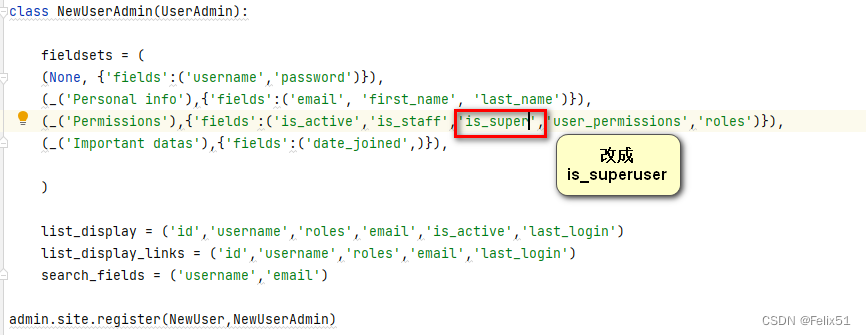
 在Django项目中,出现了一个FieldError,原因是NewUserAdmin类引用了NewUser模型的is_super字段,但该字段实际上应为is_superuser。为解决此问题,需要更新NewUserAdmin中的字段引用,确保与NewUser模型的定义一致。





 扫一扫
扫一扫


 1239
1239

 被折叠的 条评论
为什么被折叠?
被折叠的 条评论
为什么被折叠?
 到【灌水乐园】发言





