


摘要
本文介绍了机器终身学习的基本概念及其重要性,探讨了机器在连续学习多个任务时所面临的挑战,尤其是“灾难性遗忘”现象。文中通过手写数字识别与问答任务等实例,说明了多任务训练与顺序学习之间的性能差异,并指出终生学习在实际应用中需克服存储与计算限制。此外,本文还系统阐述了终身学习的评估方法,包括正确率矩阵与后向传递指标,为后续研究提供了评价基础。
Abstract
This article introduces the fundamental concept and significance of machine life-long learning, discussing the challenges machines face when learning multiple tasks sequentially, particularly the "catastrophic forgetting" phenomenon. Through examples such as handwritten digit recognition and question-answering tasks, it illustrates the performance gap between multi-task training and sequential learning, highlighting the practical limitations in storage and computation that lifelong learning must overcome. Furthermore, the article systematically describes evaluation methods for lifelong learning, including accuracy matrices and backward transfer metrics, providing a foundation for subsequent research.
一.机器上的终身学习
对于终身学习,通过浏览器搜索最有可能得到的答案不是与机器学习有关的内容,而是关于人类的活到老学到老。
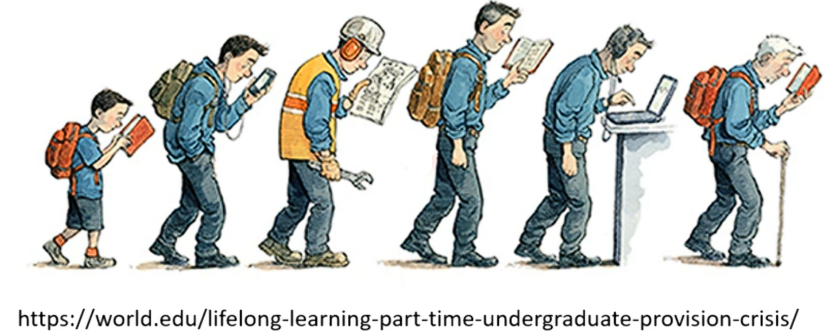
虽然大家关注的主题多是偏行人类如何活到老学到老,但是机器其实也是需要做终身学习。机器对于终身学习这件事也是非常接近与人类对于AI的想象。


 435


 扫一扫


 被折叠的 条评论
为什么被折叠?
 到【灌水乐园】发言


