public class CollectionTest {

    //forEach遍历 使用jdk 1.8的新特性
    @Test
    public void test1(){
        Collection coll = new ArrayList();

        coll.add(123);
        coll.add(456);
        coll.add(343);
        coll.add(343);

        coll.forEach(System.out::println);
    }


    //练习:在List内去除重复数字值,要求尽量简单
    public static List duplicateList(List list) {
        HashSet set = new HashSet();
        set.addAll(list);
        return new ArrayList(set);
    }
    @Test
    public void test2(){
        List list = new ArrayList();
        list.add(new Integer(1));
        list.add(new Integer(2));
        list.add(new Integer(2));
        list.add(new Integer(4));
        list.add(new Integer(4));
        List list2 = duplicateList(list);
        for (Object integer : list2) {
            System.out.println(integer);
        }
    }

    @Test
    public void test3(){
        HashSet set = new HashSet();
        Person p1 = new Person(1001,"AA");
        Person p2 = new Person(1002,"BB");

        set.add(p1);
        set.add(p2);
        System.out.println(set);

        p1.name = "CC";
        set.remove(p1);
        System.out.println(set);
        set.add(new Person(1001,"CC"));
        System.out.println(set);
        set.add(new Person(1001,"AA"));
        System.out.println(set);
    }

}
TreeSet题目测试
/**
 * MyDate类包含:
 private成员变量year,month,day;并为每一个属性定义 getter, setter 方法;
 */
public class MyDate implements Comparable{
    private int year;
    private int month;
    private int day;

    public MyDate(int year, int month, int day) {
        this.year = year;
        this.month = month;
        this.day = day;
    }

    public MyDate() {

    }

    public int getYear() {
        return year;
    }

    public void setYear(int year) {
        this.year = year;
    }

    public int getMonth() {
        return month;
    }

    public void setMonth(int month) {
        this.month = month;
    }

    public int getDay() {
        return day;
    }

    public void setDay(int day) {
        this.day = day;
    }

    @Override
    public String toString() {
        return "MyDate{" +
                "year=" + year +
                ", month=" + month +
                ", day=" + day +
                '}';
    }


    @Override
    public int compareTo(Object o) {
        if(o instanceof MyDate){
            MyDate m = (MyDate)o;

            //比较年
            int minusYear = this.getYear() - m.getYear();
            if(minusYear != 0){
                return minusYear;
            }
            //比较月
            int minusMonth = this.getMonth() - m.getMonth();
            if(minusMonth != 0){
                return minusMonth;
            }
            //比较日
            return this.getDay() - m.getDay();
        }

        throw new RuntimeException("传入的数据类型不一致!");

    }
}
/**
 * 定义一个Employee类。
 该类包含:private成员变量name,age,birthday,其中 birthday 为 MyDate 类的对象;
 并为每一个属性定义 getter, setter 方法;
 并重写 toString 方法输出 name, age, birthday
 */
public class Employee implements Comparable{
    private String name;
    private int age;
    private MyDate birthday;

    public Employee(String name, int age, MyDate birthday) {
        this.name = name;
        this.age = age;
        this.birthday = birthday;
    }

    public Employee() {

    }

    public String getName() {
        return name;
    }

    public void setName(String name) {
        this.name = name;
    }

    public int getAge() {
        return age;
    }

    public void setAge(int age) {
        this.age = age;
    }

    public MyDate getBirthday() {
        return birthday;
    }

    public void setBirthday(MyDate birthday) {
        this.birthday = birthday;
    }

    @Override
    public String toString() {
        return "Employee{" +
                "name='" + name + '\'' +
                ", age=" + age +
                ", birthday=" + birthday +
                '}';
    }

    //按 name 排序
    @Override
    public int compareTo(Object o) {
        if(o instanceof Employee){
            Employee e = (Employee)o;
            return this.name.compareTo(e.name);
        }
//        return 0;
        throw new RuntimeException("传入的数据类型不一致!");
    }
}
/**
 * 创建该类的 5 个对象,并把这些对象放入 TreeSet 集合中(下一章:TreeSet 需使用泛型来定义)
 分别按以下两种方式对集合中的元素进行排序,并遍历输出:

 1). 使Employee 实现 Comparable 接口,并按 name 排序
 2). 创建 TreeSet 时传入 Comparator对象,按生日日期的先后排序。
 *
 */
public class EmployeeTest {

    //问题二:按生日日期的先后排序。
    @Test
    public void test2(){


        TreeSet set = new TreeSet(new Comparator() {
            @Override
            public int compare(Object o1, Object o2) {
                if(o1 instanceof Employee && o2 instanceof Employee){
                    Employee e1 = (Employee)o1;
                    Employee e2 = (Employee)o2;

                    MyDate b1 = e1.getBirthday();
                    MyDate b2 = e2.getBirthday();
                    //方式一:
//                    //比较年
//                    int minusYear = b1.getYear() - b2.getYear();
//                    if(minusYear != 0){
//                        return minusYear;
//                    }
//                    //比较月
//                    int minusMonth = b1.getMonth() - b2.getMonth();
//                    if(minusMonth != 0){
//                        return minusMonth;
//                    }
//                    //比较日
//                    return b1.getDay() - b2.getDay();

                    //方式二:
                    return b1.compareTo(b2);

                }
//                return 0;
                throw new RuntimeException("传入的数据类型不一致!");
            }
        });

        Employee e1 = new Employee("liudehua",55,new MyDate(1965,5,4));
        Employee e2 = new Employee("zhangxueyou",43,new MyDate(1987,5,4));
        Employee e3 = new Employee("guofucheng",44,new MyDate(1987,5,9));
        Employee e4 = new Employee("liming",51,new MyDate(1954,8,12));
        Employee e5 = new Employee("liangzhaowei",21,new MyDate(1978,12,4));

        set.add(e1);
        set.add(e2);
        set.add(e3);
        set.add(e4);
        set.add(e5);

        Iterator iterator = set.iterator();
        while (iterator.hasNext()){
            System.out.println(iterator.next());
        }
    }


    //问题一:使用自然排序
    @Test
    public void test1(){
        TreeSet set = new TreeSet();

        Employee e1 = new Employee("liudehua",55,new MyDate(1965,5,4));
        Employee e2 = new Employee("zhangxueyou",43,new MyDate(1987,5,4));
        Employee e3 = new Employee("guofucheng",44,new MyDate(1987,5,9));
        Employee e4 = new Employee("liming",51,new MyDate(1954,8,12));
        Employee e5 = new Employee("liangzhaowei",21,new MyDate(1978,12,4));

        set.add(e1);
        set.add(e2);
        set.add(e3);
        set.add(e4);
        set.add(e5);

        Iterator iterator = set.iterator();
        while (iterator.hasNext()){
            System.out.println(iterator.next());
        }
    }
}
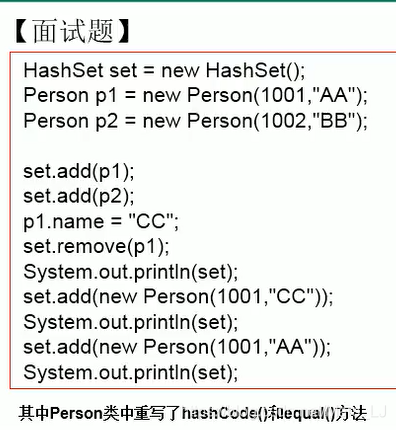
考验了set的无序性!
/**
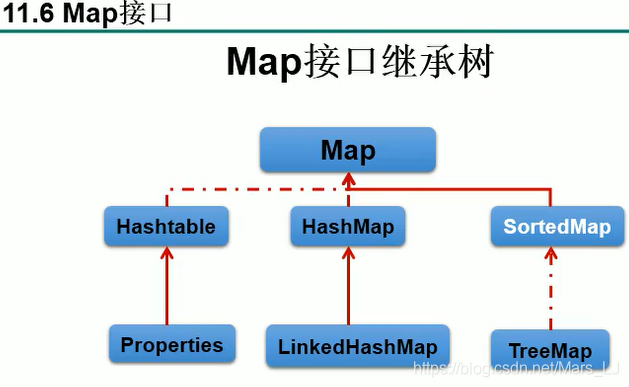
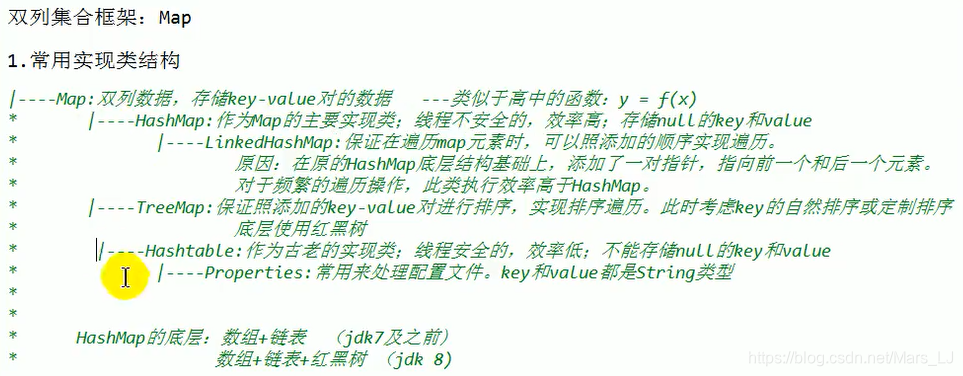
 * 一、Map的实现类的结构:
 *  |----Map:双列数据,存储key-value对的数据   ---类似于高中的函数:y = f(x)
 *         |----HashMap:作为Map的主要实现类;线程不安全的,效率高;存储null的key和value
 *              |----LinkedHashMap:保证在遍历map元素时,可以按照添加的顺序实现遍历。
 *                      原因:在原有的HashMap底层结构基础上,添加了一对指针,指向前一个和后一个元素。
 *                      对于频繁的遍历操作,此类执行效率高于HashMap。
 *         |----TreeMap:保证按照添加的key-value对进行排序,实现排序遍历。此时考虑key的自然排序或定制排序
 *                      底层使用红黑树
 *         |----Hashtable:作为古老的实现类;线程安全的,效率低;不能存储null的key和value
 *              |----Properties:常用来处理配置文件。key和value都是String类型
 *
 *
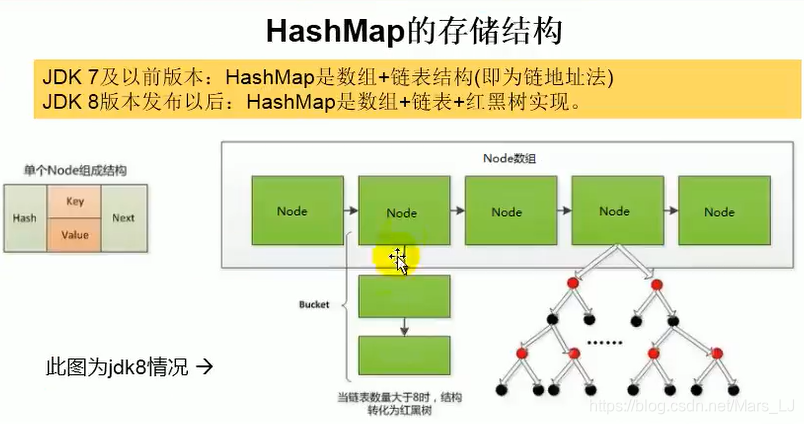
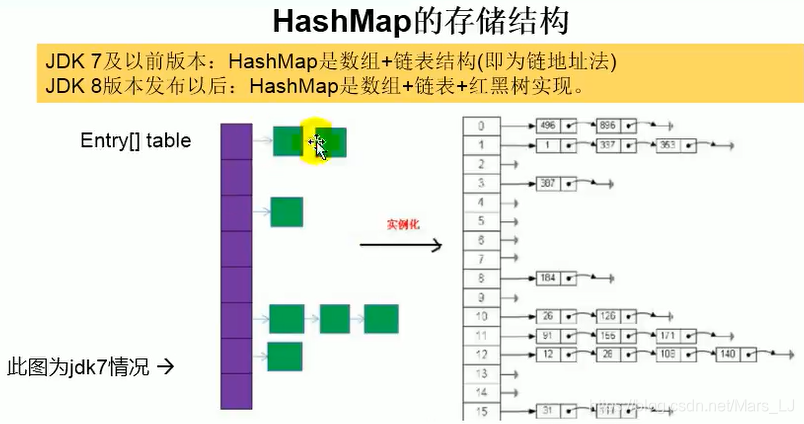
 *      HashMap的底层:数组+链表  (jdk7及之前)
 *                    数组+链表+红黑树 (jdk 8)
 *
 *
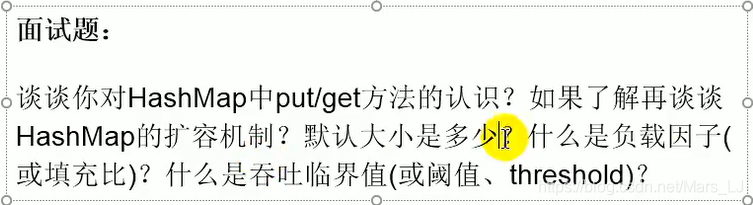
 *  面试题:
 *  1. HashMap的底层实现原理?
 *  2. HashMap 和 Hashtable的异同?
 *  3. CurrentHashMap 与 Hashtable的异同?(暂时不讲)
 *
 *  二、Map结构的理解:
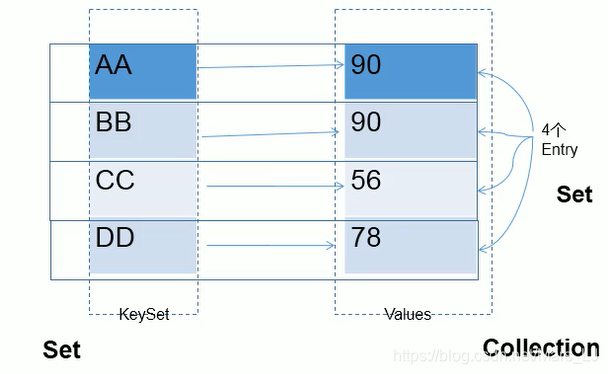
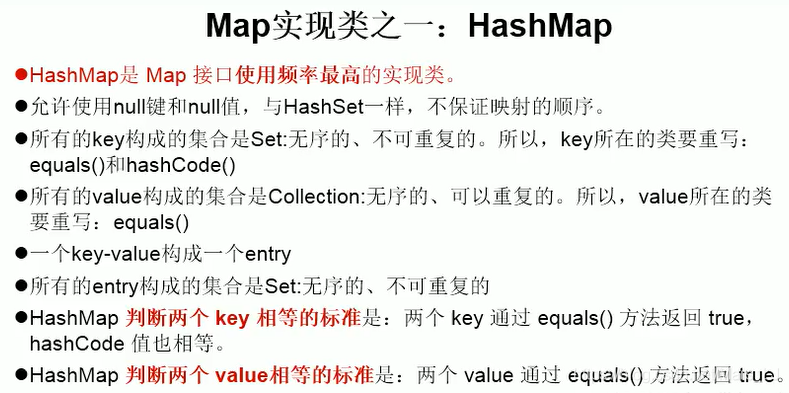
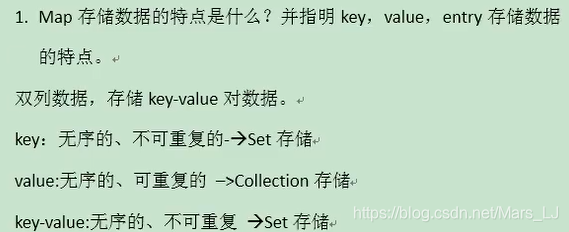
 *    Map中的key:无序的、不可重复的,使用Set存储所有的key  ---> key所在的类要重写equals()和hashCode() (以HashMap为例)
 *    Map中的value:无序的、可重复的,使用Collection存储所有的value --->value所在的类要重写equals()
 *    一个键值对:key-value构成了一个Entry对象。
 *    Map中的entry:无序的、不可重复的,使用Set存储所有的entry
 *
 *  三、HashMap的底层实现原理?以jdk7为例说明:
 *      HashMap map = new HashMap():
 *      在实例化以后,底层创建了长度是16的一维数组Entry[] table。
 *      ...可能已经执行过多次put...
 *      map.put(key1,value1):
 *      首先,调用key1所在类的hashCode()计算key1哈希值,此哈希值经过某种算法计算以后,得到在Entry数组中的存放位置。
 *      如果此位置上的数据为空,此时的key1-value1添加成功。 ----情况1
 *      如果此位置上的数据不为空,(意味着此位置上存在一个或多个数据(以链表形式存在)),比较key1和已经存在的一个或多个数据
 *      的哈希值:
 *              如果key1的哈希值与已经存在的数据的哈希值都不相同,此时key1-value1添加成功。----情况2
 *              如果key1的哈希值和已经存在的某一个数据(key2-value2)的哈希值相同,继续比较:调用key1所在类的equals(key2)方法,比较:
 *                      如果equals()返回false:此时key1-value1添加成功。----情况3
 *                      如果equals()返回true:使用value1替换value2。
 *
 *       补充:关于情况2和情况3:此时key1-value1和原来的数据以链表的方式存储。
 *
 *      在不断的添加过程中,会涉及到扩容问题,当超出临界值(且要存放的位置非空)时,扩容。默认的扩容方式:扩容为原来容量的2倍,并将原有的数据复制过来。
 *
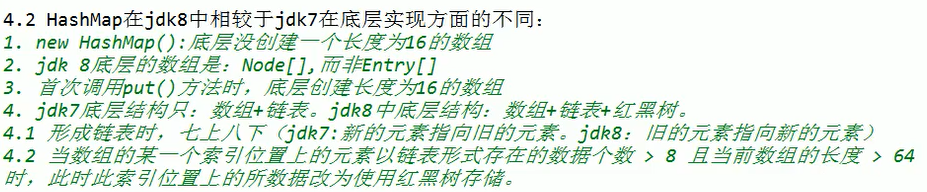
 *      jdk8 相较于jdk7在底层实现方面的不同:
 *      1. new HashMap():底层没有创建一个长度为16的数组
 *      2. jdk 8底层的数组是:Node[],而非Entry[]
 *      3. 首次调用put()方法时,底层创建长度为16的数组
 *      4. jdk7底层结构只有:数组+链表。jdk8中底层结构:数组+链表+红黑树。
 *         4.1 形成链表时,七上八下(jdk7:新的元素指向旧的元素。jdk8:旧的元素指向新的元素)
           4.2 当数组的某一个索引位置上的元素以链表形式存在的数据个数 > 8 且当前数组的长度 > 64时,此时此索引位置上的所数据改为使用红黑树存储。
 *
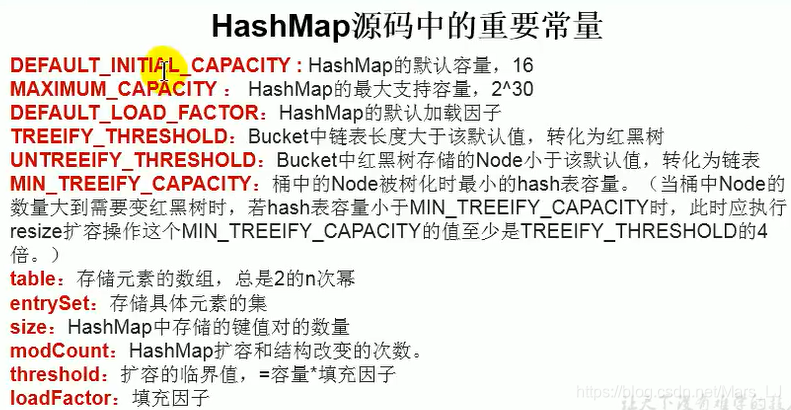
 *      DEFAULT_INITIAL_CAPACITY : HashMap的默认容量,16
 *      DEFAULT_LOAD_FACTOR:HashMap的默认加载因子:0.75
 *      threshold:扩容的临界值,=容量*填充因子:16 * 0.75 => 12
 *      TREEIFY_THRESHOLD:Bucket中链表长度大于该默认值,转化为红黑树:8
 *      MIN_TREEIFY_CAPACITY:桶中的Node被树化时最小的hash表容量:64
 *
 *  四、LinkedHashMap的底层实现原理(了解)
 *      源码中:
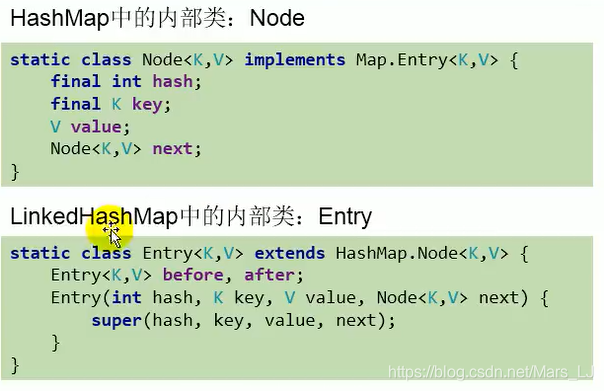
 *      static class Entry<K,V> extends HashMap.Node<K,V> {
             Entry<K,V> before, after;//能够记录添加的元素的先后顺序
             Entry(int hash, K key, V value, Node<K,V> next) {
                super(hash, key, value, next);
             }
         }
 *
 *
 *   五、Map中定义的方法:
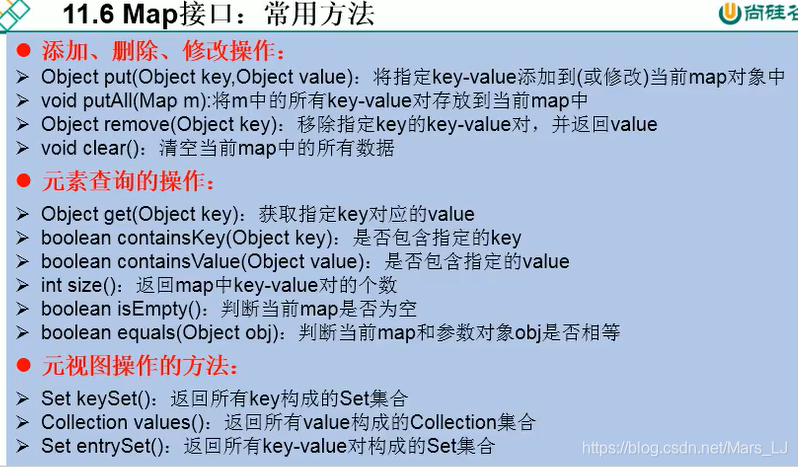
     添加、删除、修改操作:
     Object put(Object key,Object value):将指定key-value添加到(或修改)当前map对象中
     void putAll(Map m):将m中的所有key-value对存放到当前map中
     Object remove(Object key):移除指定key的key-value对,并返回value
     void clear():清空当前map中的所有数据
     元素查询的操作:
     Object get(Object key):获取指定key对应的value
     boolean containsKey(Object key):是否包含指定的key
     boolean containsValue(Object value):是否包含指定的value
     int size():返回map中key-value对的个数
     boolean isEmpty():判断当前map是否为空
     boolean equals(Object obj):判断当前map和参数对象obj是否相等
     元视图操作的方法:
     Set keySet():返回所有key构成的Set集合
     Collection values():返回所有value构成的Collection集合
     Set entrySet():返回所有key-value对构成的Set集合

 *总结:常用方法:
 * 添加:put(Object key,Object value)
 * 删除:remove(Object key)
 * 修改:put(Object key,Object value)
 * 查询:get(Object key)
 * 长度:size()
 * 遍历:keySet() / values() / entrySet()
 *
 */
public class MapTest {

    /*
     元视图操作的方法:
     Set keySet():返回所有key构成的Set集合
     Collection values():返回所有value构成的Collection集合
     Set entrySet():返回所有key-value对构成的Set集合
     */

    @Test
    public void test5(){
        Map map = new HashMap();
        map.put("AA",123);
        map.put(45,1234);
        map.put("BB",56);

        //遍历所有的key集:keySet()
        Set set = map.keySet();
            Iterator iterator = set.iterator();
            while(iterator.hasNext()){
                System.out.println(iterator.next());
        }
        System.out.println();
        //遍历所有的value集:values()
        Collection values = map.values();
        for(Object obj : values){
            System.out.println(obj);
        }
        System.out.println();
        //遍历所有的key-value
        //方式一:entrySet()
        Set entrySet = map.entrySet();
        Iterator iterator1 = entrySet.iterator();
        while (iterator1.hasNext()){
            Object obj = iterator1.next();
            //entrySet集合中的元素都是entry
            Map.Entry entry = (Map.Entry) obj;
            System.out.println(entry.getKey() + "---->" + entry.getValue());

        }
        System.out.println();
        //方式二:
        Set keySet = map.keySet();
        Iterator iterator2 = keySet.iterator();
        while(iterator2.hasNext()){
            Object key = iterator2.next();
            Object value = map.get(key);
            System.out.println(key + "=====" + value);

        }

    }


    /*
     元素查询的操作:
     Object get(Object key):获取指定key对应的value
     boolean containsKey(Object key):是否包含指定的key
     boolean containsValue(Object value):是否包含指定的value
     int size():返回map中key-value对的个数
     boolean isEmpty():判断当前map是否为空
     boolean equals(Object obj):判断当前map和参数对象obj是否相等
     */
    @Test
    public void test4(){
        Map map = new HashMap();
        map.put("AA",123);
        map.put(45,123);
        map.put("BB",56);
        // Object get(Object key)
        System.out.println(map.get(45));
        //containsKey(Object key)
        boolean isExist = map.containsKey("BB");
        System.out.println(isExist);

        isExist = map.containsValue(123);
        System.out.println(isExist);

        map.clear();

        System.out.println(map.isEmpty());

    }

    /*
     添加、删除、修改操作:
     Object put(Object key,Object value):将指定key-value添加到(或修改)当前map对象中
     void putAll(Map m):将m中的所有key-value对存放到当前map中
     Object remove(Object key):移除指定key的key-value对,并返回value
     void clear():清空当前map中的所有数据
     */
    @Test
    public void test3(){
        Map map = new HashMap();
        //添加
        map.put("AA",123);
        map.put(45,123);
        map.put("BB",56);
        //修改
        map.put("AA",87);

        System.out.println(map);

        Map map1 = new HashMap();
        map1.put("CC",123);
        map1.put("DD",123);

        map.putAll(map1);

        System.out.println(map);

        //remove(Object key)
        Object value = map.remove("CC");
        System.out.println(value);
        System.out.println(map);

        //clear()
        map.clear();//与map = null操作不同
        System.out.println(map.size());
        System.out.println(map);
    }

    @Test
    public void test2(){
        Map map = new HashMap();
        map = new LinkedHashMap();
        map.put(123,"AA");
        map.put(345,"BB");
        map.put(12,"CC");

        System.out.println(map);
    }


    @Test
    public void test1(){
        Map map = new HashMap();
//        map = new Hashtable();
        map.put(null,123);

    }
}
public class TreeMapTest {

    //向TreeMap中添加key-value,要求key必须是由同一个类创建的对象
    //因为要按照key进行排序:自然排序 、定制排序
    //自然排序
    @Test
    public void test1(){
        TreeMap map = new TreeMap();
        User u1 = new User("Tom",23);
        User u2 = new User("Jerry",32);
        User u3 = new User("Jack",20);
        User u4 = new User("Rose",18);

        map.put(u1,98);
        map.put(u2,89);
        map.put(u3,76);
        map.put(u4,100);

        Set entrySet = map.entrySet();
        Iterator iterator1 = entrySet.iterator();
        while (iterator1.hasNext()){
            Object obj = iterator1.next();
            Map.Entry entry = (Map.Entry) obj;
            System.out.println(entry.getKey() + "---->" + entry.getValue());

        }
    }

    //定制排序
    @Test
    public void test2(){
        TreeMap map = new TreeMap(new Comparator() {
            @Override
            public int compare(Object o1, Object o2) {
                if(o1 instanceof User && o2 instanceof User){
                    User u1 = (User)o1;
                    User u2 = (User)o2;
                    return Integer.compare(u1.getAge(),u2.getAge());
                }
                throw new RuntimeException("输入的类型不匹配!");
            }
        });
        User u1 = new User("Tom",23);
        User u2 = new User("Jerry",32);
        User u3 = new User("Jack",20);
        User u4 = new User("Rose",18);

        map.put(u1,98);
        map.put(u2,89);
        map.put(u3,76);
        map.put(u4,100);

        Set entrySet = map.entrySet();
        Iterator iterator1 = entrySet.iterator();
        while (iterator1.hasNext()){
            Object obj = iterator1.next();
            Map.Entry entry = (Map.Entry) obj;
            System.out.println(entry.getKey() + "---->" + entry.getValue());

        }
    }

}
public class User implements Comparable{
    private String name;
    private int age;

    public User() {
    }

    public User(String name, int age) {
        this.name = name;
        this.age = age;
    }

    public String getName() {
        return name;
    }

    public void setName(String name) {
        this.name = name;
    }

    public int getAge() {
        return age;
    }

    public void setAge(int age) {
        this.age = age;
    }

    @Override
    public String toString() {
        return "User{" +
                "name='" + name + '\'' +
                ", age=" + age +
                '}';
    }

    @Override
    public boolean equals(Object o) {
        System.out.println("User equals()....");
        if (this == o) return true;
        if (o == null || getClass() != o.getClass()) return false;

        User user = (User) o;

        if (age != user.age) return false;
        return name != null ? name.equals(user.name) : user.name == null;
    }

    @Override
    public int hashCode() { //return name.hashCode() + age;
        int result = name != null ? name.hashCode() : 0;
        result = 31 * result + age;
        return result;
    }

    //按照姓名从大到小排列,年龄从小到大排列
    @Override
    public int compareTo(Object o) {
        if(o instanceof User){
            User user = (User)o;
//            return -this.name.compareTo(user.name);
            int compare = -this.name.compareTo(user.name);
            if(compare != 0){
                return compare;
            }else{
                return Integer.compare(this.age,user.age);
            }
        }else {
            throw new RuntimeException("输入的类型不匹配");
        }
    }
}
public class PropertiesTest {

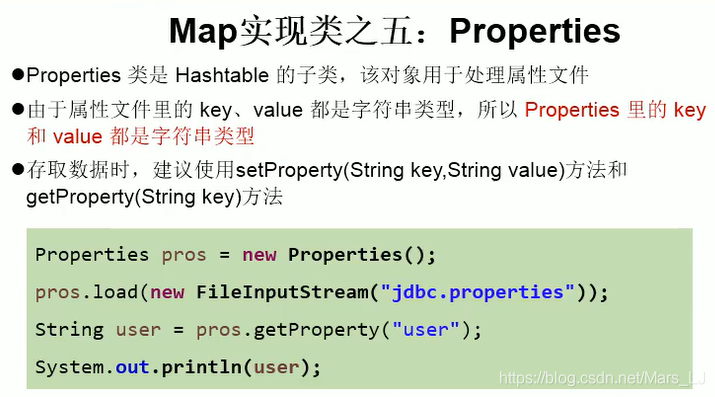
    //Properties:常用来处理配置文件。key和value都是String类型
    public static void main(String[] args)  {
        FileInputStream fis = null;
        try {
            Properties pros = new Properties();

            fis = new FileInputStream("jdbc.properties");
            pros.load(fis);//加载流对应的文件

            String name = pros.getProperty("name");
            String password = pros.getProperty("password");

            System.out.println("name = " + name + ", password = " + password);
        } catch (IOException e) {
            e.printStackTrace();
        } finally {
            if(fis != null){
                try {
                    fis.close();
                } catch (IOException e) {
                    e.printStackTrace();
                }

            }
        }

    }
}


"jdbc.properties"
name=TomXxx
password=abc123
/**
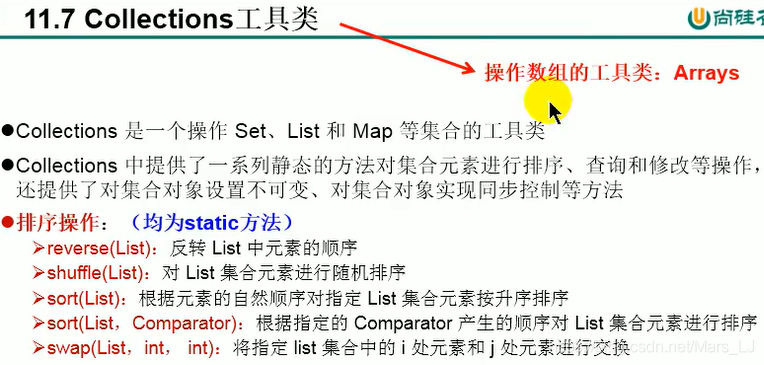
 * Collections:操作Collection、Map的工具类
 *
 * 面试题:Collection 和 Collections的区别?
 * Collection是实现接口 Collections是操作Collection的工具类
 */
public class CollectionsTest {

/*
    reverse(List):反转 List 中元素的顺序
    shuffle(List):对 List 集合元素进行随机排序
    sort(List):根据元素的自然顺序对指定 List 集合元素按升序排序
    sort(List,Comparator):根据指定的 Comparator 产生的顺序对 List 集合元素进行排序
    swap(List,int, int):将指定 list 集合中的 i 处元素和 j 处元素进行交换

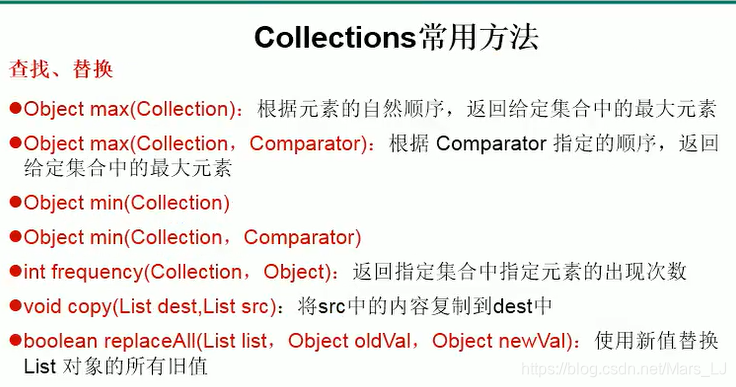
    Object max(Collection):根据元素的自然顺序,返回给定集合中的最大元素
    Object max(Collection,Comparator):根据 Comparator 指定的顺序,返回给定集合中的最大元素
    Object min(Collection)
    Object min(Collection,Comparator)
    int frequency(Collection,Object):返回指定集合中指定元素的出现次数
    void copy(List dest,List src):将src中的内容复制到dest中
    boolean replaceAll(List list,Object oldVal,Object newVal):使用新值替换 List 对象的所有旧值
 */
    @Test
    public void test2(){
        List list = new ArrayList();
        list.add(123);
        list.add(43);
        list.add(765);
        list.add(-97);
        list.add(0);

        //报异常:IndexOutOfBoundsException("Source does not fit in dest")
//        List dest = new ArrayList();
//        Collections.copy(dest,list);
        //正确的:
        List dest = Arrays.asList(new Object[list.size()]);
        System.out.println(dest.size());//list.size();
        Collections.copy(dest,list);

        System.out.println(dest);

        /*
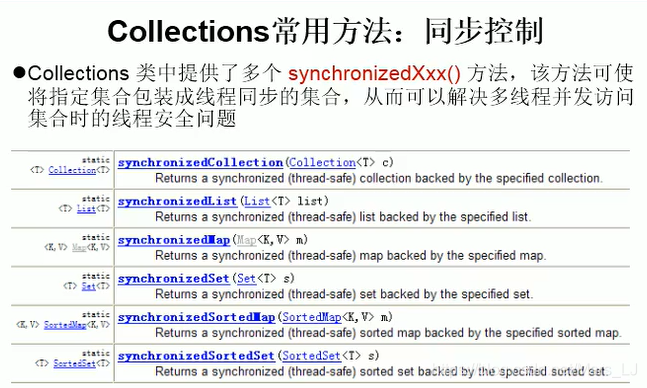
        Collections 类中提供了多个 synchronizedXxx() 方法,
        该方法可使将指定集合包装成线程同步的集合,从而可以解决
        多线程并发访问集合时的线程安全问题
         */
        //返回的list1即为线程安全的List
        List list1 = Collections.synchronizedList(list);

    }

    @Test
    public void test1(){
        List list = new ArrayList();
        list.add(123);
        list.add(43);
        list.add(765);
        list.add(765);
        list.add(765);
        list.add(-97);
        list.add(0);

        System.out.println(list);

//        Collections.reverse(list);
//        Collections.shuffle(list);
//        Collections.sort(list);
//        Collections.swap(list,1,2);
        int frequency = Collections.frequency(list, 123);

        System.out.println(list);
        System.out.println(frequency);

    }

}


 Java集合框架详解



 本文深入探讨Java集合框架中的核心概念,包括List、Set、Map等接口的具体实现与应用场景,特别聚焦于CollectionTest类中的示例代码,展示了如何利用Java 8的新特性进行集合操作,并通过TreeSet对自定义对象进行排序。





 扫一扫
扫一扫


 966
966

 被折叠的 条评论
为什么被折叠?
被折叠的 条评论
为什么被折叠?
 到【灌水乐园】发言





