



Mybatis允许用户使用自定义拦截器对Sql语句执行过程中的某一点进行拦截处理。
一、职责链模式
使多个对象都有机会处理请求,从而避免请求的发送者和接受者之间的耦合关系。将这些对象连成一条链,并沿着这条链传递请求,直到有一个对象处理它为止。(这里的对象是handler,有点像流水线作业,链上的每一个节点都有自己的职责,完成自己职责内的事。)
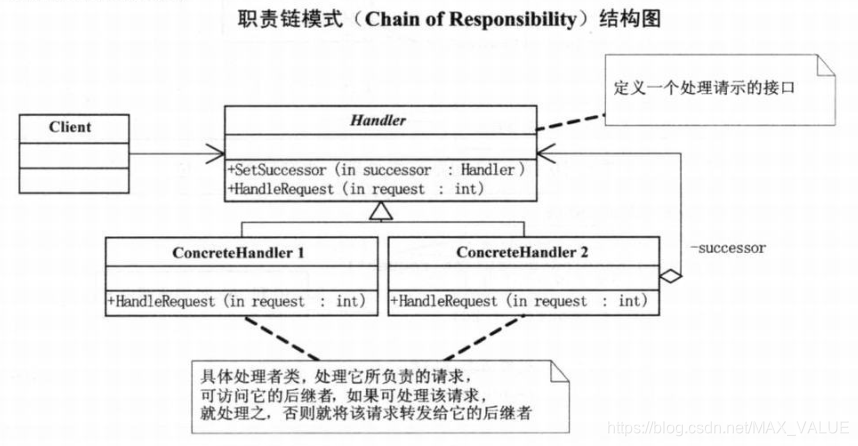
mybatis的插件模块用到了该模式,Interceptor对应Handler接口,PageInterceptor或自定义插件对应ConcreteHandler。
三、插件的工作流程
1.自定义插件只需要实现Interceptor接口便可自动注入到Configuration的interceptorChain中;PageInterceptor通过PageHelperAutoConfiguration引入。
2.Configuration在创建Executor、ParameterHandler、StatementHandler、ResultSetHandler对象时,创建的其代理对象。
  public ParameterHandler newParameterHandler(MappedStatement mappedStatement, Object parameterObject, BoundSql boundSql) {
    ParameterHandler parameterHandler = mappedStatement.getLang().createParameterHandler(mappedStatement, parameterObject, boundSql);
    parameterHandler = (ParameterHandler) interceptorChain.pluginAll(parameterHandler);
    return parameterHandler;
  }

  public ResultSetHandler newResultSetHandler(Executor executor, MappedStatement mappedStatement, RowBounds rowBounds, ParameterHandler parameterHandler,
      ResultHandler resultHandler, BoundSql boundSql) {
    ResultSetHandler resultSetHandler = new DefaultResultSetHandler(executor, mappedStatement, parameterHandler, resultHandler, boundSql, rowBounds);
    resultSetHandler = (ResultSetHandler) interceptorChain.pluginAll(resultSetHandler);
    return resultSetHandler;
  }

  public StatementHandler newStatementHandler(Executor executor, MappedStatement mappedStatement, Object parameterObject, RowBounds rowBounds, ResultHandler resultHandler, BoundSql boundSql) {
    StatementHandler statementHandler = new RoutingStatementHandler(executor, mappedStatement, parameterObject, rowBounds, resultHandler, boundSql);
    statementHandler = (StatementHandler) interceptorChain.pluginAll(statementHandler);
    return statementHandler;
  }

  public Object pluginAll(Object target) {
    for (Interceptor interceptor : interceptors) {
      target = interceptor.plugin(target);
    }
    return target;
  }

    public Object plugin(Object target) {
        return Plugin.wrap(target, this);
    }

  public static Object wrap(Object target, Interceptor interceptor) {
    //获取拦截的方法签名信息
    Map<Class<?>, Set<Method>> signatureMap = getSignatureMap(interceptor);
    Class<?> type = target.getClass();
    //拦截器中拦截的方法和target中的方法的交集
    Class<?>[] interfaces = getAllInterfaces(type, signatureMap);
    //如果target中的方法没有在拦截器指定的拦截方法中,则不进行代理。
    if (interfaces.length > 0) {
      return Proxy.newProxyInstance(
          type.getClassLoader(),
          interfaces,
          new Plugin(target, interceptor, signatureMap));
    }
    return target;
  }
3.Plugin的invoke方法处理时,如果是被拦截器拦截的方法,进入到相应的拦截器进行处理。
public class Plugin implements InvocationHandler {

  //被代理的对象
  private final Object target;
  //拦截器
  private final Interceptor interceptor;
  //拦截的方法签名
  private final Map<Class<?>, Set<Method>> signatureMap;

  public Object invoke(Object proxy, Method method, Object[] args) throws Throwable {
    try {
      Set<Method> methods = signatureMap.get(method.getDeclaringClass());
      if (methods != null && methods.contains(method)) {
        //拦截器注解上标识拦截该方法,进入到拦截器
        return interceptor.intercept(new Invocation(target, method, args));
      }
      //进入被代理对象的方法中。
      return method.invoke(target, args);
    } catch (Exception e) {
      throw ExceptionUtil.unwrapThrowable(e);
    }
  }
}
四、自定义插件
1.实现Interceptor接口。
2.使用@Intercepts注解,标识需要拦截的方法签名列表。
3.@Signature注解,标识拦截的方法签名。
@Component
@Intercepts(
        {
                @Signature(type = Executor.class, method = "query", args = {MappedStatement.class, Object.class, RowBounds.class, ResultHandler.class}),
                @Signature(type = Executor.class, method = "query", args = {MappedStatement.class, Object.class, RowBounds.class, ResultHandler.class, CacheKey.class, BoundSql.class}),
        }
)
@Slf4j
public class MyInterceptor implements Interceptor {

    @Override
    public Object intercept(Invocation invocation) throws Throwable {
        log.info("自定义拦截器。。。");
        //到下一个拦截器
        return invocation.proceed();
    }
}





 扫一扫
扫一扫


 377
377

 被折叠的 条评论
为什么被折叠?
被折叠的 条评论
为什么被折叠?
 到【灌水乐园】发言





