// SPDX-License-Identifier: GPL-2.0+
/*
* (C) Copyright 2010
* Texas Instruments, <www.ti.com>
*
* Aneesh V <aneesh@ti.com>
*/
#include <common.h>
#include <bloblist.h>
#include <binman_sym.h>
#include <bootstage.h>
#include <dm.h>
#include <handoff.h>
#include <hang.h>
#include <init.h>
#include <irq_func.h>
#include <log.h>
#include <mapmem.h>
#include <serial.h>
#include <spl.h>
#include <asm/global_data.h>
#include <asm/u-boot.h>
#include <nand.h>
#include <fat.h>
#include <u-boot/crc.h>
#include <version.h>
#include <image.h>
#include <malloc.h>
#include <mapmem.h>
#include <dm/root.h>
#include <linux/compiler.h>
#include <fdt_support.h>
#include <bootcount.h>
#include <wdt.h>
DECLARE_GLOBAL_DATA_PTR;
#ifndef CONFIG_SYS_UBOOT_START
#define CONFIG_SYS_UBOOT_START CONFIG_SYS_TEXT_BASE
#endif
#ifndef CONFIG_SYS_MONITOR_LEN
/* Unknown U-Boot size, let's assume it will not be more than 200 KB */
#define CONFIG_SYS_MONITOR_LEN (200 * 1024)
#endif
u32 *boot_params_ptr = NULL;
/* See spl.h for information about this */
binman_sym_declare(ulong, u_boot_any, image_pos);
binman_sym_declare(ulong, u_boot_any, size);
#ifdef CONFIG_TPL
binman_sym_declare(ulong, spl, image_pos);
binman_sym_declare(ulong, spl, size);
#endif
/* Define board data structure */
static struct bd_info bdata __attribute__ ((section(".data")));
#if CONFIG_IS_ENABLED(BOOTSTAGE)
/*
* Board-specific Platform code can reimplement show_boot_progress () if needed
*/
__weak void show_boot_progress(int val) {}
#endif
#if defined(CONFIG_SPL_OS_BOOT) || CONFIG_IS_ENABLED(HANDOFF) || \
defined(CONFIG_SPL_ATF)
/* weak, default platform-specific function to initialize dram banks */
__weak int dram_init_banksize(void)
{
return 0;
}
#endif
/*
* Default function to determine if u-boot or the OS should
* be started. This implementation always returns 1.
*
* Please implement your own board specific funcion to do this.
*
* RETURN
* 0 to not start u-boot
* positive if u-boot should start
*/
#ifdef CONFIG_SPL_OS_BOOT
__weak int spl_start_uboot(void)
{
puts(SPL_TPL_PROMPT
"Please implement spl_start_uboot() for your board\n");
puts(SPL_TPL_PROMPT "Direct Linux boot not active!\n");
return 1;
}
/*
* Weak default function for arch specific zImage check. Return zero
* and fill start and end address if image is recognized.
*/
int __weak bootz_setup(ulong image, ulong *start, ulong *end)
{
return 1;
}
#endif
/* Weak default function for arch/board-specific fixups to the spl_image_info */
void __weak spl_perform_fixups(struct spl_image_info *spl_image)
{
}
void spl_fixup_fdt(void *fdt_blob)
{
#if defined(CONFIG_SPL_OF_LIBFDT)
int err;
if (!fdt_blob)
return;
err = fdt_check_header(fdt_blob);
if (err < 0) {
printf("fdt_root: %s\n", fdt_strerror(err));
return;
}
/* fixup the memory dt node */
err = fdt_shrink_to_minimum(fdt_blob, 0);
if (err == 0) {
printf(SPL_TPL_PROMPT "fdt_shrink_to_minimum err - %d\n", err);
return;
}
err = arch_fixup_fdt(fdt_blob);
if (err) {
printf(SPL_TPL_PROMPT "arch_fixup_fdt err - %d\n", err);
return;
}
#endif
}
ulong spl_get_image_pos(void)
{
return spl_phase() == PHASE_TPL ?
binman_sym(ulong, spl, image_pos) :
binman_sym(ulong, u_boot_any, image_pos);
}
ulong spl_get_image_size(void)
{
return spl_phase() == PHASE_TPL ?
binman_sym(ulong, spl, size) :
binman_sym(ulong, u_boot_any, size);
}
ulong spl_get_image_text_base(void)
{
return spl_phase() == PHASE_TPL ? CONFIG_SPL_TEXT_BASE :
CONFIG_SYS_TEXT_BASE;
}
/*
* Weak default function for board specific cleanup/preparation before
* Linux boot. Some boards/platforms might not need it, so just provide
* an empty stub here.
*/
__weak void spl_board_prepare_for_linux(void)
{
/* Nothing to do! */
}
__weak void spl_board_prepare_for_optee(void *fdt)
{
}
__weak void spl_board_prepare_for_boot(void)
{
/* Nothing to do! */
}
__weak struct image_header *spl_get_load_buffer(ssize_t offset, size_t size)
{
return map_sysmem(CONFIG_SYS_TEXT_BASE + offset, 0);
}
void spl_set_header_raw_uboot(struct spl_image_info *spl_image)
{
ulong u_boot_pos = binman_sym(ulong, u_boot_any, image_pos);
spl_image->size = CONFIG_SYS_MONITOR_LEN;
/*
* Binman error cases: address of the end of the previous region or the
* start of the image's entry area (usually 0) if there is no previous
* region.
*/
if (u_boot_pos && u_boot_pos != BINMAN_SYM_MISSING) {
/* Binman does not support separated entry addresses */
spl_image->entry_point = u_boot_pos;
spl_image->load_addr = u_boot_pos;
} else {
spl_image->entry_point = CONFIG_SYS_UBOOT_START;
spl_image->load_addr = CONFIG_SYS_TEXT_BASE;
}
spl_image->os = IH_OS_U_BOOT;
spl_image->name = "U-Boot";
}
#if CONFIG_IS_ENABLED(LOAD_FIT_FULL)
/* Parse and load full fitImage in SPL */
static int spl_load_fit_image(struct spl_image_info *spl_image,
const struct image_header *header)
{
bootm_headers_t images;
const char *fit_uname_config = NULL;
uintptr_t fdt_hack;
const char *uname;
ulong fw_data = 0, dt_data = 0, img_data = 0;
ulong fw_len = 0, dt_len = 0, img_len = 0;
int idx, conf_noffset;
int ret;
#ifdef CONFIG_SPL_FIT_SIGNATURE
images.verify = 1;
#endif
ret = fit_image_load(&images, (ulong)header,
NULL, &fit_uname_config,
IH_ARCH_DEFAULT, IH_TYPE_STANDALONE, -1,
FIT_LOAD_OPTIONAL, &fw_data, &fw_len);
if (ret >= 0) {
printf("DEPRECATED: 'standalone = ' property.");
printf("Please use either 'firmware =' or 'kernel ='\n");
} else {
ret = fit_image_load(&images, (ulong)header, NULL,
&fit_uname_config, IH_ARCH_DEFAULT,
IH_TYPE_FIRMWARE, -1, FIT_LOAD_OPTIONAL,
&fw_data, &fw_len);
}
if (ret < 0) {
ret = fit_image_load(&images, (ulong)header, NULL,
&fit_uname_config, IH_ARCH_DEFAULT,
IH_TYPE_KERNEL, -1, FIT_LOAD_OPTIONAL,
&fw_data, &fw_len);
}
if (ret < 0)
return ret;
spl_image->size = fw_len;
spl_image->entry_point = fw_data;
spl_image->load_addr = fw_data;
if (fit_image_get_os(header, ret, &spl_image->os))
spl_image->os = IH_OS_INVALID;
spl_image->name = genimg_get_os_name(spl_image->os);
debug(SPL_TPL_PROMPT "payload image: %32s load addr: 0x%lx size: %d\n",
spl_image->name, spl_image->load_addr, spl_image->size);
#ifdef CONFIG_SPL_FIT_SIGNATURE
images.verify = 1;
#endif
ret = fit_image_load(&images, (ulong)header, NULL, &fit_uname_config,
IH_ARCH_DEFAULT, IH_TYPE_FLATDT, -1,
FIT_LOAD_OPTIONAL, &dt_data, &dt_len);
if (ret >= 0) {
spl_image->fdt_addr = (void *)dt_data;
if (spl_image->os == IH_OS_U_BOOT) {
/* HACK: U-boot expects FDT at a specific address */
fdt_hack = spl_image->load_addr + spl_image->size;
fdt_hack = (fdt_hack + 3) & ~3;
debug("Relocating FDT to %p\n", spl_image->fdt_addr);
memcpy((void *)fdt_hack, spl_image->fdt_addr, dt_len);
}
}
conf_noffset = fit_conf_get_node((const void *)header,
fit_uname_config);
if (conf_noffset <= 0)
return 0;
for (idx = 0;
uname = fdt_stringlist_get((const void *)header, conf_noffset,
FIT_LOADABLE_PROP, idx,
NULL), uname;
idx++)
{
#ifdef CONFIG_SPL_FIT_SIGNATURE
images.verify = 1;
#endif
ret = fit_image_load(&images, (ulong)header,
&uname, &fit_uname_config,
IH_ARCH_DEFAULT, IH_TYPE_LOADABLE, -1,
FIT_LOAD_OPTIONAL_NON_ZERO,
&img_data, &img_len);
if (ret < 0)
return ret;
}
return 0;
}
#endif
__weak int spl_parse_board_header(struct spl_image_info *spl_image,
const void *image_header, size_t size)
{
return -EINVAL;
}
__weak int spl_parse_legacy_header(struct spl_image_info *spl_image,
const struct image_header *header)
{
/* LEGACY image not supported */
debug("Legacy boot image support not enabled, proceeding to other boot methods\n");
return -EINVAL;
}
int spl_parse_image_header(struct spl_image_info *spl_image,
const struct image_header *header)
{
#if CONFIG_IS_ENABLED(LOAD_FIT_FULL)
int ret = spl_load_fit_image(spl_image, header);
if (!ret)
return ret;
#endif
if (image_get_magic(header) == IH_MAGIC) {
int ret;
ret = spl_parse_legacy_header(spl_image, header);
if (ret)
return ret;
} else {
#ifdef CONFIG_SPL_PANIC_ON_RAW_IMAGE
/*
* CONFIG_SPL_PANIC_ON_RAW_IMAGE is defined when the
* code which loads images in SPL cannot guarantee that
* absolutely all read errors will be reported.
* An example is the LPC32XX MLC NAND driver, which
* will consider that a completely unreadable NAND block
* is bad, and thus should be skipped silently.
*/
panic("** no mkimage signature but raw image not supported");
#endif
#ifdef CONFIG_SPL_OS_BOOT
ulong start, end;
if (!bootz_setup((ulong)header, &start, &end)) {
spl_image->name = "Linux";
spl_image->os = IH_OS_LINUX;
spl_image->load_addr = CONFIG_SYS_LOAD_ADDR;
spl_image->entry_point = CONFIG_SYS_LOAD_ADDR;
spl_image->size = end - start;
debug(SPL_TPL_PROMPT
"payload zImage, load addr: 0x%lx size: %d\n",
spl_image->load_addr, spl_image->size);
return 0;
}
#endif
if (!spl_parse_board_header(spl_image, (const void *)header, sizeof(*header)))
return 0;
#ifdef CONFIG_SPL_RAW_IMAGE_SUPPORT
/* Signature not found - assume u-boot.bin */
debug("mkimage signature not found - ih_magic = %x\n",
header->ih_magic);
spl_set_header_raw_uboot(spl_image);
#else
/* RAW image not supported, proceed to other boot methods. */
debug("Raw boot image support not enabled, proceeding to other boot methods\n");
return -EINVAL;
#endif
}
return 0;
}
__weak void __noreturn jump_to_image_no_args(struct spl_image_info *spl_image)
{
typedef void __noreturn (*image_entry_noargs_t)(void);
image_entry_noargs_t image_entry =
(image_entry_noargs_t)spl_image->entry_point;
debug("image entry point: 0x%lx\n", spl_image->entry_point);
image_entry();
}
#if CONFIG_IS_ENABLED(HANDOFF)
/**
* Set up the SPL hand-off information
*
* This is initially empty (zero) but can be written by
*/
static int setup_spl_handoff(void)
{
struct spl_handoff *ho;
ho = bloblist_ensure(BLOBLISTT_SPL_HANDOFF, sizeof(struct spl_handoff));
if (!ho)
return -ENOENT;
return 0;
}
__weak int handoff_arch_save(struct spl_handoff *ho)
{
return 0;
}
static int write_spl_handoff(void)
{
struct spl_handoff *ho;
int ret;
ho = bloblist_find(BLOBLISTT_SPL_HANDOFF, sizeof(struct spl_handoff));
if (!ho)
return -ENOENT;
handoff_save_dram(ho);
ret = handoff_arch_save(ho);
if (ret)
return ret;
debug(SPL_TPL_PROMPT "Wrote SPL handoff\n");
return 0;
}
#else
static inline int setup_spl_handoff(void) { return 0; }
static inline int write_spl_handoff(void) { return 0; }
#endif /* HANDOFF */
/**
* get_bootstage_id() - Get the bootstage ID to emit
*
* @start: true if this is for starting SPL, false for ending it
* @return bootstage ID to use
*/
static enum bootstage_id get_bootstage_id(bool start)
{
enum u_boot_phase phase = spl_phase();
if (IS_ENABLED(CONFIG_TPL_BUILD) && phase == PHASE_TPL)
return start ? BOOTSTAGE_ID_START_TPL : BOOTSTAGE_ID_END_TPL;
else
return start ? BOOTSTAGE_ID_START_SPL : BOOTSTAGE_ID_END_SPL;
}
static int spl_common_init(bool setup_malloc)
{
int ret;
#if CONFIG_VAL(SYS_MALLOC_F_LEN)
if (setup_malloc) {
#ifdef CONFIG_MALLOC_F_ADDR
gd->malloc_base = CONFIG_MALLOC_F_ADDR;
#endif
gd->malloc_limit = CONFIG_VAL(SYS_MALLOC_F_LEN);
gd->malloc_ptr = 0;
}
#endif
ret = bootstage_init(u_boot_first_phase());
if (ret) {
debug("%s: Failed to set up bootstage: ret=%d\n", __func__,
ret);
return ret;
}
#ifdef CONFIG_BOOTSTAGE_STASH
if (!u_boot_first_phase()) {
const void *stash = map_sysmem(CONFIG_BOOTSTAGE_STASH_ADDR,
CONFIG_BOOTSTAGE_STASH_SIZE);
ret = bootstage_unstash(stash, CONFIG_BOOTSTAGE_STASH_SIZE);
if (ret)
debug("%s: Failed to unstash bootstage: ret=%d\n",
__func__, ret);
}
#endif /* CONFIG_BOOTSTAGE_STASH */
bootstage_mark_name(get_bootstage_id(true),
spl_phase_name(spl_phase()));
#if CONFIG_IS_ENABLED(LOG)
ret = log_init();
if (ret) {
debug("%s: Failed to set up logging\n", __func__);
return ret;
}
#endif
if (CONFIG_IS_ENABLED(OF_CONTROL) && !CONFIG_IS_ENABLED(OF_PLATDATA)) {
ret = fdtdec_setup();
if (ret) {
debug("fdtdec_setup() returned error %d\n", ret);
return ret;
}
}
if (CONFIG_IS_ENABLED(DM)) {
bootstage_start(BOOTSTAGE_ID_ACCUM_DM_SPL,
spl_phase() == PHASE_TPL ? "dm tpl" : "dm_spl");
/* With CONFIG_SPL_OF_PLATDATA, bring in all devices */
ret = dm_init_and_scan(!CONFIG_IS_ENABLED(OF_PLATDATA));
bootstage_accum(BOOTSTAGE_ID_ACCUM_DM_SPL);
if (ret) {
debug("dm_init_and_scan() returned error %d\n", ret);
return ret;
}
}
return 0;
}
void spl_set_bd(void)
{
/*
* NOTE: On some platforms (e.g. x86) bdata may be in flash and not
* writeable.
*/
if (!gd->bd)
gd->bd = &bdata;
}
int spl_early_init(void)
{
int ret;
debug("%s\n", __func__);
ret = spl_common_init(true);
if (ret)
return ret;
gd->flags |= GD_FLG_SPL_EARLY_INIT;
return 0;
}
int spl_init(void)
{
int ret;
bool setup_malloc = !(IS_ENABLED(CONFIG_SPL_STACK_R) &&
IS_ENABLED(CONFIG_SPL_SYS_MALLOC_SIMPLE));
debug("%s\n", __func__);
if (!(gd->flags & GD_FLG_SPL_EARLY_INIT)) {
ret = spl_common_init(setup_malloc);
if (ret)
return ret;
}
gd->flags |= GD_FLG_SPL_INIT;
return 0;
}
#ifndef BOOT_DEVICE_NONE
#define BOOT_DEVICE_NONE 0xdeadbeef
#endif
__weak void board_boot_order(u32 *spl_boot_list)
{
spl_boot_list[0] = spl_boot_device();
}
static struct spl_image_loader *spl_ll_find_loader(uint boot_device)
{
struct spl_image_loader *drv =
ll_entry_start(struct spl_image_loader, spl_image_loader);
const int n_ents =
ll_entry_count(struct spl_image_loader, spl_image_loader);
struct spl_image_loader *entry;
for (entry = drv; entry != drv + n_ents; entry++) {
if (boot_device == entry->boot_device)
return entry;
}
/* Not found */
return NULL;
}
static int spl_load_image(struct spl_image_info *spl_image,
struct spl_image_loader *loader)
{
int ret;
struct spl_boot_device bootdev;
bootdev.boot_device = loader->boot_device;
bootdev.boot_device_name = NULL;
ret = loader->load_image(spl_image, &bootdev);
#ifdef CONFIG_SPL_LEGACY_IMAGE_CRC_CHECK
if (!ret && spl_image->dcrc_length) {
/* check data crc */
ulong dcrc = crc32_wd(0, (unsigned char *)spl_image->dcrc_data,
spl_image->dcrc_length, CHUNKSZ_CRC32);
if (dcrc != spl_image->dcrc) {
puts("SPL: Image data CRC check failed!\n");
ret = -EINVAL;
}
}
#endif
return ret;
}
/**
* boot_from_devices() - Try loading a booting U-Boot from a list of devices
*
* @spl_image: Place to put the image details if successful
* @spl_boot_list: List of boot devices to try
* @count: Number of elements in spl_boot_list
* @return 0 if OK, -ENODEV if there were no boot devices
* if CONFIG_SHOW_ERRORS is enabled, returns -ENXIO if there were
* devices but none worked
*/
static int boot_from_devices(struct spl_image_info *spl_image,
u32 spl_boot_list[], int count)
{
int ret = -ENODEV;
int i;
for (i = 0; i < count && spl_boot_list[i] != BOOT_DEVICE_NONE; i++) {
struct spl_image_loader *loader;
int bootdev = spl_boot_list[i];
if (CONFIG_IS_ENABLED(SHOW_ERRORS))
ret = -ENXIO;
loader = spl_ll_find_loader(bootdev);
if (CONFIG_IS_ENABLED(SERIAL_SUPPORT) &&
CONFIG_IS_ENABLED(LIBCOMMON_SUPPORT) &&
!IS_ENABLED(CONFIG_SILENT_CONSOLE)) {
if (loader)
printf("Trying to boot from %s\n",
spl_loader_name(loader));
else if (CONFIG_IS_ENABLED(SHOW_ERRORS))
printf(SPL_TPL_PROMPT
"Unsupported Boot Device %d\n", bootdev);
else
puts(SPL_TPL_PROMPT "Unsupported Boot Device!\n");
}
if (loader && !spl_load_image(spl_image, loader)) {
spl_image->boot_device = bootdev;
return 0;
}
}
return ret;
}
#if defined(CONFIG_SPL_FRAMEWORK_BOARD_INIT_F)
void board_init_f(ulong dummy)
{
if (CONFIG_IS_ENABLED(OF_CONTROL)) {
int ret;
ret = spl_early_init();
if (ret) {
debug("spl_early_init() failed: %d\n", ret);
hang();
}
}
preloader_console_init();
}
#endif
void board_init_r(gd_t *dummy1, ulong dummy2)
{
u32 spl_boot_list[] = {
BOOT_DEVICE_NONE,
BOOT_DEVICE_NONE,
BOOT_DEVICE_NONE,
BOOT_DEVICE_NONE,
BOOT_DEVICE_NONE,
};
struct spl_image_info spl_image;
int ret;
debug(">>" SPL_TPL_PROMPT "board_init_r()\n");
spl_set_bd();
#if defined(CONFIG_SYS_SPL_MALLOC_START)
mem_malloc_init(CONFIG_SYS_SPL_MALLOC_START,
CONFIG_SYS_SPL_MALLOC_SIZE);
gd->flags |= GD_FLG_FULL_MALLOC_INIT;
#endif
if (!(gd->flags & GD_FLG_SPL_INIT)) {
if (spl_init())
hang();
}
#if !defined(CONFIG_PPC) && !defined(CONFIG_ARCH_MX6)
/*
* timer_init() does not exist on PPC systems. The timer is initialized
* and enabled (decrementer) in interrupt_init() here.
*/
timer_init();
#endif
if (CONFIG_IS_ENABLED(BLOBLIST)) {
ret = bloblist_init();
if (ret) {
debug("%s: Failed to set up bloblist: ret=%d\n",
__func__, ret);
puts(SPL_TPL_PROMPT "Cannot set up bloblist\n");
hang();
}
}
if (CONFIG_IS_ENABLED(HANDOFF)) {
int ret;
ret = setup_spl_handoff();
if (ret) {
puts(SPL_TPL_PROMPT "Cannot set up SPL handoff\n");
hang();
}
}
#if CONFIG_IS_ENABLED(BOARD_INIT)
spl_board_init();
#endif
#if defined(CONFIG_SPL_WATCHDOG) && CONFIG_IS_ENABLED(WDT)
initr_watchdog();
#endif
if (IS_ENABLED(CONFIG_SPL_OS_BOOT) || CONFIG_IS_ENABLED(HANDOFF) ||
IS_ENABLED(CONFIG_SPL_ATF))
dram_init_banksize();
bootcount_inc();
memset(&spl_image, '\0', sizeof(spl_image));
#ifdef CONFIG_SYS_SPL_ARGS_ADDR
spl_image.arg = (void *)CONFIG_SYS_SPL_ARGS_ADDR;
#endif
spl_image.boot_device = BOOT_DEVICE_NONE;
board_boot_order(spl_boot_list);
ret = boot_from_devices(&spl_image, spl_boot_list,
ARRAY_SIZE(spl_boot_list));
if (ret) {
if (CONFIG_IS_ENABLED(SHOW_ERRORS) &&
CONFIG_IS_ENABLED(LIBCOMMON_SUPPORT))
printf(SPL_TPL_PROMPT "failed to boot from all boot devices (err=%d)\n",
ret);
else
puts(SPL_TPL_PROMPT "failed to boot from all boot devices\n");
hang();
}
spl_perform_fixups(&spl_image);
if (CONFIG_IS_ENABLED(HANDOFF)) {
ret = write_spl_handoff();
if (ret)
printf(SPL_TPL_PROMPT
"SPL hand-off write failed (err=%d)\n", ret);
}
if (CONFIG_IS_ENABLED(BLOBLIST)) {
ret = bloblist_finish();
if (ret)
printf("Warning: Failed to finish bloblist (ret=%d)\n",
ret);
}
#ifdef CONFIG_CPU_V7M
spl_image.entry_point |= 0x1;
#endif
switch (spl_image.os) {
case IH_OS_U_BOOT:
debug("Jumping to %s...\n", spl_phase_name(spl_next_phase()));
break;
#if CONFIG_IS_ENABLED(ATF)
case IH_OS_ARM_TRUSTED_FIRMWARE:
debug("Jumping to U-Boot via ARM Trusted Firmware\n");
spl_fixup_fdt(spl_image.fdt_addr);
spl_invoke_atf(&spl_image);
break;
#endif
#if CONFIG_IS_ENABLED(OPTEE)
case IH_OS_TEE:
debug("Jumping to U-Boot via OP-TEE\n");
spl_board_prepare_for_optee(spl_image.fdt_addr);
spl_optee_entry(NULL, NULL, spl_image.fdt_addr,
(void *)spl_image.entry_point);
break;
#endif
#if CONFIG_IS_ENABLED(OPENSBI)
case IH_OS_OPENSBI:
debug("Jumping to U-Boot via RISC-V OpenSBI\n");
spl_invoke_opensbi(&spl_image);
break;
#endif
#ifdef CONFIG_SPL_OS_BOOT
case IH_OS_LINUX:
debug("Jumping to Linux\n");
#if defined(CONFIG_SYS_SPL_ARGS_ADDR)
spl_fixup_fdt((void *)CONFIG_SYS_SPL_ARGS_ADDR);
#endif
spl_board_prepare_for_linux();
jump_to_image_linux(&spl_image);
#endif
default:
debug("Unsupported OS image.. Jumping nevertheless..\n");
}
#if CONFIG_VAL(SYS_MALLOC_F_LEN) && !defined(CONFIG_SYS_SPL_MALLOC_SIZE)
debug("SPL malloc() used 0x%lx bytes (%ld KB)\n", gd->malloc_ptr,
gd->malloc_ptr / 1024);
#endif
bootstage_mark_name(get_bootstage_id(false), "end phase");
#ifdef CONFIG_BOOTSTAGE_STASH
ret = bootstage_stash((void *)CONFIG_BOOTSTAGE_STASH_ADDR,
CONFIG_BOOTSTAGE_STASH_SIZE);
if (ret)
debug("Failed to stash bootstage: err=%d\n", ret);
#endif
spl_board_prepare_for_boot();
jump_to_image_no_args(&spl_image);
}
/*
* This requires UART clocks to be enabled. In order for this to work the
* caller must ensure that the gd pointer is valid.
*/
void preloader_console_init(void)
{
#ifdef CONFIG_SPL_SERIAL_SUPPORT
gd->baudrate = CONFIG_BAUDRATE;
serial_init(); /* serial communications setup */
gd->have_console = 1;
#if CONFIG_IS_ENABLED(BANNER_PRINT)
puts("\nU-Boot " SPL_TPL_NAME " " PLAIN_VERSION " (" U_BOOT_DATE " - "
U_BOOT_TIME " " U_BOOT_TZ ")\n");
#endif
#ifdef CONFIG_SPL_DISPLAY_PRINT
spl_display_print();
#endif
#endif
}
/**
* This function is called before the stack is changed from initial stack to
* relocated stack. It tries to dump the stack size used
*/
__weak void spl_relocate_stack_check(void)
{
#if CONFIG_IS_ENABLED(SYS_REPORT_STACK_F_USAGE)
ulong init_sp = gd->start_addr_sp;
ulong stack_bottom = init_sp - CONFIG_VAL(SIZE_LIMIT_PROVIDE_STACK);
u8 *ptr = (u8 *)stack_bottom;
ulong i;
for (i = 0; i < CONFIG_VAL(SIZE_LIMIT_PROVIDE_STACK); i++) {
if (*ptr != CONFIG_VAL(SYS_STACK_F_CHECK_BYTE))
break;
ptr++;
}
printf("SPL initial stack usage: %lu bytes\n",
CONFIG_VAL(SIZE_LIMIT_PROVIDE_STACK) - i);
#endif
}
/**
* spl_relocate_stack_gd() - Relocate stack ready for board_init_r() execution
*
* Sometimes board_init_f() runs with a stack in SRAM but we want to use SDRAM
* for the main board_init_r() execution. This is typically because we need
* more stack space for things like the MMC sub-system.
*
* This function calculates the stack position, copies the global_data into
* place, sets the new gd (except for ARM, for which setting GD within a C
* function may not always work) and returns the new stack position. The
* caller is responsible for setting up the sp register and, in the case
* of ARM, setting up gd.
*
* All of this is done using the same layout and alignments as done in
* board_init_f_init_reserve() / board_init_f_alloc_reserve().
*
* @return new stack location, or 0 to use the same stack
*/
ulong spl_relocate_stack_gd(void)
{
#ifdef CONFIG_SPL_STACK_R
gd_t *new_gd;
ulong ptr = CONFIG_SPL_STACK_R_ADDR;
if (CONFIG_IS_ENABLED(SYS_REPORT_STACK_F_USAGE))
spl_relocate_stack_check();
#if defined(CONFIG_SPL_SYS_MALLOC_SIMPLE) && CONFIG_VAL(SYS_MALLOC_F_LEN)
if (CONFIG_SPL_STACK_R_MALLOC_SIMPLE_LEN) {
debug("SPL malloc() before relocation used 0x%lx bytes (%ld KB)\n",
gd->malloc_ptr, gd->malloc_ptr / 1024);
ptr -= CONFIG_SPL_STACK_R_MALLOC_SIMPLE_LEN;
gd->malloc_base = ptr;
gd->malloc_limit = CONFIG_SPL_STACK_R_MALLOC_SIMPLE_LEN;
gd->malloc_ptr = 0;
}
#endif
/* Get stack position: use 8-byte alignment for ABI compliance */
ptr = CONFIG_SPL_STACK_R_ADDR - roundup(sizeof(gd_t),16);
new_gd = (gd_t *)ptr;
memcpy(new_gd, (void *)gd, sizeof(gd_t));
#if CONFIG_IS_ENABLED(DM)
dm_fixup_for_gd_move(new_gd);
#endif
#if !defined(CONFIG_ARM) && !defined(CONFIG_RISCV)
gd = new_gd;
#endif
return ptr;
#else
return 0;
#endif
}
#if defined(CONFIG_BOOTCOUNT_LIMIT) && \
((!defined(CONFIG_TPL_BUILD) && !defined(CONFIG_SPL_BOOTCOUNT_LIMIT)) || \
(defined(CONFIG_TPL_BUILD) && !defined(CONFIG_TPL_BOOTCOUNT_LIMIT)))
void bootcount_store(ulong a)
{
}
ulong bootcount_load(void)
{
return 0;
}
#endif
最新发布






 本文探讨了一个有趣的问题,即如何在给定的跳跃距离和木制平台长度下,从河的一侧到达另一侧。通过调整平台位置但保持相对顺序不变,算法确定了是否可以成功到达对岸,并提供了一种可能的解决方案。
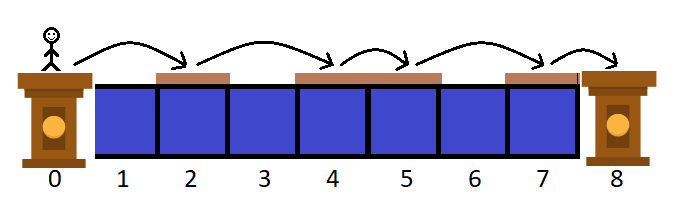 The first example: n=7n=7.





 扫一扫
扫一扫


 1050
1050

 被折叠的 条评论
为什么被折叠?
被折叠的 条评论
为什么被折叠?
 到【灌水乐园】发言





