



序言
Spring Boot Starter 是 Spring Boot 生态系统中的一个核心概念,它为开发者提供了一种便捷的方式来捆绑和配置应用程序所需的依赖项。本文将深入探讨 Spring Boot Starter 的概念、原理以及如何创建自定义的 Starter。
一、什么是 Spring Boot Starter
Spring Boot Starter 实际上是一组 Maven 或 Gradle 依赖项的集合,它们可以自动配置应用程序所需的依赖项,从而简化项目的配置过程。通过引入 Starter,开发者可以快速搭建起一个功能完备的 Spring Boot 应用程序,而不必手动添加每一个依赖项。
二、Spring Boot Starter 的原理
Spring Boot Starter 的核心原理在于自动配置和条件化装配。当应用程序启动时,Spring Boot 会自动扫描类路径上的所有 Starter,并根据约定来加载相应的配置。通过条件化装配,Spring Boot 可以根据用户的环境和配置来决定是否需要加载特定的 Starter。
三、自定义 Spring Boot Starter 流程
创建自定义的 Spring Boot Starter 主要包括以下步骤:
- 创建项目:新建一个 Maven 项目,命名规范通常为
xxx-spring-boot-starter。 - 添加依赖:在 pom.xml 文件中添加必要的依赖,包括
spring-boot-starter和spring-boot-configuration-processor。 - 定义配置类:创建一个配置映射类,使用
@ConfigurationProperties注解来获取对应的配置文件信息。 - 实现业务功能:编写一个或多个业务功能类,实现要集成功能模块的具体逻辑。
- 创建自动配置类:在 xxx-spring-boot-autoconfigure 项目或原项目中创建自动配置类。
- 创建自动装配文件:在
resources/META-INF目录下创建spring.factories文件,用于 Spring Boot 自动装配。 - 引入自定义 Starter:在其他项目中引入自定义 Starter,只需要依赖
xxx-spring-boot-starter即可。
四、自定义 Spring Boot Starter 案例
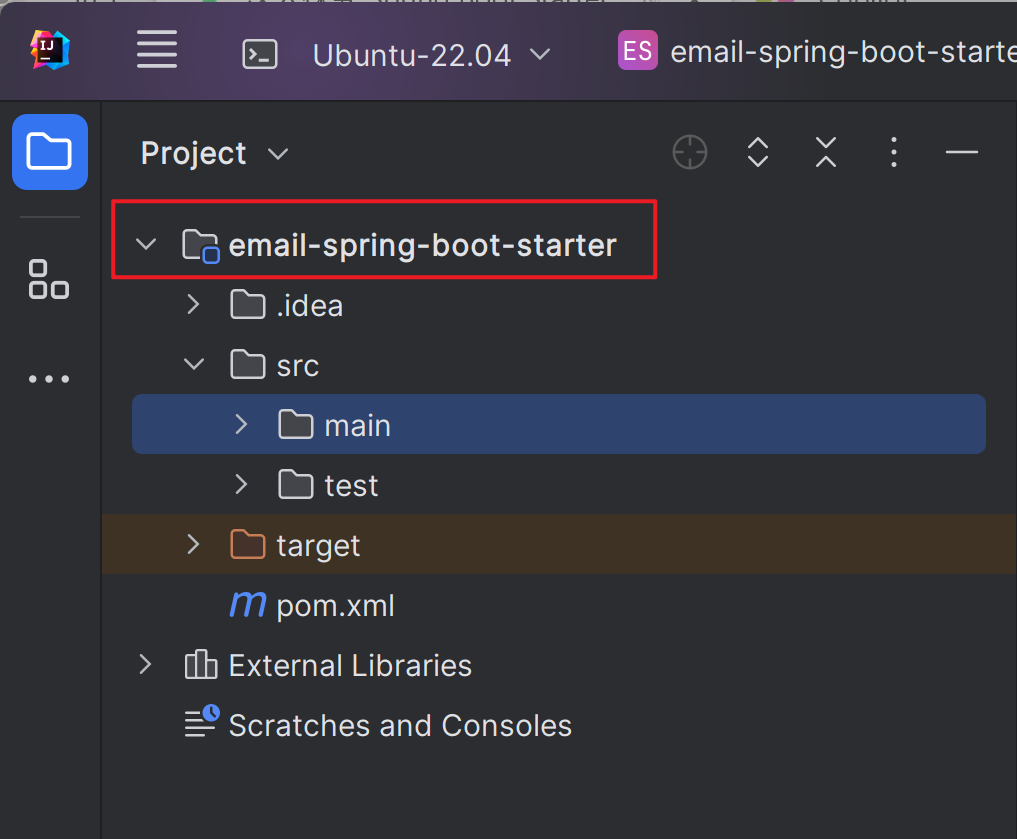
场景假设:我们需要创建一个名为 email-spring-boot-starter 的 starter,它可以提供自定义的邮件发送功能。
4.1 创建 Maven 项目
4.2 添加依赖
在项目的 pom.xml 文件中添加所需的依赖:
<dependency>
  <groupId>org.springframework.boot</groupId>
  <artifactId>spring-boot-starter</artifactId>
</dependency>

<dependency>
  <groupId>org.springframework.boot</groupId>
  <artifactId>spring-boot-configuration-processor</artifactId>
</dependency>

<!-- 引入 lombok,业务中会用到 -->
<dependency>
  <groupId>org.projectlombok</groupId>
  <artifactId>lombok</artifactId>
</dependency>
4.3 定义配置类
// 该配置类可允许在 application.yml 文件中定义配置内容
@Data
@ConfigurationProperties(prefix = "email")
public class EmailProperties {
    @Value("${host:localhost}")
    private String host;
    @Value("${port:25}")
    private int port;
    @Value("${username:admin}")
    private String username;
    @Value("${password:admin}")
    private String password;
}、
4.4 实现业务功能
实现自定义 starter 的具体业务功能。
public class EmailService {

    private final EmailProperties properties;

    public EmailService(EmailProperties properties) {
        this.properties = properties;
    }

    // 以下是发送邮件的业务逻辑
    public void sendEmail(String to, String subject, String content) {
        System.out.println("邮件服务器[" + properties.getHost() + ":" + properties.getPort() + "]");
        System.out.println("邮件服务器账号密码[username: " + properties.getUsername() + ", password: " + properties.getPassword() + "]");
        System.out.println("邮件接收人: " + to);
        System.out.println("邮件主题: " + subject);
        System.out.println("邮件内容: " + content);
    }
}
4.5 创建自动配置类
@Configuration
@EnableConfigurationProperties(EmailProperties.class)
public class EmailAutoConfiguration {

    // 自动注入业务功能
    @Bean
    public EmailService emailService(EmailProperties properties) {
        return new EmailService(properties);
    }
}
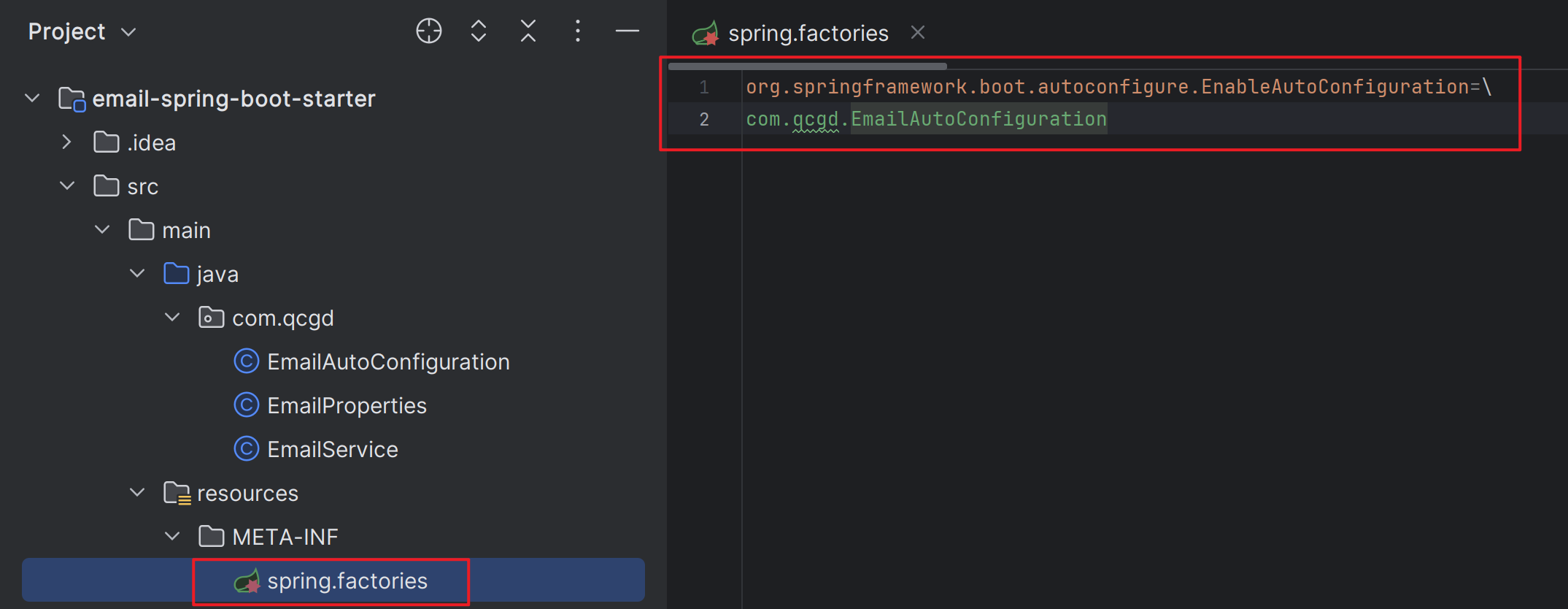
4.6 创建自动配置文件
在 resources/META-INF 目录下创建 spring.factories 文件,实现 Spring Boot 的自动装配
4.7 打包和安装
使用 mvn install 命令完成项目的打包和安装到本地
mvn install
4.8 使用自定义 starter
-
在其他项目中引入自定义的 starter
<dependency> <groupId>com.qcgd</groupId> <artifactId>email-spring-boot-starter</artifactId> <version>1.0.0</version> </dependency> -
使用自定义 starter 功能
@Resource
private EmailService emailService;

@Test
public void test() {
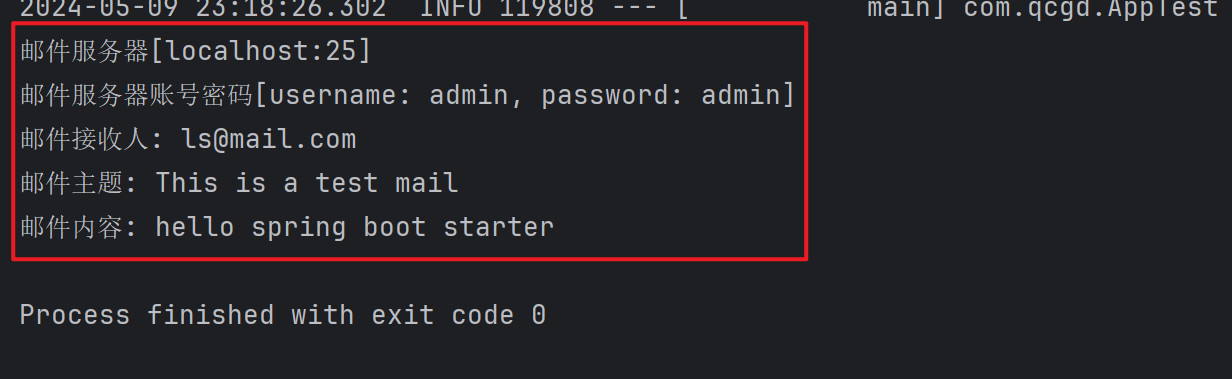
    emailService.sendEmail("ls@mail.com", "This is a test mail", "hello spring boot starter");
}
测试效果:
五、总结
Spring Boot Starter 是 Spring Boot 的一个重要特性,它可以简化我们的依赖管理,让我们可以通过添加一些 starter 的依赖,就能自动引入所需的库。通过创建自定义的 starter,我们可以更好地管理我们的项目依赖,提高我们的开发效率。





 扫一扫
扫一扫


 866
866

 被折叠的 条评论
为什么被折叠?
被折叠的 条评论
为什么被折叠?
 到【灌水乐园】发言





