


<cache type=""/>标签中type属性是指定了一个类,这个类是Mybatis的cache接口给我们提供的实现类,该接口类下有很多是实现,而mybatis中默认用的类是PerpetualCache类
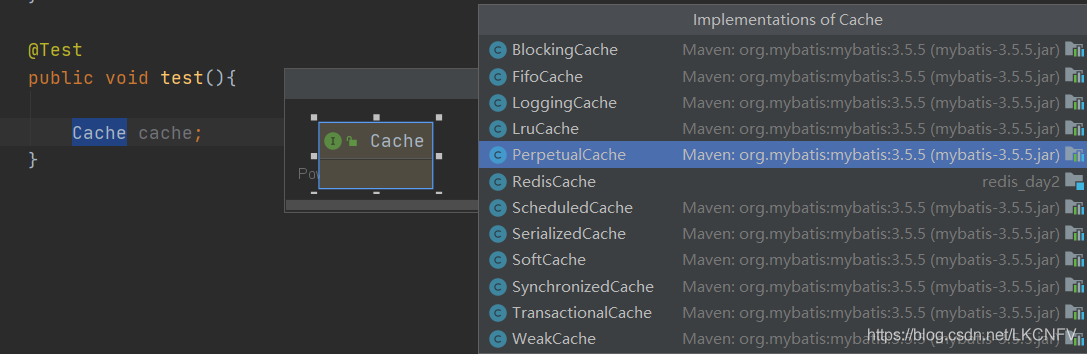
可以看到它实现mybatis的Cache接口,底层定义的是键和值都是Object的HashMap,要想使用Redis分布式缓存,就得把底层的HashMap实现改成Redis实现。因此要想做Redis分布式缓存,就得自己写一个Redis**Cache去继承Cache接口
//
// Source code recreated from a .class file by IntelliJ IDEA
// (powered by Fernflower decompiler)
//

package org.apache.ibatis.cache.impl;

import java.util.HashMap;
import java.util.Map;
import org.apache.ibatis.cache.Cache;
import org.apache.ibatis.cache.CacheException;

public class PerpetualCache implements Cache {
    private final String id;
    private final Map<Object, Object> cache = new HashMap();

    public PerpetualCache(String id) {
        this.id = id;
    }

    public String getId() {
        return this.id;
    }

    public int getSize() {
        return this.cache.size();
    }

    public void putObject(Object key, Object value) {
        this.cache.put(key, value);
    }

    public Object getObject(Object key) {
        return this.cache.get(key);
    }

    public Object removeObject(Object key) {
        return this.cache.remove(key);
    }

    public void clear() {
        this.cache.clear();
    }

    public boolean equals(Object o) {
        if (this.getId() == null) {
            throw new CacheException("Cache instances require an ID.");
        } else if (this == o) {
            return true;
        } else if (!(o instanceof Cache)) {
            return false;
        } else {
            Cache otherCache = (Cache)o;
            return this.getId().equals(otherCache.getId());
        }
    }

    public int hashCode() {
        if (this.getId() == null) {
            throw new CacheException("Cache instances require an ID.");
        } else {
            return this.getId().hashCode();
        }
    }
}
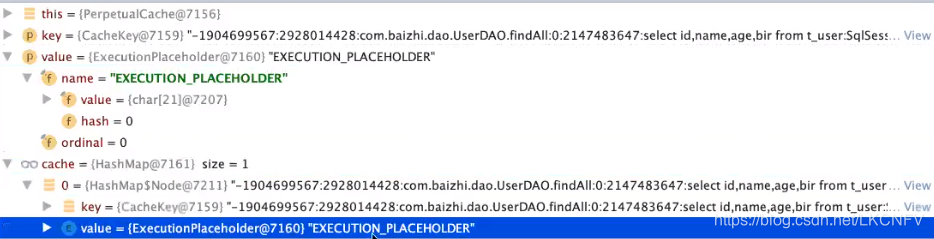
putObject上打上断点,执行测试程序,put完之后发现cache的size = 1了,key和value的值也都可以查看到。
在测试程序,写了两次查询,那么下一次查询应该是GetObject,它将根据拥有的key,拿到对应的信息。

结论:mybatis底层默认使用的是 org.apache.ibatis.cache.impl.PerpetualCache 实现。也就是
<cache type="org.apache.ibatis.cache.impl.PerpetualCache"/>
要想使用Redis,需要自定义RedisCache实现
1.通过mybatis默认cache源码得知 可以使用自定义Cache类 implements Cache 接口 并对里面的方法进行实现
2.使用RedisCache实现,type里换成自己定义的
<cache type="****.RedisCache"/>
package com.wang.cache;

import com.baizhi.util.ApplicationContextUtils;
import org.apache.ibatis.cache.Cache;
import org.springframework.beans.factory.annotation.Autowired;
import org.springframework.data.redis.core.RedisTemplate;
import org.springframework.data.redis.serializer.StringRedisSerializer;
import org.springframework.util.DigestUtils;

import java.util.concurrent.TimeUnit;

//自定义Redis缓存实现
public class RedisCache implements Cache {


    //当前放入缓存的mapper的namespace
    private final String id;

    //必须存在构造方法
    public RedisCache(String id) {
        System.out.println("id:=====================> " + id);
        this.id = id;
    }

    //返回cache唯一标识
    @Override
    public String getId() {
        return this.id;
    }


    //缓存放入值  redis RedisTemplate   StringRedisTemplate
    @Override
    public void putObject(Object key, Object value) {
    	//key大体上是id+方法名(比如是findAll)+一串数字+sql语句
        System.out.println("key:" + key.toString());
        System.out.println("value:" + value);
        //使用redishash类型作为缓存存储模型  key   hashkey  value
        getRedisTemplate().opsForHash().put(id.toString(),getKeyToMD5(key.toString()),value);

        if(id.equals("com.wang.dao.UserDAO")){
            //缓存超时  client  用户   client  员工
            getRedisTemplate().expire(id.toString(),1, TimeUnit.HOURS);
        }


        if(id.equals("com.wang.dao.CityDAO")){
            //缓存超时  client  用户   client  员工
            getRedisTemplate().expire(id.toString(),30, TimeUnit.MINUTES);
        }
        //.....指定不同业务模块设置不同缓存超时时间
    }

    //获取中获取数据
    @Override
    public Object getObject(Object key) {
        System.out.println("key:" + key.toString());

        return getRedisTemplate().opsForHash().get(id.toString(), getKeyToMD5(key.toString()));
    }

    //注意:这个方法为mybatis保留方法 默认没有实现 后续版本可能会实现
    @Override
    public Object removeObject(Object key) {
        System.out.println("根据指定key删除缓存");
        return null;
    }

    @Override
    public void clear() {
        System.out.println("清空缓存~~~");
        //清空namespace
        getRedisTemplate().delete(id.toString());//清空缓存
    }

    //用来计算缓存数量
    @Override
    public int getSize() {
        //获取hash中key value数量
        return getRedisTemplate().opsForHash().size(id.toString()).intValue();
    }

    //封装redisTemplate
    private RedisTemplate getRedisTemplate(){
        //通过application工具类获取redisTemplate
        RedisTemplate redisTemplate = (RedisTemplate) ApplicationContextUtils.getBean("redisTemplate");
        //进行序列化操作
        redisTemplate.setKeySerializer(new StringRedisSerializer());
        redisTemplate.setHashKeySerializer(new StringRedisSerializer());
        return redisTemplate;
    }

    //封装一个对key进行md5处理方法
    private String getKeyToMD5(String key){
        return DigestUtils.md5DigestAsHex(key.getBytes());
    }
}
构造函数的参数String id 就是你mapper.xml的namespace。
比如在我的UserDAOMapper.xml中
<mapper namespace="com.wang.dao.UserDAO">
那么id就是com.wang.dao.UserDAO
在继承Cache并生成重写方法后,必须要有一个构造方法以及getId返回值不能为空。
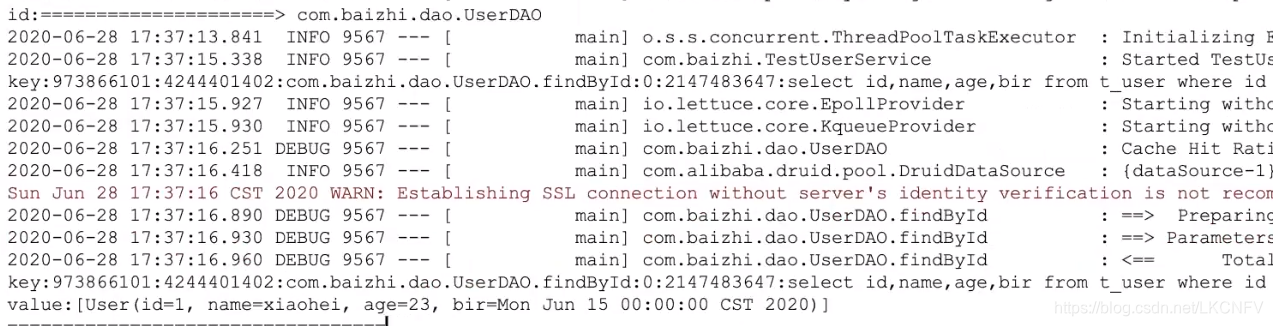
注意: 只要发生增删改操作,mybatis默认都是调用函数clear清空缓存。
如何获取RedisTemplate?
由于RedisCache这个类不是工厂管理,而是由mybatis实例化的,因此我们的RedisTemplate无法通过注入的方式进行获取。通过ApplicationContext context.getbean(“redisTemplate”) 进行获取。
package com.wang.util;

import org.springframework.beans.BeansException;
import org.springframework.context.ApplicationContext;
import org.springframework.context.ApplicationContextAware;
import org.springframework.context.annotation.Configuration;
import org.springframework.stereotype.Component;

//用来获取springboot创建好的工厂
@Component
public class ApplicationContextUtils implements ApplicationContextAware {

    //保留下来工厂
    private static ApplicationContext applicationContext;

    //将创建好工厂以参数形式传递给这个类
    @Override
    public void setApplicationContext(ApplicationContext applicationContext) throws BeansException {
        this.applicationContext = applicationContext;
    }

    //提供在工厂中获取对象的方法 //RedisTemplate  redisTemplate
    public static Object getBean(String beanName){
        return applicationContext.getBean(beanName);
    }
}





 扫一扫
扫一扫


 1391
1391

 被折叠的 条评论
为什么被折叠?
被折叠的 条评论
为什么被折叠?
 到【灌水乐园】发言





