


 本文深入剖析了Eureka客户端的服务注册流程,从EurekaClient初始化开始,详细讲解了服务注册的各个步骤,包括EurekaHttpClient的使用,InstanceInfoReplicator如何启动,以及注册信息如何通过HTTP POST请求发送到EurekaServer。在EurekaServer端,注册信息经过校验后被存储到ConcurrentHashMap结构的注册表中,确保服务实例的正确注册和管理。
“不积跬步,无以至千里。”
Eureka Client启动之后,第一件事情一定是找Eureka Server进行服务注册与注册表的抓取,这一篇文章重点分析一下Eureka Client服务注册的流程。
Eureka Client这一块的代码架构设计方面做的不是特别好,为什么这么讲??不是个人吹毛求疵,因为Eureka作为一个服务注册中心的一个组件,那么这个服务注册一定是最重要的一块机制,一定是要放在显眼的位置,便于阅读和故障调试,但是在Eureka的代码里,这块代码藏的比较深,甚至于命名都不太规范,以至于通过静态源码,几乎很难找到在哪里??
首先分析一下,这块逻辑一定是在EurekaClient的初始化代码里,也就是DiscoveryClient的构造方法里,我们之前已经看过的一块代码;
@Inject
DiscoveryClient(ApplicationInfoManager applicationInfoManager, EurekaClientConfig config, AbstractDiscoveryClientOptionalArgs args,
                Provider<BackupRegistry> backupRegistryProvider, EndpointRandomizer endpointRandomizer) {
    if (args != null) {
        this.healthCheckHandlerProvider = args.healthCheckHandlerProvider;
        this.healthCheckCallbackProvider = args.healthCheckCallbackProvider;
        this.eventListeners.addAll(args.getEventListeners());
        this.preRegistrationHandler = args.preRegistrationHandler;
    } else {
        this.healthCheckCallbackProvider = null;
        this.healthCheckHandlerProvider = null;
        this.preRegistrationHandler = null;
    }

    this.applicationInfoManager = applicationInfoManager;
    InstanceInfo myInfo = applicationInfoManager.getInfo();

    clientConfig = config;
    staticClientConfig = clientConfig;
    transportConfig = config.getTransportConfig();
    instanceInfo = myInfo;
    if (myInfo != null) {
        appPathIdentifier = instanceInfo.getAppName() + "/" + instanceInfo.getId();
    } else {
        logger.warn("Setting instanceInfo to a passed in null value");
    }

    this.backupRegistryProvider = backupRegistryProvider;
    this.endpointRandomizer = endpointRandomizer;
    this.urlRandomizer = new EndpointUtils.InstanceInfoBasedUrlRandomizer(instanceInfo);
    localRegionApps.set(new Applications());

    fetchRegistryGeneration = new AtomicLong(0);

    remoteRegionsToFetch = new AtomicReference<String>(clientConfig.fetchRegistryForRemoteRegions());
    remoteRegionsRef = new AtomicReference<>(remoteRegionsToFetch.get() == null ? null : remoteRegionsToFetch.get().split(","));

    if (config.shouldFetchRegistry()) {
        this.registryStalenessMonitor = new ThresholdLevelsMetric(this, METRIC_REGISTRY_PREFIX + "lastUpdateSec_", new long[]{15L, 30L, 60L, 120L, 240L, 480L});
    } else {
        this.registryStalenessMonitor = ThresholdLevelsMetric.NO_OP_METRIC;
    }

    if (config.shouldRegisterWithEureka()) {
        this.heartbeatStalenessMonitor = new ThresholdLevelsMetric(this, METRIC_REGISTRATION_PREFIX + "lastHeartbeatSec_", new long[]{15L, 30L, 60L, 120L, 240L, 480L});
    } else {
        this.heartbeatStalenessMonitor = ThresholdLevelsMetric.NO_OP_METRIC;
    }
    ... ...
}
这个方法里找过了,没有显眼的地方发现有服务注册的逻辑,不过还是看到有一个初始化调度任务的代码,猜想服务注册之后要持续发送心跳,可能会放在调度任务里面,所以点进去看一下,也许有想要的东西;
// finally, init the schedule tasks (e.g. cluster resolvers, heartbeat, instanceInfo replicator, fetch
initScheduledTasks();
private void initScheduledTasks() {
    if (clientConfig.shouldFetchRegistry()) {
        // registry cache refresh timer
        int registryFetchIntervalSeconds = clientConfig.getRegistryFetchIntervalSeconds();
        int expBackOffBound = clientConfig.getCacheRefreshExecutorExponentialBackOffBound();
        cacheRefreshTask = new TimedSupervisorTask(
            "cacheRefresh",
            scheduler,
            cacheRefreshExecutor,
            registryFetchIntervalSeconds,
            TimeUnit.SECONDS,
            expBackOffBound,
            new CacheRefreshThread()
        );
        scheduler.schedule(
            cacheRefreshTask,
            registryFetchIntervalSeconds, TimeUnit.SECONDS);
    }

    if (clientConfig.shouldRegisterWithEureka()) {
        int renewalIntervalInSecs = instanceInfo.getLeaseInfo().getRenewalIntervalInSecs();
        int expBackOffBound = clientConfig.getHeartbeatExecutorExponentialBackOffBound();
        logger.info("Starting heartbeat executor: " + "renew interval is: {}", renewalIntervalInSecs);

        // Heartbeat timer
        heartbeatTask = new TimedSupervisorTask(
            "heartbeat",
            scheduler,
            heartbeatExecutor,
            renewalIntervalInSecs,
            TimeUnit.SECONDS,
            expBackOffBound,
            new HeartbeatThread()
        );
        scheduler.schedule(
            heartbeatTask,
            renewalIntervalInSecs, TimeUnit.SECONDS);

        // InstanceInfo replicator
        instanceInfoReplicator = new InstanceInfoReplicator(
            this,
            instanceInfo,
            clientConfig.getInstanceInfoReplicationIntervalSeconds(),
            2); // burstSize

        statusChangeListener = new ApplicationInfoManager.StatusChangeListener() {
            @Override
            public String getId() {
                return "statusChangeListener";
            }

            @Override
            public void notify(StatusChangeEvent statusChangeEvent) {
                logger.info("Saw local status change event {}", statusChangeEvent);
                instanceInfoReplicator.onDemandUpdate();
            }
        };

        if (clientConfig.shouldOnDemandUpdateStatusChange()) {
            applicationInfoManager.registerStatusChangeListener(statusChangeListener);
        }

        instanceInfoReplicator.start(clientConfig.getInitialInstanceInfoReplicationIntervalSeconds());
    } else {
        logger.info("Not registering with Eureka server per configuration");
    }
}
instanceInfoReplicator!!!没错,找来找去,也只有这个东西应该是用来进行服务注册,replicator??这个词的语意一般都是用来做复制、副本相关的功能,绝对不是用在这种场景。。。
在方法的末尾,将这个组件启动;
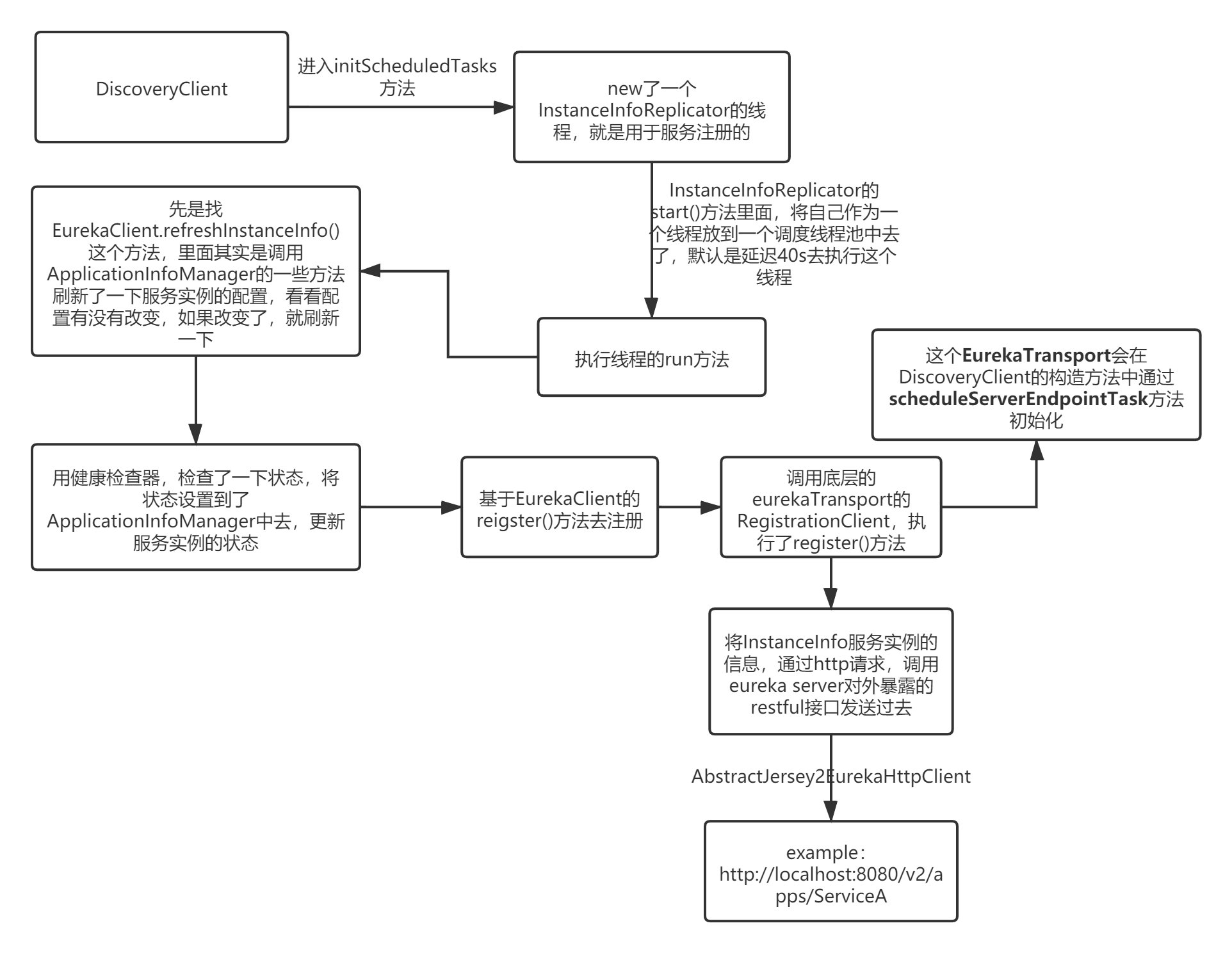
instanceInfoReplicator.start(clientConfig.getInitialInstanceInfoReplicationIntervalSeconds());
在start方法里,将自己作为一个线程放到一个调度线程池中去,默认是延迟40s去执行这个线程,还将isDirty设置为了ture;
public void start(int initialDelayMs) {
    if (started.compareAndSet(false, true)) {
        instanceInfo.setIsDirty();  // for initial register
        Future next = scheduler.schedule(this, initialDelayMs, TimeUnit.SECONDS);
        scheduledPeriodicRef.set(next);
    }
}
这个InstanceInfoReplicator组件继承自Runnable接口,所以放在调度线程池以后,会调用run方法:
public void run() {
    try {
        discoveryClient.refreshInstanceInfo();

        Long dirtyTimestamp = instanceInfo.isDirtyWithTime();
        if (dirtyTimestamp != null) {
            discoveryClient.register();
            instanceInfo.unsetIsDirty(dirtyTimestamp);
        }
    } catch (Throwable t) {
        logger.warn("There was a problem with the instance info replicator", t);
    } finally {
        Future next = scheduler.schedule(this, replicationIntervalSeconds, TimeUnit.SECONDS);
        scheduledPeriodicRef.set(next);
    }
}
这个refreshInstanceInfo()方法主要做了两件事:
(1)调用ApplicationInfoManager的一些方法刷新了一下服务实例的配置,看看配置有没有改变,如果改变了,就刷新一下;
(2)用健康检查器,检查了一下状态,将状态设置到了ApplicationInfoManager中去,更新服务实例的状态;
void refreshInstanceInfo() {
    applicationInfoManager.refreshDataCenterInfoIfRequired();
    applicationInfoManager.refreshLeaseInfoIfRequired();

    InstanceStatus status;
    try {
        status = getHealthCheckHandler().getStatus(instanceInfo.getStatus());
    } catch (Exception e) {
        logger.warn("Exception from healthcheckHandler.getStatus, setting status to DOWN", e);
        status = InstanceStatus.DOWN;
    }

    if (null != status) {
        applicationInfoManager.setInstanceStatus(status);
    }
}
继续回到run方法里比较核心的一行代码:
discoveryClient.register();
这里会正式进行服务注册,调用了DiscoveryClient的register方法;
 boolean register() throws Throwable {
     logger.info(PREFIX + "{}: registering service...", appPathIdentifier);
     EurekaHttpResponse<Void> httpResponse;
     try {
         //private final EurekaTransport eurekaTransport;
         //private EurekaHttpClient registrationClient;
         httpResponse = eurekaTransport.registrationClient.register(instanceInfo);
     } catch (Exception e) {
         logger.warn(PREFIX + "{} - registration failed {}", appPathIdentifier, e.getMessage(), e);
         throw e;
     }
     if (logger.isInfoEnabled()) {
         logger.info(PREFIX + "{} - registration status: {}", appPathIdentifier, httpResponse.getStatusCode());
     }
     return httpResponse.getStatusCode() == Status.NO_CONTENT.getStatusCode();
 }
很明显,这个服务注册调用的是底层的EurekaTransport组件的EurekaHttpClient组件,执行了register()方法,将InstanceInfo服务实例的信息作为参数,通过httpclient组件发起http请求,调用了Eureka server对外提供的restful接口,然后拿到注册的结果;
那么这个EurekaTransport是在哪里初始化的呢?
答案是DiscoveryClient的构造方法里,正是通过scheduleServerEndpointTask方法完成的;
eurekaTransport = new EurekaTransport();
//给registrationClient赋值的逻辑在此方法中
scheduleServerEndpointTask(eurekaTransport, args);
我们再次回到register方法,这个httpclient使用的是子类AbstractJersey2EurekaHttpClient,这个只能通过打断点调试才知道,因为这个httpclient类的设计体系太乱了,通过静态源码很难找到,很快就能把你绕晕,也因为知道Eureka是基于jersey框架进行网络通信这个大背景,加上在对应的方法打上断点,很快定位到了真正发送register的逻辑:
@Override
public EurekaHttpResponse<Void> register(InstanceInfo info) {
    String urlPath = "apps/" + info.getAppName();
    Response response = null;
    try {
        Builder resourceBuilder = jerseyClient.target(serviceUrl).path(urlPath).request();
        addExtraProperties(resourceBuilder);
        addExtraHeaders(resourceBuilder);
        response = resourceBuilder
            .accept(MediaType.APPLICATION_JSON)
            .acceptEncoding("gzip")
            //发送的是POST请求
            .post(Entity.json(info));
        return anEurekaHttpResponse(response.getStatus()).headers(headersOf(response)).build();
    } finally {
        if (logger.isDebugEnabled()) {
            logger.debug("Jersey2 HTTP POST {}/{} with instance {}; statusCode={}", serviceUrl, urlPath, info.getId(),
                         response == null ? "N/A" : response.getStatus());
        }
        if (response != null) {
            response.close();
        }
    }
}
这个serviceUrl就是类似于“http://localhost:8080/v2”这样的一串东西,appName就是你配置的服务名称,所以最终发送的请求是“POST http://localhost:8080/v2/apps/ServiceA”这种形式的url;
在这个eureka core的resources包下面,有一堆的XXXResource,这些Resource相当于Springmvc的Controller,是用来接收这个http请求的。Resource相当于是jersey框架里面的controller吧。
EurekaClient通过http发送给Server的请求会先经过核心servlet–>ServletContainer,然后通过请求url分发给对应的Resources处理;
<filter>
    <filter-name>jersey</filter-name>
    <filter-class>com.sun.jersey.spi.container.servlet.ServletContainer</filter-class>
    <init-param>
      <param-name>com.sun.jersey.config.property.WebPageContentRegex</param-name>
      <param-value>/(flex|images|js|css|jsp)/.*</param-value>
    </init-param>
    <init-param>
      <param-name>com.sun.jersey.config.property.packages</param-name>
      <param-value>com.sun.jersey;com.netflix</param-value>
    </init-param>
    ... ...
</filter>
所以我们的请求最终被分发到ApplicationResource,由addInstance()方法来处理,至于分发的流程就不具体分析了,说实话jersey这个框架国内基本不用,当时netflix如果用springmvc不就省事了么,让我们先来看看addInstance方法的实现代码;
@POST
@Consumes({"application/json", "application/xml"})
public Response addInstance(InstanceInfo info,
                            @HeaderParam(PeerEurekaNode.HEADER_REPLICATION) String isReplication) {
    logger.debug("Registering instance {} (replication={})", info.getId(), isReplication);
    // validate that the instanceinfo contains all the necessary required fields
    if (isBlank(info.getId())) {
        return Response.status(400).entity("Missing instanceId").build();
    } else if (isBlank(info.getHostName())) {
        return Response.status(400).entity("Missing hostname").build();
    } else if (isBlank(info.getIPAddr())) {
        return Response.status(400).entity("Missing ip address").build();
    } else if (isBlank(info.getAppName())) {
        return Response.status(400).entity("Missing appName").build();
    } else if (!appName.equals(info.getAppName())) {
        return Response.status(400).entity("Mismatched appName, expecting " + appName + " but was " + info.getAppName()).build();
    } else if (info.getDataCenterInfo() == null) {
        return Response.status(400).entity("Missing dataCenterInfo").build();
    } else if (info.getDataCenterInfo().getName() == null) {
        return Response.status(400).entity("Missing dataCenterInfo Name").build();
    }

    // handle cases where clients may be registering with bad DataCenterInfo with missing data
    DataCenterInfo dataCenterInfo = info.getDataCenterInfo();
    if (dataCenterInfo instanceof UniqueIdentifier) {
        String dataCenterInfoId = ((UniqueIdentifier) dataCenterInfo).getId();
        if (isBlank(dataCenterInfoId)) {
            boolean experimental = "true".equalsIgnoreCase(serverConfig.getExperimental("registration.validation.dataCenterInfoId"));
            if (experimental) {
                String entity = "DataCenterInfo of type " + dataCenterInfo.getClass() + " must contain a valid id";
                return Response.status(400).entity(entity).build();
            } else if (dataCenterInfo instanceof AmazonInfo) {
                AmazonInfo amazonInfo = (AmazonInfo) dataCenterInfo;
                String effectiveId = amazonInfo.get(AmazonInfo.MetaDataKey.instanceId);
                if (effectiveId == null) {
                    amazonInfo.getMetadata().put(AmazonInfo.MetaDataKey.instanceId.getName(), info.getId());
                }
            } else {
                logger.warn("Registering DataCenterInfo of type {} without an appropriate id", dataCenterInfo.getClass());
            }
        }
    }

    registry.register(info, "true".equals(isReplication));
    return Response.status(204).build();  // 204 to be backwards compatible
}
方法的开始做了一堆的校验,这种防御式编程,可以很好的保持代码的健壮性。不过这种代码跟核心业务逻辑放在一起,不太好,最好是设计一个工具类来进行校验。
Eureka里大量的跟亚马逊云耦合在一起,很多地方使用硬编码,也是不太可取的,所以看源码要吸收人家的优点,但也要有自己的标准,不一定源码就全部都是精华,也有一些是糟粕,需要自己筛选、甄别,这就需要我们的技术内功,这个内功只能依赖阅读大量开源项目源码积攒而来。
随后进入PeerAwareInstanceRegistryImpl(注册表)的register方法,发现默认的心跳续约时间是90s,如果我们自己有配置,会使用我们的来覆盖默认值;
@Override
public void register(final InstanceInfo info, final boolean isReplication) {
    //public static final int DEFAULT_DURATION_IN_SECS = 90;
    int leaseDuration = Lease.DEFAULT_DURATION_IN_SECS;
    if (info.getLeaseInfo() != null && info.getLeaseInfo().getDurationInSecs() > 0) {
        leaseDuration = info.getLeaseInfo().getDurationInSecs();
    }
    super.register(info, leaseDuration, isReplication);
    replicateToPeers(Action.Register, info.getAppName(), info.getId(), info, null, isReplication);
}
调用父类AbstractInstanceRegistry的注册方法完成注册;
public void register(InstanceInfo registrant, int leaseDuration, boolean isReplication) {
    read.lock();
    try {
        Map<String, Lease<InstanceInfo>> gMap = registry.get(registrant.getAppName());
        REGISTER.increment(isReplication);
        if (gMap == null) {
            final ConcurrentHashMap<String, Lease<InstanceInfo>> gNewMap = new ConcurrentHashMap<String, Lease<InstanceInfo>>();
            gMap = registry.putIfAbsent(registrant.getAppName(), gNewMap);
            if (gMap == null) {
                gMap = gNewMap;
            }
        }
        Lease<InstanceInfo> existingLease = gMap.get(registrant.getId());
        // Retain the last dirty timestamp without overwriting it, if there is already a lease
        if (existingLease != null && (existingLease.getHolder() != null)) {
            Long existingLastDirtyTimestamp = existingLease.getHolder().getLastDirtyTimestamp();
            Long registrationLastDirtyTimestamp = registrant.getLastDirtyTimestamp();
            logger.debug("Existing lease found (existing={}, provided={}", existingLastDirtyTimestamp, registrationLastDirtyTimestamp);

            // this is a > instead of a >= because if the timestamps are equal, we still take the remote transmitted
            // InstanceInfo instead of the server local copy.
            if (existingLastDirtyTimestamp > registrationLastDirtyTimestamp) {
                logger.warn("There is an existing lease and the existing lease's dirty timestamp {} is greater" +
                            " than the one that is being registered {}", existingLastDirtyTimestamp, registrationLastDirtyTimestamp);
                logger.warn("Using the existing instanceInfo instead of the new instanceInfo as the registrant");
                registrant = existingLease.getHolder();
            }
        } else {
            // The lease does not exist and hence it is a new registration
            synchronized (lock) {
                if (this.expectedNumberOfClientsSendingRenews > 0) {
                    // Since the client wants to register it, increase the number of clients sending renews
                    this.expectedNumberOfClientsSendingRenews = this.expectedNumberOfClientsSendingRenews + 1;
                    updateRenewsPerMinThreshold();
                }
            }
            logger.debug("No previous lease information found; it is new registration");
        }
        Lease<InstanceInfo> lease = new Lease<InstanceInfo>(registrant, leaseDuration);
        if (existingLease != null) {
            lease.setServiceUpTimestamp(existingLease.getServiceUpTimestamp());
        }
        gMap.put(registrant.getId(), lease);
        recentRegisteredQueue.add(new Pair<Long, String>(
            System.currentTimeMillis(),
            registrant.getAppName() + "(" + registrant.getId() + ")"));
        // This is where the initial state transfer of overridden status happens
        if (!InstanceStatus.UNKNOWN.equals(registrant.getOverriddenStatus())) {
            logger.debug("Found overridden status {} for instance {}. Checking to see if needs to be add to the "
                         + "overrides", registrant.getOverriddenStatus(), registrant.getId());
            if (!overriddenInstanceStatusMap.containsKey(registrant.getId())) {
                logger.info("Not found overridden id {} and hence adding it", registrant.getId());
                overriddenInstanceStatusMap.put(registrant.getId(), registrant.getOverriddenStatus());
            }
        }
        InstanceStatus overriddenStatusFromMap = overriddenInstanceStatusMap.get(registrant.getId());
        if (overriddenStatusFromMap != null) {
            logger.info("Storing overridden status {} from map", overriddenStatusFromMap);
            registrant.setOverriddenStatus(overriddenStatusFromMap);
        }

        // Set the status based on the overridden status rules
        InstanceStatus overriddenInstanceStatus = getOverriddenInstanceStatus(registrant, existingLease, isReplication);
        registrant.setStatusWithoutDirty(overriddenInstanceStatus);

        // If the lease is registered with UP status, set lease service up timestamp
        if (InstanceStatus.UP.equals(registrant.getStatus())) {
            lease.serviceUp();
        }
        registrant.setActionType(ActionType.ADDED);
        recentlyChangedQueue.add(new RecentlyChangedItem(lease));
        registrant.setLastUpdatedTimestamp();
        invalidateCache(registrant.getAppName(), registrant.getVIPAddress(), registrant.getSecureVipAddress());
        logger.info("Registered instance {}/{} with status {} (replication={})",
                    registrant.getAppName(), registrant.getId(), registrant.getStatus(), isReplication);
    } finally {
        read.unlock();
    }
}
首先加了一把读锁,说明服务注册的方法允许多线程并发执行,为啥?你看看这个注册表是啥就知道了;
private final ConcurrentHashMap<String, Map<String, Lease<InstanceInfo>>> registry
            = new ConcurrentHashMap<String, Map<String, Lease<InstanceInfo>>>();
ConcurrentHashMap!!!线程安全的Map集合,是注册表的真面目,jdk7以后对这个Map使用了CAS机制的优化,所以性能不会太差。
首先根据服务名称获取一个Map<String, Lease<InstanceInfo>>,这个Map的key可以看出来就是服务实例Id,value是一个Lease对象,而且使用InstanceInfo做为泛型,不过第一次注册肯定Map是空的,会new一个新的ConcurrentHashMap;
Map<String, Lease<InstanceInfo>> gMap = registry.get(registrant.getAppName());
REGISTER.increment(isReplication);
if (gMap == null) {
    final ConcurrentHashMap<String, Lease<InstanceInfo>> gNewMap = new ConcurrentHashMap<String, Lease<InstanceInfo>>();
    gMap = registry.putIfAbsent(registrant.getAppName(), gNewMap);
    if (gMap == null) {
        gMap = gNewMap;
    }
}
接着会走到这段代码
// The lease does not exist and hence it is a new registration
synchronized (lock) {
    if (this.expectedNumberOfClientsSendingRenews > 0) {
        // Since the client wants to register it, increase the number of clients sending renews
        this.expectedNumberOfClientsSendingRenews = this.expectedNumberOfClientsSendingRenews + 1;
        updateRenewsPerMinThreshold();
    }
}
logger.debug("No previous lease information found; it is new registration");
这段代码还是有点意思的,我先说说这里是在干什么,用过EurekaClient的朋友应该都知道,Eureka有一个保护机制,是说一段时间内,如果Eureka发现服务实例大规模的故障,就会认为自己的网络出现问题,就会进入保护模式,不再摘除任何服务实例,这个expectedNumberOfClientsSendingRenews就是它期望的发送心跳的实例,而下面的updateRenewsPerMinThreshold()方法就是在计算期望心跳,如果实际的集群心跳少于这个期望,就会开启保护模式,为什么说有意思,我之前看1.7.2的时候,你知道它这里是怎么设计的嘛,+2,就是说期望的心跳每上线一个服务实例就会+2,你可能会想,为什么是+2,不是加3或者别的,因为默认的EurekaClient发送心跳的间隔是30s!!!是不是瞬间明白了,这不是搞笑吗?我严重怀疑之前的版本这一块就是netflix的实习生写的,可能是觉得太离谱,在后续的版本修复了这个问题。。。
然后new了一个Lease,以实例Id做为key,放进Map<String, Lease>;
Lease<InstanceInfo> lease = new Lease<InstanceInfo>(registrant, leaseDuration);
if (existingLease != null) {
    lease.setServiceUpTimestamp(existingLease.getServiceUpTimestamp());
}
gMap.put(registrant.getId(), lease);
接着用服务名称和实例Id封装了一个Pair对象,放到一个recentRegisteredQueue里面,这个queue保存的就是最新注册的服务
private final CircularQueue<Pair<Long, String>> recentRegisteredQueue;

recentRegisteredQueue.add(new Pair<Long, String>(
                    System.currentTimeMillis(),
                    registrant.getAppName() + "(" + registrant.getId() + ")"));
同时把这个Lease封装了一个RecentlyChangedItem放到最新变化的队列recentlyChangedQueue,这个东东后面也会说,先有个概念;
private ConcurrentLinkedQueue<RecentlyChangedItem> recentlyChangedQueue = new ConcurrentLinkedQueue<RecentlyChangedItem>();

recentlyChangedQueue.add(new RecentlyChangedItem(lease));
最后过期掉RW缓存,关于注册表的RW和RO缓存,后面拉取注册表会说,这里先有个印象;
invalidateCache(registrant.getAppName(), registrant.getVIPAddress(), registrant.getSecureVipAddress());
最后,来总结下服务注册表的数据结构
ConcurrentHashMap<String, Map<String, Lease>>
类似下面的结构,这个InstanceInfo主要就是包含主机名、ip地址、端口号、租约信息等等这些。
{
  “ServiceA”: {
    “001”: Lease<InstanceInfo>,
    “002”: Lease<InstanceInfo>,
    “003”: Lease<InstanceInfo>
  },
  “ServiceB”: {
    “001”: Lease<InstanceInfo>,
    “002”: Lease<InstanceInfo>,
    “003”: Lease<InstanceInfo>
  }
}
最后附上一张自绘制的EurekaClient服务注册流程图帮助理解。





 扫一扫
扫一扫


 2920
2920

 被折叠的 条评论
为什么被折叠?
被折叠的 条评论
为什么被折叠?
 到【灌水乐园】发言





