



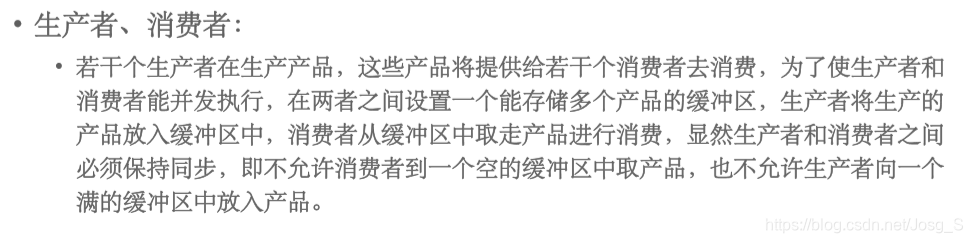
 本文介绍了一个基于Java的生产者-消费者模式实现案例,通过使用synchronized关键字和wait/notifyAll方法,确保了线程之间的正确同步。生产者线程负责创建商品并将其存放在共享的Shop对象中,而消费者线程则从该对象中取出商品。
public class TestProductCustomer {

	public static void main(String[] args) {
		Shop shop = new Shop();//共享资源对象
		Thread p = new Thread(new Product(shop),"生产者");
		Thread c = new Thread(new Customer(shop),"消费者");

		p.start();
		c.start();

	}

}
//商品
class Goods{
	private int id;
	public Goods(int id) {
		this.id = id;
	}
	public int getId() {
		return id;
	}
	public void setId(int id) {
		this.id = id;
	}

}
//商场
class Shop{
	Goods goods;
	boolean flag;//标识商品是否充足
	//生产者调用的,存的方法
	public synchronized void saveGoods(Goods goods) throws InterruptedException {
		//1.判断商品是否充足
		if(flag == true) {//商品充足,生产者不用生产,等待消费者买完!进入等待状态
			this.wait();
		}
		//商品不充足
		System.out.println(Thread.currentThread().getName()+"生产并在商场里存放了"+goods.getId()+"件商品");
		this.goods = goods;
		flag = true;//已经有商品了!可以让消费者购买了!
		this.notifyAll();//将等待队列的消费者唤醒!前来购买商品

	}
	//消费者调用的,取的方法
	public synchronized void buyGoods() throws InterruptedException {
		if(flag == false) {//没有商品了,消费者就要等待
			System.out.println("消费者:商品不足了,要等待了");
			this.wait();//消费者进入等待队列,等待生产者生产商品后,唤醒!
		}
		//正常购买
		System.out.println(Thread.currentThread().getName()+"购买了"+goods.getId()+"件商品");
		//商品卖完了,标识没货了
		this.goods = null;
		flag = false;
		//唤醒生产者去生产商品
		this.notifyAll();
	}
}
//生产者
class Product implements Runnable{
	Shop shop;

	public Product(Shop shop) {
		super();
		this.shop = shop;
	}
	public void run() {
		//通过循环,生产商品存放到Shop里
		for (int i = 1; i < 30; i++) {
			//生产者线程调用存商品的方法,传一个商品对象
			try {
				this.shop.saveGoods(new Goods(i));
			} catch (InterruptedException e) {
				// TODO Auto-generated catch block
				e.printStackTrace();
			}
		}
	}
}
//消费者
class Customer implements Runnable{
	Shop shop;

	public Customer(Shop shop) {
		super();
		this.shop = shop;
	}
	public void run() {
		for (int i = 1; i < 30; i++) {
			try {
				this.shop.buyGoods();
			} catch (InterruptedException e) {
				// TODO Auto-generated catch block
				e.printStackTrace();
			}
		}
	}
}
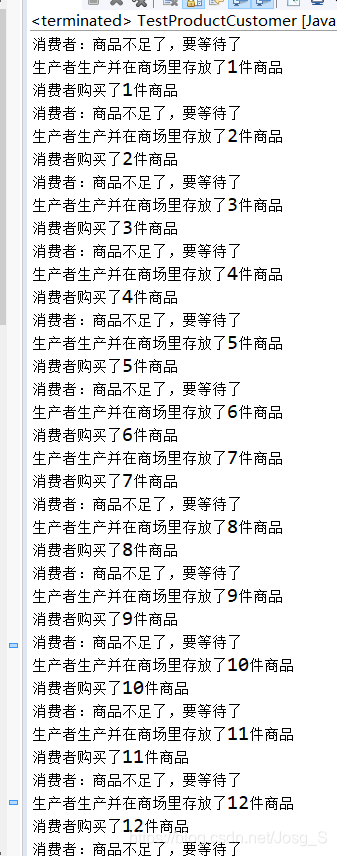
运行结果:





 扫一扫
扫一扫


 被折叠的 条评论
为什么被折叠?
被折叠的 条评论
为什么被折叠?
 到【灌水乐园】发言





