


MVC分层模式
MVC是软件开发的一种软件架构模式,把软件系统分为三部分:模型、视图、控制
1、MVC把一个应用的输入,处理,输出按照Model(模型),View(视图),Controller(控制)三层进行分离
(1)Model(模型):数据模型,提供要展示的数据,包含数据和行为,一般分离为数据对象和服务层
(2)View(视图):负责模型的展示,一般就是我们见到的用户界面
(3)Controller(控制):接收用户请求,传给模型处理,把模型处理后的数据给视图,起到控制调度的作用
2、MVC分层模式的优点:
-
(1)高内聚低耦合
-
(2)重用性高
-
(3)部署快
-
(4)可维护性高
-
(5)有利于软件工程化管理
3、MVC分层模式的文档结构:
(1)Model层:包含实体层、Dao层、Dao实现层、Service层、Service实现层、工具类层
分别位于不同的包中:
-
com.hrxy.entity
-
com.hrxy.dao
-
com.hrxy.dao.impl
-
com.hrxy.service
-
com.hrxy.service.impl
-
com.hrxy.util
-
com.hrxy.test
entity:实体层,放置一个个实体,及其相应的set、get方法。如果想要对数据库进行一些操作(比如说读取)的话,就要先写entity层。
dao:Dao是数据访问层,Dao的作用是封装对数据库的访问:增删改查,不涉及业务逻辑,只是达到按某个条件获得指定数据的要求。
service:业务逻辑层。它处理逻辑上的业务,而不去考虑具体的实现。至于为什么service层要使用接口来定义有以下几点好处:在java中接口是多继承的,而类是单继承的,如果你需要一个类实现多个service,你用接口可以实现,用类定义service就没那么灵活。
util:工具包
(2)View层:
(3)Controller层:
接下来我们以部门表为例进行讲解:
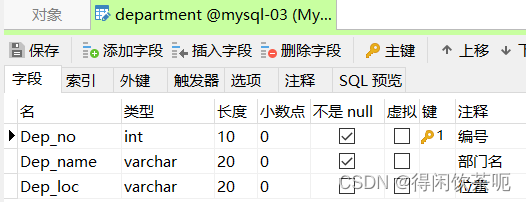
4、编写Entity层
package _15MVC.d01.cn.com.entity;
/**部门实体
* @author LX
* @create 2023-12-24 20:22
*/
public class Departement {
private int dep_no;
private String deo_name;
private String dep_loc;
public Departement() {
}
public Departement(int dep_no, String deo_name, String dep_loc) {
this.dep_no = dep_no;
this.deo_name = deo_name;
this.dep_loc = dep_loc;
}
public int getDep_no() {
return dep_no;
}
public void setDep_no(int dep_no) {
this.dep_no = dep_no;
}
public String getDeo_name() {
return deo_name;
}
public void setDeo_name(String deo_name) {
this.deo_name = deo_name;
}
public String getDep_loc() {
return dep_loc;
}
public void setDep_loc(String dep_loc) {
this.dep_loc = dep_loc;
}
}
5、编写Dao层接口和BaseDao
package _15MVC.d01.cn.com.dao;
import java.sql.*;
/**所有Dao层的父类:BaseDao
 * @author LX
 * @create 2023-12-24 20:26
 */
public class BaseDao {
    protected Connection con;
    protected PreparedStatement pst;
    protected ResultSet rs;
    //打开连接
    public void openCon() {
        try {
            Class.forName("com.mysql.jdbc.Driver");
            con= DriverManager.getConnection(
                    "jdbc:mysql://localhost:3306/mysql-03",
                    "root","root");
        } catch (ClassNotFoundException e) {
            e.printStackTrace();
        } catch (SQLException throwables) {
            throwables.printStackTrace();
        }
    }
    //关闭资源
    public void closeAll(){
        try {
            if (rs!=null) {//防止空指针异常
                rs.close();
            }
            if (pst!=null) {
                pst.close();
            }
            if (con!=null) {
                con.close();
            }
        } catch (SQLException throwables) {
            throwables.printStackTrace();
        }
    }
}
package _15MVC.d01.cn.com.dao;
import _15MVC.d01.cn.com.entity.Departement;
import java.util.List;
/**部门表的Dao层接口,数据访问层
 * @author LX
 * @create 2023-12-24 20:42
 */
public interface DepartmentDao {
    public int insert(Departement dept) ;
    public int delete(Departement dept) ;
    public int update(Departement dept) ;
    public List<Departement> selectAll() ;
    public Departement selectById(Departement dept);
}
6、编写Daod实现层impl
package _15MVC.d01.cn.com.dao.impl;
import _15MVC.d01.cn.com.dao.BaseDao;
import _15MVC.d01.cn.com.dao.DepartmentDao;
import _15MVC.d01.cn.com.entity.Departement;
import java.sql.SQLException;
import java.util.ArrayList;
import java.util.List;
/**部门表Dao层接口的实现类:
* 继承BaseDao,实现与数据库相连
* 实现部门接口,实现方法,一个方法对应一个SQL语句
* @author LX
* @create 2023-12-24 20:44
*/
public class DepartmentDaoImpl extends BaseDao implements DepartmentDao {
//增加的方法实现
public int insert(Departement dept) {
int i=-1;//代表出现异常
openCon();
String sql="insert into department values(?,?,?)";
try {
pst=con.prepareStatement(sql);
pst.setInt(1,dept.getDep_no());
pst.setString(2,dept.getDeo_name());
pst.setString(3,dept.getDep_loc());
i=pst.executeUpdate();
} catch (SQLException throwables) {
throwables.printStackTrace();
}finally {//无论如何都要关闭资源
closeAll();
}
return i;
}
//删除的方法实现
public int delete(Departement dept) {
int i=-1;
openCon();
String sql="delete from department where dep_no=?";
try {
pst=con.prepareStatement(sql);
pst.setInt(1,dept.getDep_no());
i=pst.executeUpdate();
} catch (SQLException throwables) {
throwables.printStackTrace();
}finally {
closeAll();
}
return i;
}
//修改的方法实现
public int update(Departement dept) {
int i=-1;
openCon();
String sql="update department set dep_name=? where dep_no=?";
return 0;
}
//查询全部的方法实现
public List<Departement> selectAll(){
List<Departement> list=null;
openCon();
String sql="select * from department";
try {
pst=con.prepareStatement(sql);
rs=pst.executeQuery();
list=new ArrayList<Departement>();
while (rs.next()){
Departement dept=new Departement();
dept.setDep_no(rs.getInt("dep_no"));
dept.setDeo_name(rs.getString("dep_name"));
dept.setDep_loc(rs.getString("dep_loc"));
list.add(dept);
}
} catch (SQLException throwables) {
throwables.printStackTrace();
}finally {
closeAll();
}
return list;
}
//通过id查询的方法实现
public Departement selectById(Departement dept) {
Departement d=null;
openCon();
String sql="select * from department where dep_no=?";
try {
pst=con.prepareStatement(sql);
pst.setInt(1,dept.getDep_no());
rs=pst.executeQuery();
while (rs.next()){//只返回一行数据也要接收在rs中进行判断
d=new Departement();
d.setDep_no(rs.getInt("dep_no"));
d.setDeo_name(rs.getString("dep_name"));
d.setDep_loc(rs.getString("dep_loc"));
}
} catch (SQLException throwables) {
throwables.printStackTrace();
} finally {
closeAll();
}
return d;
}
}
7、编写service层接口
package _15MVC.d01.cn.com.service;
import _15MVC.d01.cn.com.entity.Departement;
import java.util.List;
/**部门业务层,逻辑业务层
 * @author LX
 * @create 2023-12-24 22:17
 */
public interface DepartmentService {
    public boolean add(Departement departement) ;//save
    public boolean remove(Departement departement);//drop
    public boolean modify(Departement departement);//alter
    public List<Departement> findAll();//
    public Departement findById(Departement departement);//
}
8、编写service接口的实现类impl层
package _15MVC.d01.cn.com.service.impl;
import _15MVC.d01.cn.com.dao.DepartmentDao;
import _15MVC.d01.cn.com.dao.impl.DepartmentDaoImpl;
import _15MVC.d01.cn.com.entity.Departement;
import _15MVC.d01.cn.com.service.DepartmentService;
import java.util.List;
/**service接口的实现类
* @author LX
* @create 2023-12-24 22:25
*/
public class DepartmentServiceImpl implements DepartmentService {
//上调下,私有化
private DepartmentDao departmentDao=new DepartmentDaoImpl();
public boolean add(Departement departement) {
/*int i=departmentDao.insert(departement);
if (i>0){
return true;
}else{
return false;
}*/
/*boolean f=departmentDao.insert(departement)>0?true:false;
return f;*/
return departmentDao.insert(departement)>0;
}
public boolean remove(Departement departement) {
return departmentDao.delete(departement)>0;
}
public boolean modify(Departement departement) {
return departmentDao.update(departement)>0;
}
public List<Departement> findAll() {
return departmentDao.selectAll();
}
public Departement findById(Departement departement) {
return departmentDao.selectById(departement);
}
}
9、编写测试类
public class Test {
    public static void main(String[] args) {
        DepartmentService departmentService=new         DepartmentServiceImpl();
        Departement departement=null;
       /* System.out.println("-----------增加-----------");
        departement=new Departement(7,"开发部","222");
        if (departmentService.add(departement)) {
            System.out.println("添加成功!");
        }else {
            System.out.println("添加失败!");
        }*/
        /*System.out.println("-----------删除-----------");
        departement=new Departement(7,"开发部","222");
        if (departmentService.remove(departement)) {
            System.out.println("删除成功!");
        }else {
            System.out.println("删除失败!");
        }*/
        /*System.out.println("-----------修改-----------");
        departement=new Departement(6,"运维部","223");
        if (departmentService.modify(departement)) {
            System.out.println("添加成功!");
        }else {
            System.out.println("添加失败!");
        }*/
        System.out.println("-----------查询全部-----------");
        List<Departement> list=departmentService.findAll();
        for (Departement d:list) {                            System.out.println(d.getDep_no()+"\t"+d.getDeo_name()+"\t"+d.getDep_loc());
        }
        System.out.println("-----------通过id查询-----------");
        departement=new Departement(6,"运维部","223");
        departement=departmentService.findById(departement); System.out.println(departement.getDep_no()+"\t"+departement.getDeo_name()+"\t"+departement.getDep_loc());
    }
}
 1195


 扫一扫


 被折叠的 条评论
为什么被折叠?
 到【灌水乐园】发言


