



 该博客围绕线程展开,介绍了程序、进程和线程的基本概念,重点讲解线程的创建方式、生命周期、编号和名称等。还阐述了线程的常用方法,如阻塞、优先级管理等。着重探讨线程同步机制,包括实现方式、静态方法锁定、死锁概念等,最后提及线程池相关内容。
18.1 基本概念
18.1.1 程序和进程的概念
程序 - 数据结构 + 算法,主要指存放在硬盘上的可执行文件。
进程 - 主要指运行在内存中的可执行文件。
目前主流的操作系统都支持多进程,为了让操作系统同时可以执行多个任务,但进程是重量级的,
也就是新建一个进程会消耗CPU和内存空间等系统资源,因此进程的数量比较局限。
18.1.2 线程的概念
为了解决上述问题就提出线程的概念,线程就是进程内部的程序流,也就是说操作系统内部支持多进程的,而每个进程的内部又是支持多线程的,
线程是轻量的,新建线程会共享所在进程的系统资 源,因此目前主流的开发都是采用多线程。
多线程是采用时间片轮转法来保证多个线程的并发执行,所谓并发就是指宏观并行微观串行的机 制。
18.2 线程的创建(重中之重)
18.2.1 Thread类的概念
java.lang.Thread类代表线程,任何线程对象都是Thread类(子类)的实例。
Thread类是线程的模板,封装了复杂的线程开启等操作,封装了操作系统的差异性。
18.2.2 创建方式
(1)方式一:自定义类继承Thread类并重写run方法,然后创建该类的对象调用start方法,start方法作用是开启线程调用run方法。
(2)方式二:自定义类实现Runnable接口并重写run方法,创建该类的对象作为实参来构造Thread类型的对象,然后使用Thread类型的对象调用start方法。
两种方式的优缺点: 当自定义类还需要继承被的父类时,就不能实现,因为java中只支持单继承, 但是可以实现接口在继承父类,开发中常用方式二
18.2.3 相关的方法
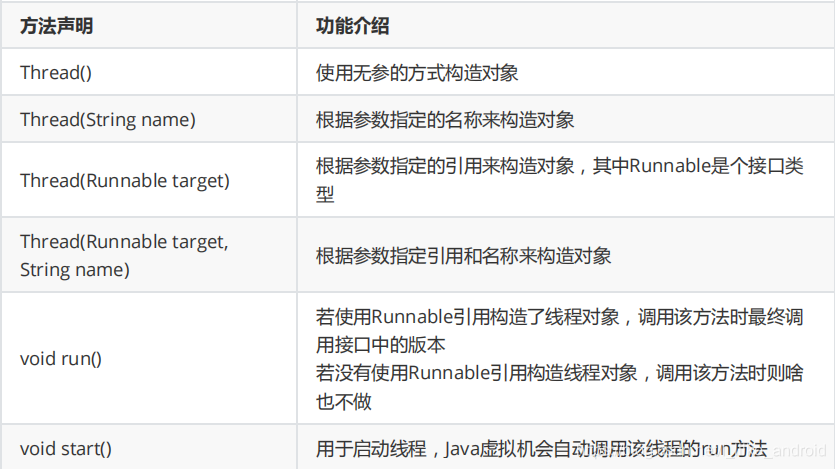
18.2.4 执行流程
(1)执行main方法的线程叫做主线程,执行run方法的线程叫做新线程/子线程。
(2)main方法是程序的入口,对于start方法之前的代码来说,由主线程执行一次,当start方法调用成 功后线程的个数由1个变成了2个,
新启动的线程去执行run方法的代码,主线程继续向下执行,两 个线程各自独立运行互不影响。
(3)当run方法执行完毕后子线程结束,当main方法执行完毕后主线程结束。
(4)两个线程执行没有明确的先后执行次序,由操作系统调度算法来决定。
注意:run方法是由java虚拟机调用的。
18.2.5 方式的比较
继承Thread类的方式代码简单,但是若该类继承Thread类后则无法继承其它类,而实现 Runnable接口的方式代码复杂,
但不影响该类继承其它类以及实现其它接口,因此以后的开发中推荐使用第二种方式。
18.2.6 匿名内部类的方式
使用匿名内部类的方式来创建和启动线程。
18.3 线程的生命周期(熟悉)
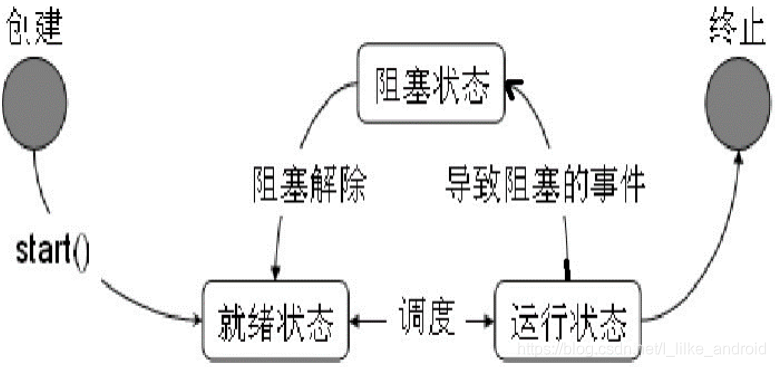
(1)新建状态 - 使用new关键字创建之后进入的状态,此时线程并没有开始执行。
(2)就绪状态 - 调用start方法后进入的状态,此时线程还是没有开始执行。
(3)运行状态 - 使用线程调度器调用该线程后进入的状态,此时线程开始执行,当线程的时间片执行完
(4)毕后任务没有完成时回到就绪状态。
(5)消亡状态 - 当线程的任务执行完成后进入的状态,此时线程已经终止。
(6)阻塞状态 - 当线程执行的过程中发生了阻塞事件进入的状态,如:sleep方法。 阻塞状态解除后进入就绪状态。
18.4 线程的编号和名称(熟悉)
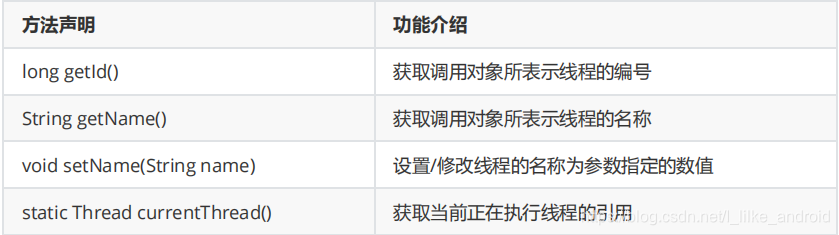
18.4.1 相关方法
18.4.2 案例题目
自定义类继承Thread类并重写run方法,在run方法中先打印当前线程的编号和名称,然后将线程 的名称修改为"zhangfei"后再次打印编号和名称。
要求在main方法中也要打印主线程的编号和名称。代码如下:
package com.lagou.task17;
public class ThreadIdNameTest extends Thread{

    public ThreadIdNameTest(String name) {
        //调用父类的构造方法指定线程名称
        super(name);
    }

    @Override
    public void run() {                 //super.getId()     super.getName()
        System.out.println("子线程编号是:"+getId()+"; 名称是:"+getName());  //子线程编号是:14; 名称是:zhangfei
        //修改后的线程名称
        setName("guanyu");
        System.out.println("子线程编号是:"+getId()+"; 修改后名称是:"+getName()); //子线程编号是:14; 修改后名称是:guanyu
    }

    public static void main(String[] args) {

        //创建ThreadIdNameTest对象
        ThreadIdNameTest tit = new ThreadIdNameTest("zhangfei");
        //启动线程
        tit.start();

        //获取主线程的线程编号和线程名称
        //获取当前线程就是主线程
        Thread thread = Thread.currentThread();
        System.out.println("主线程编号是:"+thread.getId()+" ;主线程名称是:"+thread.getName());
    }
}
18.5 线程的常用方法(重点)
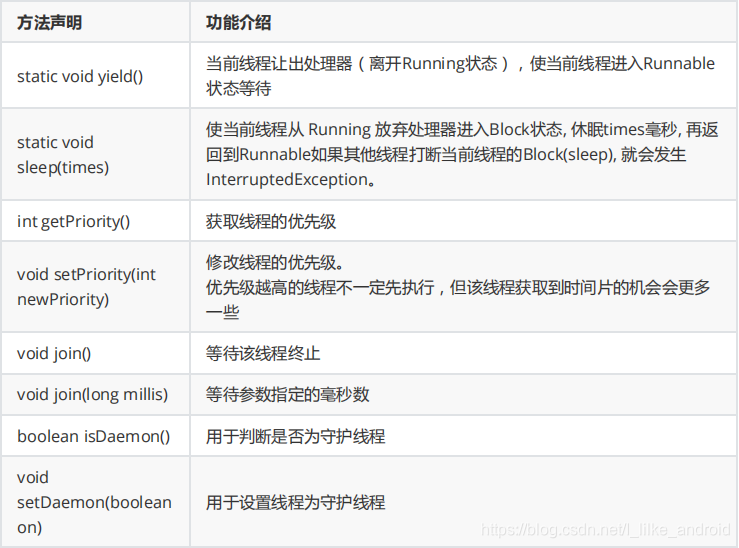
(1) sleep 线程阻塞
package com.lagou.task17;
import java.text.SimpleDateFormat;
import java.util.Date;

public class ThreadSleepTest extends Thread {
    public boolean flag = true;
    @Override
    public void run() {
        //每隔一秒钟打印系统时间,模拟时钟效果
        while(flag){
            Date date = new Date();
            SimpleDateFormat sdf = new SimpleDateFormat("yyyy-MM-dd HH:mm:ss");
            System.out.println("当前系统时间:"+sdf.format(date));

            try {
                Thread.sleep(1000);
            } catch (InterruptedException e) {
                e.printStackTrace();
            }
        }
    }

    public static void main(String[] args) {
        //创建ThreadSleepTest对象
        ThreadSleepTest tst = new ThreadSleepTest();
        //启动线程
        tst.start();

        //主线程等待5秒之后结束子线程
        System.out.println("主线程开始等待....");
        try{
            Thread.sleep(5000);
        } catch(InterruptedException e){
            e.printStackTrace();
        }
        //tst.stop();
        tst.flag = false;
        System.out.println("主线程等待结束");
    }

}
(2)线程优先级管理
优先级高的线程不一定先执行, 但是优先级高的线程整体一定是先执行完成的.
Thread.MAX_PRIORITY 高 10
Thread.MIN_PRIORITY 低 1
Thread.NORM_PRIORITY 默认 5
package com.lagou.task17;

public class ThreadPriorityTest extends Thread{
    //子线程和主线程默认的优先级是5
    @Override
    public void run() {
        //System.out.println("子线程的优先级是:"+getPriority());
        //设置子线程优先级为MAX_PRIORITY  10
        setPriority(Thread.MAX_PRIORITY);
        for (int i = 0; i < 30; i++) {
            System.out.println("run方法中i="+i);
        }
    }

    public static void main(String[] args) {
        ThreadPriorityTest tpt = new ThreadPriorityTest();
        tpt.start();

        for (int i = 0; i < 30; i++) {
            System.out.println("--main方法中i="+i);
        }
        //Thread td = Thread.currentThread();
        //System.out.println("主线程的优先级是:"+td.getPriority());

    }

}
(3)线程等待
package com.lagou.task17;

public class ThreadJoinTest extends Thread {

    @Override
    public void run() {
        //模拟倒数10个数的效果
        System.out.println("倒计时开始...");
        for (int i = 10; i > 0; i--) {
            System.out.println(i);
            try {
                Thread.sleep(1000);
            } catch (InterruptedException e) {
                e.printStackTrace();
            }
        }
        System.out.println("新年快乐");
    }

    public static void main(String[] args) {

        ThreadJoinTest tjt = new ThreadJoinTest();
        tjt.start();

        System.out.println("主线程开始等待......");
        try {
            //表示当前正在执行的线程对象等待调用线程的对象, 也就是主线程等待子线程

            //tjt.join();//主线程一直等待tjt线程执行完成才加入,等待谁就让谁调用join()方法
            tjt.join(5000); //主线程等待子线程5秒钟,不管子线程执行完成与否,主线程都加入
        } catch (InterruptedException e) {
            e.printStackTrace();
        }
        System.out.println("终于等到你,还好没放弃!");

    }

}


打印结果
主线程开始等待......
倒计时开始...
10
9
8
7
6
终于等到你,还好没放弃!
5
4
3
2
1
新年快乐
(4)线程守护
当子线程不是守护线程时,虽然主线程先结束了,但是子线程依然会继续执行,直到打印完毕所有数据为止。
当子线程是守护线程时,当主线程结束后,则子线程随之结束,但是不会马上停止,因为刹车也是需要时间的。
package com.lagou.task17;

public class ThreadDaemonTest extends  Thread {
    @Override
    public void run() {
        //System.out.println(isDaemon()? "该线程是守护线程": "该线程不是守护线程"); // 默认不是守护线程
        // 当子线程不是守护线程时,虽然主线程先结束了,但是子线程依然会继续执行,直到打印完毕所有数据为止
        // 当子线程是守护线程时,当主线程结束后,则子线程随之结束
        for (int i = 0; i < 50; i++) {
            System.out.println("子线程中:i = " + i);
        }
    }

    public static void main(String[] args) {

        ThreadDaemonTest tdt = new ThreadDaemonTest();
        // 必须在线程启动之前设置子线程为守护线程
        tdt.setDaemon(true);
        tdt.start();

        for (int i = 0; i < 20; i++) {
            System.out.println("-------主线程中:i = " + i);
        }
    }
}
(5)案例题目
编程创建两个线程,线程一负责打印1 ~ 100之间的所有奇数,其中线程二负责打印1 ~ 100之间的所有偶数。
在main方法启动上述两个线程同时执行,主线程等待两个线程终止。
代码中是继承Thread类的线程, 也可以实现Runnable接口的线程
18.6 线程同步机制(重点)
18.6.1 基本概念
当多个线程同时访问同一种共享资源时,比如多个线程对同一个变量赋值,可能会造成数据的覆盖等不一致性问题,此时就需要对线
程之间进行通信和协调,该机制就叫做线程的同步机制。
多个线程并发读写同一个临界资源时会发生线程并发安全问题。
异步操作:多线程并发的操作,各自独立运行。
同步操作:多线程串行的操作,先后执行的顺序。
18.6.2 解决方案
由程序结果可知:当两个线程同时对同一个账户进行取款时,导致最终的账户余额不合理。
引发原因:线程一执行取款时还没来得及将取款后的余额写入后台,线程二就已经开始取款。
解决方案:让线程一执行完毕取款操作后,再让线程二执行即可,将线程的并发操作改为串行操作。
经验分享:在以后的开发尽量减少串行操作的范围,从而提高效率。
18.6.3 实现方式
在Java语言中使用synchronized关键字来实现同步/对象锁机制从而保证线程执行的原子性
(1)实现方式1:同步代码块锁定部分代码
使用同步代码块的方式实现部分代码的锁定,格式如下:
synchronized(类类型的引用) {
编写所有需要锁定的代码;
}
代码1:实现Runnable接口
package com.lagou.task17;
public class AccountRunnableTest implements Runnable {

    //私有化成员变量  账户余额
    private int balance;
    //为synchronized关键字声明一个引用类型变量
    private Demo dm = new Demo();

    public AccountRunnableTest(int balance) {
        this.balance = balance;
    }

    public AccountRunnableTest() {
    }

    public int getBalance() {
        return balance;
    }

    public void setBalance(int balance) {
        this.balance = balance;
    }

    @Override
    public void run() {
        System.out.println("线程名称"+Thread.currentThread().getName()+"正在执行");
        synchronized (dm) {
        //synchronized (new Demo()) {  锁不住,相当于每开一个线程都会创建新的对象加一把新锁,必须是同一个对象才可以
            //模拟银行取款的过程
            //获取账户余额
            int tempBalance = getBalance();
            //余额大于200进行取款
            if (tempBalance >= 200) {
                System.out.println("线程"+Thread.currentThread().getName()+"正在出钞......");
                try {
                    Thread.sleep(7000);
                } catch (InterruptedException e) {
                    e.printStackTrace();
                }
                tempBalance -= 200;
                System.out.println("出钞结束");
            }else{
                System.out.println("余额不足,请核对账户余额");
            }
            //取款后重新设置账户余额
            setBalance(tempBalance);
        }
    }

    public static void main(String[] args) {
        AccountRunnableTest art = new AccountRunnableTest(1000);
        Thread td1 = new Thread(art);
        Thread td2 = new Thread(art);
        td1.start();
        td2.start();

        System.out.println("主线程正在等待..........");
        try {
            td1.join();
            //td2.start();//等待线程1结束,在启动线程2,但是这样和创建两个方法分别执行线程1和线程2的代码没什么区别
            td2.join();
        } catch (InterruptedException e) {
            e.printStackTrace();
        }
        System.out.println("主线程等待结束,取款完毕!!!");
        System.out.println("最终账户余额为:"+art.getBalance());

    }
}

class Demo{}
代码2:继承Thread类 主要是因为用static修饰dm变量,将dm变量提升为类层级,所有对象共用一个dm变量。
package com.lagou.task17;
public class AccountThreadTest extends Thread{

    //私有化成员变量  账户余额
    private int balance;
    //为synchronized关键字声明一个引用类型变量
    private static Demo dm = new Demo();  //用static修饰后,dm变量就提升为类层级, 所有对象都公用一个

    public AccountThreadTest(int balance) {
        this.balance = balance;
    }

    public AccountThreadTest() {
    }

    public int getBalance() {
        return balance;
    }

    public void setBalance(int balance) {
        this.balance = balance;
    }

    @Override
    public void run() {
        System.out.println("线程名称"+Thread.currentThread().getName()+"正在执行");
        synchronized (dm) {//如果dm不用static修饰,att1和att2会对应两个dm对象,要想锁住相同代码块,两次调用的dm必须是同一个对象,dm用static修饰后提升到类层级,所有该类对象共用一个dm
            //synchronized (new Demo()) {  锁不住,相当于每开一个线程都会创建新的对象加一把新锁,必须是同一个对象才可以
            //模拟银行取款的过程
            //获取账户余额
            int tempBalance = getBalance();
            //余额大于200进行取款
            if (tempBalance >= 200) {
                System.out.println("线程"+Thread.currentThread().getName()+"正在出钞......");
                try {
                    Thread.sleep(7000);
                } catch (InterruptedException e) {
                    e.printStackTrace();
                }
                tempBalance -= 200;
                System.out.println("出钞结束");
            }else{
                System.out.println("余额不足,请核对账户余额");
            }
            //取款后重新设置账户余额
            setBalance(tempBalance);
        }
    }


    public static void main(String[] args) {
        AccountThreadTest att1 = new AccountThreadTest(1000);
        AccountThreadTest att2 = new AccountThreadTest(1000);
        att1.start();
        att2.start();

        System.out.println("主线程正在等待..........");
        try {
            att1.join();
            //td2.start();//等待线程1结束,在启动线程2,但是这样和创建两个方法分别执行线程1和线程2的代码没什么区别
            att2.join();
        } catch (InterruptedException e) {
            e.printStackTrace();
        }
        System.out.println("主线程等待结束,取款完毕!!!");
        System.out.println("最终账户att1余额为:"+att1.getBalance());
        System.out.println("最终账户att2余额为:"+att2.getBalance());

    }

}
(2)实现方式二:同步方法锁定方法内所有代码
使用同步方法的方式实现所有代码的锁定。
直接使用synchronized关键字来修饰整个方法即可
该方式等价于:
public synchronized void run() <=> synchronized(this) { 整个方法体的代码 }
代码1:实现Runnable接口
this表示当前正在调用的对象,启动线程实际是调用Runnable实现类中的run方法,只要Runnable实现类是同一个对象就锁得住
package com.lagou.task17;
public class AccountRunnableTest implements Runnable {

    //私有化成员变量  账户余额
    private int balance;
    //为synchronized关键字声明一个引用类型变量
    private Demo dm = new Demo();

    public AccountRunnableTest(int balance) {
        this.balance = balance;
    }

    public AccountRunnableTest() {
    }

    public int getBalance() {
        return balance;
    }

    public void setBalance(int balance) {
        this.balance = balance;
    }

    @Override
    public /*synchronized*/ void run() {
        synchronized (this) {//由源码可知:启动线程最终是art调用run(),因此当前正在调用的对象就是art,即this=art;因为this表示的是同一个对象,所以可以锁住代码
        System.out.println("线程名称"+Thread.currentThread().getName()+"正在执行");
        //synchronized (dm) {
        //synchronized (new Demo()) {  锁不住,相当于每开一个线程都会创建新的对象加一把新锁,必须是同一个对象才可以
            //模拟银行取款的过程
            //获取账户余额
            int tempBalance = getBalance();
            //余额大于200进行取款
            if (tempBalance >= 200) {
                System.out.println("线程"+Thread.currentThread().getName()+"正在出钞......");
                try {
                    Thread.sleep(7000);
                } catch (InterruptedException e) {
                    e.printStackTrace();
                }
                tempBalance -= 200;
                System.out.println("出钞结束");
            }else{
                System.out.println("余额不足,请核对账户余额");
            }
            //取款后重新设置账户余额
            setBalance(tempBalance);
        }
    }

    public static void main(String[] args) {
        AccountRunnableTest art = new AccountRunnableTest(1000);
        Thread td1 = new Thread(art);
        Thread td2 = new Thread(art);
        td1.start();
        td2.start();

        System.out.println("主线程正在等待..........");
        try {
            td1.join();
            //td2.start();//等待线程1结束,在启动线程2,但是这样和创建两个方法分别执行线程1和线程2的代码没什么区别
            td2.join();
        } catch (InterruptedException e) {
            e.printStackTrace();
        }
        System.out.println("主线程等待结束,取款完毕!!!");
        System.out.println("最终账户余额为:"+art.getBalance());

    }
}

class Demo{}
代码1:继承Thread类
att1和att2是两个对象 synchronized(this){} this分别代表att1和att2 所以锁不住
方案:在run()前加synchronized修饰是锁不住的, 需要在加一个static修饰,但是run()是继承父类Thread来的,父类中run()方法没有static,
可以新创建一个test()并用synchronized 和 static修饰,然后在run方法中调用test方法,等价于synchornized(类名.class)
原因在于:静态方法锁的是类对象(类层级)而非静态方法锁的是当前方法所属对象(对象层级)。
package com.lagou.task17;
public class AccountThreadTest extends Thread{

    //私有化成员变量  账户余额
    private int balance;
    //为synchronized关键字声明一个引用类型变量
    private static Demo dm = new Demo();  //用static修饰后,dm变量就提升为类层级, 所有对象都公用一个

    public AccountThreadTest(int balance) {
        this.balance = balance;
    }

    public AccountThreadTest() {
    }

    public int getBalance() {
        return balance;
    }

    public void setBalance(int balance) {
        this.balance = balance;
    }

    //dm用static修饰,理论上用static修饰run()也可以,但是run()是父类继承来的,父类中run()没有用static修饰,所以run()不能用static修饰;
    //方案:我们可以把run()中的代码写到另一个用static修饰的方法test()中,在run()内部调用test();
    @Override
    public  /*synchronized*/ void run() {
        /*System.out.println("线程名称"+Thread.currentThread().getName()+"正在执行");
        synchronized (dm) {
            //synchronized (new Demo()) {  锁不住,相当于每开一个线程都会创建新的对象加一把新锁,必须是同一个对象才可以
            //模拟银行取款的过程
            //获取账户余额
            int tempBalance = getBalance();
            //余额大于200进行取款
            if (tempBalance >= 200) {
                System.out.println("线程"+Thread.currentThread().getName()+"正在出钞......");
                try {
                    Thread.sleep(7000);
                } catch (InterruptedException e) {
                    e.printStackTrace();
                }
                tempBalance -= 200;
                System.out.println("出钞结束");
            }else{
                System.out.println("余额不足,请核对账户余额");
            }
            //取款后重新设置账户余额
            setBalance(tempBalance);
          }*/
        test();
    }


    public static /*synchronized*/  void test(){
        synchronized (AccountThreadTest.class) { //该类型对象的class对象:因为类型是固定的,所以class对象也是唯一的,因此可以实现同步
        System.out.println("线程名称"+Thread.currentThread().getName()+"正在执行");
        //synchronized (dm) {
            //synchronized (new Demo()) {  锁不住,相当于每开一个线程都会创建新的对象加一把新锁,必须是同一个对象才可以
            //模拟银行取款的过程
            //获取账户余额
            int tempBalance = 1000; //getBalance();  getBalance()没有static修饰
            //余额大于200进行取款
            if (tempBalance >= 200) {
                System.out.println("线程"+Thread.currentThread().getName()+"正在出钞......");
                try {
                    Thread.sleep(7000);
                } catch (InterruptedException e) {
                    e.printStackTrace();
                }
                tempBalance -= 200;
                System.out.println("出钞结束");
            }else{
                System.out.println("余额不足,请核对账户余额");
            }
            //取款后重新设置账户余额
            //setBalance(tempBalance); 因为test方法用static修饰,但是setBalance没有static修饰,所以会报错,先注释掉
        }
    }

    public static void main(String[] args) {
        AccountThreadTest att1 = new AccountThreadTest(1000);
        AccountThreadTest att2 = new AccountThreadTest(1000);
        att1.start();
        att2.start();

        System.out.println("主线程正在等待..........");
        try {
            att1.join();
            //td2.start();//等待线程1结束,在启动线程2,但是这样和创建两个方法分别执行线程1和线程2的代码没什么区别
            att2.join();
        } catch (InterruptedException e) {
            e.printStackTrace();
        }
        System.out.println("主线程等待结束,取款完毕!!!");
        System.out.println("最终账户att1余额为:"+att1.getBalance());
        System.out.println("最终账户att2余额为:"+att2.getBalance());

    }


}
18.6.4 静态方法的锁定
当我们对一个静态方法加锁,如:
public synchronized static void test(){….} <=> synchronized (AccountThreadTest.class){...}
public synchronized static void xxx(){….} 等价于 synchronized(类名.class){代码}
那么该方法锁的对象是类对象。每个类都有唯一的一个类对象。获取类对象的方式:类名.class。
静态方法与非静态方法同时使用了synchronized后它们之间是非互斥关系的。
原因在于:静态方法锁的是类对象(类层级)而非静态方法锁的是当前方法所属对象(对象层级)。
18.6.5 注意事项
使用synchronized保证线程同步应当注意:
多个需要同步的线程在访问同步块时,看到的应该是同一个锁对象引用。
在使用同步块时应当尽量减少同步范围以提高并发的执行效率。
18.6.6 线程安全类和不安全类
StringBuffffer类是线程安全的类(方法有synchronized 修饰),但StringBuilder类不是线程安全的类(方法没有synchronized 修饰)。
Vector类和 Hashtable类是线程安全的类(基本淘汰了),但ArrayList类和HashMap类不是线程安全的类。
Collections.synchronizedList() 和 Collections.synchronizedMap()等方法实现安全。
18.6.7 死锁的概念
线程一执行的代码:
public void run(){
synchronized(a){ //持有对象锁a,等待对象锁b
synchronized(b){
编写锁定的代码;
}
}
}
线程二执行的代码:
public void run(){
synchronized(b){ //持有对象锁b,等待对象锁a
synchronized(a){
编写锁定的代码;
}
}
}
注意:
在以后的开发中尽量减少同步的资源,减少同步代码块的嵌套结构的使用!
18.6.8 使用Lock(锁)实现线程同步
(1)基本概念
a. 从Java5开始提供了更强大的线程同步机制—使用显式定义的同步锁对象来实现。
b. java.util.concurrent.locks.Lock接口是控制多个线程对共享资源进行访问的工具。
c. 该接口的主要实现类是ReentrantLock类,该类拥有与synchronized相同的并发性,在以后的线程安全控制中,经常使用ReentrantLock类显式加锁和释放锁。
(2)常用的方法
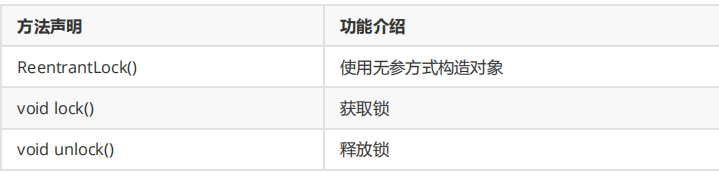
(3)与synchronized方式的比较
a. Lock是显式锁,需要手动实现开启和关闭操作,而synchronized是隐式锁,执行锁定代码后自动 释放。
b. Lock只有同步代码块方式的锁,而synchronized有同步代码块方式和同步方法两种锁。
c. 使用Lock锁方式时,Java虚拟机将花费较少的时间来调度线程,因此性能更好。
18.6.9 Object类常用的方法 实现线程间的通信
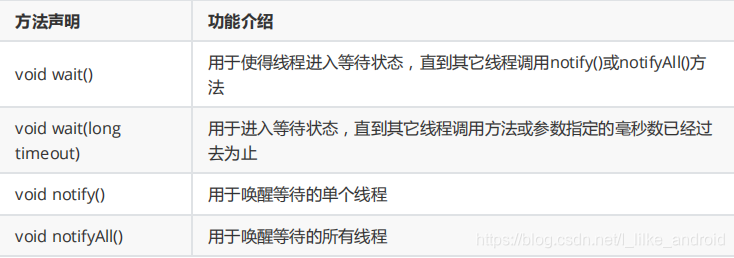
案例一:两个线程交错打印1-100之间的整数,不能重复打印
package com.lagou.task17;

public class ThreadCommunicateTest implements Runnable {
    private  int cnt = 1;

    @Override
    public void run() {
        while (true) {
            synchronized (this) {
                notify();//唤醒之前阻塞的线程, 每次进到循环在判断条件之前就唤醒阻塞的线程
                //打印1-100之间的整数
                if (cnt <= 100) {
                    System.out.println("线程" + Thread.currentThread().getName() + "中cnt=" + cnt);
                    try {
                        Thread.sleep(100);
                    } catch (InterruptedException e) {
                        e.printStackTrace();
                    }
                    cnt++;
                    //当前线程打印完一个整数后,为了防止打印下一个整数,调用wait()阻塞
                    try {
                        wait(); //线程进入阻塞状态后,自送释放对象锁,wait和notify必须在锁定的代码中调用
                    } catch (InterruptedException e) {
                        e.printStackTrace();
                    }
                } else {
                    break;
                }
            }

        }
    }

    public static void main(String[] args) {
        ThreadCommunicateTest tct = new ThreadCommunicateTest();
        Thread td1 = new Thread(tct);
        Thread td2 = new Thread(tct);
        td1.start();
        td2.start();
    }
}
案例二:生产者和消费者共用一个仓库,产品数量<10就生产, 产品数量>0就消费
package com.lagou.task17;

/**
 * 仓库类: 用于生产产品  和  消费产品
 * 注意: 生产者线程 和 消费者线程 共用一个仓库
 *       仓库产品总数量不能超过10个
 */
public class StoreHouse {

    private int cnt = 0; // 用于记录产品的数量

    //生产产品方法
    public synchronized void produceProduct() {
        notify();
        if (cnt < 10) {
            System.out.println("线程" + Thread.currentThread().getName() + "正在生产第" + (cnt+1) + "个产品...");
            cnt++;
        } else {
            try {
                wait();
            } catch (InterruptedException e) {
                e.printStackTrace();
            }
        }
    }

    //消费产品方法
    public synchronized void consumerProduct() {
        notify();
        if (cnt > 0) {
            System.out.println("线程" + Thread.currentThread().getName() + "消费第" + cnt + "个产品");
            cnt--;
        } else {
            try {
                wait();
            } catch (InterruptedException e) {
                e.printStackTrace();
            }
        }
    }

}
------------------------
package com.lagou.task17;

/**
 * 生产者线程 sleep 100
 */
public class ProduceThread extends Thread {

    //声明一个仓库类对象,为了可以调用仓库类的生产产品的方法
    private StoreHouse sh;
    //创建生产者线程对象时给仓库类引用赋值
    public ProduceThread(StoreHouse sh){
        this.sh = sh;
    }

    @Override
    public void run() {
        while(true){
            //调用仓库类生产产品的方法
            sh.produceProduct();
            //睡一会继续100
            try {
                Thread.sleep(100);
            } catch (InterruptedException e) {
                e.printStackTrace();
            }
        }

    }

}
--------------------
package com.lagou.task17;

/**
 * 消费者线程  sleep 2000
 */
public class ConsumerThread extends Thread {
    //为了调用仓库类中消费产品的方法
    private  StoreHouse sh;
    //创建生产者线程对象时给仓库类引用赋值
    public ConsumerThread(StoreHouse sh){
        this.sh = sh;
    }

    @Override
    public void run() {
        while(true){
            //调用仓库类中消费产品的方法
            sh.consumerProduct();
            //睡一会继续 2000
            try {
                Thread.sleep(2000);
            } catch (InterruptedException e) {
                e.printStackTrace();
            }
        }
    }


}
--------------------
package com.lagou.task17;

public class StoreHouseTest {

    public static void main(String[] args) {
        //创建仓库类
        StoreHouse sh = new StoreHouse();
        //创建生产者线程
        ProduceThread ptd = new ProduceThread(sh);
        //创建消费者线程
        ConsumerThread ctd = new ConsumerThread(sh);

        ptd.start();
        ctd.start();

    }
}
18.6.10 线程池(熟悉)
(1)实现Callable接口
从Java5开始新增加创建线程的第三种方式为实现java.util.concurrent.Callable接口。
常用的方法如下:
方法声明 功能介绍V call() 计算结果并返回
(2)FutureTask类
java.util.concurrent.FutureTask类用于描述可取消的异步计算,该类提供了Future接口的基本实
现,包括启动和取消计算、查询计算是否完成以及检索计算结果的方法,也可以用于获取方法调用后的返回结果。
常用的方法如下:
方法声明 功能介绍FutureTask(Callable callable) 根据参数指定的引用来创建一个未来任务V get() 获取call方法计算的结果
代码:实现Callable接口启动线程
package com.lagou.task17;
import java.util.concurrent.Callable;
import java.util.concurrent.FutureTask;

public class ThreadCallableTest implements Callable {

    @Override
    public Object call() throws Exception {
        int sum = 0;
        for (int i = 1; i <= 10000; i++) {
            sum = sum+i;
        }
        System.out.println("计算1-10000累加的和是:"+sum);
        return  sum;
    }

    public static void main(String[] args) {

        ThreadCallableTest tct = new ThreadCallableTest();
        FutureTask ft = new FutureTask(tct);
        Thread td = new Thread(ft);
        td.start(); //调用call()方法

        /*//利用FutureTask的get()方法获取call()的返回值
        Object obj = null;
        try {
            obj = ft.get();
        } catch (InterruptedException e) {
            e.printStackTrace();
        } catch (ExecutionException e) {
            e.printStackTrace();
        }
        System.out.println("线程中call方法的返回值是:"+obj);*/

    }


}
(3)线程池的由来
在服务器编程模型的原理,每一个客户端连接用一个单独的线程为之服务,当与客户端的会话结束
时,线程也就结束了,即每来一个客户端连接,服务器端就要创建一个新线程。
如果访问服务器的客户端很多,那么服务器要不断地创建和销毁线程,这将严重影响服务器的性 能。
(4)概念和原理
线程池的概念:首先创建一些线程,它们的集合称为线程池,当服务器接受到一个客户请求后,就
从线程池中取出一个空闲的线程为之服务,服务完后不关闭该线程,而是将该线程还回到线程池 中。
在线程池的编程模式下,任务是提交给整个线程池,而不是直接交给某个线程,线程池在拿到任务
后,它就在内部找有无空闲的线程,再把任务交给内部某个空闲的线程,任务是提交给整个线程
池,一个线程同时只能执行一个任务,但可以同时向一个线程池提交多个任务。
(5)相关类和方法
a. 从Java5开始提供了线程池的相关类和接口:java.util.concurrent.Executors类和 java.util.concurrent.ExecutorService接口。
b. 其中Executors是个工具类和线程池的工厂类,可以创建并返回不同类型的线程池,常用方法如下:
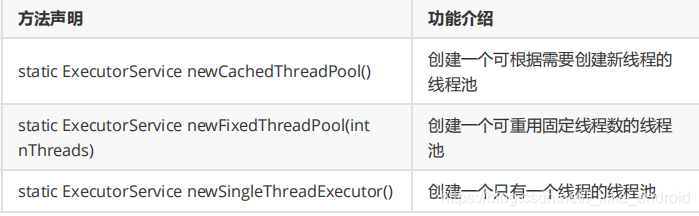
c. 其中ExecutorService接口是真正的线程池接口,主要实现类是ThreadPoolExecutor,常用方法如下:
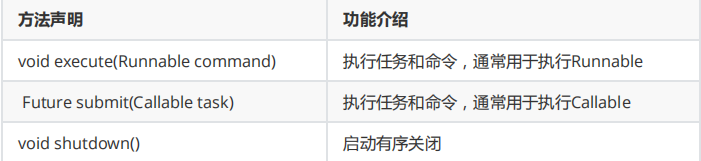
(6)测试代码
package com.lagou.task18;

import java.util.concurrent.ExecutorService;
import java.util.concurrent.Executors;

public class ThreadPoolTest {

    public static void main(String[] args) {

        // 1.创建一个线程池
        ExecutorService executorService = Executors.newFixedThreadPool(10);
        // 2.向线程池中布置任务
        executorService.submit(new ThreadCallableTest());
        // 3.关闭线程池
        executorService.shutdown();
    }
}





 扫一扫
扫一扫


 890
890

 被折叠的 条评论
为什么被折叠?
被折叠的 条评论
为什么被折叠?
 到【灌水乐园】发言





