



 本文介绍了一种使用两个栈来实现队列的方法,并提供了两种不同的实现思路,一种为作者原创,另一种则参考了LeetCode上的解答。这两种方法都能有效地完成队列的基本操作,包括入队、出队、获取队首元素及判断队列是否为空。
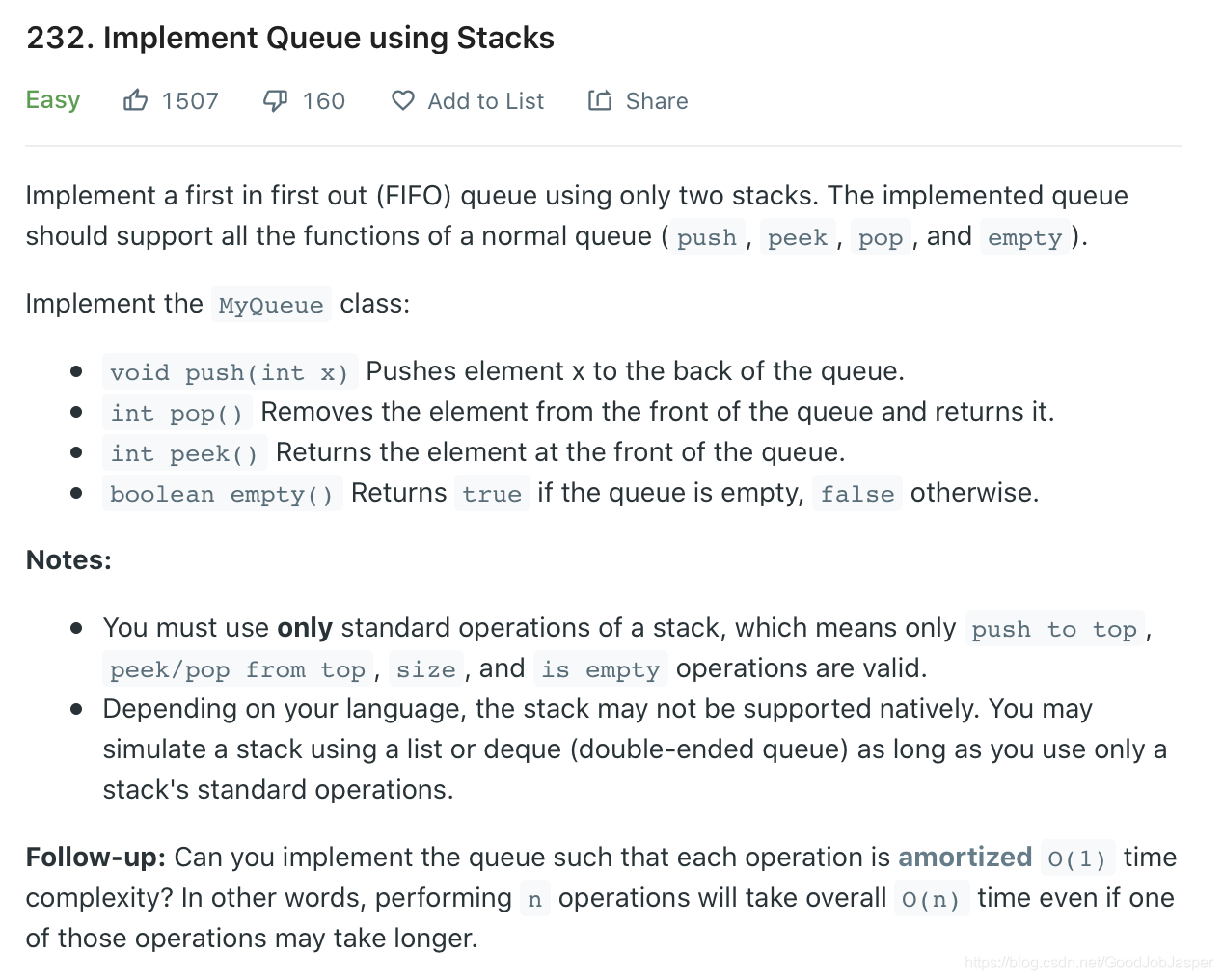
方法1: 这边直接做follow up的答案了。时间复杂1,空间复杂1。下面展示两种方法,我不确定第一种(我自己的代码)时间复杂是不是1,但是第二种(lc解答2)确定时间复杂是1.
// 我的代码
class MyQueue {
    Stack<Integer> s1 = new Stack<>();
    Stack<Integer> s2 = new Stack<>();
    int top;
    /** Initialize your data structure here. */
    public MyQueue() {

    }

    /** Push element x to the back of queue. */
    public void push(int x) {
        if(s1.isEmpty())top = x;
        s1.push(x);
    }

    /** Removes the element from in front of queue and returns that element. */
    public int pop() {
        while(s1.size() > 1){
            s2.push(s1.pop());
        }
        int res = s1.pop();
        if(!s2.isEmpty()) top = s2.peek();
        while(!s2.isEmpty()){
            s1.push(s2.pop());
        }
        return res;
    }

    /** Get the front element. */
    public int peek() {
        return top;
    }

    /** Returns whether the queue is empty. */
    public boolean empty() {
        return s1.isEmpty();
    }
}

/**
 * Your MyQueue object will be instantiated and called as such:
 * MyQueue obj = new MyQueue();
 * obj.push(x);
 * int param_2 = obj.pop();
 * int param_3 = obj.peek();
 * boolean param_4 = obj.empty();
 */
class MyQueue {
    Stack<Integer> s1 = new Stack<>();
    Stack<Integer> s2 = new Stack<>();
    int top;
    /** Initialize your data structure here. */
    public MyQueue() {

    }

    /** Push element x to the back of queue. */
    public void push(int x) {
        if(s1.isEmpty())top = x;
        s1.push(x);
    }

    /** Removes the element from in front of queue and returns that element. */
    public int pop() {
        if(s2.isEmpty()){
            while(!s1.isEmpty()) s2.push(s1.pop());
        }
        return s2.pop();
    }

    /** Get the front element. */
    public int peek() {
        if(!s2.isEmpty()) return s2.peek();
        return top;
    }

    /** Returns whether the queue is empty. */
    public boolean empty() {
        return s1.isEmpty() && s2.isEmpty();
    }
}

/**
 * Your MyQueue object will be instantiated and called as such:
 * MyQueue obj = new MyQueue();
 * obj.push(x);
 * int param_2 = obj.pop();
 * int param_3 = obj.peek();
 * boolean param_4 = obj.empty();
 */
总结:
- 虽然很简单,但是请看这篇帖子





 扫一扫
扫一扫


 323
323

 被折叠的 条评论
为什么被折叠?
被折叠的 条评论
为什么被折叠?
 到【灌水乐园】发言





