



 博客围绕一道链表相关的LeetCode简单题展开,介绍了两种解法。迭代法需新建prev node,将curr node的next指向prev node并右移节点,时间复杂度n,空间复杂度1;递归法逻辑不难想但实现较绕,时间和空间复杂度均为n。通过此题学到链表swap操作。
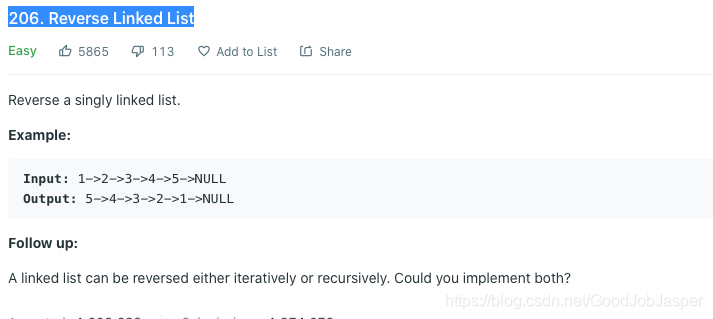
方法1: 这道easy题两个方法我都没有解出来,主要原因是感觉还是接触链表题目太少。第一个方法是iterate。这个方法关键在于要新建一个prev node,初始化为null。具体思路是curr node的next指向prev node,然后在向右移动curr node和pre node。时间复杂度n,空间复杂度1
/**
 * Definition for singly-linked list.
 * public class ListNode {
 *     int val;
 *     ListNode next;
 *     ListNode() {}
 *     ListNode(int val) { this.val = val; }
 *     ListNode(int val, ListNode next) { this.val = val; this.next = next; }
 * }
 */
class Solution {
    public ListNode reverseList(ListNode head) {
        ListNode prev = null;
        ListNode curr = head;
        while(curr != null){
            ListNode temp = curr.next;
            curr.next = prev;
            prev = curr;
            curr = temp;
        }
        return prev;
    }
}
方法2: recursion。其实链表题的recursion逻辑并不是很难想,主要是正确的写出这个逻辑,这中间会比较绕。时间复杂度n,空间复杂度n。
/**
 * Definition for singly-linked list.
 * public class ListNode {
 *     int val;
 *     ListNode next;
 *     ListNode() {}
 *     ListNode(int val) { this.val = val; }
 *     ListNode(int val, ListNode next) { this.val = val; this.next = next; }
 * }
 */
class Solution {
    public ListNode reverseList(ListNode head) {
        if(head ==null || head.next == null) return head;
        ListNode p = reverseList(head.next);
        head.next.next = head;
        head.next = null;
        return p;
    }
}
总结:
- 这是一道非常经典的题目,虽然是easy题,但是学到了不少链表swap之类的操作





 扫一扫
扫一扫


 425
425

 被折叠的 条评论
为什么被折叠?
被折叠的 条评论
为什么被折叠?
 到【灌水乐园】发言





