



 本文深入探讨了解决LeetCode中Almost Duplicate问题的三种核心方法:暴力破解、自平衡二叉搜索树及桶排序策略。通过对比不同算法的优劣,帮助读者理解数据结构在算法设计中的关键作用。
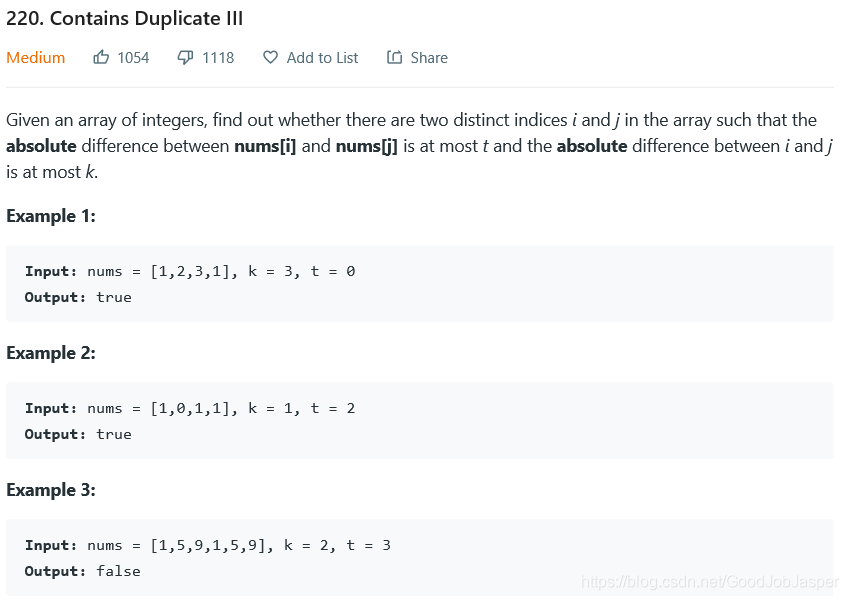
思路一: 这是我自己的思路,其实本质上和approach1是差不多的,brute force。但是会tle。下面给出代码,但是复盘不建议看我的代码,没意义,后面介绍的两种方法才是这道题真正让我学习到的东西:
class Solution {
    public boolean containsNearbyAlmostDuplicate(int[] nums, int k, int t) {
        Map[] map = new Map[nums.length];
        for(int i = 0; i < nums.length; i++){
            map[i] = new HashMap();
        }

        for(int i = 0; i < nums.length; i++){
            if(map[0].isEmpty())
                map[0].put(0,nums[0]);
            else{
                int flag = 0;
                for(int j = 0; j < i; j++){
                    if(map[j].isEmpty()) break;
                    long a = (int)map[j].get(map[j].keySet().toArray()[0]);
                    long b = nums[i];
                    long num = a - b;
                    num = Math.abs(num);
                    if(num <= t){
                        map[j].put(i,nums[i]);
                        flag = 1;
                    }
                }
                if(flag == 0)
                    map[i].put(i,nums[i]);
            }
        }

        for(Map m : map){
            if(m.isEmpty())
                continue;
            else{
                for(int i = 0; i < m.size() - 1; i++){
                    int check = (int)m.keySet().toArray()[i + 1] - (int)m.keySet().toArray()[i];
                    if(check <= k)
                        return true;
                }
            }
        }
        return false;
    }
}
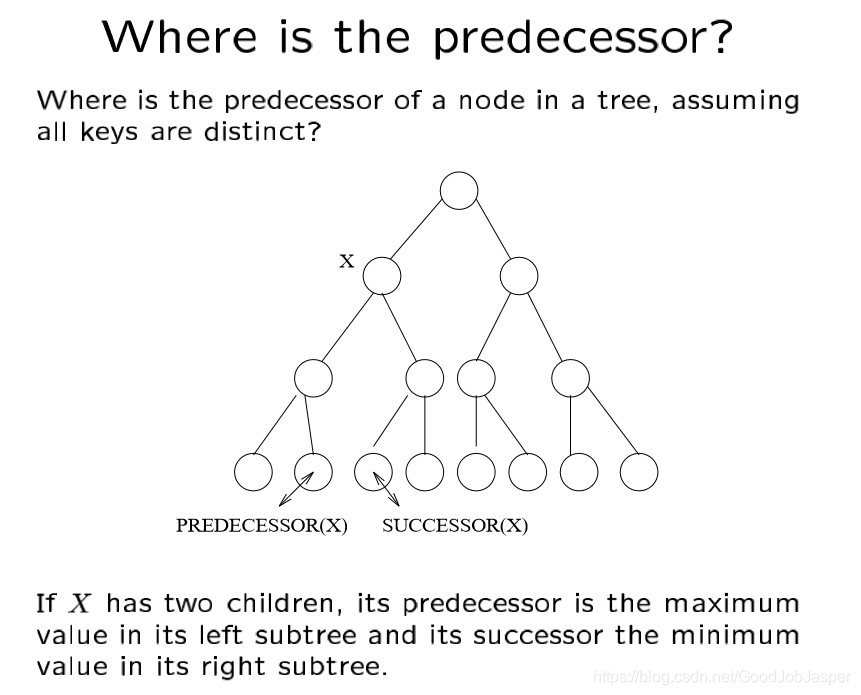
思路二: 利用自平衡二叉寻找树这个数据结构。自平衡二叉寻找树在java中的实现是treeset,这题主要是利用了treeset的两个函数ceiling和floor。floor(E e) 方法返回在这个集合中小于或者等于给定元素的最大元素,如果不存在这样的元素,返回null。ceiling(E e) 方法返回在这个集合中大于或者等于给定元素的最小元素,如果不存在这样的元素,返回null。floor返回的值可以看作e的predecessor,ceiling返回的值可以看作e的successor。关于predecessor和successor在自平衡二叉树种的体现可以参照下面这张图:
具体这个方法的思路我建议去lc上看approach2,讲的很清楚,这边我直接上代码,其实直接看代码也基本可以看的懂:
public boolean containsNearbyAlmostDuplicate(int[] nums, int k, int t) {
    TreeSet<Integer> set = new TreeSet<>();
    for (int i = 0; i < nums.length; ++i) {
        // Find the successor of current element
        Integer s = set.ceiling(nums[i]);
        if (s != null && s <= nums[i] + t) return true;

        // Find the predecessor of current element
        Integer g = set.floor(nums[i]);
        if (g != null && nums[i] <= g + t) return true;

        set.add(nums[i]);
        if (set.size() > k) {
            set.remove(nums[i - k]);
        }
    }
    return false;
}
思路三: buckets。就是按照t的大小来分组,每个组大小都是t。并且每个组只能最多存在一个数字。遍历数组,我们碰到一个数字n,那么要符合题目condition2的数字只可能出现在n所在的组,或n前面一个组,或n后面一个组。我们只要分别check就行,check成功就返回true。同时我们还需要满足condition1,所以当遍历到下标超过k的数字时,我们就要去掉前面最老的一个元素。保证在map中的元素总量小于等于k。我讲的很笼统我建议去lc看approach3讲解,讲的很清楚,这边我直接展示代码:
public class Solution {
    // Get the ID of the bucket from element value x and bucket width w
    // In Java, `-3 / 5 = 0` and but we need `-3 / 5 = -1`.
    private long getID(long x, long w) {
        return x < 0 ? (x + 1) / w - 1 : x / w;
    }

    public boolean containsNearbyAlmostDuplicate(int[] nums, int k, int t) {
        if (t < 0) return false;
        Map<Long, Long> d = new HashMap<>();
        long w = (long)t + 1;
        for (int i = 0; i < nums.length; ++i) {
            long m = getID(nums[i], w);
            // check if bucket m is empty, each bucket may contain at most one element
            if (d.containsKey(m))
                return true;
            // check the neighbor buckets for almost duplicate
            if (d.containsKey(m - 1) && Math.abs(nums[i] - d.get(m - 1)) < w)
                return true;
            if (d.containsKey(m + 1) && Math.abs(nums[i] - d.get(m + 1)) < w)
                return true;
            // now bucket m is empty and no almost duplicate in neighbor buckets
            d.put(m, (long)nums[i]);
            if (i >= k) d.remove(getID(nums[i - k], w));
        }
        return false;
    }
}
总结:
- 自平衡二叉寻找树是bst的升级,它保证了每一个节点的左子树和右子树的height差在1之内。换句话说就是对于自平衡二叉寻找树的任意一个节点,他的balance factor只能为0,1,-1三者之一。为什么要尽量减少这种heights的差距呢,因为bst中的绝大多数操作的耗时时常都与这棵树height有着直接的关系,我们尽量平衡这个bst的话,那么这个bst的height就会减小,对于这个树的操作所花的时间就会越少。
- 自平衡二叉寻找树的java是现实treeset。
- 这道题目值得仔细看每个解法,我上面写的思路解释真的很差,因为我现在很饿,我要去吃饭了,建议复盘的时候直接看lc思路解释。





 扫一扫
扫一扫


 796
796

 被折叠的 条评论
为什么被折叠?
被折叠的 条评论
为什么被折叠?
 到【灌水乐园】发言





