


DefaultCoordinator1:seata Server分析(TC源码分析)
在seata tc服务的启动的时候都是通过它提供的启动脚本来启动,对于seata Server的入口分析,也是启动脚本就可以看出。如下我截最后执行命令,才下面可以很清晰的看到它的入口启动main类为io.seata.server.Server
exec "$JAVACMD" $JAVA_OPTS -server -Xmx2048m -Xms2048m -Xmn1024m -Xss512k -XX:SurvivorRatio=10 -XX:MetaspaceSize=128m -XX:MaxMetaspaceSize=256m -XX:MaxDirectMemorySize=1024m -XX:-OmitStackTraceInFastThrow -XX:-UseAdaptiveSizePolicy -XX:+HeapDumpOnOutOfMemoryError -XX:HeapDumpPath="$BASEDIR"/logs/java_heapdump.hprof -XX:+DisableExplicitGC -XX:+CMSParallelRemarkEnabled -XX:+UseCMSInitiatingOccupancyOnly -XX:CMSInitiatingOccupancyFraction=75 -Xloggc:"$BASEDIR"/logs/seata_gc.log -verbose:gc -Dio.netty.leakDetectionLevel=advanced \
  -classpath "$CLASSPATH" \
  -Dapp.name="seata-server" \
  -Dapp.pid="$$" \
  -Dapp.repo="$REPO" \
  -Dapp.home="$BASEDIR" \
  -Dbasedir="$BASEDIR" \
  io.seata.server.Server \
  "$@"
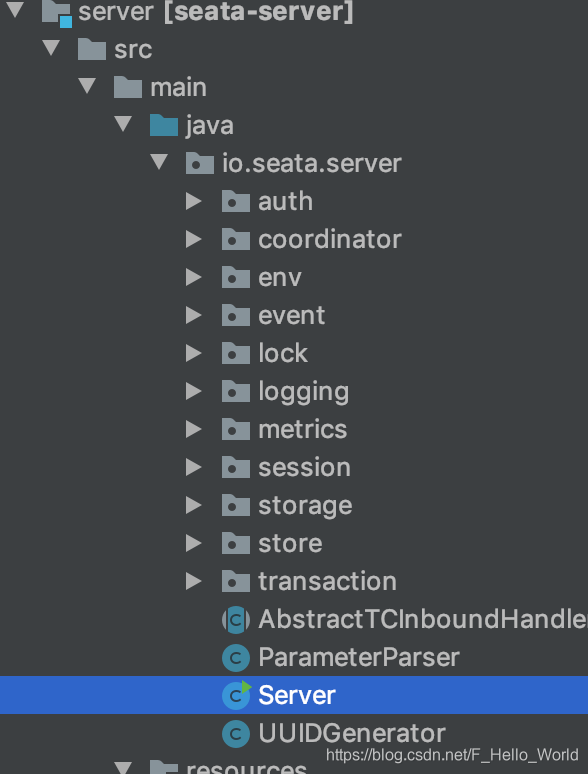
1.1:Server
seata TC是一个很简单的由netty提供的server服务,经典的多reactor模式使得server端的性能既有,可以承受TM与RM端频繁的交互。
public class Server {

    //最小pool执行线程数
    private static final int MIN_SERVER_POOL_SIZE = 50;
    //最大执行线程数
    private static final int MAX_SERVER_POOL_SIZE = 500;
    //请求等待队列最大值
    private static final int MAX_TASK_QUEUE_SIZE = 20000;
    //线程keep-alive 时间 500ms
    private static final int KEEP_ALIVE_TIME = 500;
    //worker 线程pool channel接受数据后由worker中线程处理执行
    private static final ThreadPoolExecutor WORKING_THREADS = new ThreadPoolExecutor(MIN_SERVER_POOL_SIZE,
        MAX_SERVER_POOL_SIZE, KEEP_ALIVE_TIME, TimeUnit.SECONDS,
        new LinkedBlockingQueue<>(MAX_TASK_QUEUE_SIZE),
        new NamedThreadFactory("ServerHandlerThread", MAX_SERVER_POOL_SIZE), new ThreadPoolExecutor.CallerRunsPolicy());

    /**
     * The entry point of application.
     *
     * @param args the input arguments
     * @throws IOException the io exception
     */
    public static void main(String[] args) throws IOException {
        // get port first, use to logback.xml
        //获取启动端口
        int port = PortHelper.getPort(args);
        //将配置设置到环境中
        System.setProperty(ConfigurationKeys.SERVER_PORT, Integer.toString(port));

        // 创建log  log使用logback管理
        final Logger logger = LoggerFactory.getLogger(Server.class);
        if (ContainerHelper.isRunningInContainer()) {
            logger.info("The server is running in container.");
        }

        //initialize the parameter parser
        //Note that the parameter parser should always be the first line to execute.
        //Because, here we need to parse the parameters needed for startup.
        //初始化请求参数解析器 将请求参数转化对象
        ParameterParser parameterParser = new ParameterParser(args);

        //初始化 metrics
        MetricsManager.get().init();

        //设置store.mode 类型 事务会话信息存储方式 目前支持3种	file本地文件(不支持HA),db数据库|redis(支持HA)
        System.setProperty(ConfigurationKeys.STORE_MODE, parameterParser.getStoreMode());

        //初始化NettyRemotingServer
        NettyRemotingServer nettyRemotingServer = new NettyRemotingServer(WORKING_THREADS);
        //设置 netty server监听port
        nettyRemotingServer.setListenPort(parameterParser.getPort());
        //初始化id发号器 用于tc生成的id 经典的雪花算法 在TC HA部署注意雪花算法问题
        UUIDGenerator.init(parameterParser.getServerNode());
        //log store mode : file, db, redis
        //初始化 store
        SessionHolder.init(parameterParser.getStoreMode());

        DefaultCoordinator coordinator = new DefaultCoordinator(nettyRemotingServer);
        coordinator.init();
        //设置netty 输入in handler
        nettyRemotingServer.setHandler(coordinator);
        // 注册关闭钩子函数 关闭服务资源
        ShutdownHook.getInstance().addDisposable(coordinator);
        ShutdownHook.getInstance().addDisposable(nettyRemotingServer);

        //验证host有效性 127.0.0.1 and 0.0.0.0 这里无效
        //设置XID
        if (NetUtil.isValidIp(parameterParser.getHost(), false)) {
            XID.setIpAddress(parameterParser.getHost());
        } else {
            //获取实际地址
            XID.setIpAddress(NetUtil.getLocalIp());
        }
        //设置端口号
        XID.setPort(nettyRemotingServer.getListenPort());

        try {
            //初始化启动
            nettyRemotingServer.init();
        } catch (Throwable e) {
            logger.error("nettyServer init error:{}", e.getMessage(), e);
            System.exit(-1);
        }

        System.exit(0);
    }
}
1.1:NettyRemotingServer
与之前描述的RmNettyRemotingClient与TmNettyRemotingClient类似(底层都是继承AbstractNettyRemoting抽象类),主要负责注册processor与destroyChannel,如下所示:
public class NettyRemotingServer extends AbstractNettyRemotingServer {

    private static final Logger LOGGER = LoggerFactory.getLogger(NettyRemotingServer.class);

    private TransactionMessageHandler transactionMessageHandler;

    private final AtomicBoolean initialized = new AtomicBoolean(false);

    @Override
    public void init() {
        // registry processor
        registerProcessor();
        if (initialized.compareAndSet(false, true)) {
            //初始化server
            super.init();
        }
    }

    /**
     * Instantiates a new Rpc remoting server.
     *
     * @param messageExecutor   the message executor
     */
    public NettyRemotingServer(ThreadPoolExecutor messageExecutor) {
        super(messageExecutor, new NettyServerConfig());
    }

    /**
     * Sets transactionMessageHandler.
     *
     * @param transactionMessageHandler the transactionMessageHandler
     */
    public void setHandler(TransactionMessageHandler transactionMessageHandler) {
        this.transactionMessageHandler = transactionMessageHandler;
    }

    public TransactionMessageHandler getHandler() {
        return transactionMessageHandler;
    }

    @Override
    public void destroyChannel(String serverAddress, Channel channel) {
        //destroy channel
        if (LOGGER.isInfoEnabled()) {
            LOGGER.info("will destroy channel:{},address:{}", channel, serverAddress);
        }
        //关闭channel
        channel.disconnect();
        channel.close();
    }

    private void registerProcessor() {
        // 1. 注册请求消息处理器
        ServerOnRequestProcessor onRequestProcessor =
            new ServerOnRequestProcessor(this, getHandler());
        super.registerProcessor(MessageType.TYPE_BRANCH_REGISTER, onRequestProcessor, messageExecutor);
        super.registerProcessor(MessageType.TYPE_BRANCH_STATUS_REPORT, onRequestProcessor, messageExecutor);
        super.registerProcessor(MessageType.TYPE_GLOBAL_BEGIN, onRequestProcessor, messageExecutor);
        super.registerProcessor(MessageType.TYPE_GLOBAL_COMMIT, onRequestProcessor, messageExecutor);
        super.registerProcessor(MessageType.TYPE_GLOBAL_LOCK_QUERY, onRequestProcessor, messageExecutor);
        super.registerProcessor(MessageType.TYPE_GLOBAL_REPORT, onRequestProcessor, messageExecutor);
        super.registerProcessor(MessageType.TYPE_GLOBAL_ROLLBACK, onRequestProcessor, messageExecutor);
        super.registerProcessor(MessageType.TYPE_GLOBAL_STATUS, onRequestProcessor, messageExecutor);
        super.registerProcessor(MessageType.TYPE_SEATA_MERGE, onRequestProcessor, messageExecutor);
        // 2. 注册response消息处理器
        ServerOnResponseProcessor onResponseProcessor =
            new ServerOnResponseProcessor(getHandler(), getFutures());
        super.registerProcessor(MessageType.TYPE_BRANCH_COMMIT_RESULT, onResponseProcessor, messageExecutor);
        super.registerProcessor(MessageType.TYPE_BRANCH_ROLLBACK_RESULT, onResponseProcessor, messageExecutor);
        // 3. registry rm message processor
        RegRmProcessor regRmProcessor = new RegRmProcessor(this);
        super.registerProcessor(MessageType.TYPE_REG_RM, regRmProcessor, messageExecutor);
        // 4. registry tm message processor
        RegTmProcessor regTmProcessor = new RegTmProcessor(this);
        super.registerProcessor(MessageType.TYPE_REG_CLT, regTmProcessor, null);
        // 5. registry heartbeat message processor
        ServerHeartbeatProcessor heartbeatMessageProcessor = new ServerHeartbeatProcessor(this);
        super.registerProcessor(MessageType.TYPE_HEARTBEAT_MSG, heartbeatMessageProcessor, null);
    }

}
从上述代码可以看出TC需要与TM,TM进行交互,并处理对于的request请求和response请求,都是通过Proessor做到的。而关于respnse的发送底层和之前描述的seata client的单条发送一致,都是基于AbstractNettyRemoting类实现。seata client包含了meager message的过程而server并没有此response过程。
1.2:NettyServerBootstrap
负责server端netty server有关的设置与初始化
public class NettyServerBootstrap implements RemotingBootstrap {

    private static final Logger LOGGER = LoggerFactory.getLogger(NettyServerBootstrap.class);
    private final ServerBootstrap serverBootstrap = new ServerBootstrap();
    private final EventLoopGroup eventLoopGroupWorker;
    private final EventLoopGroup eventLoopGroupBoss;
    private final NettyServerConfig nettyServerConfig;
    //piplines handler
    private ChannelHandler[] channelHandlers;
    private int listenPort;
    private final AtomicBoolean initialized = new AtomicBoolean(false);

    public NettyServerBootstrap(NettyServerConfig nettyServerConfig) {

        this.nettyServerConfig = nettyServerConfig;
        //是否开启 io多路复用 epoll模式
        if (NettyServerConfig.enableEpoll()) {

            this.eventLoopGroupBoss = new EpollEventLoopGroup(nettyServerConfig.getBossThreadSize(),
                new NamedThreadFactory(nettyServerConfig.getBossThreadPrefix(), nettyServerConfig.getBossThreadSize()));
            this.eventLoopGroupWorker = new EpollEventLoopGroup(nettyServerConfig.getServerWorkerThreads(),
                new NamedThreadFactory(nettyServerConfig.getWorkerThreadPrefix(),
                    nettyServerConfig.getServerWorkerThreads()));
        } else {
            this.eventLoopGroupBoss = new NioEventLoopGroup(nettyServerConfig.getBossThreadSize(),
                new NamedThreadFactory(nettyServerConfig.getBossThreadPrefix(), nettyServerConfig.getBossThreadSize()));
            this.eventLoopGroupWorker = new NioEventLoopGroup(nettyServerConfig.getServerWorkerThreads(),
                new NamedThreadFactory(nettyServerConfig.getWorkerThreadPrefix(),
                    nettyServerConfig.getServerWorkerThreads()));
        }

        // init listenPort in constructor so that getListenPort() will always get the exact port
        //设置 端口号 默认8091
        setListenPort(nettyServerConfig.getDefaultListenPort());
    }

    /**
     * Sets channel handlers.
     *
     * @param handlers the handlers
     */
    protected void setChannelHandlers(final ChannelHandler... handlers) {
        if (handlers != null) {
            channelHandlers = handlers;
        }
    }

    /**
     * Add channel pipeline last.
     *
     * @param channel  the channel
     * @param handlers the handlers
     */
    private void addChannelPipelineLast(Channel channel, ChannelHandler... handlers) {
        if (channel != null && handlers != null) {
            channel.pipeline().addLast(handlers);
        }
    }

    /**
     * Sets listen port.
     *
     * @param listenPort the listen port
     */
    public void setListenPort(int listenPort) {

        if (listenPort <= 0) {
            throw new IllegalArgumentException("listen port: " + listenPort + " is invalid!");
        }
        this.listenPort = listenPort;
    }

    /**
     * Gets listen port.
     *
     * @return the listen port
     */
    public int getListenPort() {
        return listenPort;
    }

    @Override
    public void start() {
        //netty server端设置 启动
        this.serverBootstrap.group(this.eventLoopGroupBoss, this.eventLoopGroupWorker)
            .channel(NettyServerConfig.SERVER_CHANNEL_CLAZZ)
            .option(ChannelOption.SO_BACKLOG, nettyServerConfig.getSoBackLogSize())
            .option(ChannelOption.SO_REUSEADDR, true)
            .childOption(ChannelOption.SO_KEEPALIVE, true)
            .childOption(ChannelOption.TCP_NODELAY, true)
            .childOption(ChannelOption.SO_SNDBUF, nettyServerConfig.getServerSocketSendBufSize())
            .childOption(ChannelOption.SO_RCVBUF, nettyServerConfig.getServerSocketResvBufSize())
            .childOption(ChannelOption.WRITE_BUFFER_WATER_MARK,
                new WriteBufferWaterMark(nettyServerConfig.getWriteBufferLowWaterMark(),
                    nettyServerConfig.getWriteBufferHighWaterMark()))
            .localAddress(new InetSocketAddress(listenPort))
                //pipeline 设置 channel
            .childHandler(new ChannelInitializer<SocketChannel>() {
                @Override
                public void initChannel(SocketChannel ch) {
                    ch.pipeline().addLast(new IdleStateHandler(nettyServerConfig.getChannelMaxReadIdleSeconds(), 0, 0))
                        .addLast(new ProtocolV1Decoder())
                        .addLast(new ProtocolV1Encoder());
                    if (channelHandlers != null) {
                        addChannelPipelineLast(ch, channelHandlers);
                    }

                }
            });

        try {
            //绑定端口 同步等待启动
            ChannelFuture future = this.serverBootstrap.bind(listenPort).sync();
            LOGGER.info("Server started, listen port: {}", listenPort);
            //将当前ip端口注册到注册中心(支持的注册中心可参考RegistryType)中
            RegistryFactory.getInstance().register(new InetSocketAddress(XID.getIpAddress(), XID.getPort()));
            initialized.set(true);
            //关闭future的channel
            future.channel().closeFuture().sync();
        } catch (Exception exx) {
            throw new RuntimeException(exx);
        }

    }

    @Override
    public void shutdown() {
        //关闭netty server 销毁一些资源
        try {
            if (LOGGER.isDebugEnabled()) {
                LOGGER.debug("Shutting server down. ");
            }
            if (initialized.get()) {
                //向注册中心发起下线通知
                RegistryFactory.getInstance().unregister(new InetSocketAddress(XID.getIpAddress(), XID.getPort()));
                //关闭与注册中心连接
                RegistryFactory.getInstance().close();
                //关闭等待一段时间等待正在传输网络中数据完成
                TimeUnit.SECONDS.sleep(nettyServerConfig.getServerShutdownWaitTime());
            }
            //关闭netty资源
            this.eventLoopGroupBoss.shutdownGracefully();
            this.eventLoopGroupWorker.shutdownGracefully();
        } catch (Exception exx) {
            LOGGER.error(exx.getMessage());
        }
    }
}
1.3:ServerHandler
netty server读写channel数据handler,对于read本质通过判定消息类型,找到具体的消息processor,执行对应的process函数
@ChannelHandler.Sharable
    class ServerHandler extends ChannelDuplexHandler {

        /**
         * Channel red.
         *
         * @param ctx the ctx
         * @param msg the msg
         * @throws Exception the exception
         */
        @Override
        public void channelRead(final ChannelHandlerContext ctx, Object msg) throws Exception {
            if (!(msg instanceof RpcMessage)) {
                return;
            }
            //根据message类型获取处理器
            processMessage(ctx, (RpcMessage) msg);
        }

        @Override
        public void channelWritabilityChanged(ChannelHandlerContext ctx) {
            synchronized (lock) {
                if (ctx.channel().isWritable()) {
                    lock.notifyAll();
                }
            }
            ctx.fireChannelWritabilityChanged();
        }

        /**
         * 处理不活动的Channel.
         *
         * @param ctx the ctx
         * @throws Exception the exception
         */
        @Override
        public void channelInactive(ChannelHandlerContext ctx) throws Exception {
            debugLog("inactive:" + ctx);
            if (messageExecutor.isShutdown()) {
                return;
            }
            handleDisconnect(ctx);
            super.channelInactive(ctx);
        }

        private void handleDisconnect(ChannelHandlerContext ctx) {
            final String ipAndPort = NetUtil.toStringAddress(ctx.channel().remoteAddress());
            RpcContext rpcContext = ChannelManager.getContextFromIdentified(ctx.channel());
            if (LOGGER.isInfoEnabled()) {
                LOGGER.info(ipAndPort + " to server channel inactive.");
            }
            if (rpcContext != null && rpcContext.getClientRole() != null) {
                rpcContext.release();
                if (LOGGER.isInfoEnabled()) {
                    LOGGER.info("remove channel:" + ctx.channel() + "context:" + rpcContext);
                }
            } else {
                if (LOGGER.isInfoEnabled()) {
                    LOGGER.info("remove unused channel:" + ctx.channel());
                }
            }
        }

        /**
         * Exception caught.
         *
         * @param ctx   the ctx
         * @param cause the cause
         * @throws Exception the exception
         */
        @Override
        public void exceptionCaught(ChannelHandlerContext ctx, Throwable cause) throws Exception {
            if (LOGGER.isInfoEnabled()) {
                LOGGER.info("channel exx:" + cause.getMessage() + ",channel:" + ctx.channel());
            }
            ChannelManager.releaseRpcContext(ctx.channel());
            super.exceptionCaught(ctx, cause);
        }

        /**
         * User event triggered.
         *
         * @param ctx the ctx
         * @param evt the evt
         * @throws Exception the exception
         */
        @Override
        public void userEventTriggered(ChannelHandlerContext ctx, Object evt) {
            if (evt instanceof IdleStateEvent) {
                debugLog("idle:" + evt);
                IdleStateEvent idleStateEvent = (IdleStateEvent) evt;
                if (idleStateEvent.state() == IdleState.READER_IDLE) {
                    if (LOGGER.isInfoEnabled()) {
                        LOGGER.info("channel:" + ctx.channel() + " read idle.");
                    }
                    handleDisconnect(ctx);
                    try {
                        closeChannelHandlerContext(ctx);
                    } catch (Exception e) {
                        LOGGER.error(e.getMessage());
                    }
                }
            }
        }

        @Override
        public void close(ChannelHandlerContext ctx, ChannelPromise future) throws Exception {
            if (LOGGER.isInfoEnabled()) {
                LOGGER.info(ctx + " will closed");
            }
            super.close(ctx, future);
        }

    }
1.4:RegistryFactory与RegistryService
RegistryFactory为注册中心工厂类,通过该类可以根据设置的注册中心类型获取到具体的RegistryService接口的详细实现的实例(单例模式),RegistryService封装了对注册中心的统一操作,例如上下线,心跳检测,订阅与取消,获取服务列表等。public interface RegistryService<T> {
/**
* 设置的vgroupMapping前缀
*/
String PREFIX_SERVICE_MAPPING = "vgroupMapping.";
/**
* The constant PREFIX_SERVICE_ROOT.
*/
String PREFIX_SERVICE_ROOT = "service";
/**
* The constant CONFIG_SPLIT_CHAR.
*/
String CONFIG_SPLIT_CHAR = ".";
Set<String> SERVICE_GROUP_NAME = new HashSet<>();
/**
* Register.
*
* @param address the address
* @throws Exception the exception
*/
void register(InetSocketAddress address) throws Exception;
/**
* Unregister.
*
* @param address the address
* @throws Exception the exception
*/
void unregister(InetSocketAddress address) throws Exception;
/**
* Subscribe.
*
* @param cluster the cluster
* @param listener the listener
* @throws Exception the exception
*/
void subscribe(String cluster, T listener) throws Exception;
/**
* Unsubscribe.
*
* @param cluster the cluster
* @param listener the listener
* @throws Exception the exception
*/
void unsubscribe(String cluster, T listener) throws Exception;
/**
* Lookup list.
*
* @param key the key
* @return the list
* @throws Exception the exception
*/
List<InetSocketAddress> lookup(String key) throws Exception;
/**
* Close.
* @throws Exception
*/
void close() throws Exception;
/**
* Get current service group name
*
* @param key service group
* @return the service group name
*/
default String getServiceGroup(String key) {
key = PREFIX_SERVICE_ROOT + CONFIG_SPLIT_CHAR + PREFIX_SERVICE_MAPPING + key;
if (!SERVICE_GROUP_NAME.contains(key)) {
ConfigurationCache.addConfigListener(key);
SERVICE_GROUP_NAME.add(key);
}
return ConfigurationFactory.getInstance().getConfig(key);
}
}
1.4:消息处理器(按照执行顺序来描述)
1.4.1:RegTmProcessor
该处理器用于处理TM的channel注册类型的消息,将channel写入server本地环境,并记录channel的version,成功返回success,失败记录其失败原因
public class RegTmProcessor implements RemotingProcessor {

    private static final Logger LOGGER = LoggerFactory.getLogger(RegTmProcessor.class);

    private RemotingServer remotingServer;

    private RegisterCheckAuthHandler checkAuthHandler;

    public RegTmProcessor(RemotingServer remotingServer) {
        this.remotingServer = remotingServer;
        this.checkAuthHandler = EnhancedServiceLoader.load(RegisterCheckAuthHandler.class);
    }

    @Override
    public void process(ChannelHandlerContext ctx, RpcMessage rpcMessage) throws Exception {
        onRegTmMessage(ctx, rpcMessage);
    }

    private void onRegTmMessage(ChannelHandlerContext ctx, RpcMessage rpcMessage) {
        //request message
        RegisterTMRequest message = (RegisterTMRequest) rpcMessage.getBody();
        //获取请求ip 端口
        String ipAndPort = NetUtil.toStringAddress(ctx.channel().remoteAddress());
        //写入当前version版本
        Version.putChannelVersion(ctx.channel(), message.getVersion());
        boolean isSuccess = false;
        String errorInfo = StringUtils.EMPTY;
        try {
            if (null == checkAuthHandler || checkAuthHandler.regTransactionManagerCheckAuth(message)) {
                //注册TM(写入缓存) channel后续处理使用
                ChannelManager.registerTMChannel(message, ctx.channel());

                Version.putChannelVersion(ctx.channel(), message.getVersion());
                //成功标示
                isSuccess = true;
                if (LOGGER.isDebugEnabled()) {
                    LOGGER.debug("checkAuth for client:{},vgroup:{},applicationId:{}",
                        ipAndPort, message.getTransactionServiceGroup(), message.getApplicationId());
                }
            }
        } catch (Exception exx) {
            isSuccess = false;
            //保持记录errorinfo
            errorInfo = exx.getMessage();
            LOGGER.error("TM register fail, error message:{}", errorInfo);
        }
        //封装response消息
        RegisterTMResponse response = new RegisterTMResponse(isSuccess);
        if (StringUtils.isNotEmpty(errorInfo)) {
            //error info
            response.setMsg(errorInfo);
        }
        //异步发送response
        remotingServer.sendAsyncResponse(rpcMessage, ctx.channel(), response);
        if (LOGGER.isInfoEnabled()) {
            LOGGER.info("TM register success,message:{},channel:{},client version:{}", message, ctx.channel(),
                message.getVersion());
        }
    }

}
1.4.2:RegRmProcessor
该处理器用于处理RM的channel注册类型的消息,将channel写入server本地环境,并记录channel的version,成功返回success,失败记录其失败原因。该类与RegTmProcessor基本一直,这里不详细描述
1.4.3:ServerOnRequestProcessor
当channel注册完成后,剩下就是就是处理client端的请求的request数据,message类型的如下所示:

/**
 * 处理 RM/TM 客户端 请求消息.
 * <p>
 * message type:
 * RM:
 * 1) {@link MergedWarpMessage}
 * 2) {@link BranchRegisterRequest}
 * 3) {@link BranchReportRequest}
 * 4) {@link GlobalLockQueryRequest}
 * TM:
 * 1) {@link MergedWarpMessage}
 * 2) {@link GlobalBeginRequest}
 * 3) {@link GlobalCommitRequest}
 * 4) {@link GlobalReportRequest}
 * 5) {@link GlobalRollbackRequest}
 * 6) {@link GlobalStatusRequest}
 *
 * @author zhangchenghui.dev@gmail.com
 * @since 1.3.0
 */
public class ServerOnRequestProcessor implements RemotingProcessor {

    private static final Logger LOGGER = LoggerFactory.getLogger(ServerOnRequestProcessor.class);

    //实现 NettyRemotingServer
    private RemotingServer remotingServer;

    //实现 DefaultCoordinator
    private TransactionMessageHandler transactionMessageHandler;

    public ServerOnRequestProcessor(RemotingServer remotingServer, TransactionMessageHandler transactionMessageHandler) {
        this.remotingServer = remotingServer;
        this.transactionMessageHandler = transactionMessageHandler;
    }

    @Override
    public void process(ChannelHandlerContext ctx, RpcMessage rpcMessage) throws Exception {
        //验证当前请求channel是否在server注册成功
        if (ChannelManager.isRegistered(ctx.channel())) {
            //处理请求
            onRequestMessage(ctx, rpcMessage);
        } else {
            try {
                if (LOGGER.isInfoEnabled()) {
                    LOGGER.info("closeChannelHandlerContext channel:" + ctx.channel());
                }
                //无效channel 关闭
                ctx.disconnect();
                ctx.close();
            } catch (Exception exx) {
                LOGGER.error(exx.getMessage());
            }
            if (LOGGER.isInfoEnabled()) {
                LOGGER.info(String.format("close a unhandled connection! [%s]", ctx.channel().toString()));
            }
        }
    }

    private void onRequestMessage(ChannelHandlerContext ctx, RpcMessage rpcMessage) {
        //获取请求数据
        Object message = rpcMessage.getBody();
        //从ChannelManager缓存获取对应RpcContext
        RpcContext rpcContext = ChannelManager.getContextFromIdentified(ctx.channel());
        //记录日志
        if (LOGGER.isDebugEnabled()) {
            LOGGER.debug("server received:{},clientIp:{},vgroup:{}", message,
                NetUtil.toIpAddress(ctx.channel().remoteAddress()), rpcContext.getTransactionServiceGroup());
        } else {
            try {
                BatchLogHandler.INSTANCE.getLogQueue()
                    .put(message + ",clientIp:" + NetUtil.toIpAddress(ctx.channel().remoteAddress()) + ",vgroup:"
                        + rpcContext.getTransactionServiceGroup());
            } catch (InterruptedException e) {
                LOGGER.error("put message to logQueue error: {}", e.getMessage(), e);
            }
        }
        //message 类型校验
        if (!(message instanceof AbstractMessage)) {
            return;
        }
        //如果是merged类型
        if (message instanceof MergedWarpMessage) {
            //定义结果集
            AbstractResultMessage[] results = new AbstractResultMessage[((MergedWarpMessage) message).msgs.size()];
            for (int i = 0; i < results.length; i++) {
                final AbstractMessage subMessage = ((MergedWarpMessage) message).msgs.get(i);
                //根据message 执行具体的TC业务逻辑
                results[i] = transactionMessageHandler.onRequest(subMessage, rpcContext);
            }
            //多条result聚合发送
            MergeResultMessage resultMessage = new MergeResultMessage();
            resultMessage.setMsgs(results);
            remotingServer.sendAsyncResponse(rpcMessage, ctx.channel(), resultMessage);
        } else {
            //单message request请求发送
            final AbstractMessage msg = (AbstractMessage) message;
            //根据message 执行具体的TC业务逻辑 返回结果
            AbstractResultMessage result = transactionMessageHandler.onRequest(msg, rpcContext);
            remotingServer.sendAsyncResponse(rpcMessage, ctx.channel(), result);
        }
    }

}
从上述源码可以看出TransactionMessageHandler(默认实DefaultCoordinato)负责处理关于TC中事务流程,对于TransactionMessageHandler的初始化在Server中构建。
1.4.4DefaultCoordinator(默认的协调者)
从该类的命令可以看出该类是作为TC的事务核心,协调TM,RM与TCserver之间关系。管理了多个定时调度器,用于handleRetryRollbacking(),handleRetryCommitting (),handleAsyncCommitting(),timeoutcheck(),undoLogDelete() 等任务。
public class DefaultCoordinator extends AbstractTCInboundHandler implements TransactionMessageHandler, Disposable {

    private static final Logger LOGGER = LoggerFactory.getLogger(DefaultCoordinator.class);

    //定时任务关机最大等待时间 默认5s
    private static final int TIMED_TASK_SHUTDOWN_MAX_WAIT_MILLS = 5000;

    /**
     * 提交重试周期 默认1s
     */
    protected static final long COMMITTING_RETRY_PERIOD = CONFIG.getLong(ConfigurationKeys.COMMITING_RETRY_PERIOD,
        1000L);

    /**
     * 异步提交重试周期 默认1s
     */
    protected static final long ASYNC_COMMITTING_RETRY_PERIOD = CONFIG.getLong(
        ConfigurationKeys.ASYN_COMMITING_RETRY_PERIOD, 1000L);

    /**
     * 回滚重试周期 默认1s
     */
    protected static final long ROLLBACKING_RETRY_PERIOD = CONFIG.getLong(ConfigurationKeys.ROLLBACKING_RETRY_PERIOD,
        1000L);

    /**
     * 超时重试周期 默认1s
     */
    protected static final long TIMEOUT_RETRY_PERIOD = CONFIG.getLong(ConfigurationKeys.TIMEOUT_RETRY_PERIOD, 1000L);

    /**
     *
     */
    protected static final long UNDO_LOG_DELETE_PERIOD = CONFIG.getLong(
        ConfigurationKeys.TRANSACTION_UNDO_LOG_DELETE_PERIOD, 24 * 60 * 60 * 1000);

    /**
     *
     * 事务 undo log 延迟删除周期 默认3min
     */
    protected static final long UNDO_LOG_DELAY_DELETE_PERIOD = 3 * 60 * 1000;

    private static final int ALWAYS_RETRY_BOUNDARY = 0;

    //最大重试commit超时时间
    private static final Duration MAX_COMMIT_RETRY_TIMEOUT = ConfigurationFactory.getInstance().getDuration(
        ConfigurationKeys.MAX_COMMIT_RETRY_TIMEOUT, DurationUtil.DEFAULT_DURATION, 100);

    //最大重试rollback超时时间
    private static final Duration MAX_ROLLBACK_RETRY_TIMEOUT = ConfigurationFactory.getInstance().getDuration(
        ConfigurationKeys.MAX_ROLLBACK_RETRY_TIMEOUT, DurationUtil.DEFAULT_DURATION, 100);

    //开启
    private static final boolean ROLLBACK_RETRY_TIMEOUT_UNLOCK_ENABLE = ConfigurationFactory.getInstance().getBoolean(
        ConfigurationKeys.ROLLBACK_RETRY_TIMEOUT_UNLOCK_ENABLE, false);

    /*定义server端重试线程pool*/

    //rollback 重试
    private ScheduledThreadPoolExecutor retryRollbacking = new ScheduledThreadPoolExecutor(1,
        new NamedThreadFactory("RetryRollbacking", 1));

    //commit重试
    private ScheduledThreadPoolExecutor retryCommitting = new ScheduledThreadPoolExecutor(1,
        new NamedThreadFactory("RetryCommitting", 1));

    //异步提交
    private ScheduledThreadPoolExecutor asyncCommitting = new ScheduledThreadPoolExecutor(1,
        new NamedThreadFactory("AsyncCommitting", 1));

    //tx超时检测
    private ScheduledThreadPoolExecutor timeoutCheck = new ScheduledThreadPoolExecutor(1,
        new NamedThreadFactory("TxTimeoutCheck", 1));

    //undolog 日志生产任务
    private ScheduledThreadPoolExecutor undoLogDelete = new ScheduledThreadPoolExecutor(1,
        new NamedThreadFactory("UndoLogDelete", 1));

    private RemotingServer remotingServer;

    //全局事务执行有关底层核心类
    private DefaultCore core;

    private EventBus eventBus = EventBusManager.get();

    /**
     * Instantiates a new Default coordinator.
     *
     * @param remotingServer the remoting server
     */
    public DefaultCoordinator(RemotingServer remotingServer) {
        this.remotingServer = remotingServer;
        this.core = new DefaultCore(remotingServer);
    }

    @Override
    protected void doGlobalBegin(GlobalBeginRequest request, GlobalBeginResponse response, RpcContext rpcContext)
        throws TransactionException {
        //写response入xid
        response.setXid(core.begin(rpcContext.getApplicationId(), rpcContext.getTransactionServiceGroup(),
            request.getTransactionName(), request.getTimeout()));
        if (LOGGER.isInfoEnabled()) {
            LOGGER.info("Begin new global transaction applicationId: {},transactionServiceGroup: {}, transactionName: {},timeout:{},xid:{}",
                rpcContext.getApplicationId(), rpcContext.getTransactionServiceGroup(), request.getTransactionName(), request.getTimeout(), response.getXid());
        }
    }

    @Override
    protected void doGlobalCommit(GlobalCommitRequest request, GlobalCommitResponse response, RpcContext rpcContext)
        throws TransactionException {
        //写入执行后全局状态
        response.setGlobalStatus(core.commit(request.getXid()));
    }

    @Override
    protected void doGlobalRollback(GlobalRollbackRequest request, GlobalRollbackResponse response,
                                    RpcContext rpcContext) throws TransactionException {
        //写入执行后全局状态
        response.setGlobalStatus(core.rollback(request.getXid()));
    }

    @Override
    protected void doGlobalStatus(GlobalStatusRequest request, GlobalStatusResponse response, RpcContext rpcContext)
        throws TransactionException {
        //获取xid对应全局事务状态
        response.setGlobalStatus(core.getStatus(request.getXid()));
    }

    @Override
    protected void doGlobalReport(GlobalReportRequest request, GlobalReportResponse response, RpcContext rpcContext)
        throws TransactionException {
        response.setGlobalStatus(core.globalReport(request.getXid(), request.getGlobalStatus()));
    }

    @Override
    protected void doBranchRegister(BranchRegisterRequest request, BranchRegisterResponse response,
                                    RpcContext rpcContext) throws TransactionException {
        response.setBranchId(
            core.branchRegister(request.getBranchType(), request.getResourceId(), rpcContext.getClientId(),
                request.getXid(), request.getApplicationData(), request.getLockKey()));
    }

    @Override
    protected void doBranchReport(BranchReportRequest request, BranchReportResponse response, RpcContext rpcContext)
        throws TransactionException {
        core.branchReport(request.getBranchType(), request.getXid(), request.getBranchId(), request.getStatus(),
            request.getApplicationData());
    }

    @Override
    protected void doLockCheck(GlobalLockQueryRequest request, GlobalLockQueryResponse response, RpcContext rpcContext)
        throws TransactionException {
        response.setLockable(
            core.lockQuery(request.getBranchType(), request.getResourceId(), request.getXid(), request.getLockKey()));
    }

    /**
     * Timeout check.
     *
     * @throws TransactionException the transaction exception
     */
    protected void timeoutCheck() throws TransactionException {
        Collection<GlobalSession> allSessions = SessionHolder.getRootSessionManager().allSessions();
        if (CollectionUtils.isEmpty(allSessions)) {
            return;
        }
        if (allSessions.size() > 0 && LOGGER.isDebugEnabled()) {
            LOGGER.debug("Global transaction timeout check begin, size: {}", allSessions.size());
        }
        for (GlobalSession globalSession : allSessions) {
            if (LOGGER.isDebugEnabled()) {
                LOGGER.debug(
                    globalSession.getXid() + " " + globalSession.getStatus() + " " + globalSession.getBeginTime() + " "
                        + globalSession.getTimeout());
            }
            boolean shouldTimeout = SessionHolder.lockAndExecute(globalSession, () -> {
                if (globalSession.getStatus() != GlobalStatus.Begin || !globalSession.isTimeout()) {
                    return false;
                }
                globalSession.addSessionLifecycleListener(SessionHolder.getRootSessionManager());
                globalSession.close();
                globalSession.changeStatus(GlobalStatus.TimeoutRollbacking);

                // transaction timeout and start rollbacking event
                eventBus.post(
                    new GlobalTransactionEvent(globalSession.getTransactionId(), GlobalTransactionEvent.ROLE_TC,
                        globalSession.getTransactionName(), globalSession.getBeginTime(), null,
                        globalSession.getStatus()));

                return true;
            });
            if (!shouldTimeout) {
                continue;
            }
            LOGGER.info("Global transaction[{}] is timeout and will be rollback.", globalSession.getXid());

            globalSession.addSessionLifecycleListener(SessionHolder.getRetryRollbackingSessionManager());
            SessionHolder.getRetryRollbackingSessionManager().addGlobalSession(globalSession);

        }
        if (allSessions.size() > 0 && LOGGER.isDebugEnabled()) {
            LOGGER.debug("Global transaction timeout check end. ");
        }

    }

    /**
     * Handle retry rollbacking.
     */
    protected void handleRetryRollbacking() {
        //获取当前为Rollbacking的session
        Collection<GlobalSession> rollbackingSessions = SessionHolder.getRetryRollbackingSessionManager().allSessions();
        if (CollectionUtils.isEmpty(rollbackingSessions)) {
            return;
        }
        long now = System.currentTimeMillis();

        for (GlobalSession rollbackingSession : rollbackingSessions) {
            try {
                //验证当前全局事务状态是否为rollback
                if (rollbackingSession.getStatus().equals(GlobalStatus.Rollbacking) && !rollbackingSession.isRollbackingDead()) {
                    continue;
                }
                //判断是否超时 若超时关闭该session
                //防止重复回滚
                if (isRetryTimeout(now, MAX_ROLLBACK_RETRY_TIMEOUT.toMillis(), rollbackingSession.getBeginTime())) {
                    if (ROLLBACK_RETRY_TIMEOUT_UNLOCK_ENABLE) {
                        rollbackingSession.clean();
                    }
                    /**
                     * 防止线程安全问题
                     */
                    SessionHolder.getRetryRollbackingSessionManager().removeGlobalSession(rollbackingSession);
                    LOGGER.info("Global transaction rollback retry timeout and has removed [{}]", rollbackingSession.getXid());
                    continue;
                }
                rollbackingSession.addSessionLifecycleListener(SessionHolder.getRootSessionManager());
                //执行全局回滚
                core.doGlobalRollback(rollbackingSession, true);
            } catch (TransactionException ex) {
                LOGGER.info("Failed to retry rollbacking [{}] {} {}", rollbackingSession.getXid(), ex.getCode(), ex.getMessage());
            }
        }
    }

    /**
     * Handle retry committing.
     */
    protected void handleRetryCommitting() {
        Collection<GlobalSession> committingSessions = SessionHolder.getRetryCommittingSessionManager().allSessions();
        if (CollectionUtils.isEmpty(committingSessions)) {
            return;
        }
        long now = System.currentTimeMillis();
        for (GlobalSession committingSession : committingSessions) {
            try {
                //验证是否
                if (isRetryTimeout(now, MAX_COMMIT_RETRY_TIMEOUT.toMillis(), committingSession.getBeginTime())) {
                    /**
                     * Prevent thread safety issues
                     */
                    SessionHolder.getRetryCommittingSessionManager().removeGlobalSession(committingSession);
                    LOGGER.error("Global transaction commit retry timeout and has removed [{}]", committingSession.getXid());
                    continue;
                }
                committingSession.addSessionLifecycleListener(SessionHolder.getRootSessionManager());
                //执行全局事务commit
                core.doGlobalCommit(committingSession, true);
            } catch (TransactionException ex) {
                LOGGER.info("Failed to retry committing [{}] {} {}", committingSession.getXid(), ex.getCode(), ex.getMessage());
            }
        }
    }

    private boolean isRetryTimeout(long now, long timeout, long beginTime) {
        return timeout >= ALWAYS_RETRY_BOUNDARY && now - beginTime > timeout;
    }

    /**
     * Handle async committing.
     */
    protected void handleAsyncCommitting() {
        Collection<GlobalSession> asyncCommittingSessions = SessionHolder.getAsyncCommittingSessionManager()
            .allSessions();
        if (CollectionUtils.isEmpty(asyncCommittingSessions)) {
            return;
        }
        for (GlobalSession asyncCommittingSession : asyncCommittingSessions) {
            try {
                // Instruction reordering in DefaultCore#asyncCommit may cause this situation
                if (GlobalStatus.AsyncCommitting != asyncCommittingSession.getStatus()) {
                    continue;
                }
                asyncCommittingSession.addSessionLifecycleListener(SessionHolder.getRootSessionManager());
                core.doGlobalCommit(asyncCommittingSession, true);
            } catch (TransactionException ex) {
                LOGGER.error("Failed to async committing [{}] {} {}", asyncCommittingSession.getXid(), ex.getCode(), ex.getMessage(), ex);
            }
        }
    }

    /**
     * Undo log delete.
     */
    protected void undoLogDelete() {
        //获取当前有效rm
        Map<String, Channel> rmChannels = ChannelManager.getRmChannels();
        if (rmChannels == null || rmChannels.isEmpty()) {
            if (LOGGER.isDebugEnabled()) {
                LOGGER.debug("no active rm channels to delete undo log");
            }
            return;
        }
        //undolog 最大存储时间 默认7天
        short saveDays = CONFIG.getShort(ConfigurationKeys.TRANSACTION_UNDO_LOG_SAVE_DAYS,
            UndoLogDeleteRequest.DEFAULT_SAVE_DAYS);
        for (Map.Entry<String, Channel> channelEntry : rmChannels.entrySet()) {
            String resourceId = channelEntry.getKey();
            //发送到各RM端删除undolog请求
            UndoLogDeleteRequest deleteRequest = new UndoLogDeleteRequest();
            deleteRequest.setResourceId(resourceId);
            deleteRequest.setSaveDays(saveDays > 0 ? saveDays : UndoLogDeleteRequest.DEFAULT_SAVE_DAYS);
            try {
                //发起删除undolog请求
                remotingServer.sendAsyncRequest(channelEntry.getValue(), deleteRequest);
            } catch (Exception e) {
                LOGGER.error("Failed to async delete undo log resourceId = {}, exception: {}", resourceId, e.getMessage());
            }
        }
    }

    /**
     * Init.
     */
    public void init() {
        //初始化定时任务
        retryRollbacking.scheduleAtFixedRate(() -> {
            try {
                handleRetryRollbacking();
            } catch (Exception e) {
                LOGGER.info("Exception retry rollbacking ... ", e);
            }
        }, 0, ROLLBACKING_RETRY_PERIOD, TimeUnit.MILLISECONDS);

        retryCommitting.scheduleAtFixedRate(() -> {
            try {
                handleRetryCommitting();
            } catch (Exception e) {
                LOGGER.info("Exception retry committing ... ", e);
            }
        }, 0, COMMITTING_RETRY_PERIOD, TimeUnit.MILLISECONDS);

        asyncCommitting.scheduleAtFixedRate(() -> {
            try {
                handleAsyncCommitting();
            } catch (Exception e) {
                LOGGER.info("Exception async committing ... ", e);
            }
        }, 0, ASYNC_COMMITTING_RETRY_PERIOD, TimeUnit.MILLISECONDS);

        timeoutCheck.scheduleAtFixedRate(() -> {
            try {
                timeoutCheck();
            } catch (Exception e) {
                LOGGER.info("Exception timeout checking ... ", e);
            }
        }, 0, TIMEOUT_RETRY_PERIOD, TimeUnit.MILLISECONDS);

        undoLogDelete.scheduleAtFixedRate(() -> {
            try {
                undoLogDelete();
            } catch (Exception e) {
                LOGGER.info("Exception undoLog deleting ... ", e);
            }
        }, UNDO_LOG_DELAY_DELETE_PERIOD, UNDO_LOG_DELETE_PERIOD, TimeUnit.MILLISECONDS);
    }

    @Override
    public AbstractResultMessage onRequest(AbstractMessage request, RpcContext context) {
        if (!(request instanceof AbstractTransactionRequestToTC)) {
            throw new IllegalArgumentException();
        }
        AbstractTransactionRequestToTC transactionRequest = (AbstractTransactionRequestToTC) request;
        transactionRequest.setTCInboundHandler(this);

        //
        return transactionRequest.handle(context);
    }

    @Override
    public void onResponse(AbstractResultMessage response, RpcContext context) {
        if (!(response instanceof AbstractTransactionResponse)) {
            throw new IllegalArgumentException();
        }

    }

    @Override
    public void destroy() {
        // 1. 关闭定时任务
        retryRollbacking.shutdown();
        retryCommitting.shutdown();
        asyncCommitting.shutdown();
        timeoutCheck.shutdown();
        try {
            //等待超时时间内执行完成
            retryRollbacking.awaitTermination(TIMED_TASK_SHUTDOWN_MAX_WAIT_MILLS, TimeUnit.MILLISECONDS);
            retryCommitting.awaitTermination(TIMED_TASK_SHUTDOWN_MAX_WAIT_MILLS, TimeUnit.MILLISECONDS);
            asyncCommitting.awaitTermination(TIMED_TASK_SHUTDOWN_MAX_WAIT_MILLS, TimeUnit.MILLISECONDS);
            timeoutCheck.awaitTermination(TIMED_TASK_SHUTDOWN_MAX_WAIT_MILLS, TimeUnit.MILLISECONDS);
        } catch (InterruptedException ignore) {

        }
        // 2. 关闭netty服务
        if (remotingServer instanceof NettyRemotingServer) {
            ((NettyRemotingServer) remotingServer).destroy();
        }
        // 3. last destroy SessionHolder
        SessionHolder.destroy();
    }
}AbstractTCInboundHandler:DefaultCoordinator实现的分类,通过模版方法模式封装各分布式阶段执行流程,只对外提供具体的核心方法抽象类。为以后的扩展提供基础。
public abstract class AbstractTCInboundHandler extends AbstractExceptionHandler implements TCInboundHandler {

    private static final Logger LOGGER = LoggerFactory.getLogger(AbstractTCInboundHandler.class);


    /**
     * 该抽象类定义了分布式事务TC阶段所有抽象方法
     * 针对每一个阶段根据请求request不同提供不同的handle处理 这里使用了模版方法模式 最终调用实现类中具体方法方法
     */

    @Override
    public GlobalBeginResponse handle(GlobalBeginRequest request, final RpcContext rpcContext) {
        GlobalBeginResponse response = new GlobalBeginResponse();
        //执行具体阶段请求
        exceptionHandleTemplate(new AbstractCallback<GlobalBeginRequest, GlobalBeginResponse>() {
            @Override
            public void execute(GlobalBeginRequest request, GlobalBeginResponse response) throws TransactionException {
                try {
                    doGlobalBegin(request, response, rpcContext);
                } catch (StoreException e) {
                    throw new TransactionException(TransactionExceptionCode.FailedStore,
                        String.format("begin global request failed. xid=%s, msg=%s", response.getXid(), e.getMessage()),
                        e);
                }
            }
        }, request, response);
        return response;
    }

    /**
     * Do global begin.
     *
     * @param request    the request
     * @param response   the response
     * @param rpcContext the rpc context
     * @throws TransactionException the transaction exception
     */
    protected abstract void doGlobalBegin(GlobalBeginRequest request, GlobalBeginResponse response,
                                          RpcContext rpcContext) throws TransactionException;

    @Override
    public GlobalCommitResponse handle(GlobalCommitRequest request, final RpcContext rpcContext) {
        GlobalCommitResponse response = new GlobalCommitResponse();
        //设置response状态为commiting
        response.setGlobalStatus(GlobalStatus.Committing);
        exceptionHandleTemplate(new AbstractCallback<GlobalCommitRequest, GlobalCommitResponse>() {
            @Override
            public void execute(GlobalCommitRequest request, GlobalCommitResponse response)
                throws TransactionException {
                try {
                    doGlobalCommit(request, response, rpcContext);
                } catch (StoreException e) {
                    throw new TransactionException(TransactionExceptionCode.FailedStore,
                        String.format("global commit request failed. xid=%s, msg=%s", request.getXid(), e.getMessage()),
                        e);
                }
            }
            //异常处理 由统一异常处理类AbstractExceptionHandler处理
            @Override
            public void onTransactionException(GlobalCommitRequest request, GlobalCommitResponse response,
                                               TransactionException tex) {
                super.onTransactionException(request, response, tex);
                checkTransactionStatus(request, response);
            }

            @Override
            public void onException(GlobalCommitRequest request, GlobalCommitResponse response, Exception rex) {
                super.onException(request, response, rex);
                checkTransactionStatus(request, response);
            }


        }, request, response);
        return response;
    }

    /**
     * Do global commit.
     *
     * @param request    the request
     * @param response   the response
     * @param rpcContext the rpc context
     * @throws TransactionException the transaction exception
     */
    protected abstract void doGlobalCommit(GlobalCommitRequest request, GlobalCommitResponse response,
                                           RpcContext rpcContext) throws TransactionException;

    @Override
    public GlobalRollbackResponse handle(GlobalRollbackRequest request, final RpcContext rpcContext) {
        GlobalRollbackResponse response = new GlobalRollbackResponse();
        response.setGlobalStatus(GlobalStatus.Rollbacking);
        exceptionHandleTemplate(new AbstractCallback<GlobalRollbackRequest, GlobalRollbackResponse>() {
            @Override
            public void execute(GlobalRollbackRequest request, GlobalRollbackResponse response)
                throws TransactionException {
                try {
                    doGlobalRollback(request, response, rpcContext);
                } catch (StoreException e) {
                    throw new TransactionException(TransactionExceptionCode.FailedStore, String
                        .format("global rollback request failed. xid=%s, msg=%s", request.getXid(), e.getMessage()), e);
                }
            }

            @Override
            public void onTransactionException(GlobalRollbackRequest request, GlobalRollbackResponse response,
                                               TransactionException tex) {
                super.onTransactionException(request, response, tex);
                // may be appears StoreException outer layer method catch
                checkTransactionStatus(request, response);
            }

            @Override
            public void onException(GlobalRollbackRequest request, GlobalRollbackResponse response, Exception rex) {
                super.onException(request, response, rex);
                // may be appears StoreException outer layer method catch
                checkTransactionStatus(request, response);
            }
        }, request, response);
        return response;
    }

    /**
     * Do global rollback.
     *
     * @param request    the request
     * @param response   the response
     * @param rpcContext the rpc context
     * @throws TransactionException the transaction exception
     */
    protected abstract void doGlobalRollback(GlobalRollbackRequest request, GlobalRollbackResponse response,
                                             RpcContext rpcContext) throws TransactionException;

    @Override
    public BranchRegisterResponse handle(BranchRegisterRequest request, final RpcContext rpcContext) {
        BranchRegisterResponse response = new BranchRegisterResponse();
        exceptionHandleTemplate(new AbstractCallback<BranchRegisterRequest, BranchRegisterResponse>() {
            @Override
            public void execute(BranchRegisterRequest request, BranchRegisterResponse response)
                throws TransactionException {
                try {
                    doBranchRegister(request, response, rpcContext);
                } catch (StoreException e) {
                    throw new TransactionException(TransactionExceptionCode.FailedStore, String
                        .format("branch register request failed. xid=%s, msg=%s", request.getXid(), e.getMessage()), e);
                }
            }
        }, request, response);
        return response;
    }

    /**
     * Do branch register.
     *
     * @param request    the request
     * @param response   the response
     * @param rpcContext the rpc context
     * @throws TransactionException the transaction exception
     */
    protected abstract void doBranchRegister(BranchRegisterRequest request, BranchRegisterResponse response,
                                             RpcContext rpcContext) throws TransactionException;

    @Override
    public BranchReportResponse handle(BranchReportRequest request, final RpcContext rpcContext) {
        BranchReportResponse response = new BranchReportResponse();
        exceptionHandleTemplate(new AbstractCallback<BranchReportRequest, BranchReportResponse>() {
            @Override
            public void execute(BranchReportRequest request, BranchReportResponse response)
                throws TransactionException {
                try {
                    doBranchReport(request, response, rpcContext);
                } catch (StoreException e) {
                    throw new TransactionException(TransactionExceptionCode.FailedStore, String
                        .format("branch report request failed. xid=%s, branchId=%s, msg=%s", request.getXid(),
                            request.getBranchId(), e.getMessage()), e);
                }
            }
        }, request, response);
        return response;
    }

    /**
     * Do branch report.
     *
     * @param request    the request
     * @param rpcContext the rpc context
     * @throws TransactionException the transaction exception
     */
    protected abstract void doBranchReport(BranchReportRequest request, BranchReportResponse response,
                                           RpcContext rpcContext) throws TransactionException;

    @Override
    public GlobalLockQueryResponse handle(GlobalLockQueryRequest request, final RpcContext rpcContext) {
        GlobalLockQueryResponse response = new GlobalLockQueryResponse();
        exceptionHandleTemplate(new AbstractCallback<GlobalLockQueryRequest, GlobalLockQueryResponse>() {
            @Override
            public void execute(GlobalLockQueryRequest request, GlobalLockQueryResponse response)
                throws TransactionException {
                try {
                    doLockCheck(request, response, rpcContext);
                } catch (StoreException e) {
                    throw new TransactionException(TransactionExceptionCode.FailedStore, String
                        .format("global lock query request failed. xid=%s, msg=%s", request.getXid(), e.getMessage()),
                        e);
                }
            }
        }, request, response);
        return response;
    }

    /**
     * Do lock check.
     *
     * @param request    the request
     * @param response   the response
     * @param rpcContext the rpc context
     * @throws TransactionException the transaction exception
     */
    protected abstract void doLockCheck(GlobalLockQueryRequest request, GlobalLockQueryResponse response,
                                        RpcContext rpcContext) throws TransactionException;

    @Override
    public GlobalStatusResponse handle(GlobalStatusRequest request, final RpcContext rpcContext) {
        GlobalStatusResponse response = new GlobalStatusResponse();
        response.setGlobalStatus(GlobalStatus.UnKnown);
        exceptionHandleTemplate(new AbstractCallback<GlobalStatusRequest, GlobalStatusResponse>() {
            @Override
            public void execute(GlobalStatusRequest request, GlobalStatusResponse response)
                throws TransactionException {
                try {
                    doGlobalStatus(request, response, rpcContext);
                } catch (StoreException e) {
                    throw new TransactionException(TransactionExceptionCode.FailedStore,
                        String.format("global status request failed. xid=%s, msg=%s", request.getXid(), e.getMessage()),
                        e);
                }
            }

            @Override
            public void onTransactionException(GlobalStatusRequest request, GlobalStatusResponse response,
                                               TransactionException tex) {
                super.onTransactionException(request, response, tex);
                checkTransactionStatus(request, response);
            }

            @Override
            public void onException(GlobalStatusRequest request, GlobalStatusResponse response, Exception rex) {
                super.onException(request, response, rex);
                checkTransactionStatus(request, response);
            }
        }, request, response);
        return response;
    }

    /**
     * Do global status.
     *
     * @param request    the request
     * @param response   the response
     * @param rpcContext the rpc context
     * @throws TransactionException the transaction exception
     */
    protected abstract void doGlobalStatus(GlobalStatusRequest request, GlobalStatusResponse response,
                                           RpcContext rpcContext) throws TransactionException;

    @Override
    public GlobalReportResponse handle(GlobalReportRequest request, final RpcContext rpcContext) {
        GlobalReportResponse response = new GlobalReportResponse();
        response.setGlobalStatus(request.getGlobalStatus());
        exceptionHandleTemplate(new AbstractCallback<GlobalReportRequest, GlobalReportResponse>() {
            @Override
            public void execute(GlobalReportRequest request, GlobalReportResponse response)
                throws TransactionException {
                doGlobalReport(request, response, rpcContext);
            }
        }, request, response);
        return response;
    }

    /**
     * Do global report.
     *
     * @param request    the request
     * @param response   the response
     * @param rpcContext the rpc context
     * @throws TransactionException the transaction exception
     */
    protected abstract void doGlobalReport(GlobalReportRequest request, GlobalReportResponse response,
                                           RpcContext rpcContext) throws TransactionException;

    /**
     * 检测当前分布式全局事务状态
     * @param request
     * @param response
     */
    private void checkTransactionStatus(AbstractGlobalEndRequest request, AbstractGlobalEndResponse response) {
        try {
            //获取事务对应session对象
            GlobalSession globalSession = SessionHolder.findGlobalSession(request.getXid(), false);
            if (globalSession != null) {
                response.setGlobalStatus(globalSession.getStatus());
            } else {
                //事务结束
                response.setGlobalStatus(GlobalStatus.Finished);
            }
        } catch (Exception exx) {
            LOGGER.error("check transaction status error,{}]", exx.getMessage());
        }
    }
}
统一异常handler类:AbstractExceptionHandler
内部定义执行回调接口Callback及其抽象类实现AbstractCallback,用于统一处理执行过程发生的异常并可正常response返回
public abstract class AbstractExceptionHandler {

    private static final Logger LOGGER = LoggerFactory.getLogger(AbstractExceptionHandler.class);

    /**
     * The constant CONFIG.
     */
    protected static final Configuration CONFIG = ConfigurationFactory.getInstance();

    /**
     *定义事务执行流程回调函数
     *
     * @param <T> the type parameter
     * @param <S> the type parameter
     */
    public interface Callback<T extends AbstractTransactionRequest, S extends AbstractTransactionResponse> {
        /**
         * Execute.
         *
         * @param request  the request
         * @param response the response
         * @throws TransactionException the transaction exception
         */
        void execute(T request, S response) throws TransactionException;

        /**
         * on Success
         *
         * @param request
         * @param response
         */
        void onSuccess(T request, S response);

        /**
         * onTransactionException
         *
         * @param request
         * @param response
         * @param exception
         */
        void onTransactionException(T request, S response, TransactionException exception);

        /**
         * on other exception
         *
         * @param request
         * @param response
         * @param exception
         */
        void onException(T request, S response, Exception exception);

    }

    //AbstractCallback实现
    public abstract static class AbstractCallback<T extends AbstractTransactionRequest, S extends AbstractTransactionResponse>
        implements Callback<T, S> {

        @Override
        public void onSuccess(T request, S response) {
            response.setResultCode(ResultCode.Success);
        }

        //发生异常时 对response统一处理
        @Override
        public void onTransactionException(T request, S response,
            TransactionException tex) {
            //返回状态failed
            response.setTransactionExceptionCode(tex.getCode());
            response.setResultCode(ResultCode.Failed);
            response.setMsg("TransactionException[" + tex.getMessage() + "]");
        }

        @Override
        public void onException(T request, S response, Exception rex) {
            response.setResultCode(ResultCode.Failed);
            response.setMsg("RuntimeException[" + rex.getMessage() + "]");
        }
    }

    /**
     * 执行过程中发生任何异常处理模版
     *
     * @param callback the callback
     * @param request  the request
     * @param response the response
     */
    public <T extends AbstractTransactionRequest, S extends AbstractTransactionResponse> void exceptionHandleTemplate(Callback<T, S> callback, T request, S response) {
        try {
            //回调执行
            callback.execute(request, response);
            callback.onSuccess(request, response);
        } catch (TransactionException tex) {
            LOGGER.error("Catch TransactionException while do RPC, request: {}", request, tex);
            callback.onTransactionException(request, response, tex);
        } catch (RuntimeException rex) {
            LOGGER.error("Catch RuntimeException while do RPC, request: {}", request, rex);
            //其它异常调用具体实现
            callback.onException(request, response, rex);
        }
    }

}
1.4.5:DefaultCore(Core接口默认实现)
全局事务执行有关底层核心类,提供了以下核心方法

1.4.6:ServerHeartbeatProcessor
很简单的处理客户的心跳检测,对client做出正常响应即可
/**
 * 处理客户端心跳消息请求(PING)
 * <p>
 * process message type:
 * {@link HeartbeatMessage}
 *
 * @author zhangchenghui.dev@gmail.com
 * @since 1.3.0
 */
public class ServerHeartbeatProcessor implements RemotingProcessor {

    private static final Logger LOGGER = LoggerFactory.getLogger(ServerHeartbeatProcessor.class);

    private RemotingServer remotingServer;

    public ServerHeartbeatProcessor(RemotingServer remotingServer) {
        this.remotingServer = remotingServer;
    }

    @Override
    public void process(ChannelHandlerContext ctx, RpcMessage rpcMessage) throws Exception {
        try {
            remotingServer.sendAsyncResponse(rpcMessage, ctx.channel(), HeartbeatMessage.PONG);
        } catch (Throwable throwable) {
            LOGGER.error("send response error: {}", throwable.getMessage(), throwable);
        }
        if (LOGGER.isDebugEnabled()) {
            LOGGER.debug("received PING from {}", ctx.channel().remoteAddress());
        }
    }

}详细参考如下流程图


 1732


 扫一扫


 被折叠的 条评论
为什么被折叠?
 到【灌水乐园】发言


