



本博客梳理AVL树基本性质与底层原理
一、AVL树的概念
1.定义
AVL树是一棵空树,或者是:左右子树都是AVL树,且左右子树高度差的绝对值不超过1
2.平衡因子
任何节点的平衡因子 = 右子树高度 - 左子树高度
3.增删查改效率:O(logN)
二、AVL树底层原理
1.AVL树的结构
template<class K, class V>
struct AVLTreeNode
{
    pair<K, V> _kv;
    AVLTreeNode<K, V>* _left;
    AVLTreeNode<K, V>* _right;
    AVLTreeNode<K, V>* _parent;
    int _bf;//平衡因子balance factor

    AVLTreeNode(const pair<K, V>& kv)
        :_kv(kv)
        , _left(nullptr)
        , _right(nullptr)
        , _parent(nullptr)
        , _bf(0)
    { }
};

template<class K, class V>
class AVLTree
{
    typedef AVLTreeNode<K, V> Node;
public:
    //...
private:
    Node* _root = nullptr;
};
2.AVL树的插入
(1)插入的过程
①按二叉搜索树规则插入
②新增一个节点,一定只影响祖先的平衡因子(不一定是所有祖先),所以要更新“新增节点->根节点”路径上的平衡因子
③更新过程中如果出现不平衡,则旋转处理,没出现则更新完插入就结束了
(2)平衡因子更新
①更新原则:
- 新增节点在parent的右子树,parent的平衡因子++;在parent的左子树,parent的平衡因子- -
- parent所在子树高度是否变化决定是否会向上更新
②更新停止条件:
-
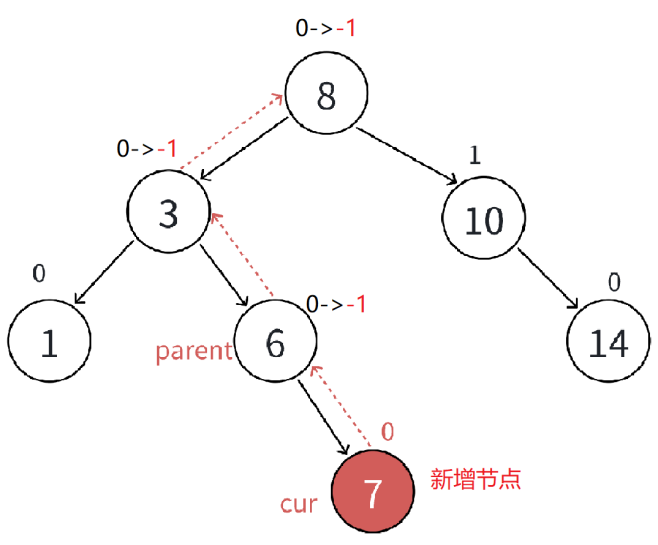
更新后parent的平衡因子为0:说明新增节点插入在低的那边,更新结束
-
更新后parent的平衡因子为1/-1:parent所在子树符合要求,但再往上是否符合要求不确定,要继续向上更新
-
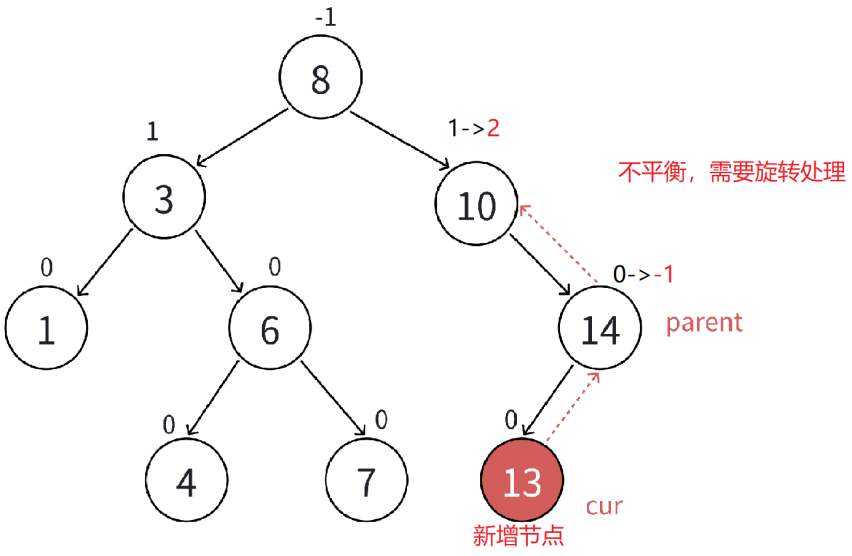
更新后parent的平衡因子为2/-2:旋转处理,旋转完之后不需要继续向上更新
bool Insert(const pair<K, V>& kv)
{
    if (_root == nullptr)
    {
        _root = new Node(kv);
        return true;
    }

    //1.走二叉搜索树的逻辑,确定插入位置
    Node* cur = _root;
    Node* parent = nullptr;
    while (cur)
    {
        if (kv.first < cur->_kv.first)
        {
            parent = cur;
            cur = cur->_left;
        }
        else if (kv.first > cur->_kv.first)
        {
            parent = cur;
            cur = cur->_right;
        }
        else
            return false;
    }

    //此时cur指向一个空位置
    cur = new Node(kv);
    if (kv.first < parent->_kv.first)
        parent->_left = cur;
    else
        parent->_right = cur;

    cur->_parent = parent;
    cur->_bf = 0;

    //2.更新平衡因子
    while (parent)
    {
        if (cur == parent->_left)
            parent->_bf--;
        else
            parent->_bf++;

        if (parent->_bf == 0)//结束更新
            break;
        else if (parent->_bf == 1 || parent->_bf == -1)//继续向上更新
        {
            cur = parent;
            parent = cur->_parent;
        }
        else if (parent->_bf == 2 || parent->_bf == -2)//不平衡,旋转处理
        {
            //...
            break;
        }
        else
        {
            cout << "插入出错" << endl;
            assert(false);
        }
    }
}
3.AVL树的旋转
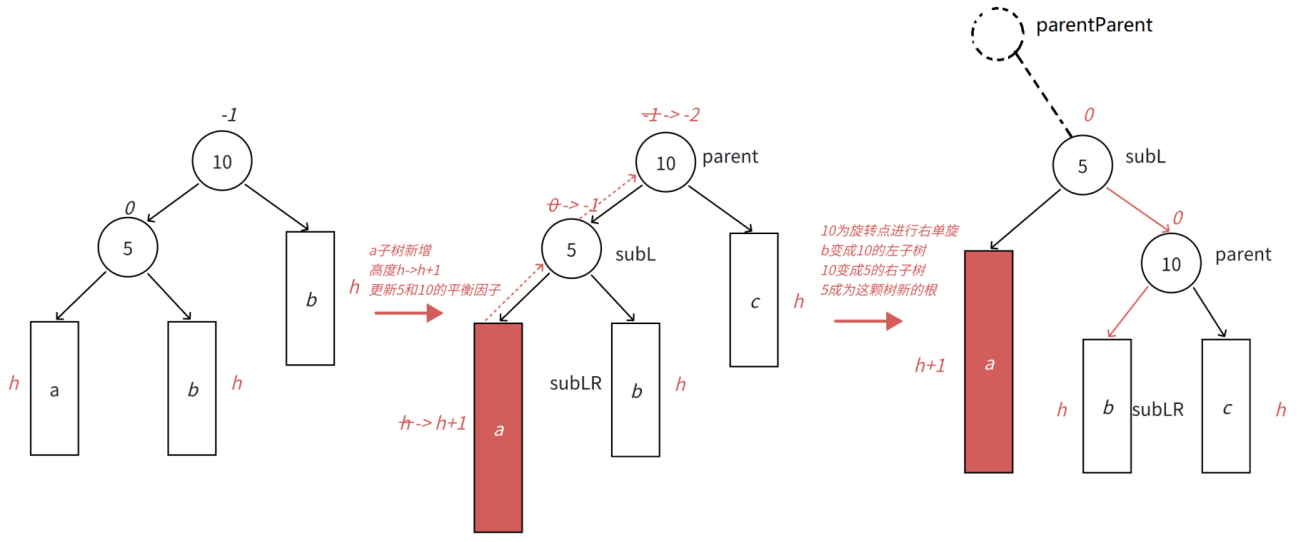
旋转的原则:首先要保持二叉搜索树的规则,其次让旋转过后的树变得平衡,降低树的高度,因此旋转之后不需要再向上更新
(1)右单旋
左边太高了,要把左边的高度降一下
void RotateR(Node* parent)
{
    Node* subL = parent->_left;
    Node* subLR = subL->_right;
    Node* parentParent = parent->_parent;

    if (subLR)
        subLR->_parent = parent;
    parent->_left = subLR;

    subL->_right = parent;
    parent->_parent = subL;

    if (parent == _root)
    {
        _root = subL;
        subL->_parent = nullptr;
    }
    else
    {
        if (parent == parentParent->_left)
                parentParent->_left = subL;
        else
                parentParent->_right = subL;
        subL->_parent = parentParent;
    }
    parent->_bf = subL->_bf = 0;
}
(2)左单旋
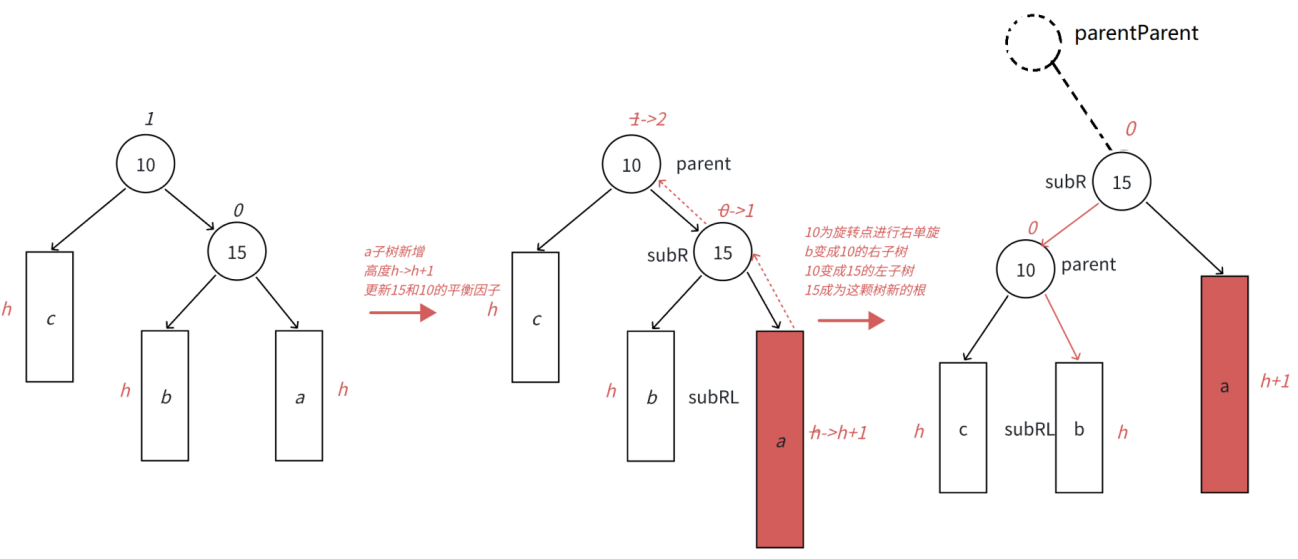
与右单旋相反,右边太高了,要把右边的高度降一下
void RotateL(Node* parent)
{
	Node* subR = parent->_right;
	Node* subRL = subR->_left;
	Node* parentParent = parent->_parent;

	if (subRL)
		subRL->_parent = parent;
	parent->_right = subRL;

	subR->_left = parent;
	parent->_parent = subR;

	if (_root == parent)
	{
		_root = subR;
		subR->_parent = nullptr;
	}
	else
	{
		if (parent == parentParent->_left)
			parentParent->_left = subR;
		else
			parentParent->_right = subR;
		subR->_parent = parentParent;
	}
	parent->_bf = subR->_bf = 0;
}
(3)左右双旋
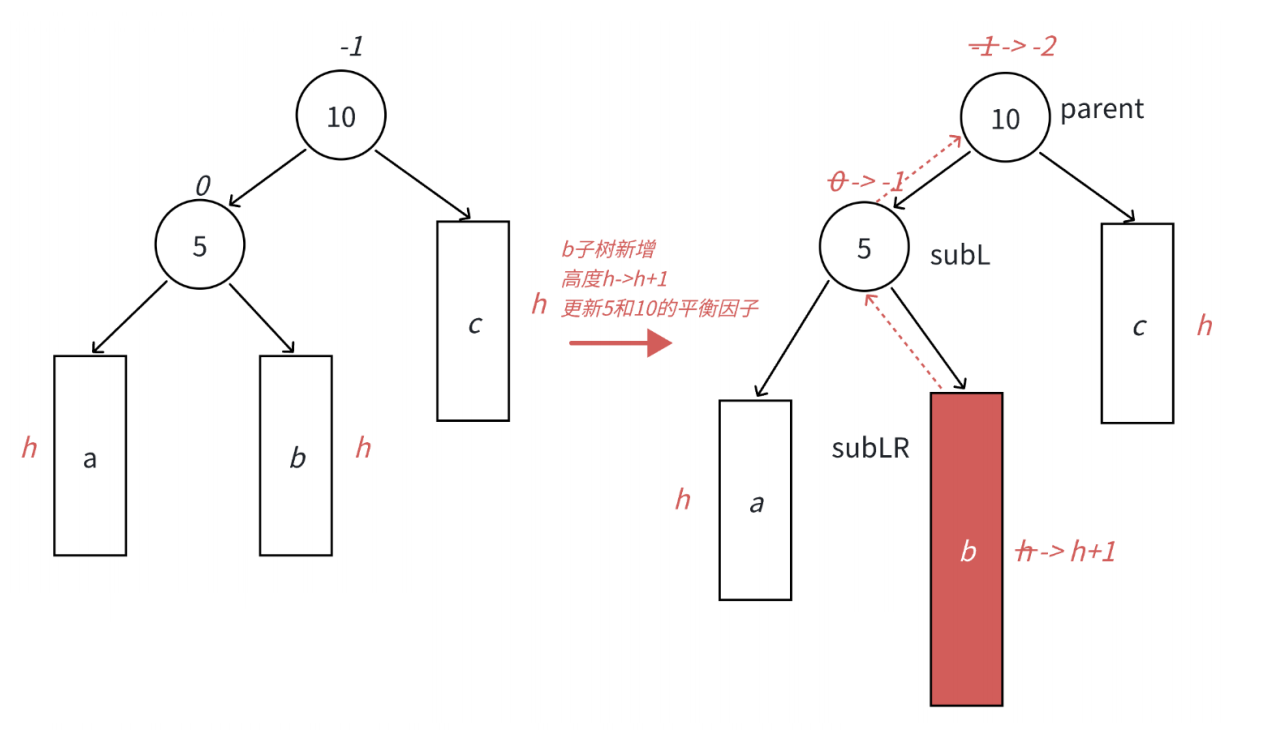
- 插入在b的左树和b的右树不同点:对平衡因子的影响不同
- 怎么区分在e插入还是在f插入?——观察subLR平衡因子的变化
subLR->_bf == 0:自己就是新增节点
subLR->_bf == -1:在e插入
subLR->_bf == 1:在f插入 - 旋转完成之后,单独更新subLR,subL,parent的平衡因子
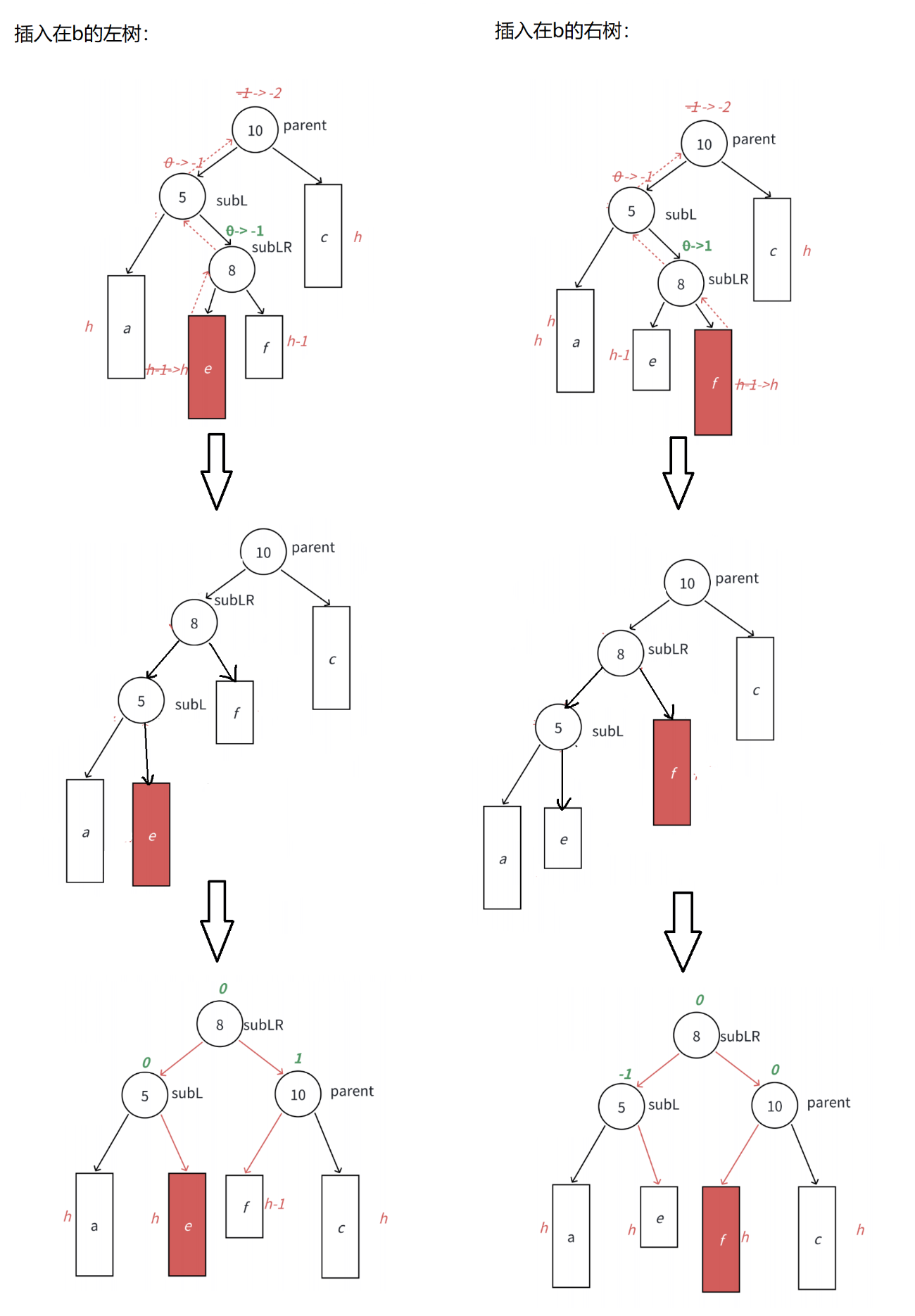
void RotateLR(Node* parent)
{
    Node* subL = parent->_left;
    Node* subLR = subL->_right;

    int subLR_bf = subLR->_bf;
    RotateL(subL);
    RotateR(parent);

    if (subLR_bf == 0)//说明自己就是新增节点
    {
        subLR_bf = subL->_bf = parent->_bf = 0;
    }
    else if (subLR_bf == -1)//在e插入
    {
        subL->_bf = subLR->_bf = 0;
        parent->_bf = 1;
    }
    else if(subLR_bf == 1)//在f插入
    {
        subL->_bf = -1;
        subLR->_bf = parent->_bf = 0;
    }
    else
    {
        cout << "左右双旋出错" << endl;
        assert(false);
    }
}
(4)右左双旋
与左右双旋类似,读者可自行画图分析,代码如下:
	void RotateRL(Node* parent)
	{
		Node* subR = parent->_right;
		Node* subRL = subR->_left;

		int subRL_bf = subRL->_bf;
		RotateR(subR);
		RotateL(parent);

		if (subRL_bf == 0)
		{
			parent->_bf = subR->_bf = subRL->_bf = 0;
		}
		else if (subRL_bf == -1)//说明在e插入
		{
			subR->_bf = 1;
			subRL->_bf = parent->_bf = 0;
		}
		else if (subRL_bf == 1)//说明在f插入
		{
			subR->_bf = subRL->_bf = 0;
			parent->_bf = -1;
		}
		else
		{
			cout << "右左双旋出错" << endl;
			assert(false);
		}
	}
至此,AVL树核心原理及代码模拟已经全部梳理完毕,下面给出一份更为完善的AVL树模拟实现代码,增加了查找,中序遍历,平衡检测等功能,提供测试代码,供读者参考
//AVLTree.h
#pragma once

#include<iostream>
#include<assert.h>
using namespace std;

template<class K, class V>
struct AVLTreeNode
{
	pair<K, V> _kv;
	AVLTreeNode<K, V>* _left;
	AVLTreeNode<K, V>* _right;
	AVLTreeNode<K, V>* _parent;
	int _bf;//平衡因子balance factor

	AVLTreeNode(const pair<K, V>& kv)
		:_kv(kv)
		, _left(nullptr)
		, _right(nullptr)
		, _parent(nullptr)
		, _bf(0)
	{ }
};

template<class K, class V>
class AVLTree
{
	typedef AVLTreeNode<K, V> Node;
public:
	bool Insert(const pair<K, V>& kv)
	{
		if (_root == nullptr)
		{
			_root = new Node(kv);
			return true;
		}

		//1.走二叉搜索树的逻辑,确定插入位置
		Node* cur = _root;
		Node* parent = nullptr;
		while (cur)
		{
			if (kv.first < cur->_kv.first)
			{
				parent = cur;
				cur = cur->_left;
			}
			else if (kv.first > cur->_kv.first)
			{
				parent = cur;
				cur = cur->_right;
			}
			else
				return false;
		}

		//此时cur指向一个空位置
		cur = new Node(kv);
		if (kv.first < parent->_kv.first)
			parent->_left = cur;
		else
			parent->_right = cur;

		cur->_parent = parent;
		cur->_bf = 0;

		//2.更新平衡因子
		while (parent)
		{
			if (cur == parent->_left)
				parent->_bf--;
			else
				parent->_bf++;

			if (parent->_bf == 0)//结束更新
				break;
			else if (parent->_bf == 1 || parent->_bf == -1)//继续向上更新
			{
				cur = parent;
				parent = cur->_parent;
			}
			else if (parent->_bf == 2 || parent->_bf == -2)//不平衡,旋转处理
			{
				//旋转处理,分右单旋,左单旋,左右双旋,右左双旋
				if (parent->_bf == -2 && cur->_bf == -1)//右单旋
					RotateR(parent);
				else if (parent->_bf == 2 && cur->_bf == 1)//左单旋
					RotateL(parent);
				else if (parent->_bf == -2 && cur->_bf == 1)//左右双旋
					RotateLR(parent);
				else if (parent->_bf == 2 && cur->_bf == -1)//右左双旋
					RotateRL(parent);
				else
					assert(false);
				break;
			}
			else
			{
				cout << "插入出错" << endl;
				assert(false);
			}
		}
	}

	void InOrder()
	{
		_InOrder(_root);
	}

	bool IsBalanceTree()
	{
		return _IsBalanceTree(_root);
	}

	int Height()
	{
		return _Height(_root);
	}

	int Size()
	{
		return _Size(_root);
	}

	Node* Find(const K& key)
	{
		Node* cur = _root;
		while (cur)
		{
			if (cur->_kv.first < key)
			{
				cur = cur->_right;
			}
			else if (cur->_kv.first > key)
			{
				cur = cur->_left;
			}
			else
			{
				return cur;
			}
		}
		return nullptr;
	}

private:
	void RotateR(Node* parent)
	{
		Node* subL = parent->_left;
		Node* subLR = subL->_right;
		Node* parentParent = parent->_parent;

		if (subLR)
			subLR->_parent = parent;
		parent->_left = subLR;

		subL->_right = parent;
		parent->_parent = subL;

		if (parent == _root)
		{
			_root = subL;
			subL->_parent = nullptr;
		}
		else
		{
			if (parent == parentParent->_left)
				parentParent->_left = subL;
			else
				parentParent->_right = subL;
			subL->_parent = parentParent;
		}
		parent->_bf = subL->_bf = 0;
	}

	void RotateL(Node* parent)
	{
		Node* subR = parent->_right;
		Node* subRL = subR->_left;
		Node* parentParent = parent->_parent;

		if (subRL)
			subRL->_parent = parent;
		parent->_right = subRL;

		subR->_left = parent;
		parent->_parent = subR;

		if (_root == parent)
		{
			_root = subR;
			subR->_parent = nullptr;
		}
		else
		{
			if (parent == parentParent->_left)
				parentParent->_left = subR;
			else
				parentParent->_right = subR;
			subR->_parent = parentParent;
		}
		parent->_bf = subR->_bf = 0;
	}

	void RotateLR(Node* parent)
	{
		Node* subL = parent->_left;
		Node* subLR = subL->_right;

		int subLR_bf = subLR->_bf;
		RotateL(subL);
		RotateR(parent);

		if (subLR_bf == 0)//说明自己就是新增节点
		{
			subLR_bf = subL->_bf = parent->_bf = 0;
		}
		else if (subLR_bf == -1)//在e插入
		{
			subL->_bf = subLR->_bf = 0;
			parent->_bf = 1;
		}
		else if(subLR_bf == 1)//在f插入
		{
			subL->_bf = -1;
			subLR->_bf = parent->_bf = 0;
		}
		else
		{
			cout << "左右双旋出错" << endl;
			assert(false);
		}
	}

	void RotateRL(Node* parent)
	{
		Node* subR = parent->_right;
		Node* subRL = subR->_left;

		int subRL_bf = subRL->_bf;
		RotateR(subR);
		RotateL(parent);

		if (subRL_bf == 0)
		{
			parent->_bf = subR->_bf = subRL->_bf = 0;
		}
		else if (subRL_bf == -1)//说明在e插入
		{
			subR->_bf = 1;
			subRL->_bf = parent->_bf = 0;
		}
		else if (subRL_bf == 1)//说明在f插入
		{
			subR->_bf = subRL->_bf = 0;
			parent->_bf = -1;
		}
		else
		{
			cout << "右左双旋出错" << endl;
			assert(false);
		}
	}

	void _InOrder(Node* root)
	{
		if (root == nullptr)
			return;
		_InOrder(root->_left);
		cout << root->_kv.first << ":" << root->_kv.second << endl;
		_InOrder(root->_right);
	}

	int _Height(Node* root)
	{
		if (root == nullptr)
			return 0;
		int leftHeight = _Height(root->_left);
		int rightHeight = _Height(root->_right);

		return leftHeight > rightHeight ? leftHeight + 1 : rightHeight + 1;
	}

	bool _IsBalanceTree(Node* root)
	{
		if (root == nullptr)
			return true;

		int leftHeight = _Height(root->_left);
		int rightHeight = _Height(root->_right);
		int diff = rightHeight - leftHeight;

		if (abs(diff) >= 2)
		{
			cout << "高度差异常" << endl;
			return false;
		}
		if (root->_bf != diff)//平衡因子可能是负数
		{
			cout << "根部平衡因子异常" << endl;
			return false;
		}

		return _IsBalanceTree(root->_left) && _IsBalanceTree(root->_right);
	}

	int _Size(Node* root)
	{
		if (root == nullptr)
			return 0;
		return _Size(root->_left) + _Size(root->_right) + 1;
	}
private:
	Node* _root = nullptr;
};
//test.cpp
#define _CRT_SECURE_NO_WARNINGS 1

#include"AVLTree.h"
#include<vector>
void TestAVLTree1()
{
	AVLTree<int, int> t;
	// 常规的测试⽤例
	// int a[] = { 16, 3, 7, 11, 9, 26, 18, 14, 15 };
	// 特殊的带有双旋场景的测试⽤例
	int a[] = { 4, 2, 6, 1, 3, 5, 15, 7, 16, 14 };
	for (auto e : a)
	{
		t.Insert({ e, e });
	}

	t.InOrder();
	cout << t.IsBalanceTree() << endl;
}

void TestAVLTree2()
{
	const int N = 100000;
	vector<int> v;
	v.reserve(N);
	srand(time(0));
	for (size_t i = 0; i < N; i++)
	{
		v.push_back(rand() + i);
	}
	size_t begin2 = clock();
	AVLTree<int, int> t;
	for (auto e : v)
	{
		t.Insert(make_pair(e, e));
	}
	size_t end2 = clock();
	cout << "Insert:" << end2 - begin2 << endl;
	cout << t.IsBalanceTree() << endl;
	cout << "Height:" << t.Height() << endl;
	cout << "Size:" << t.Size() << endl;
	size_t begin1 = clock();

	for (size_t i = 0; i < N; i++)
	{
		t.Find((rand() + i));
	}
	size_t end1 = clock();
	cout << "Find:" << end1 - begin1 << endl;
}
int main()
{
	//TestAVLTree1();
	TestAVLTree2();
	return 0;
}





 扫一扫
扫一扫


 被折叠的 条评论
为什么被折叠?
被折叠的 条评论
为什么被折叠?
 到【灌水乐园】发言





