


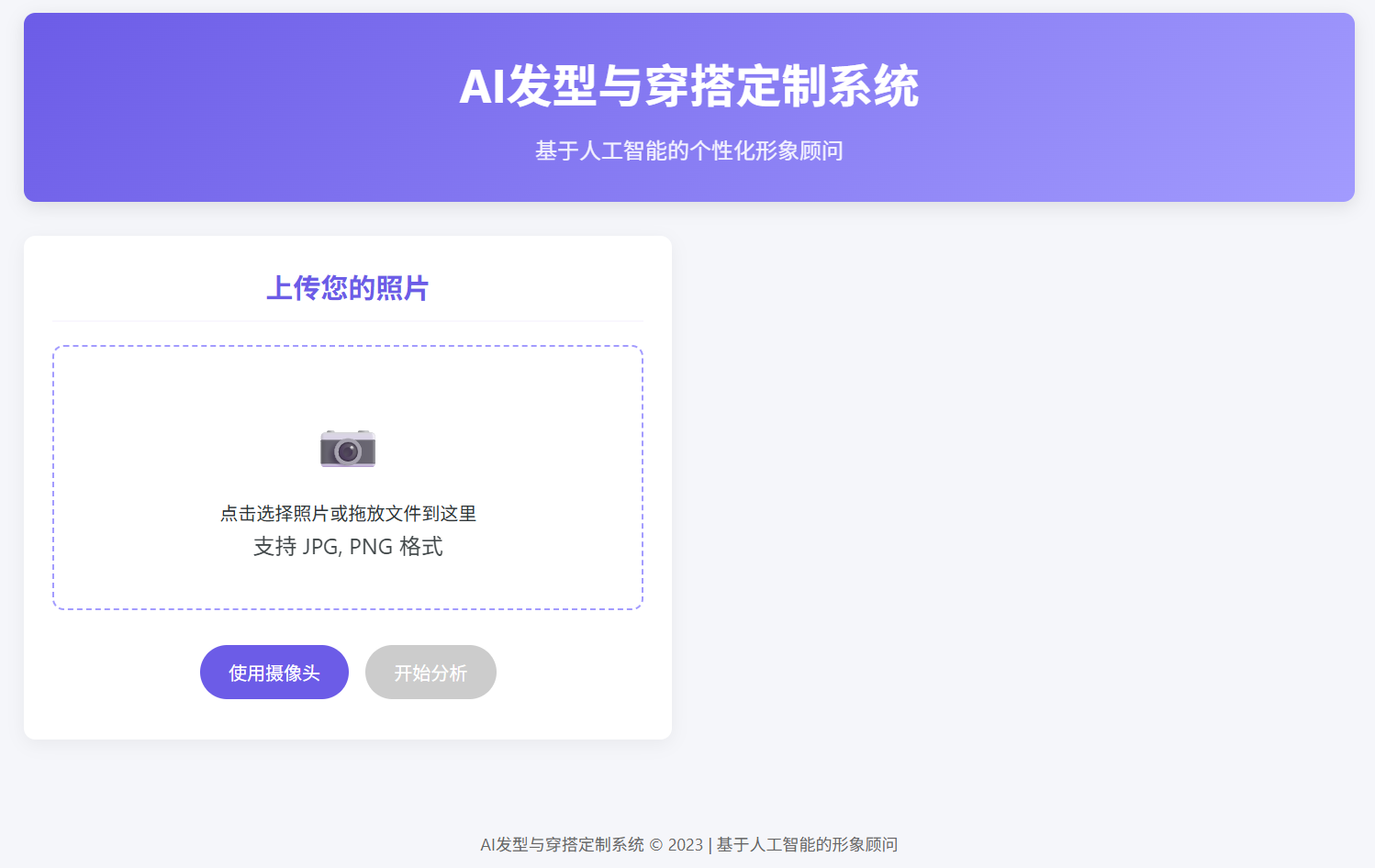
下面是一个基于Python的数字AI发型和穿搭定制系统的设计方案。这个系统将使用计算机视觉和机器学习技术来分析用户特征,并提供个性化的发型和穿搭建议。
系统架构概述
import cv2
import numpy as np
import tensorflow as tf
from tensorflow import keras
import matplotlib.pyplot as plt
from sklearn.cluster import KMeans
import pandas as pd
from PIL import Image
import dlib
import os
1. 用户特征分析模块
class UserFeatureAnalyzer:
    def __init__(self):
        # 加载人脸检测和特征点检测模型
        self.detector = dlib.get_frontal_face_detector()
        self.predictor = dlib.shape_predictor("shape_predictor_68_face_landmarks.dat")

        # 加载肤色分析模型
        self.skin_tone_model = self.load_skin_tone_model()

    def load_skin_tone_model(self):
        # 这里应该加载预训练的肤色分类模型
        # 简化版本使用基于HSV空间的肤色检测
        pass

    def analyze_face_shape(self, image):
        """分析用户脸型"""
        gray = cv2.cvtColor(image, cv2.COLOR_BGR2GRAY)
        faces = self.detector(gray)

        if len(faces) == 0:
            return None

        face = faces[0]
        landmarks = self.predictor(gray, face)

        # 提取关键点计算脸型特征
        face_width = landmarks.part(16).x - landmarks.part(0).x
        face_height = landmarks.part(8).y - landmarks.part(27).y
        jaw_width = landmarks.part(15).x - landmarks.part(1).x
        forehead_width = landmarks.part(17).x - landmarks.part(26).x

        # 根据比例判断脸型
        ratios = {
            'face_ratio': face_height / face_width,
            'jaw_ratio': jaw_width / face_width,
            'forehead_ratio': forehead_width / face_width
        }

        return self.classify_face_shape(ratios)

    def classify_face_shape(self, ratios):
        """根据比例分类脸型"""
        face_ratio = ratios['face_ratio']
        jaw_ratio = ratios['jaw_ratio']

        if face_ratio > 1.4:
            if jaw_ratio < 0.7:
                return "椭圆形"
            else:
                return "长方形"
        elif face_ratio < 1.1:
            if jaw_ratio > 0.9:
                return "圆形"
            else:
                return "方形"
        else:
            if jaw_ratio > 0.85:
                return "心形"
            else:
                return "菱形"

    def analyze_skin_tone(self, image):
        """分析用户肤色"""
        # 转换为HSV颜色空间
        hsv = cv2.cvtColor(image, cv2.COLOR_BGR2HSV)

        # 定义肤色范围(需要根据实际情况调整)
        lower_skin = np.array([0, 20, 70], dtype=np.uint8)
        upper_skin = np.array([20, 255, 255], dtype=np.uint8)

        # 创建肤色掩码
        mask = cv2.inRange(hsv, lower_skin, upper_skin)

        # 提取肤色区域
        skin = cv2.bitwise_and(image, image, mask=mask)

        # 计算平均肤色
        skin_pixels = skin[np.where(mask != 0)]
        if len(skin_pixels) > 0:
            avg_skin_color = np.mean(skin_pixels, axis=0)
            return self.classify_skin_tone(avg_skin_color)

        return "无法检测"

    def classify_skin_tone(self, color):
        """根据RGB值分类肤色"""
        r, g, b = color

        # 简化分类逻辑
        if r > 180 and g > 150 and b > 120:
            return "白皙"
        elif r > 150 and g > 120 and b > 100:
            return "自然"
        elif r > 120 and g > 100 and b > 80:
            return小麦色"
        else:
            return "深色"

    def analyze_body_type(self, image):
        """分析用户体型(简化版,实际需要全身图像)"""
        # 这里应该使用全身图像和姿势估计模型
        # 简化版本返回默认值
        return "标准型"
2. 发型推荐引擎
class HairstyleRecommender:
    def __init__(self):
        self.hairstyle_db = self.load_hairstyle_database()
        self.face_shape_rules = {
            "椭圆形": ["所有发型都适合", "中长发", "短发", "长发"],
            "圆形": ["高顶发型", "侧分发型", "不对称发型", "长发带层次"],
            "方形": ["柔化线条的发型", "波浪卷发", "长发", "侧分发型"],
            "长方形": ["有刘海的发型", "卷发", "中长发", "避免高顶发型"],
            "心形": ["齐肩发", "波浪发型", "侧分发型", "避免过短发型"],
            "菱形": ["有刘海的发型", "层次感发型", "中长发", "避免贴头皮发型"]
        }

    def load_hairstyle_database(self):
        """加载发型数据库"""
        # 这里应该从文件或数据库加载发型数据
        # 简化版本使用硬编码数据
        return {
            "短发": ["波波头", "精灵短发", "齐耳短发", "超短发"],
            "中长发": ["锁骨发", "层次中长发", "波浪中长发", "直发"],
            "长发": ["大波浪", "直长发", "编发", "马尾辫"],
            "卷发": ["大卷", "小卷", "自然卷", "螺旋卷"],
            "染发": ["棕色系", "金色系", "红色系", "黑色系", "时尚色系"]
        }

    def recommend_hairstyles(self, face_shape, skin_tone, personal_preferences=None):
        """根据脸型和肤色推荐发型"""
        # 基于脸型的推荐
        shape_based = self.face_shape_rules.get(face_shape, [])

        # 基于肤色的发色推荐
        color_based = self.recommend_hair_color(skin_tone)

        # 结合用户偏好(如果有)
        if personal_preferences:
            filtered_styles = self.filter_by_preferences(shape_based, personal_preferences)
        else:
            filtered_styles = shape_based

        return {
            "适合的发型": filtered_styles,
            "推荐发色": color_based,
            "避免的发型": self.get_avoid_hairstyles(face_shape)
        }

    def recommend_hair_color(self, skin_tone):
        """根据肤色推荐发色"""
        color_rules = {
            "白皙": ["所有发色都适合", "浅棕色", "亚麻色", "红色系"],
            "自然": ["巧克力色", "深棕色", "栗色", "暖色调"],
            "小麦色": ["深棕色", "黑色", "酒红色", "避免黄色调"],
            "深色": ["黑色", "深棕色", "暗红色", "避免浅色系"]
        }
        return color_rules.get(skin_tone, ["经典黑色", "深棕色"])

    def get_avoid_hairstyles(self, face_shape):
        """获取应避免的发型"""
        avoid_rules = {
            "圆形": ["齐刘海", "过短发型", "圆润发型"],
            "方形": ["直线条发型", "齐耳短发", "厚重刘海"],
            "长方形": ["高顶发型", "长直发", "无刘海"],
            "心形": ["过短发型", "顶部蓬松发型", "厚重刘海"],
            "菱形": ["贴头皮发型", "无刘海", "过短发型"],
            "椭圆形": ["无特定避免发型"]
        }
        return avoid_rules.get(face_shape, [])

    def filter_by_preferences(self, hairstyles, preferences):
        """根据用户偏好过滤发型"""
        filtered = []
        for style in hairstyles:
            if any(pref in style for pref in preferences):
                filtered.append(style)
        return filtered if filtered else hairstyles
3. 穿搭推荐引擎
class OutfitRecommender:
    def __init__(self):
        self.color_palettes = self.load_color_palettes()
        self.body_type_rules = self.load_body_type_rules()
        self.occasion_styles = self.load_occasion_styles()

    def load_color_palettes(self):
        """加载颜色搭配方案"""
        return {
            "白皙": ["柔和色系", "明亮色系", "冷色调", "暖色调"],
            "自然": ["大地色系", "中性色", "暖色调", "柔和色"],
            "小麦色": ["暖色调", "大地色系", "鲜艳色", "避免苍白色"],
            "深色": ["鲜艳色", "亮色", "暖色调", "避免浑浊色"]
        }

    def load_body_type_rules(self):
        """加载体型穿搭规则"""
        return {
            "标准型": ["所有款式都适合", "修身剪裁", "展示身材曲线"],
            "苹果型": ["V领上衣", "A字裙", "高腰裤", "避免紧身衣"],
            "梨型": ["突出上半身", "A字裙/裤", "深色下装", "避免紧身下装"],
            "矩形": ["创造曲线", "收腰设计", "层次穿搭", "避免直筒造型"],
            "倒三角": ["平衡上下身", "简约上身", "突出下半身", "避免宽肩设计"]
        }

    def load_occasion_styles(self):
        """加载场合穿搭风格"""
        return {
            "正式": ["西装", "连衣裙", "衬衫", "皮鞋"],
            "休闲": ["T恤", "牛仔裤", "运动鞋", "休闲裤"],
            "商务": ["衬衫", "西裤", "裙装", "皮鞋"],
            "约会": ["连衣裙", "半身裙", "时尚上衣", "高跟鞋"],
            "运动": ["运动服", "运动鞋", "休闲装", "透气材质"]
        }

    def recommend_outfits(self, skin_tone, body_type, occasion, personal_style=None):
        """推荐穿搭方案"""
        # 基于肤色的颜色推荐
        color_recs = self.color_palettes.get(skin_tone, ["经典黑白灰"])

        # 基于体型的款式推荐
        body_recs = self.body_type_rules.get(body_type, ["通用款式"])

        # 基于场合的风格推荐
        occasion_recs = self.occasion_styles.get(occasion, ["休闲装"])

        # 组合推荐
        recommendations = {
            "推荐颜色": color_recs,
            "适合款式": body_recs,
            "场合穿搭": occasion_recs,
            "搭配建议": self.generate_styling_tips(skin_tone, body_type, occasion)
        }

        # 考虑个人风格偏好
        if personal_style:
            recommendations["个性化调整"] = self.adjust_for_personal_style(
                recommendations, personal_style)

        return recommendations

    def generate_styling_tips(self, skin_tone, body_type, occasion):
        """生成穿搭建议"""
        tips = []

        # 肤色相关建议
        if skin_tone in ["白皙", "自然"]:
            tips.append("可以尝试明亮的颜色提升气色")
        elif skin_tone in ["小麦色", "深色"]:
            tips.append("暖色调和鲜艳色系能突出健康肤色")

        # 体型相关建议
        if body_type == "苹果型":
            tips.append("选择V领上衣拉长颈部线条")
        elif body_type == "梨型":
            tips.append("上半身可以选择有设计感的款式吸引注意力")

        # 场合相关建议
        if occasion == "正式":
            tips.append("选择合身的剪裁和优质面料")
        elif occasion == "休闲":
            tips.append("可以尝试混搭风格展现个性")

        return tips

    def adjust_for_personal_style(self, recommendations, personal_style):
        """根据个人风格调整推荐"""
        adjustments = []

        if "简约" in personal_style:
            adjustments.append("选择基础款和纯色单品")
        if "时尚" in personal_style:
            adjustments.append("可以加入当季流行元素")
        if "复古" in personal_style:
            adjustments.append("选择经典款式和复古元素")

        return adjustments
4. 虚拟试穿模块
class VirtualTryOn:
    def __init__(self):
        self.hairstyle_images = self.load_hairstyle_images()
        self.outfit_images = self.load_outfit_images()

    def load_hairstyle_images(self):
        """加载发型图片库"""
        # 这里应该从文件系统加载图片
        return {}  # 简化版本

    def load_outfit_images(self):
        """加载穿搭图片库"""
        # 这里应该从文件系统加载图片
        return {}  # 简化版本

    def try_hairstyle(self, user_image, hairstyle):
        """虚拟试穿发型(简化版)"""
        # 实际实现需要使用GAN或图像处理技术
        # 这里返回原图作为示例
        return user_image

    def try_outfit(self, user_image, outfit):
        """虚拟试穿服装(简化版)"""
        # 实际实现需要复杂的计算机视觉技术
        # 这里返回原图作为示例
        return user_image

    def show_comparison(self, original_image, try_on_image, title):
        """显示试穿对比"""
        fig, (ax1, ax2) = plt.subplots(1, 2, figsize=(10, 5))
        ax1.imshow(cv2.cvtColor(original_image, cv2.COLOR_BGR2RGB))
        ax1.set_title('原图')
        ax1.axis('off')

        ax2.imshow(cv2.cvtColor(try_on_image, cv2.COLOR_BGR2RGB))
        ax2.set_title(title)
        ax2.axis('off')

        plt.show()
5. 主系统集成
class AIStyleAdvisor:
    def __init__(self):
        self.feature_analyzer = UserFeatureAnalyzer()
        self.hairstyle_recommender = HairstyleRecommender()
        self.outfit_recommender = OutfitRecommender()
        self.virtual_tryon = VirtualTryOn()

    def analyze_user(self, image_path):
        """分析用户特征"""
        image = cv2.imread(image_path)

        if image is None:
            return {"error": "无法加载图像"}

        # 分析脸型
        face_shape = self.feature_analyzer.analyze_face_shape(image)

        # 分析肤色
        skin_tone = self.feature_analyzer.analyze_skin_tone(image)

        # 分析体型(简化版)
        body_type = self.feature_analyzer.analyze_body_type(image)

        return {
            "脸型": face_shape,
            "肤色": skin_tone,
            "体型": body_type,
            "图像": image
        }

    def get_recommendations(self, user_features, occasion="日常", personal_preferences=None):
        """获取个性化推荐"""
        # 发型推荐
        hairstyle_recs = self.hairstyle_recommender.recommend_hairstyles(
            user_features["脸型"],
            user_features["肤色"],
            personal_preferences
        )

        # 穿搭推荐
        outfit_recs = self.outfit_recommender.recommend_outfits(
            user_features["肤色"],
            user_features["体型"],
            occasion,
            personal_preferences
        )

        return {
            "发型推荐": hairstyle_recs,
            "穿搭推荐": outfit_recs
        }

    def virtual_try_on(self, user_image, hairstyle=None, outfit=None):
        """虚拟试穿功能"""
        result_image = user_image.copy()

        if hairstyle:
            result_image = self.virtual_tryon.try_hairstyle(result_image, hairstyle)

        if outfit:
            result_image = self.virtual_tryon.try_outfit(result_image, outfit)

        return result_image

    def run_complete_analysis(self, image_path, occasion="日常", personal_preferences=None):
        """运行完整分析流程"""
        print("开始分析用户特征...")
        user_features = self.analyze_user(image_path)

        if "error" in user_features:
            print("分析失败:", user_features["error"])
            return None

        print(f"分析结果: 脸型-{user_features['脸型']}, 肤色-{user_features['肤色']}, 体型-{user_features['体型']}")

        print("生成个性化推荐...")
        recommendations = self.get_recommendations(user_features, occasion, personal_preferences)

        return {
            "用户特征": user_features,
            "推荐方案": recommendations
        }

# 使用示例
if __name__ == "__main__":
    # 创建AI造型顾问实例
    advisor = AIStyleAdvisor()

    # 运行分析(需要提供用户图像路径)
    # result = advisor.run_complete_analysis("user_image.jpg", "日常", ["简约", "时尚"])

    # 打印结果
    # if result:
    #     print("发型推荐:", result["推荐方案"]["发型推荐"])
    #     print("穿搭推荐:", result["推荐方案"]["穿搭推荐"])

    print("AI造型顾问系统初始化完成")
系统扩展建议
-
数据增强:收集更多发型和穿搭数据,提高推荐准确性
-
深度学习模型:使用GAN实现更逼真的虚拟试穿效果
-
用户反馈系统:收集用户对推荐的反馈,优化算法
-
3D建模:结合3D扫描技术实现更精确的体型分析
-
时尚趋势分析:集成实时时尚数据,保持推荐的前沿性
-
多模态输入:支持语音、文字描述等多种输入方式
注意事项
-
隐私保护:用户图像数据需要妥善处理,避免隐私泄露
-
多样性考虑:系统应考虑不同文化背景的审美差异
-
可访问性:确保界面友好,支持不同技术水平的用户
-
性能优化:虚拟试穿等计算密集型功能需要优化性能
这个系统框架提供了基本的AI发型和穿搭推荐功能,实际应用中需要根据具体需求进一步开发和优化。





 扫一扫
扫一扫


 6824
6824

 被折叠的 条评论
为什么被折叠?
被折叠的 条评论
为什么被折叠?
 到【灌水乐园】发言





