





 本文探讨了Java中ScheduledExecutorService如何实现任务延迟执行,对比了Timer的缺陷,重点分析了ScheduledThreadPoolExecutor的DelayQueue工作原理,包括其如何确保线程不被阻塞、延迟时间的准确性以及周期任务的执行方式。通过源码解析,阐述了ScheduledFutureTask在延迟队列中的角色和任务调度的细节。
引言
Timer类的解析中提到,Timer类的缺陷:
- 单线程
- Timer只有一个任务执行线程,如果某个TimerTask耗时较久,影响其他任务
- Timer不会捕获执行TimerTask时所抛出的异常,由于Timer是单线程,所以一旦出现异常,则线程就会终止,其他任务也得不到执行。
- 系统时间敏感性,由于Timer中使用了currentTimeMillis做参考,所以系统时间变化会使得任务发生变化
所以在JDK1.5后大家就抛弃了Timer,一般使用ScheduledThreadPoolExecutor。
研究完ScheduledExecutor,我突然发现一直困扰我的一个问题——程序中的定时任务是如何实现的?例如,闹钟。ScheduledExecutor正是一个绝佳的例子:
● 任务调度和任务执行解耦,并运行在不同线程上,防止阻塞。任务调度单线程即可满足性能要求,它并不是瓶颈
● 具备延迟时间的任务,在时间的维度上,可以假想它们排成一列,所以你不需要轮询所有任务,只需要关注最早开始的任务
● 等待并不需要轮询,可以等待指定时间唤醒
概述
我们已经看过Timer的延迟执行方案——任务放入最小堆中,任务线程每次取出需要最早执行的任务,并在当前线程中执行。
ScheduledThreadPoolExecutor简单来说,是基于线程池的实现基础上,把原有的任务队列换成DelayQueue。
所以我认为,核心其实在DelayQueue上,它是一种阻塞队列,只有当任务到指定延迟时间时,它才能返回;其次,它也是一种优先队列,基于数组的最小堆实现,按延迟时间排序。
由于取出任务之后,交给线程池执行(由线程池管理子线程执行),所以并不会阻塞调度线程,所以也就没有上述1,2,3的问题。而且它内部使用了nanoTime而不是currentTimeMillis,因而也和系统时间无关(nanoTime的区别是,它是计算从某一个时间的累计时间,这个时间是在启动JVM时任意指定的,例外,它的精度为微纳秒)。
所以它本身不复杂,线程池的实现参考之前的文章。
源码解析
API
ScheduledFuture<?> scheduleAtFixedRate(Runnable command,**long **initialDelay,**long **period,TimeUnit unit),指定任务,初始延迟时间,周期时间,时间单位。注意该方法每一周期启动一次任务,不需要等任务结束。
scheduleWithFixedDelay(Runnable command,**long **initialDelay,**long **delay,TimeUnit unit),指定任务,初始延迟时间,延迟时间,时间单位。注意该延迟时间指的是前一个周期结束到下一个周期开始时间,换句话说,它需要任务执行完才能开始下一个周期。
代码结构

ScheduledThreadPoolExecutor继承了ThreadPoolExecutor,复用线程池的功能。实现了ScheduledExecutorService,拓展为调度的线程池服务。
public interface ScheduledExecutorService extends ExecutorService {

    public ScheduledFuture<?> schedule(Runnable command,
                                       long delay, TimeUnit unit);

    public <V> ScheduledFuture<V> schedule(Callable<V> callable,
                                           long delay, TimeUnit unit);

    public ScheduledFuture<?> scheduleAtFixedRate(Runnable command,
                                                  long initialDelay,
                                                  long period,
                                                  TimeUnit unit);

    public ScheduledFuture<?> scheduleWithFixedDelay(Runnable command,
                                                     long initialDelay,
                                                     long delay,
                                                     TimeUnit unit);
}
DelayedWorkQueue **extends **AbstractQueue<Runnable>**implements **BlockingQueue<Runnable>,队列则继承了AbstractQueue,数组实现了最小堆。实现了BlockingQueue接口,具备阻塞队列的特性。
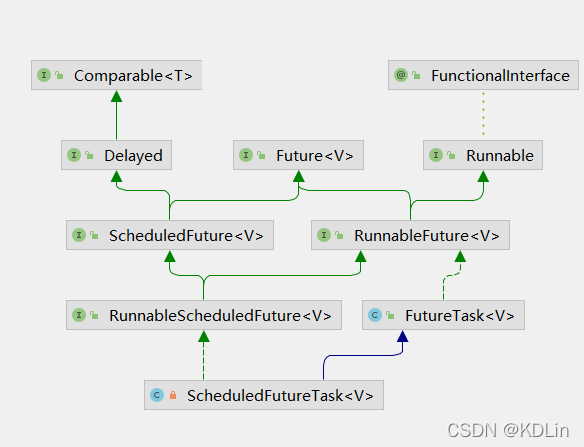
最后就是队列中放的对象,为ScheduledFutureTask,它的继承结构比较复杂,但本质上就是对FutureTask的拓展,支持了延迟时间的对比查询管理。
源码
ScheduledThreadPoolExecutor的入口,都很简单,核心是队列的阻塞方法——如何实现到时间才返回。
public ScheduledFuture<?> scheduleAtFixedRate(Runnable command,
                                              long initialDelay,
                                              long period,
                                              TimeUnit unit) {
    if (command == null || unit == null)
        throw new NullPointerException();
    if (period <= 0L)
        throw new IllegalArgumentException();
    // 新建了一个延迟任务
    ScheduledFutureTask<Void> sft =
        new ScheduledFutureTask<Void>(command,
                                      null,
                                      triggerTime(initialDelay, unit),
                                      unit.toNanos(period),
                                      sequencer.getAndIncrement());
    // decorateTask其实是一个就是隐式的向上转型,转为RunnableScheduledFuture
    RunnableScheduledFuture<Void> t = decorateTask(command, sft);
    sft.outerTask = t;
    // 调度该任务
    delayedExecute(t);
    return t;
}
private void delayedExecute(RunnableScheduledFuture<?> task) {
    if (isShutdown())
        reject(task);
    else {
        // 任务加入队列
        super.getQueue().add(task);
        if (!canRunInCurrentRunState(task) && remove(task))
            task.cancel(false);
        else
            // 线程池的方法,确认是否添加工作线程
            ensurePrestart();
    }
}
加入任务队列后,其实剩下都是线程池的工作,它的工作线程会不断地从任务队列中取出任务,区别在于我们的任务队列是DelayedQueue。
所以核心就是理解它如何阻塞线程,让任务到时间再返回,来看take方法。
该Queue持有一个leader,它是当前执行的线程引用。
public RunnableScheduledFuture<?> take() throws InterruptedException {
    final ReentrantLock lock = this.lock;
    // 调度过程加锁,注意lock用于锁定调度
    lock.lockInterruptibly();
    try {
        for (;;) {
            RunnableScheduledFuture<?> first = queue[0];
            // 堆为空,等待,available为锁上的condition监视器
            if (first == null)
                available.await();
            else {
                long delay = first.getDelay(NANOSECONDS);
                // 到达延迟时间,任务返回
                if (delay <= 0L)
                    return finishPoll(first);
                first = null; // don't retain ref while waiting
                // 如果leader不为空,则说明已经有线程占用,available上等待
                if (leader != null)
                    // 除了leader的其他线程无限等待
                    available.await();
                // leader为空,则自己作为leader线程
                else {
                    Thread thisThread = Thread.currentThread();
                    leader = thisThread;
                    try {
                        // leader等待指定时间
                        available.awaitNanos(delay);
                    } finally {
                        // 执行完,设置leader为null
                        if (leader == thisThread)
                            leader = null;
                    }
                }
            }
        }
    } finally {
        // 当前任务调度完成,唤醒其他线程调度下一任务
        if (leader == null && queue[0] != null)
            available.signal();
        lock.unlock();
    }
}
我们看到,它的逻辑也不复杂,如果任务达到执行时间,就立刻返回给线程池去执行。每次只有一个线程能做leader,拥有调度当前任务的权限,等待指定延迟时间,其他线程则无限等待,直到被唤醒。
再来说一下leader的作用,这里的leader是为了减少不必要的定时等待,当一个线程成为leader时,它只等待下一个节点的时间间隔,但其它线程无限期等待。 leader线程必须在从take()或poll()返回之前signal其它线程,除非其他线程成为了leader。
然后就是返回任务的时候,queue又做了什么?
其实很简单,将堆顶元素返回,堆顶元素移除,替换为最后一个元素,然后调整堆。
private RunnableScheduledFuture<?> finishPoll(RunnableScheduledFuture<?> f) {
    int s = --size;
    RunnableScheduledFuture<?> x = queue[s];
    queue[s] = null;
    if (s != 0)
        siftDown(0, x);
    setIndex(f, -1);
    return f;
}
最后是周期执行如何实现?
答案是,在任务执行完,重新设置下一次的延迟时间,重新入queue调度。
public void run() {
    if (!canRunInCurrentRunState(this))
        cancel(false);
    // 非周期执行,直接执行
    else if (!isPeriodic())
        super.run();
    // 周期执行,执行完重新设置时间
    else if (super.runAndReset()) {
        // 重新设置时间
        setNextRunTime();
        // 重新入queue
        reExecutePeriodic(outerTask);
    }
}
为何不精确
仔细考虑一下整个实现,你会发现:
- 任务执行交给线程池管理
- 调度任务每次只有一个线程能进入,都会等queue中需要最早执行的任务到达执行时间,交给线程池执行。因为一个任务调度很快,所以多个任务先后到达执行时间都会执行,而不像Timer一样,受到前一个任务执行影响
- 由于堆的调整需要时间,线程池的线程资源有限,所以任务也不一定非常精确地按照延迟时间来。
参考
http://concurrent.redspider.group/article/03/20.html





 扫一扫
扫一扫


 20万+
20万+

 被折叠的 条评论
为什么被折叠?
被折叠的 条评论
为什么被折叠?
 到【灌水乐园】发言





