


在 Vue 3 中,v-bind="$attrs" 是一个非常重要的特性,它用于处理组件间的属性透传。让我详细解释它的含义和用法:
一、$attrs 是什么
$attrs 是 Vue 组件实例上的一个特殊属性,它包含:
-
父组件传递给子组件但未被声明为 props 的属性
-
包括 HTML 属性、自定义属性、DOM 事件监听器
-
不包含:
-
已声明的 props
-
class和style(在 Vue 3 中它们有单独的处理机制)
-
二、v-bind="$attrs" 的作用
html
复制
下载
运行
<child-component v-bind="$attrs"></child-component>
这句代码的意思是:将当前组件接收到的所有未声明属性,透传给内部的子组件。
三、使用场景详解
场景 1:创建高阶组件(属性透传)
vue
复制
下载
<!-- Parent.vue -->
<template>
  <ChildComponent
    title="父组件标题"
    data-id="123"
    @custom-event="handleEvent"
    class="parent-class"
  />
</template>

<!-- ChildComponent.vue -->
<template>
  <div>
    <!-- 将未声明的属性透传给孙子组件 -->
    <GrandChild v-bind="$attrs" />
  </div>
</template>

<script setup>
// 只声明了 title 作为 prop
defineProps(['title'])
</script>

<!-- GrandChild.vue -->
<template>
  <div>
    <!-- 将接收到的属性绑定到根元素 -->
    <div v-bind="$attrs">孙子组件</div>
  </div>
</template>
结果:
-
title被 ChildComponent 作为 prop 接收 -
data-id和@custom-event透传到 GrandChild -
GrandChild 的根元素会获得:
data-id="123"和custom-event监听器
场景 2:禁用默认继承
vue
复制
下载
<script setup>
defineOptions({
  inheritAttrs: false // 禁用默认的属性继承
})
</script>

<template>
  <div class="wrapper">
    <!-- 手动控制属性绑定位置 -->
    <input v-bind="$attrs" />
  </div>
</template>
-
默认情况下,未声明的属性会自动绑定到根元素
-
设置
inheritAttrs: false后,可以通过v-bind="$attrs"手动指定绑定位置
四、Vue 3 中的变化(对比 Vue 2)
| 特性 | Vue 2 | Vue 3 |
|---|---|---|
| 包含内容 | 普通属性 | 属性 + 事件监听器 |
| class/style | 包含在 $attrs 中 | 不包含在 $attrs 中 |
| 事件监听器 | 在 $listeners 中 | 合并到 $attrs 中 |
| 透传方式 | 需要同时绑定 $attrs 和 $listeners | 只需绑定 $attrs |
五、实际应用技巧
1. 组合式 API 中使用
vue
复制
下载
<script setup>
import { useAttrs } from 'vue'

const attrs = useAttrs()
console.log(attrs) // 包含所有未声明属性
</script>
2. 过滤特定属性
vue
复制
下载
<template>
  <div>
    <input v-bind="filteredAttrs">
  </div>
</template>

<script setup>
import { computed, useAttrs } from 'vue'

const attrs = useAttrs()

const filteredAttrs = computed(() => {
  const { class: _, style: __, ...rest } = attrs
  return rest
})
</script>
3. 多层透传
vue
复制
下载
<!-- 中间层组件 -->
<template>
  <ThirdPartyComponent v-bind="$attrs" />
</template>
这样可以将父组件的属性直接透传给第三方组件,无需在中间组件中声明
六、注意事项
-
事件监听器:在 Vue 3 中,事件监听器会作为
onXxx属性出现在$attrs中js
复制
下载
// $attrs 内容示例 { "data-id": "123", "onCustomEvent": () => {} // 事件监听器 } -
与 class/style 的分离:
vue
复制
下载
<Child class="parent-class" style="color:red" />

<!-- 子组件中 -->
<div :class="$attrs.class" :style="$attrs.style">
  <!-- 其他内容 -->
</div>
但更好的做法是直接使用
class和style绑定 -
优先级:手动绑定的属性会覆盖
$attrs中的同名属性vue
复制
下载
<input v-bind="$attrs" placeholder="默认">
<!-- 如果 $attrs 中有 placeholder,会被覆盖为 "默认" -->
七、为什么需要这个特性
-
创建通用组件:当构建可复用的基础组件(如按钮、输入框)时
-
减少 props 声明:避免在中间组件中声明大量不必要的 props
-
与第三方库集成:将 Vue 组件作为原生 HTML 元素的包装器
-
保持组件接口灵活:允许父组件传递任意属性
总结
v-bind="$attrs" 是 Vue 组件通信的重要机制,它:
-
实现属性自动透传
-
配合
inheritAttrs: false可精确控制属性绑定位置 -
在 Vue 3 中统一处理属性和事件
-
特别适合创建高阶组件和通用基础组件
合理使用这个特性可以大幅提高组件的可复用性和灵活性,减少不必要的 props 声明,保持组件接口的简洁性。
Vue 3 多层属性透传详解
在 Vue 3 中,多层属性透传是一种强大的功能,允许属性从父组件通过中间组件自动传递到深层子组件,而不需要在中间组件中显式声明这些属性。
核心概念
多层透传的核心是使用 v-bind="$attrs":
-
$attrs包含父组件传递但未被当前组件声明为 props 的所有属性 -
v-bind="$attrs"将这些属性传递给子组件 -
整个过程不需要中间组件知道或处理这些属性
基本透传示例
vue
复制
下载
<!-- ParentComponent.vue -->
<template>
  <MiddleComponent
    title="父组件标题"
    data-id="123"
    @custom-event="handleEvent"
    class="parent-class"
  />
</template>

<script setup>
const handleEvent = (value) => {
  console.log('收到事件:', value);
};
</script>
vue
复制
下载
<!-- MiddleComponent.vue -->
<template>
  <div class="middle">
    <h2>中间组件</h2>
    <!-- 将属性透传给孙子组件 -->
    <GrandChildComponent v-bind="$attrs" />
  </div>
</template>

<script setup>
// 没有声明任何 props,所以所有属性都会进入 $attrs
</script>
vue
复制
下载
<!-- GrandChildComponent.vue -->
<template>
  <div class="grandchild">
    <h3>孙子组件</h3>
    <!-- 接收所有透传属性 -->
    <button @click="triggerEvent">触发事件</button>
    <p>接收到的标题: {{ $attrs.title }}</p>
    <p>接收到的数据ID: {{ $attrs['data-id'] }}</p>
  </div>
</template>

<script setup>
import { useAttrs } from 'vue';

const attrs = useAttrs();

const triggerEvent = () => {
  // 检查是否有自定义事件监听器
  if (attrs.onCustomEvent) {
    attrs.onCustomEvent('来自孙子组件的值');
  }
};
</script>
多层透传的关键点
1. 属性继承机制
-
默认情况下,未声明的属性会自动绑定到组件的根元素
-
设置
inheritAttrs: false可以禁用此行为
vue
复制
下载
<!-- MiddleComponent.vue -->
<script>
export default {
  inheritAttrs: false // 禁用自动绑定到根元素
}
</script>
2. 精确控制绑定位置
禁用自动继承后,可以手动指定属性绑定位置:
vue
复制
下载
<!-- MiddleComponent.vue -->
<template>
  <div class="wrapper">
    <!-- 只将属性绑定到特定元素 -->
    <div class="header" v-bind="$attrs"></div>

    <!-- 传递到子组件 -->
    <GrandChildComponent v-bind="$attrs" />
  </div>
</template>
3. 属性过滤与修改
可以在传递前修改或过滤属性:
vue
复制
下载
<!-- MiddleComponent.vue -->
<template>
  <GrandChildComponent v-bind="filteredAttrs" />
</template>

<script setup>
import { computed, useAttrs } from 'vue';

const attrs = useAttrs();

const filteredAttrs = computed(() => {
  // 过滤掉 style 属性
  const { style, ...rest } = attrs;

  // 添加额外属性
  return {
    ...rest,
    'data-middle': '中间组件添加'
  };
});
</script>
4. 事件处理
Vue 3 中事件监听器包含在 $attrs 中:
vue
复制
下载
<!-- GrandChildComponent.vue -->
<template>
  <button @click="emitCustomEvent">触发事件</button>
</template>

<script setup>
import { useAttrs } from 'vue';

const attrs = useAttrs();

const emitCustomEvent = () => {
  // 检查是否有事件监听器
  if (attrs.onCustomEvent) {
    attrs.onCustomEvent('事件值');
  }

  // 更安全的写法
  const eventHandler = attrs.onCustomEvent;
  if (typeof eventHandler === 'function') {
    eventHandler('事件值');
  }
};
</script>
实际应用场景
1. 创建高阶组件 (HOC)
vue
复制
下载
<!-- WithLogging.js -->
<script setup>
import { onMounted } from 'vue';

const props = defineProps(['componentName']);

onMounted(() => {
  console.log(`组件 ${props.componentName} 已挂载`);
});
</script>

<template>
  <component v-bind="$attrs" />
</template>
vue
复制
下载
<!-- ParentComponent.vue -->
<template>
  <WithLogging
    componentName="SpecialButton"
    is="SpecialButton"
    @click="handleClick"
  />
</template>
2. 包装第三方组件
vue
复制
下载
<!-- WrappedElInput.vue -->
<template>
  <el-input v-bind="$attrs" />
</template>

<script setup>
// 可以在这里添加通用逻辑
import { useAttrs } from 'vue';

const attrs = useAttrs();

// 设置默认placeholder
if (!attrs.placeholder) {
  attrs.placeholder = '请输入内容';
}
</script>
3. 表单字段组件
vue
复制
下载
<!-- FormField.vue -->
<template>
  <div class="form-field">
    <label v-if="label">{{ label }}</label>
    <input v-bind="$attrs" />
    <div class="error" v-if="error">{{ error }}</div>
  </div>
</template>

<script setup>
defineProps({
  label: String,
  error: String
});

// 禁用自动继承
defineOptions({
  inheritAttrs: false
});
</script>
注意事项
-
属性冲突:
vue
复制
下载
<ChildComponent v-bind="$attrs" title="新标题" />
手动指定的属性会覆盖
$attrs中的同名属性 -
性能考虑:
-
透传大量属性可能影响性能
-
对于静态属性,考虑直接传递而非透传
-
-
事件监听器:
-
Vue 3 中事件监听器以
onXxx形式存在于$attrs -
如
@custom-event变为onCustomEvent属性
-
-
与 provide/inject 对比:
特性 多层透传 provide/inject 适用场景 属性直接传递 跨层级数据共享 数据类型 属性/事件 任意响应式数据 组件耦合 较低 较高 灵活性 仅限于属性传递 更通用
调试技巧
使用组合式 API 检查 $attrs:
vue
复制
下载
<script setup>
import { useAttrs, onMounted } from 'vue';

const attrs = useAttrs();

onMounted(() => {
  console.log('接收到的属性:', attrs);
});
</script>
总结
多层属性透传是 Vue 3 中强大的组件通信机制:
-
使用
v-bind="$attrs"传递未声明属性 -
通过
inheritAttrs: false精确控制绑定位置 -
事件监听器自动包含在透传中
-
适合创建可复用组件和高阶组件
-
避免在中间组件中声明不必要的 props
合理使用多层透传可以:
-
简化组件接口
-
提高组件复用性
-
减少不必要的 props 声明
-
保持组件层级间的解耦
对于复杂的应用场景,可以结合 provide/inject 和事件总线等其他通信方式,构建灵活高效的组件架构。
获取 $attrs 的内容
import { useAttrs } from "vue";

const attrs = useAttrs();
console.log("$attrs = ", attrs);
输出打印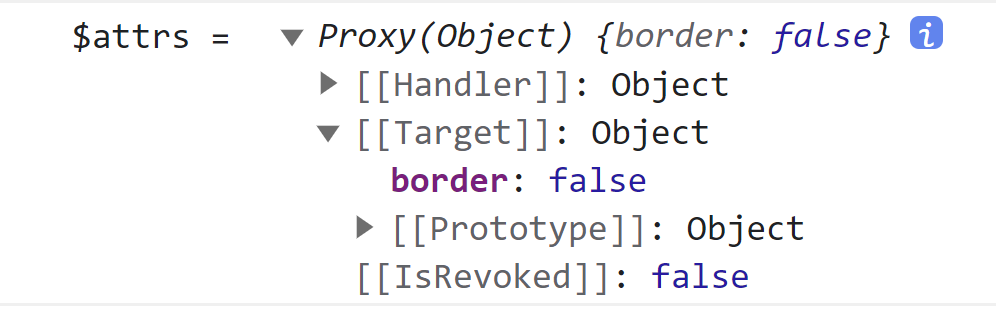





 扫一扫
扫一扫


 2192
2192

 被折叠的 条评论
为什么被折叠?
被折叠的 条评论
为什么被折叠?
 到【灌水乐园】发言





