





第一种:继承Thread类,重写它的Run方法。
实例:
public class Test_thread extends Thread{

    @Override
    public void run() {

        //重写编写父类
        System.out.println("我是Thread 方式");
        //输出一个循环
        for (int i = 0; i < 2; i++) {
                System.out.print(i+ "  ");
        }
    }
    public static void main(String[] args) {
        Test_thread  t = new Test_thread();
        Thread t2 = new Thread(t);
        t2.start();
    }
}
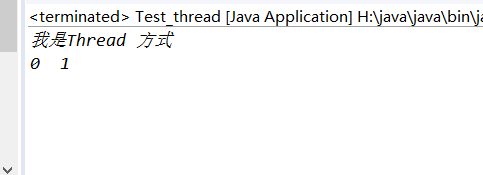
截图如下:
第二种:实现Runnable 接口,重写run方法
实例:
public class Test_Runnable  implements Runnable{


	@Override
	public void run() {
		//实现父类的方法
		System.out.println("我是Runnable 方式实现多线程");

	}

	public static void main(String[] args) {
		Test_Runnable t =new Test_Runnable();
		new Thread(t).start();
	}

}
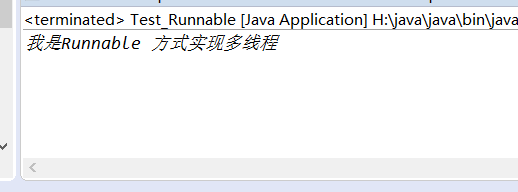
截图如下:
第三种:实现callable接口,重写这个call()方法
import java.util.concurrent.Callable;
import java.util.concurrent.FutureTask;

public class Test_callable implements Callable<Object>{

	@Override
	public Object call() throws Exception {

		return "我是callable";
	}

	public static void main(String[] args) throws Exception{
		Test_callable t =new Test_callable();

		FutureTask<Object> task = new FutureTask<>(t);
		new Thread(task).start();


		System.out.println(task.get());

	}

}
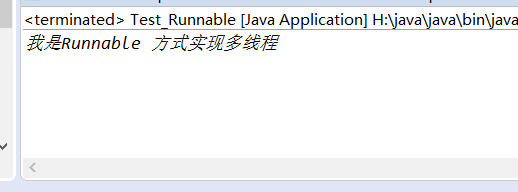
截图如下:
第四种:采用这个线程池的方式,ExecutorService对象
实例:
public class Test_threadPool {


	/**
	 * 利用线程池:
	 * 先要实现这个Runnable 接口
	 * 后在实例化这个ExecutorService。
	 * @param args
	 */
	public static void main(String[] args) {

                // 下面的这条语句是在线程池中定义5个线程容量
		ExecutorService executorService =Executors.newFixedThreadPool(5);
		// 下面的意思为,executorservice执行一个new A()对象,
                executorService.execute(new A());
                //下面的表示终结所有的线程对象
		executorService.shutdown();
	}

}

class A implements Runnable{

	@Override
	public void run() {
		System.out.println(" A ");
	}

}
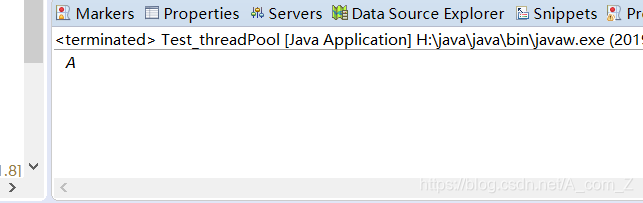
截图如下:
本篇只是介绍实现多线程的方式,它们之间的联系请看后面内容。。。。。。





 扫一扫
扫一扫


 492
492


 到【灌水乐园】发言



